Slide toggle
Monday - Friday: 09:00 - 5:00 CT 9001 Griggs Avenue Unit 243, Circle Pines, MN 55014 612-239-1469 orders@handmadekapamilya.com

Tag: fabric

Barong Tagalog Style Guide (USA): How to Choose & Wear

Mabuhay, Kapamilya! 🇵🇭

Finding formal wear in the United States that feels authentic, elegant, and proudly Filipino is not always simple. However, whether you are a groom planning a wedding in New Jersey, a guest attending a black-tie gala in Los Angeles, or a professional honoring your heritage, the goal is the same. You want an outfit that earns respect without losing identity.

That is where the Barong Tagalog stands apart. More than a shirt, it represents the highest form of Filipino formal wear. It carries history, skill, and pride in every stitch.

At Handmade Kapamilya, we work closely with artisans in Lumban, Laguna, as well as Filipino-Americans across the United States. Over time, we have noticed a clear change. Today’s modern man no longer wants stiff rentals or boxy cuts. Instead, he looks for the sharp fit of a tailored suit combined with true Filipino craftsmanship.

Because of this shift, this guide will help you choose, style, care for, and confidently buy a Barong Tagalog online in the USA. As a result, you can look pogi and feel proud at your next event.

Why the Barong Tagalog Matters: A Legacy of Resistance and Elegance

The Barong Tagalog is deeply rooted in Filipino history. Long before colonization, early Filipinos wore lightweight, collarless garments suited to the tropical climate. During the Spanish colonial era, these evolved into what we now recognize as the modern Barong.

There is a well-known piece of folklore suggesting Filipinos were forced to wear sheer, untucked shirts so they couldn’t hide weapons—meant to symbolize subjugation. Whether literal history or cultural metaphor, what matters is how Filipinos responded.

We transformed restriction into refinement.

Using delicate pineapple fibers, masterful hand embroidery, and immaculate craftsmanship, Filipinos elevated the Barong into a symbol of dignity and quiet resistance. Today, it stands shoulder-to-shoulder with the Western tuxedo—and in the Philippines, it often replaces it entirely at the highest levels of government and society.

When you buy a Barong Tagalog online today, you’re not just purchasing formalwear.
You’re wearing history—reimagined.

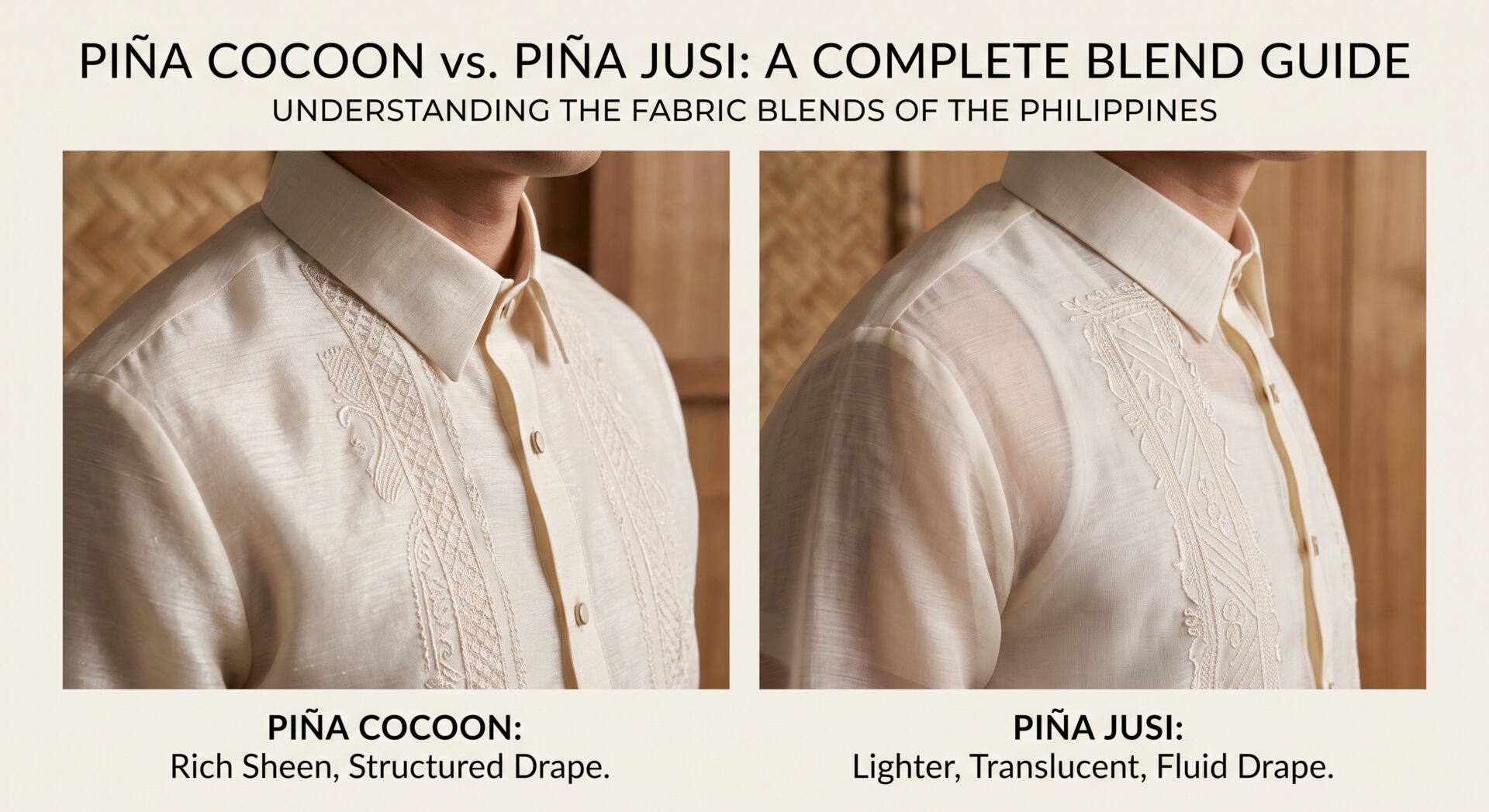
Comparison of Barong Tagalog fabrics: Piña Silk vs Cocoon Silk vs Jusi for Filipino formal wear.

Choosing the Right Fabric: The Soul of Your Barong Tagalog

Fabric selection is the single most important decision you’ll make. While Barongs were designed for tropical weather, many Filipino-Americans now wear them in churches, ballrooms, and outdoor venues across the United States.

Here’s how to choose wisely.

Piña Silk: The Gold Standard

Piña is handcrafted from pineapple leaf fibers and is considered the most prestigious Barong fabric.

Best for:

  • Grooms
  • Wedding parties
  • Heirloom pieces

Look & Feel:
Naturally ivory, sheer, elegant, and slightly crisp. Piña softens beautifully over time and photographs exceptionally well.

Jusi: The Versatile Classic

Traditionally woven from raw silk, Jusi is the most commonly worn fabric for formal events.

Best for:

  • Wedding guests
  • Fathers of the bride or groom
  • Formal galas

Look & Feel:
More opaque than Piña, smoother in texture, and ideal for intricate embroidery.

Cocoon Silk: Modern Luxury

A favorite in modern collections, Cocoon silk mimics the texture of Piña while offering greater durability.

Best for:

  • Long events
  • Men who want a premium look with less fragility

Look & Feel:
Matte, textured, sophisticated, and distinctly modern.

Organza: Entry-Level Formal

Organza is typically a silk blend or synthetic fabric and is commonly used for group orders.

Best for:

  • Choirs
  • Large entourages
  • Budget-friendly formalwear

Look & Feel:
Very sheer, stiff, and high-shine.

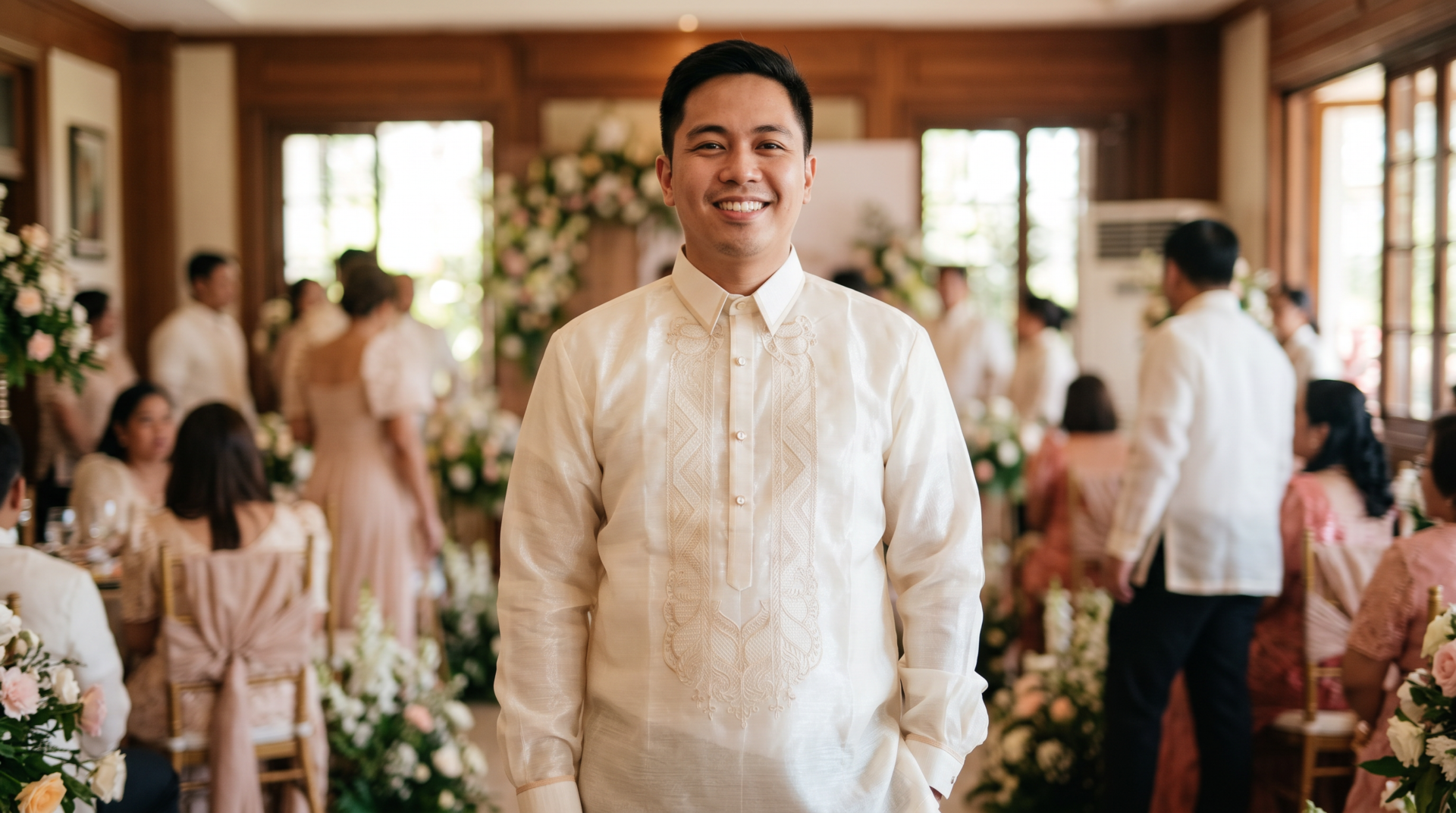
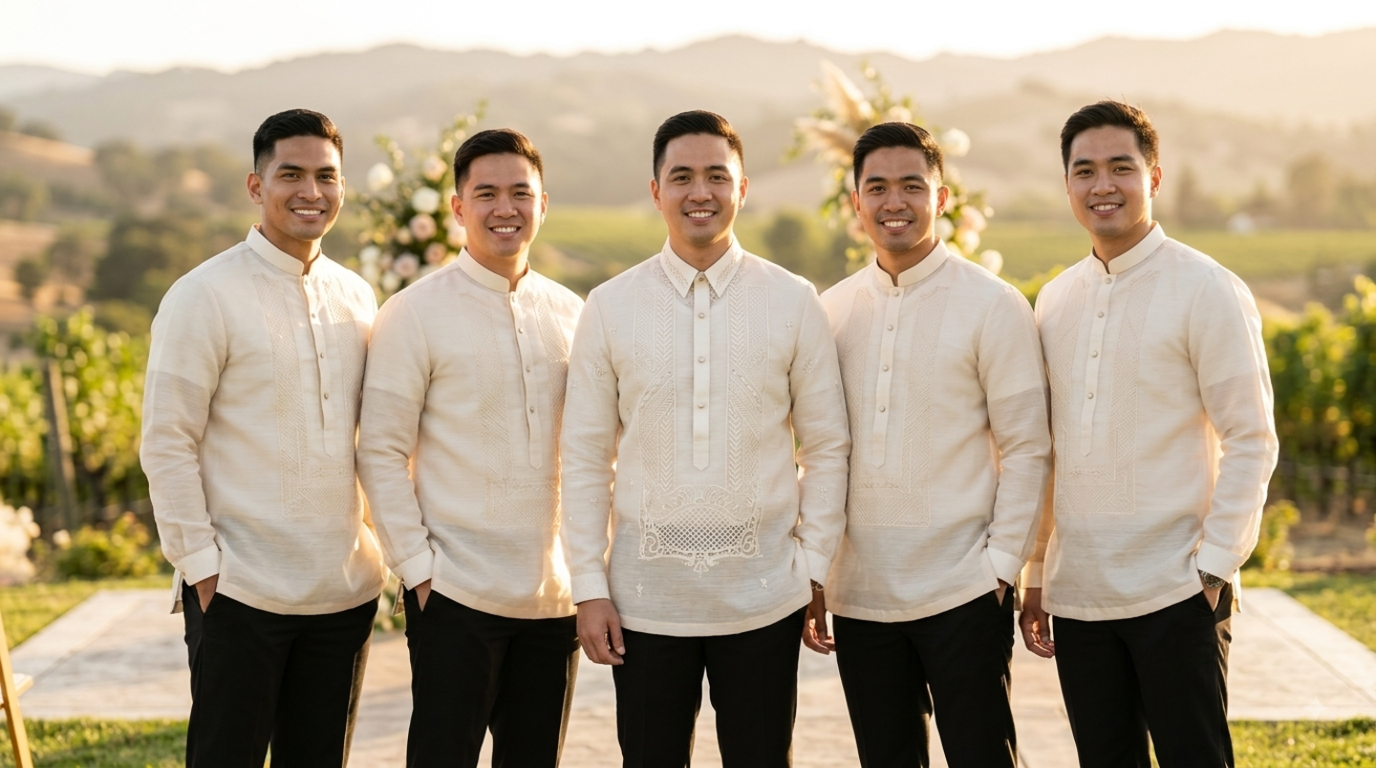
Modern slim-fit Barong Tagalog styled for a Filipino-American wedding in the United States.

Modern Fit vs. Traditional Fit: What Works Best in the USA?

The oversized Barongs of the 1990s are no longer the standard—especially in the United States.

Traditional Fit

  • Straight cut
  • Maximum airflow
  • Relaxed silhouette

Ideal for warm climates or those who prefer a classic look.

Contemporary Slim Fit

At Handmade Kapamilya, our slim-fit Barongs are tailored to modern proportions:

  • Subtle waist taper
  • Narrower sleeves
  • Clean shoulder structure

This fit photographs beautifully, pairs well with modern dress slacks, and delivers a polished, tailored appearance without losing authenticity.

How to Wear a Barong Tagalog Properly (Etiquette Matters)

1. Always Wear the Correct Undershirt

Never wear a standard T-shirt underneath a Barong. The sleeves and neckline will show through the fabric.

Correct choice:
A Camisa de Chino—a scoop-neck, long-sleeved undershirt that matches the Barong’s color.

2. Button It All the Way Up

For weddings and formal events, the Barong should always be fully buttoned.

3. Pants and Shoes

  • Pants: Black or charcoal dress slacks only
  • Shoes: Black leather Oxfords or Derbies, well-polished

Avoid denim, chinos, or casual footwear.

4. Never Tuck In a Barong

A Barong Tagalog is never tucked in. The side slits are intentional—designed for movement and tradition.

Modern Barong Tagalog Trends in the United States

The Barong continues to evolve—especially within the Filipino diaspora.

Colored Barongs

Black, navy, and deep green Barongs are rising in popularity for galas and evening events. A black Barong with black embroidery is the ultimate modern power look.

Everyday Barongs

Made from linen or ramie, these are short-sleeved, less sheer, and ideal for business-casual settings.

Women Wearing Barongs

Barong tops are increasingly worn by women, paired with trousers or skirts—redefining Filipiniana with confidence and strength.

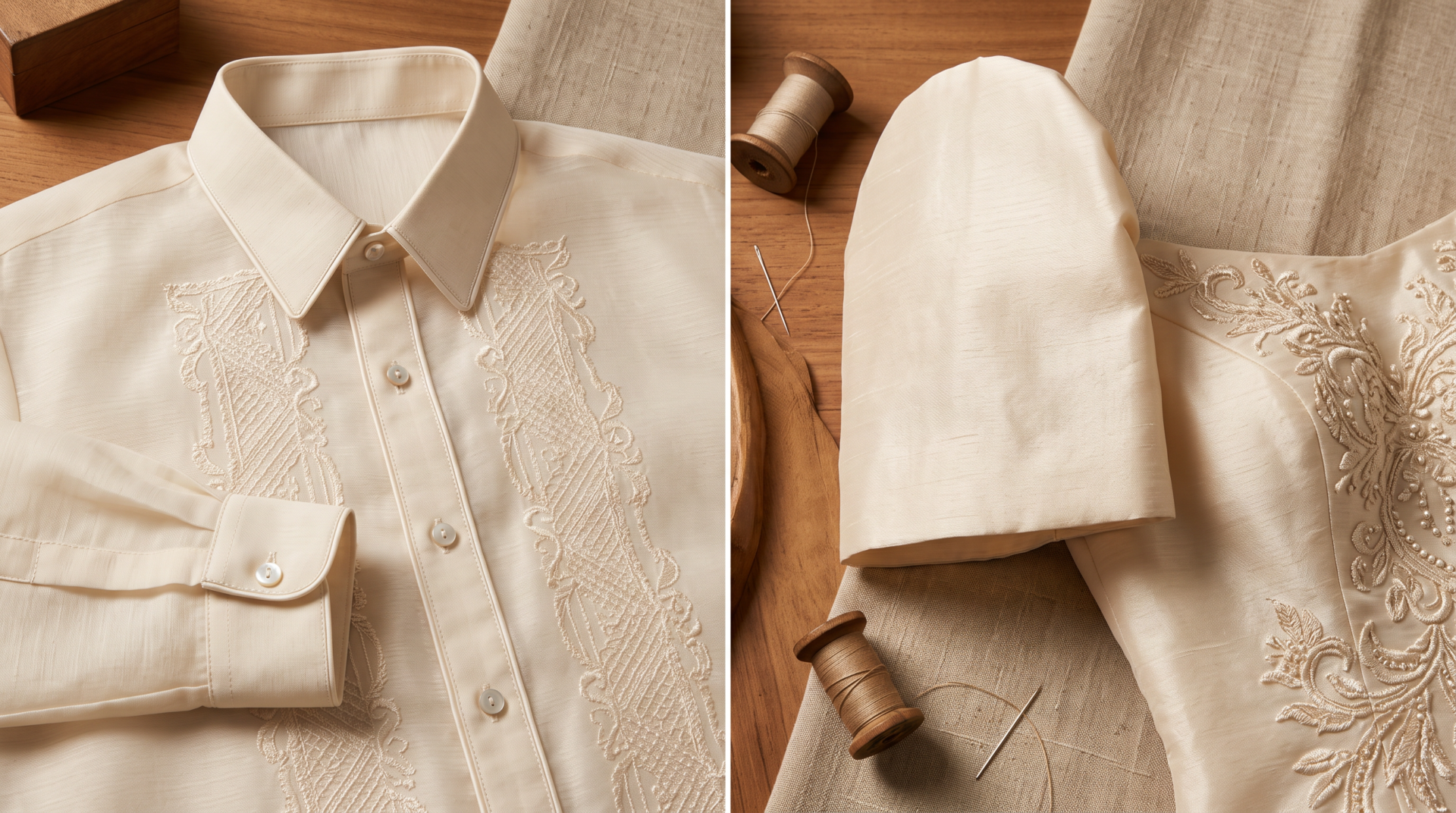
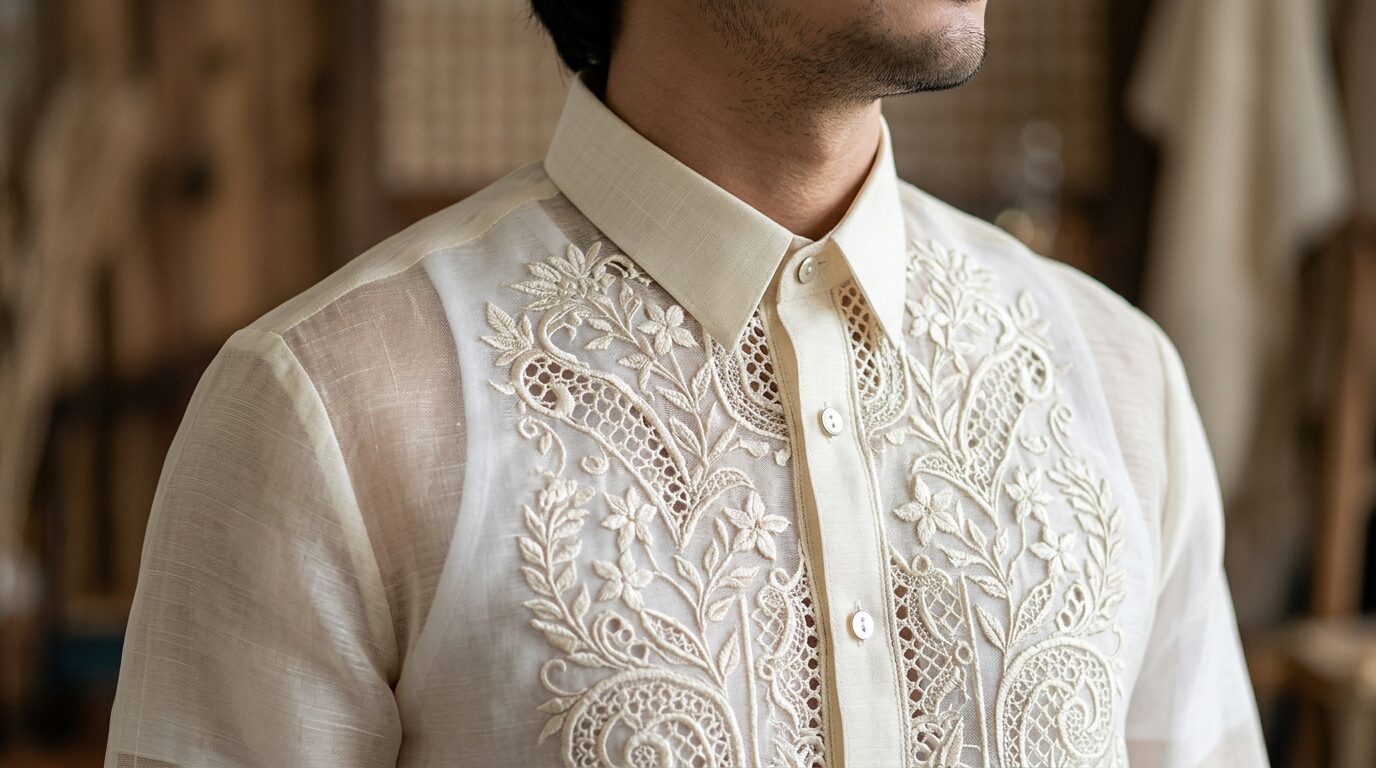
Close-up of black-on-black embroidery on a modern Barong Tagalog for gala events.

How to Buy a Barong Tagalog Online in the USA

Buying a Barong Tagalog online requires attention to detail—especially with sizing.

Key Tips:

  • Check shoulder measurements carefully (Barongs do not stretch)
  • Look for lined Barongs if you want structure without an undershirt
  • Custom Barongs are always the best investment if budget allows

Custom sizing ensures:

  • Proper sleeve length
  • Balanced proportions
  • A truly elevated look

At Handmade Kapamilya, we ship across the United States—bringing the craftsmanship of Lumban, Laguna directly to Filipino-American homes nationwide.

Caring for Your Barong Tagalog

A quality Barong is an heirloom piece.

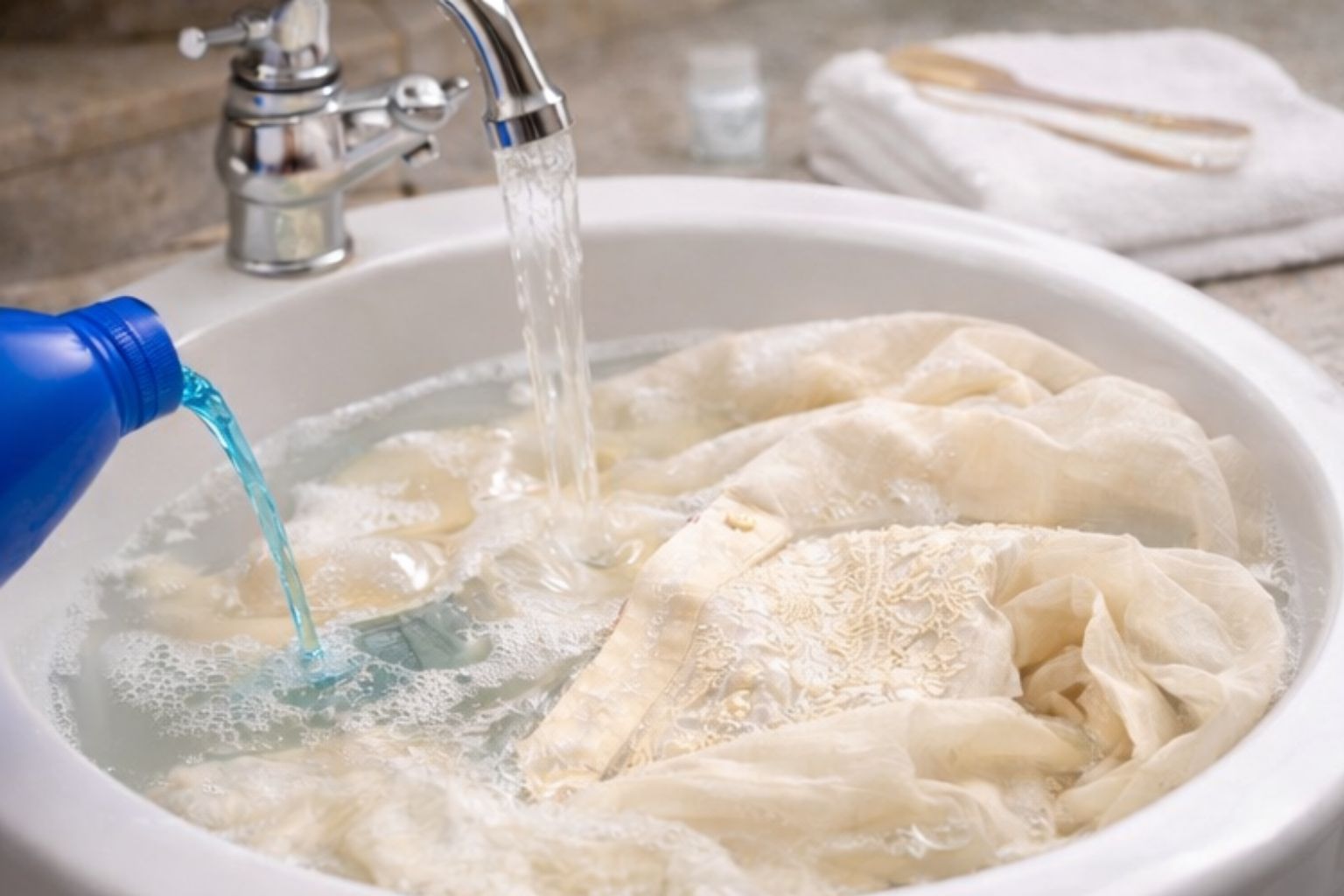
Never machine wash.
Hand wash gently using lukewarm water and mild detergent.

Do not scrub embroidery.
Use a gentle dip-and-sway method.

Storage:

  • Hang only
  • Use a padded hanger
  • Store in a breathable garment bag (never plastic)

Ironing:

  • Use the lowest silk setting
  • Best when slightly damp or steamed

Wear Your Culture with Pride

The Barong Tagalog is a bridge between generations—a garment that speaks without shouting. When you wear one, you don’t just dress well. You carry history, craftsmanship, and Kapamilya pride into every room you enter.

👉 Ready to find your perfect fit?
Explore our handcrafted collection and buy your Barong Tagalog online with confidence—trusted by Filipino-Americans across the United States.

Shop the Handmade Kapamilya Barong Collection:

More from the Kapamilya Blog

Salamat po. Mabuhay, Kapamilya! 🇵🇭

Barong Tagalog Fabric

Barong Tagalog in the US: The Ultimate “Fabric Expert” Guide to Authentic Filipino Formal Wear

If you are reading this, you likely have a significant event on your calendar. Maybe you are a groom planning a heritage wedding, a guest attending a Filipiniana gala, or a proud parent preparing for a graduation. You know you need a Barong Tagalog, but a quick search online has left you more confused than when you started.

You see listings for a “Piña Barong” ranging from $50 to $500. You read terms like Piña, Cocoon, Jusi, and Organza with no clear explanation of how they actually feel, wear, or differ in quality. You worry about ordering a Filipino shirt online, fearing it might arrive looking like a shiny, stiff costume rather than the elegant Filipino formal wear you deserve.

At Handmade Kapamilya, we understand this anxiety. The Barong Tagalog is not just a shirt; it is a translucent armor of Filipino identity. It represents centuries of resilience, where indigenous fibers were transformed by artisans into garments of honor.

In this ultimate Barong Tagalog fabric guide, we are pulling back the curtain on the industry. We will teach you how to think like a fabric expert, so when you search for where to buy a barong in the US, you know exactly what you are paying for—and why.

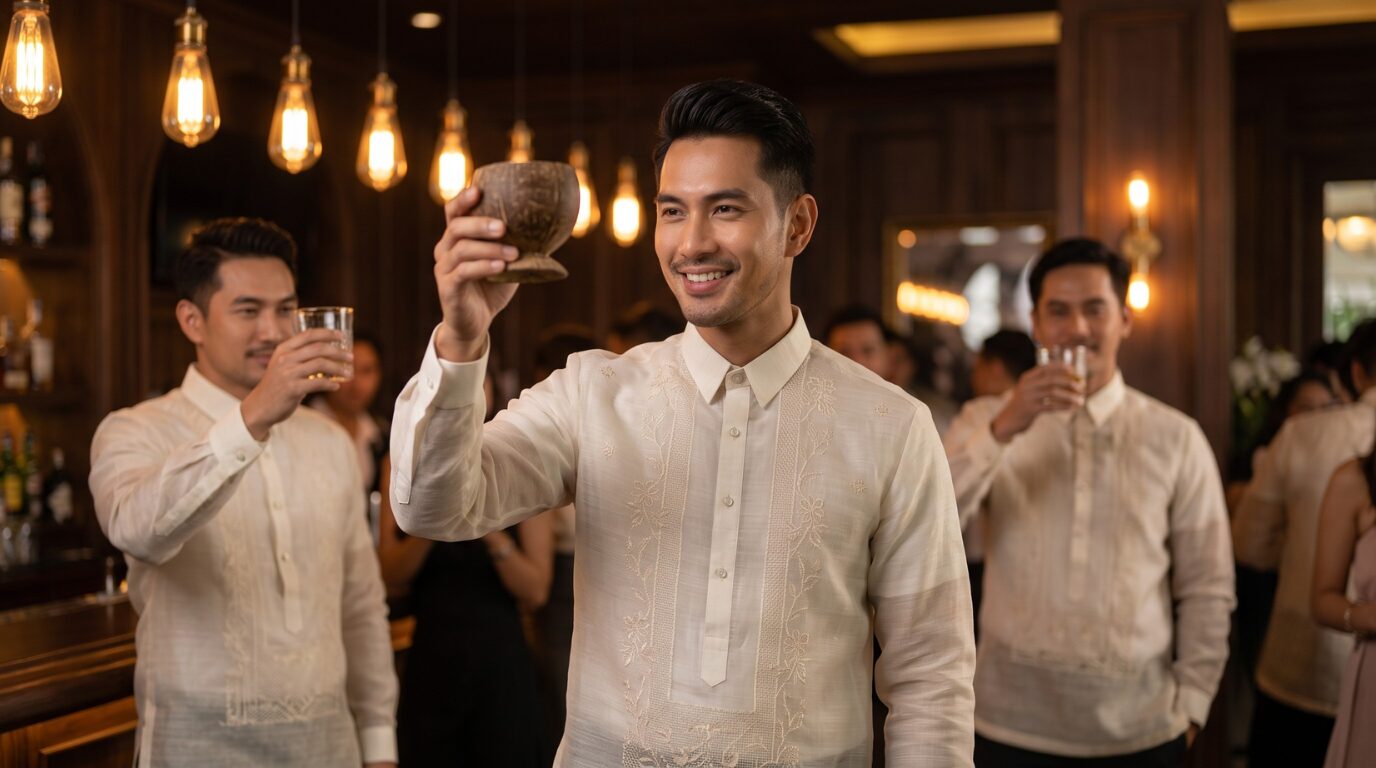
Man Wearing Barong at Dinner Party

The Hierarchy of Barong Fabrics: What Are You Actually Paying For?

The price, comfort, and formality of a Barong Tagalog for men are dictated almost entirely by the fabric. In the Philippines, these fabrics are traditionally categorized by their origin, difficulty to weave, and cultural prestige.

Below is the definitive breakdown of the four main Barong Tagalog fabric types you will encounter in the US market.

1. Piña: The “Queen of Philippine Fabrics”

If you are the groom, the father of the bride, or a guest of honor, this is the gold standard of Barong Tagalog fabric.

What it is:
Authentic Piña is extracted from the leaves of the Red Spanish Pineapple plant, primarily grown in the province of Aklan. It is not made from the fruit itself, but from a specific pineapple variety cultivated for its strong, fine fibers.

The “Expert” Check:
How do you know it’s real? Look closely at the weave. Authentic Piña fiber is naturally uneven. You should see tiny “slubs” or irregularities in the thread thickness. This is not a defect—it is the signature of a hand-loomed natural fiber.

The Feel:
Extremely lightweight, airy, and translucent. Piña has a natural yellowish-champagne hue that deepens with age, turning the garment into a true heirloom.

Why it costs more:
The fiber extraction process is grueling. Artisans scrape pineapple leaves by hand (pagkigue) to separate the fibers. It can take weeks to produce just a few yards of fabric. When you buy a Piña barong, you are paying for months of skilled human labor.

Expert Tip:
You will often see Piña-Seda (Pineapple-Silk) or Piña-Jusi blends. These retain the texture of real Piña while improving durability and lowering cost—an excellent compromise for US-based weddings.

2. Cocoon Silk: The Modern Masterpiece

For the modern groom or fashion-forward guest who wants the look of Piña without extreme fragility, Cocoon Silk is the top choice in 2025.

What it is:
A high-grade woven silk designed to mimic the structure and opacity of Piña. Cocoons are often imported, then woven and embroidered by Filipino artisans.

The “Expert” Check:
Cocoon Silk closely resembles Piña but appears slightly more creamy or off-white rather than the vintage yellow of aged Piña. It is also less transparent, which many US customers prefer.

Why we love it:
Cocoon Silk is the most durable premium Barong Tagalog fabric. It holds embroidery exceptionally well and resists snagging better than pure Piña—making it ideal for barong tagalog for men wedding attire.

Barong Tagalog Fabric

3. Jusi: The Traditional Workhorse

If you grew up attending Filipino weddings or formal parties, this is likely what your uncles wore.

The History:
Historically, Jusi referred to banana-fiber fabric. Today’s Jusi is typically a silk blend combined with organza or polyester, engineered to recreate the traditional texture.

The Feel:
Softer and more opaque than Piña, with a smooth finish and subtle sheen. Jusi is significantly more affordable than Piña or Cocoon, making it ideal for groomsmen and guests.

The Limitation:
Jusi is less durable long-term than synthetic fabrics and requires careful storage to prevent brittleness.

4. Organza & Jusilyn: The Budget-Friendly Options

These fabrics are best for students, performers, or one-time events.

What it is:
Synthetic (usually polyester) fabrics woven to resemble traditional Jusi.

The “Expert” Check:
They are noticeably shinier. Authentic Piña and Cocoon have a soft, pearlescent glow. Organza reflects light harshly, especially in flash photography.

The Verdict:
There is absolutely a place for these fabrics. They are affordable, durable, and easy to care for. If you need a Filipino shirt for a school event or performance, they are a smart choice. For weddings, however, we recommend upgrading to at least Jusi or Cocoon for comfort and breathability.

Technical Comparison: Which Fabric Is Right for You?

When shopping for Filipino formal wear for men, use this table to quickly match your role and budget.

Fabric Best For Breathability Price Point Transparency
Piña Grooms, VIPs, Fathers Excellent High ($$$$) Very Sheer
Cocoon Silk Modern Grooms, Galas Good Med–High ($$$) Semi-Sheer
Jusi Groomsmen, Guests Very Good Medium ($$) Opaque
Organza Performers, Students Low Low ($) Glassy
Linen/Gusot Office, Casual Excellent Low–Med ($$) Solid

Man Wearing Linen Barong

Anatomy of Authenticity: How to Spot a “Fake” Barong

One of the biggest fears of buying Filipino formal wear in the US is getting ripped off.

1. The “Finger Test” (Texture)

  • Real: Cool, textured, organic
  • Fake: Slick, plasticky, stiff

2. The Embroidery Quality (The “Likod” Check)

  • High Quality: Clean, structured embroidery on the back
  • Mass Produced: Flat, sticker-like stitching

3. The “Calado” Detail

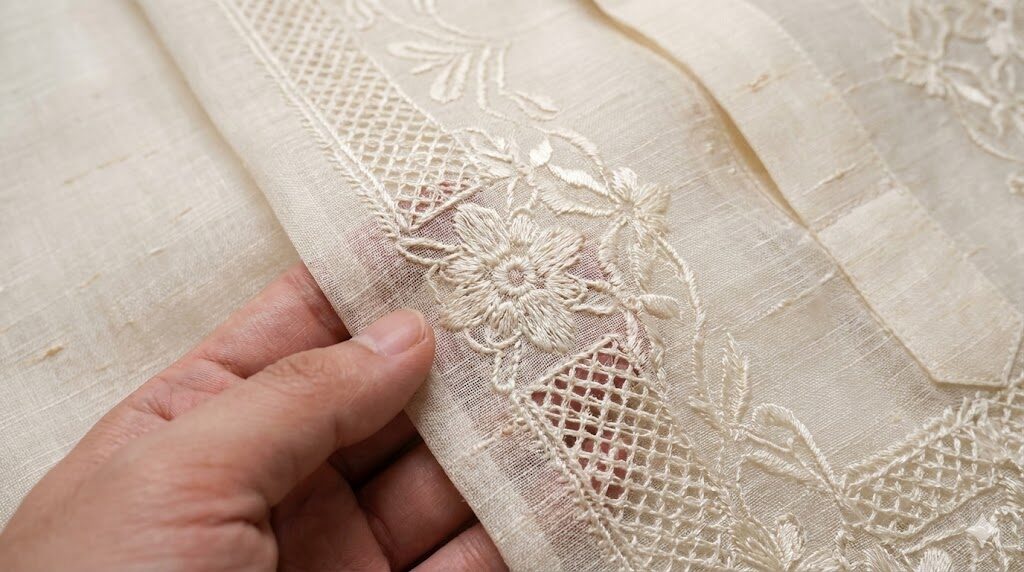
True luxury Barongs feature hand-pulled lattice embroidery, not laser-cut imitations.

The “Sizing” Elephant in the Room

Any guide on where to buy a barong in the US must address sizing.

Filipino sizing traditionally runs smaller than US sizing. A Manila “Large” is often a US Medium.

Golden Rules:

  • Chest: 4–6 inches of ease
  • Length: Bottom of the buttocks
  • Sleeves: Size up for athletic builds

At Handmade Kapamilya, we convert traditional cuts into US Standard Sizing, so you don’t have to guess.

Caring for Your Investment: The “No-Wring” Rule

Never machine wash Piña, Cocoon, or Jusi.

  • Hand wash only
  • Never wring
  • Steam or low-heat iron with cloth barrier
  • Store in breathable garment bags

Styling Your Barong: Modern vs Traditional

The Groom:
Piña or Cocoon Barong + black trousers + Camisa de Chino

The Modern Guest:
Colored Jusi or Coat Barong + chinos or dress pants

For the Ladies:
Butterfly-sleeve Filipiniana boleros in organza or silk blends

Why Handmade Kapamilya?

We are not just a store—we are a bridge.

  • Direct sourcing from Lumban & Aklan
  • US-standard sizing
  • Fast domestic shipping

Whether you need a barong tagalog for men, women’s Filipiniana, or guidance you can trust, we are here to help you wear your heritage with pride.

Ready to Find Your Perfect Fit?

Browse our expert-verified collections:

Read More from the Handmade Kapamilya Blog:

Filipiniana Dress Modern

Filipiniana Dress Modern to Traditional

Exploring the Diverse Types of Filipinianas Dress Modern to Traditional

The Filipiniana dress modern to traditional has a wide array of styles, with its enchanting allure and rich cultural heritage, which is a testament to the timeless beauty of Filipino fashion. Throughout history, this traditional ensemble has undergone various transformations, resulting in a plethora of captivating styles that capture the essence of the Philippines’ diverse regions and influences. Let’s embark on a journey through the enchanting world of Filipinianas and discover the different types that make this attire so special.

Filipiniana Dress Modern

Terno: The Iconic Butterfly Sleeves

No discussion of Filipinianas is complete without mentioning the iconic terno. Known for its distinctive butterfly sleeves that gracefully extend from the shoulders, the terno is a symbol of elegance and sophistication. This type of Filipiniana has its origins in the Spanish colonial era but has evolved over time, showcasing various sleeve lengths, fabrics, and intricately embroidered patterns. The terno is often the attire of choice for formal events, weddings, and high-profile gatherings, representing the epitome of Filipino grace.

Maria Clara: A Nod to the Past

The Maria Clara Filipiniana, also referred to as “baro’t saya,” pays homage to the pre-colonial era. It comprises a baro (blouse) adorned with delicate embroidery and a saya (skirt) with intricate patterns. The Maria Clara ensemble reflects the fusion of native Filipino aesthetics with Spanish influences, creating a captivating and timeless look. This type of Filipiniana is often worn during cultural celebrations and traditional events, exuding a sense of historical charm.

Mestiza Dress: Filipiniana Dress Modern Fusion

The Mestiza Dress is a modern iteration of the Filipiniana, blending traditional elements with contemporary style. This type of Filipiniana often features a fusion of fabrics, combining indigenous materials like piña or jusi with modern textiles. The Mestiza Dress strikes a balance between elegance and comfort, making it suitable for both formal occasions and casual gatherings. With its versatility and adaptability, the Mestiza Dress has become a popular choice for modern Filipino women seeking to embrace their heritage.

Mestiza - Filipiniana Dress Modern

Kimona and Patadyong: Visayan Heritage

The Visayan region of the Philippines boasts its unique Filipiniana styles. The Kimona, a loose-fitting blouse, is often paired with the Patadyong, a tube skirt characterized by its vibrant colors and intricate patterns. This combination showcases the vibrant and festive spirit of the Visayan culture, reflecting the region’s love for vibrant hues and elaborate embroidery. The Kimona and Patadyong are commonly worn during local festivals and cultural events, presenting a beautiful fusion of tradition and celebration.

Mindanao-inspired Malong Dress

From the island of Mindanao comes the Malong Dress, which embraces the versatile malong fabric. The malong is a tubular cloth with bold and vivid patterns, traditionally used by various ethnic groups in Mindanao. The Malong Dress creatively transforms this fabric into a chic and stylish ensemble, offering a unique and eye-catching twist on the classic Filipiniana. With its comfortable and flowing design, the Malong Dress celebrates the beauty of Mindanao’s cultural heritage.

Maling Dress

Conclusion: An Endless Tapestry of Filipino Dress Modern to Traditional Elegance

The diverse types of Filipinianas, each with its unique characteristics and cultural influences, weave together a tapestry of Filipino elegance and heritage. From the iconic terno’s butterfly sleeves to the colorful Kimona and Patadyong of Visayas, and the modern fusion of the Mestiza Dress, every Filipiniana tells a story of history, artistry, and pride.

As Filipinos embrace their cultural identity through these exquisite ensembles, the Filipiniana continues to evolve, reflecting the nation’s ever-changing landscape while preserving the essence of its vibrant past. Whether worn for formal occasions, traditional celebrations, or everyday fashion, the Filipiniana stands as a testament to the enduring charm and elegance that define Filipino fashion and the timeless spirit of the Filipino people.

Filipiniana History: Tracing the Evolution

Unveiling the Story of Filipiniana History: Tracing the Evolution of Traditional Clothing

Embark on a captivating journey through the annals of time as we delve deep into the captivating history of Filipiniana, a traditional attire that has etched its legacy in the tapestry of Filipino culture.

A Glimpse into Filipiniana History

The roots of Filipiniana history extend back to the pre-colonial era, where ingenious early Filipinos expertly crafted garments from indigenous materials like piña, abaca, and jusi. These fabrics were meticulously woven and adorned with hand embroidery, offering a window into the artistry and craftsmanship of our ancestors. These garments, designed to be loose and flowing, perfectly suited to the tropical climate, embodying the seamless blend of functionality and aesthetics.

Filipiniana History shown in stamp
Stamp printed in Philippines shows Ferdinand Marcos Inauguration, 2nd-term inauguration of president Marcos, circa 1969

Spanish Influences and Evolving Silhouettes

The arrival of Spanish colonizers during the 16th century marked a pivotal moment in the history of Filipiniana. Traditional clothing took on Spanish elements, giving birth to the iconic terno—a distinct ensemble famed for its butterfly sleeves. Initially known as the “Maria Clara” dress, this design emerged as an embodiment of grace and femininity. As time unfolded, the terno underwent metamorphosis, embracing changes in sleeve shapes, lengths, and fabric selections that mirrored the shifting preferences and influences of the era.

Filipiniana in Colonial Times: An Essential Part of Filipiniana History

Throughout the expanse of the Spanish colonial period, Filipiniana history played an integral role in formal gatherings and festivities. Women adorned themselves in exquisitely embroidered baro’t saya, a combination of a baro (blouse) and a saya (skirt). These elaborate embroideries featured delicate patterns and floral motifs, all meticulously handcrafted by skilled artisans. As women from diverse social strata donned their personalized renditions of the baro’t saya, this ensemble metamorphosed into a symbol of cultural pride and societal identity.

The Golden Age of Terno and Its Place in Filipiniana History

The mid-20th century witnessed the zenith of the terno’s popularity, propelling it to the forefront of the global fashion scene. The influential First Lady, Imelda Marcos, renowned for her refined style, championed the terno as an emblem of elegance. She elegantly showcased its versatility and allure on international platforms, garnering admiration and acclaim worldwide. The terno, adorned with its signature butterfly sleeves, became synonymous with Filipino sophistication and poise.

Filipiniana History - Woman

Revival and Modern Renaissance: Reconnecting with Filipiniana History

In recent decades, Filipiniana history has experienced a resurgence of interest. Filipino designers and artisans have breathed new life into traditional ensembles, fusing contemporary elements with the essence of cultural heritage. The Filipiniana has transcended boundaries, emerging as a favored choice for weddings, special events, and even global runways. Contemporary adaptations, including modern terno tops paired with trousers or skirts, seamlessly integrate this attire into everyday wear.

Sustaining Cultural Heritage

As the journey of Filipiniana history unfolds, it remains a potent expression of Filipino identity and cultural heritage. It stands as a testament to the intricate tapestry of our past, weaving together indigenous origins with influences shaped by centuries of cross-cultural interactions. The Filipiniana signifies more than an appreciation for beauty and fashion; it represents a deep connection to our shared history and a commitment to preserving our legacy for generations to come.

Conclusion: Embracing the Essence of Filipiniana

The Filipiniana transcends being a mere fashion statement; it encapsulates a celebration of our collective identity and heritage. From its humble beginnings in pre-colonial times to its contemporary revival, the Filipiniana continues to capture hearts with its enduring elegance and cultural significance.

As we wholeheartedly embrace these resplendent ensembles, we honor the remarkable craftsmanship and artistry of our forebearers. Embracing the essence of Filipiniana serves as a profound tribute to our history, a tribute to our roots, and an inspiration for a future where the timeless allure of Filipino culture flourishes. Beyond garments, the Filipiniana embodies the indomitable spirit and grace of the Filipino people.

Barong Tagalog Types

Discovering the Elegance of Barong Tagalog Types

The world of Barong Tagalog types may seem unfamiliar to many, but fear not! Let’s take a closer look at these exquisite materials to help you find the perfect Barong for your needs.

Much like other garments, the Barong Tagalog comes in various fabric types, each possessing unique qualities such as Organza, Jusi, Pina, and more. These fabrics vary in quality, softness, opaqueness, thickness, price, and other factors. Let’s explore the most common types and understand their advantages and disadvantages.

Organza Barong: Affordable Elegance Barong Tagalog Types

For those seeking a cost-effective option, the Organza Barong is a wonderful choice. This sheer and transparent material, crafted from Silk and Polyester, offers the most budget-friendly Barong Tagalog. Its shiny appearance can be the perfect show-stopper on stage, but it might be too dazzling for a low-key wedding or office wear. If you need a one-time Barong or are on a budget, the Organza Barong is readily available at Barong Warehouse.

Organza Barong Tagalog

Jusi Barong: Refined and Affordable

The Jusi Barong strikes an excellent balance between refinement and affordability. Made from a type of silk, it is softer and less sheer than Organza but more budget-friendly than Pina Barong. Available in various colors and styles, you can opt for a Jusi-Pina Barong, featuring subtle stripes resembling Pina fabric, or a Monochromatic Jusi Barong with a captivating gradient effect.

Jusilyn Barong: Silk’s Affordable Alternative Barong Tagalog Types

Similar to Jusi, the Jusilyn Barong offers an economical alternative with a silk and polyester blend. It boasts greater opaqueness than Jusi, making it an attractive option for those seeking budget-friendly elegance.

Barong Tagalog Types - Jusilyn Barong
Traditional Costume Barong Tagalog

Gusot-Mayaman: The Comfortable Linen Fabric

For office wear in the hot and humid Philippine climate, Gusot-Mayaman, known as “Wrinkle of the Rich,” is a popular choice. This breathable Linen fabric features simpler embroidery designs, favored by office workers for its comfort and style. An affordable version, the Bihis Mayaman, is crafted from lightweight polyester.

Piña Barong: Epitome of Elegance

The Piña Barong stands as the epitome of Barong Tagalog elegance. Meticulously woven in the Philippines by skilled artisans, this fabric seamlessly combines age-old Filipino weaving techniques with European hand-embroidery traditions. The result is a truly exquisite fabric that represents a genuine investment for Barong Tagalog aficionados. While Piña Barongs can range from a few hundred to thousands of dollars, there are other fabrics that closely resemble its splendor, such as Cocoon and Silk Barongs, offering affordable yet equally beautiful alternatives.

Barong Tagalog Types - Piña Barong
Traditional Costume Barong Tagalog

Now that you are acquainted with the diverse world of Barong Tagalog fabrics, you can confidently choose the perfect one to suit your style and occasion. Embrace the elegance and charm of these fabrics as you celebrate the rich cultural heritage of the Philippines with your Barong Tagalog attire.