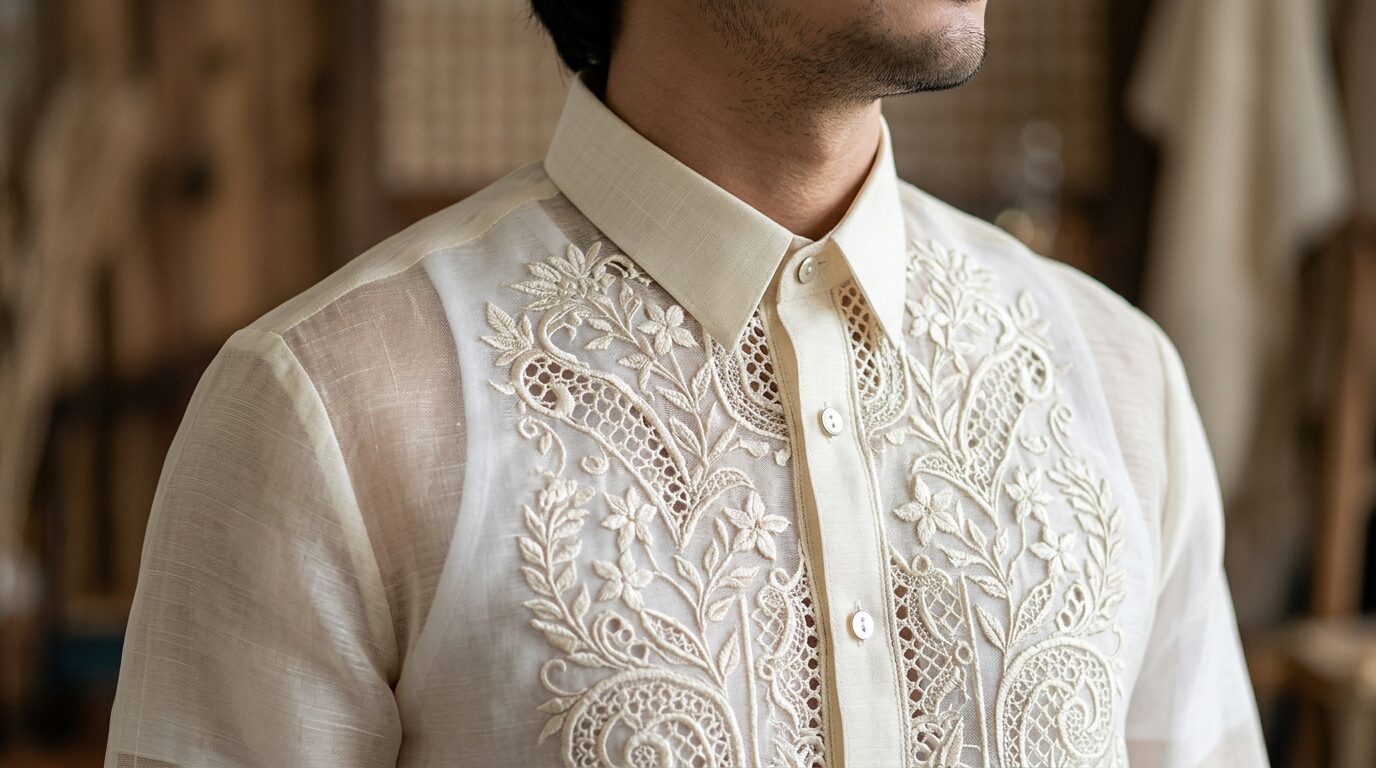
Kumusta po! A single hand-embroidered calado barong can take over 30 hours of meticulous needlework. Here is how you can spot the difference in 5 seconds…
Navigating the market for formal Filipino attire can be an overwhelming experience, especially when you are preparing to invest $150 to $300 or more for a wedding, state dinner, or major cultural milestone. The modern digital marketplace is flooded with options ranging from mass-produced factory garments to true artisanal masterpieces. For the discerning buyer, wedding groom, or heritage enthusiast, understanding the nuances of hand embroidered barong tagalog craftsmanship is essential to ensure that your investment reflects genuine cultural heritage rather than factory shortcuts.
In this comprehensive guide, we will dissect the fundamental differences between hand embroidery and machine stitching, explore the intricate art of calado embroidery barong, analyze computer embroidered barong vs hand embroidered pieces, examine handmade filipiniana details, and provide an insider’s framework for verifying authentic filipino tailoring.
The Anatomy of a Heritage Garment: Why Craftsmanship Matters
The Barong Tagalog is more than just a formal shirt; it is the national dress of the Philippines, carrying centuries of history, social status, and artistic expression. Originating during the Spanish colonial era—where local weavers adapted Indigenous translucent plant fibers into structured garments—the Barong has evolved into the definitive attire for weddings, inaugurations, and solemn ceremonies.
When you examine a well-made Barong, the focal point is almost always the chest piece, known locally as the pechera. Historically and traditionally, this intricate designwork is executed entirely by hand by skilled artisans in renowned embroidery hubs such as Lumban, Laguna, and Taal, Batangas.
However, as commercial demand has expanded globally, automated production methods have entered the market. While machine stitching offers speed and lower price points, it fundamentally alters the character, texture, and durability of the garment. For buyers seeking genuine heirloom quality, distinguishing between authentic handwork and industrial production is paramount. Before selecting your garment, we recommend reviewing our comprehensive guide on [Barong Tagalog Fabrics: How to Choose the Right One] to understand how base textiles interact with needlework. Furthermore, to fully appreciate the cultural evolution of these garments, explore [The Ultimate Barong Tagalog History Guide for Timeless Style].
Hand Embroidery vs. Machine Embroidery: The Core Technical Differences
To the untrained eye, a densely stitched front panel on a Barong may look impressive regardless of how it was produced. But when subjected to close inspection, the differences between human hands and computerized industrial machines become starkly apparent.
- Tension and Thread Variation
- Hand Embroidery: Human hands apply variable tension with every single stitch. This results in subtle, organic irregularities—a slight variance in loop tightness or curve curvature that proves human touch. No two hand-embroidered flowers or geometric motifs are completely identical.
- Machine Embroidery: Computerized sewing and embroidery machines operate under rigid, mechanized tension. Every stitch is mathematically uniform, resulting in a sterile, hyper-perfect appearance that lacks artistic warmth.
- Reverse Side Inspection
The single fastest diagnostic test for any embroidered textile is turning the garment inside out.
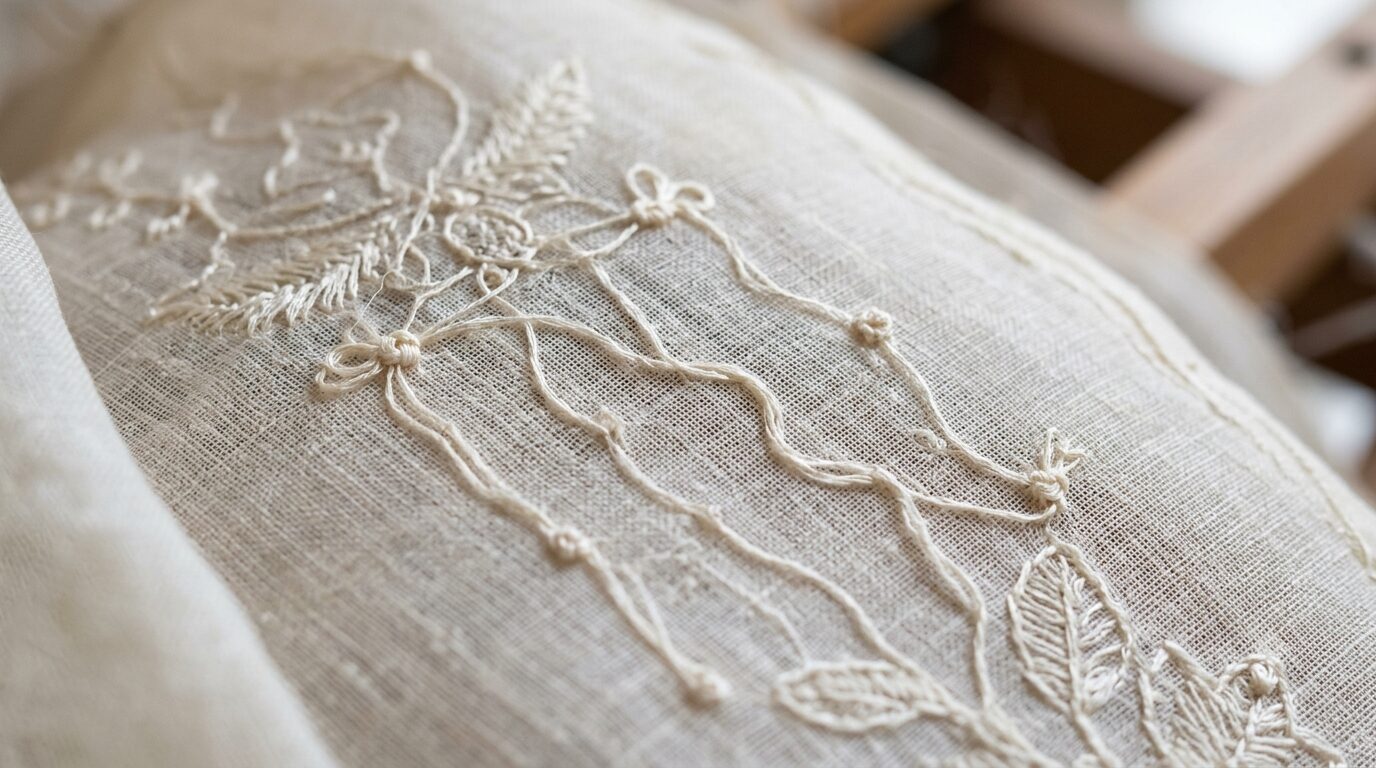
- Hand-Embroidered Barong: The reverse side reveals neat knots, subtle thread crossovers, and hand-finished anchoring. Because the artisan works stitch by stitch through delicate, sheer fabric, the back reflects the physical labor of the needle passing back and forth.
- Machine-Embroidered Barong: The reverse side of a machine-stitched garment is typically caked in dense, plasticized stabilizer backing or messy interlacing bobbin threads. Industrial machines require this stabilizer to keep delicate fabrics from puckering under high-speed needle impact.
Mastering the Calado Technique: The Pinnacle of Filipino Needlework
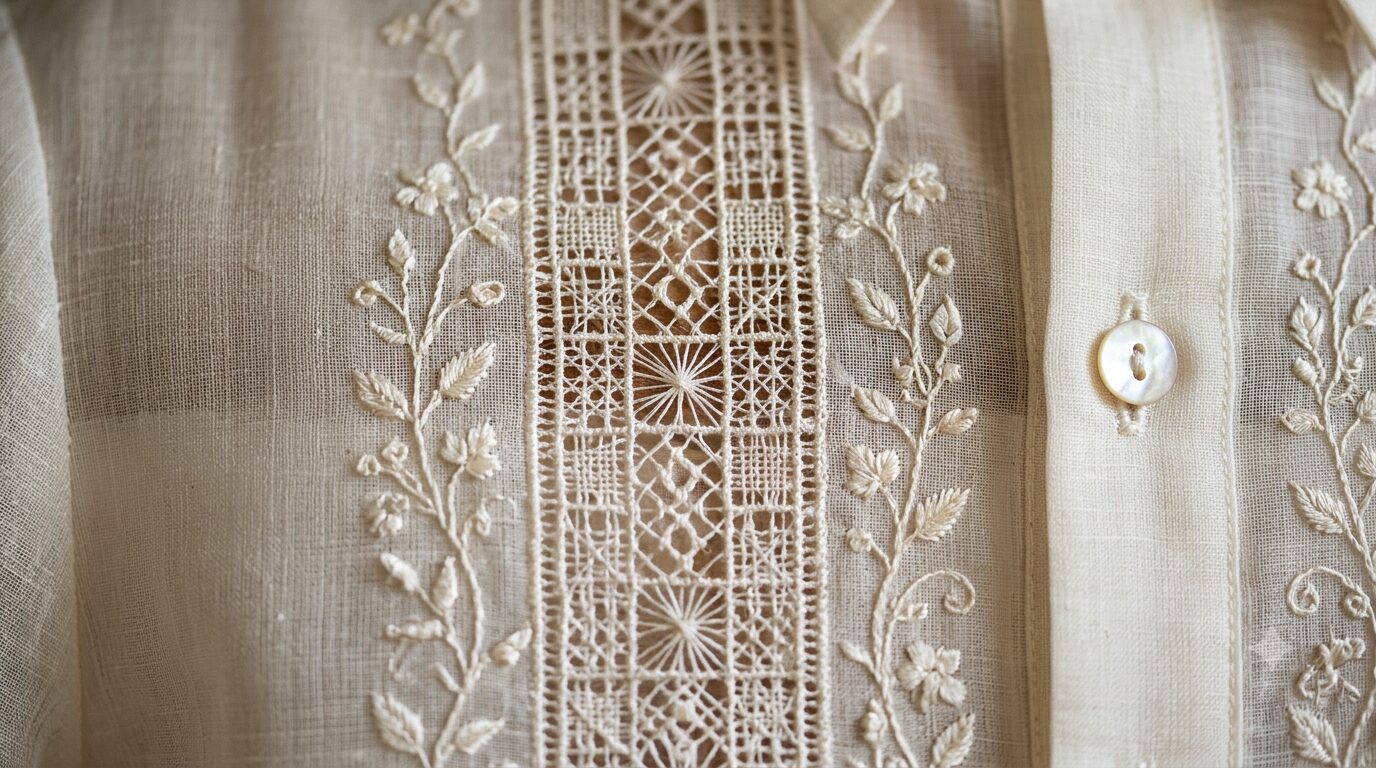
No discussion of authentic Barong craftsmanship is complete without examining calado. Recognized as one of the most labor-intensive textile arts in the world, calado is a form of pulled-thread embroidery where specific warp and weft threads of the fabric are carefully extracted and the remaining threads are buttonhole-stitched and reinforced to create intricate, lace-like openwork patterns.
The Process Behind Calado
- Thread Pulling: Master artisans use fine needles to count and pull precise threads from the translucent fabric without compromising the structural integrity of the base cloth.
- Reinforcement (Lupi and Suksok): The remaining grid is meticulously bound using specialized embroidery floss, locking the open spaces into geometric or floral lacework.
- Motif Integration: Artisans then embroider surrounding vines, leaves, and petals around these open windows, creating a stunning contrast between solid threadwork and airy transparency.
Because calado requires extraordinary visual concentration and manual dexterity, a genuine calado embroidery barong cannot be rushed. It represents the pinnacle of authentic filipino tailoring, serving as an undeniable marker that a garment was crafted by an experienced master embroiderer rather than a factory floor.
Computer Embroidered Barong vs. Hand Embroidered: Spotting Shortcuts in 5 Seconds
When shopping online or in retail storefronts, distinguishing a computer embroidered barong vs hand embroidered piece can save you from overpaying for mass-produced goods. Use this 5-second verification checklist:
- Check the Edges of the Motifs: Run your finger lightly over the embroidered vines. Hand embroidery features soft, dimensional thread beds that sit organically on the fabric. Computer embroidery often feels stiff, plastic-coated, or heavily embossed due to underlying synthetic stabilizers.
- Inspect the Open Spaces (Calado vs. Faux Cutouts): If the garment features open lace-like holes, look closely at the edges. Authentic calado features hand-stitched buttonhole reinforcement around every individual opening. Cheap machine-made imitations often use laser-cut holes surrounded by tight, flat satin machine stitches that fray or pucker over time.
- Examine Motif Symmetry: Perfect, laser-calibrated symmetry across the entire pechera is a dead giveaway of machine production. Artisans working freehand always introduce minute variations in petal shape, stem curvature, and leaf density.
The Role of Fabric: Pairing Embroidery with Organza, Jusilyn, and Cocoon
Embroidery does not exist in a vacuum; its beauty and longevity depend entirely on the fabric it adorns. The choice of textile dictates how the embroidery sits, how the garment drapes, and how formal the occasion calls for. Historically, the most prized barongs were made from piña (pineapple-leaf fiber) and later jusi. We don’t sell piña or jusi. Our barongs are polyester organza, with a few in Jusilyn, cocoon fabric and cotton.
Polyester Organza
Most of our barongs are polyester organza, including the Ivory White Organza Barong, our colored barongs, and the kids’ and infant barongs. It is light with a soft sheen, double-layered and opaque on the men’s barongs, and easy to care for. It gives hand embroidery a clean, crisp backdrop and works for weddings, the entourage, graduations, and formal events.
Jusilyn
Jusilyn is a lightweight, single-layer synthetic barong fabric with a fine crosshatch texture. It is lightly translucent, so the embroidery stands out clearly against it. We carry it in two styles: the White Jusilyn Barong and the Deluxe Intricate Jusilyn Barong.
Cocoon Fabric and Cotton
Our Ivory Cocoon Barong uses a single-layer cocoon fabric with a slubby crosshatch weave and a soft, dry lustre, a good pick for a groom who wants some texture. For casual events, our navy short-sleeve polo barongs are cotton. Whatever the fabric, check whether the embroidery is hand-finished or purely industrial, since price varies a lot with the labor that goes into it.
Examining Handmade Filipiniana Details and Tailoring Integrity
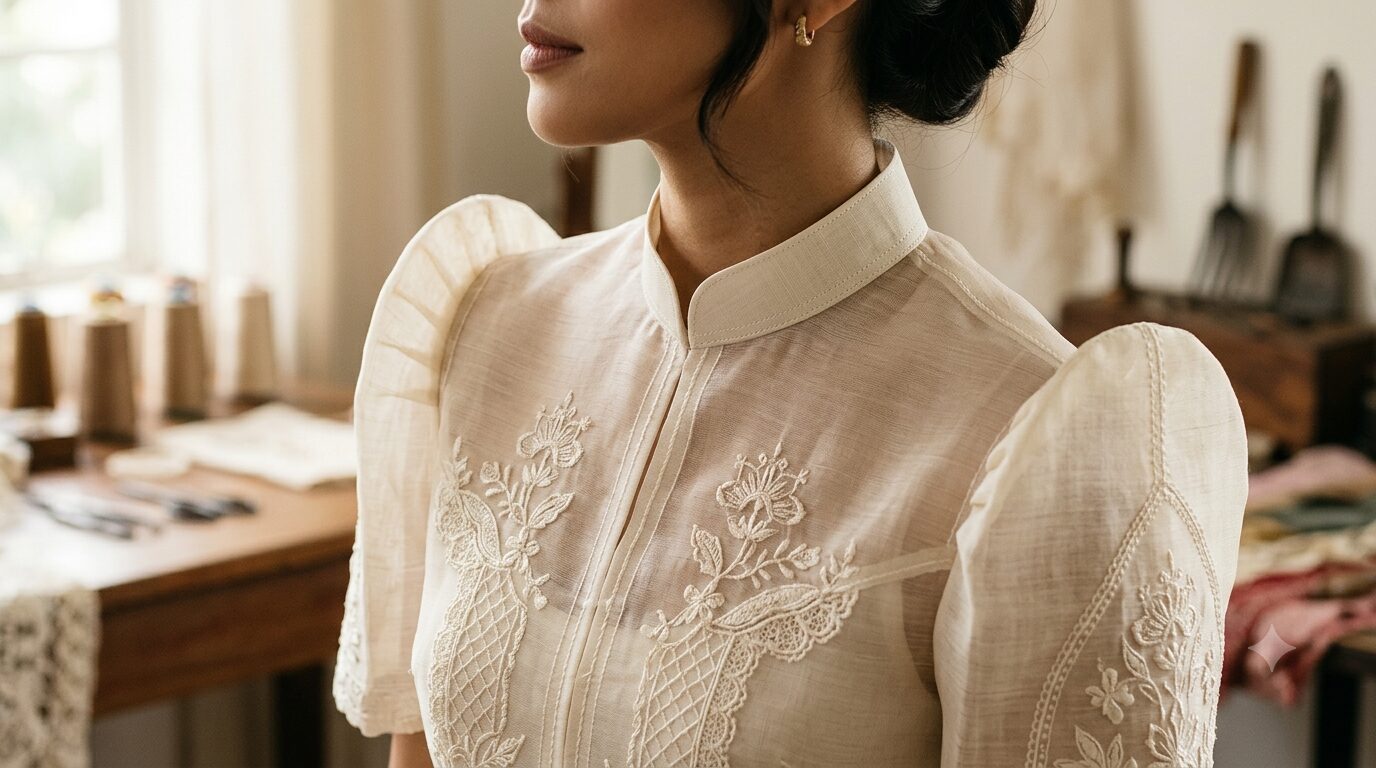
While the Barong Tagalog is traditionally worn by men, the broader umbrella of formal Filipino heritage attire encompasses stunning handmade filipiniana details for women, including butterfly-sleeved ternos, structured mestiza boleros, and flowing formal gowns.
Whether evaluating a men’s formal Barong or a women’s Filipiniana dress, structural integrity is just as important as surface decoration. Key markers of superior tailoring include:
- French Seams: Cleanly enclosed internal seams that prevent fraying on delicate, translucent fabrics.
- Matched Plackets: Seamless alignment of front button panels where embroidery patterns mirror each other across the opening.
- Collar Rigidity: Well-constructed Mandarin or Chinese collars that stand upright without collapsing or wrinkling excessively.
Price vs. Quality: What to Expect When Investing $150–$300+
When shopping for formal heritage wear, price is one of the most reliable indicators of authenticity. Understanding market tiers helps buyers avoid inflated markups on inferior factory-made garments:
- Budget Tier (Under $120): Typically features heavy machine embroidery and standardized factory sizing. Suitable for casual wear or one-off cultural events where heirloom longevity is not a priority.
- Mid-Range Tier ($120–$200): Often combines refined machine embroidery with partial hand detailing. Offers a clean silhouette and respectable durability for guests and wedding attendees.
- Premium & Heirloom Tier ($200–$350+): Features extensive hand embroidery and, at the top end, authentic calado work. These garments represent 30 to 50 hours of artisan labor, making them true investment pieces for grooms, executives, and state occasions.
For a barong hand-embroidered by artisans in the Philippines, explore our selection in the [Signature Hand-Embroidered Barong Collection].
Frequently Asked Questions About Barong Craftsmanship
How can I tell if a Barong Tagalog is truly hand-embroidered?
Turn the garment inside out. Hand embroidery features clean, organic thread knots and soft tension variations without heavy plastic backing. On the front, the stitching will have a raised, dimensional feel rather than a flat, machine-pressed finish.
What is calado embroidery, and why is it expensive?
Calado is a pulled-thread embroidery technique where artisans extract specific warp and weft threads from the fabric and meticulously buttonhole-stitch the remaining grid to create open lace patterns. It requires intense manual labor and hours of painstaking handwork, driving up the value of the garment.
Can machine-embroidered Barongs look authentic?
While advanced machine embroidery can look neat from a distance, it lacks the unique artistic nuances, breathable thread texture, and historical integrity of hand-stitched garments. For high-stakes events like weddings, hand embroidery remains the gold standard.
How do I care for a hand-embroidered Barong Tagalog?
Hand-embroidered barongs should always be hand-washed gently in cold water with mild soap, hung to dry in the shade, and pressed with a warm (not hot) iron over a clean pressing cloth. Never machine wash or tumble dry.
Honoring the Craft: Your Final Barong Selection Guide
Investing in an authentic Barong Tagalog is an act of cultural celebration. By inspecting the reverse side for hand knots, verifying genuine calado openwork, and understanding fabric grades, you ensure a confident purchase for weddings and formal galas.
Browse the [Signature Hand-Embroidered Barong Collection] today and experience timeless Filipino craftsmanship.
Explore More Stories, Guides, & Style Tips
- Wearing a Barong or Filipiniana for Graduation: How to Celebrate Heritage on Commencement Day
- Filipiniana Mother of the Bride: How to Choose an Elegant, Flattering Terno or Bolero
- What to Wear Under a Barong Tagalog: Undershirt Rules
- The Evolution of the Camisa: Modern Minimalist Filipiniana for 2026