

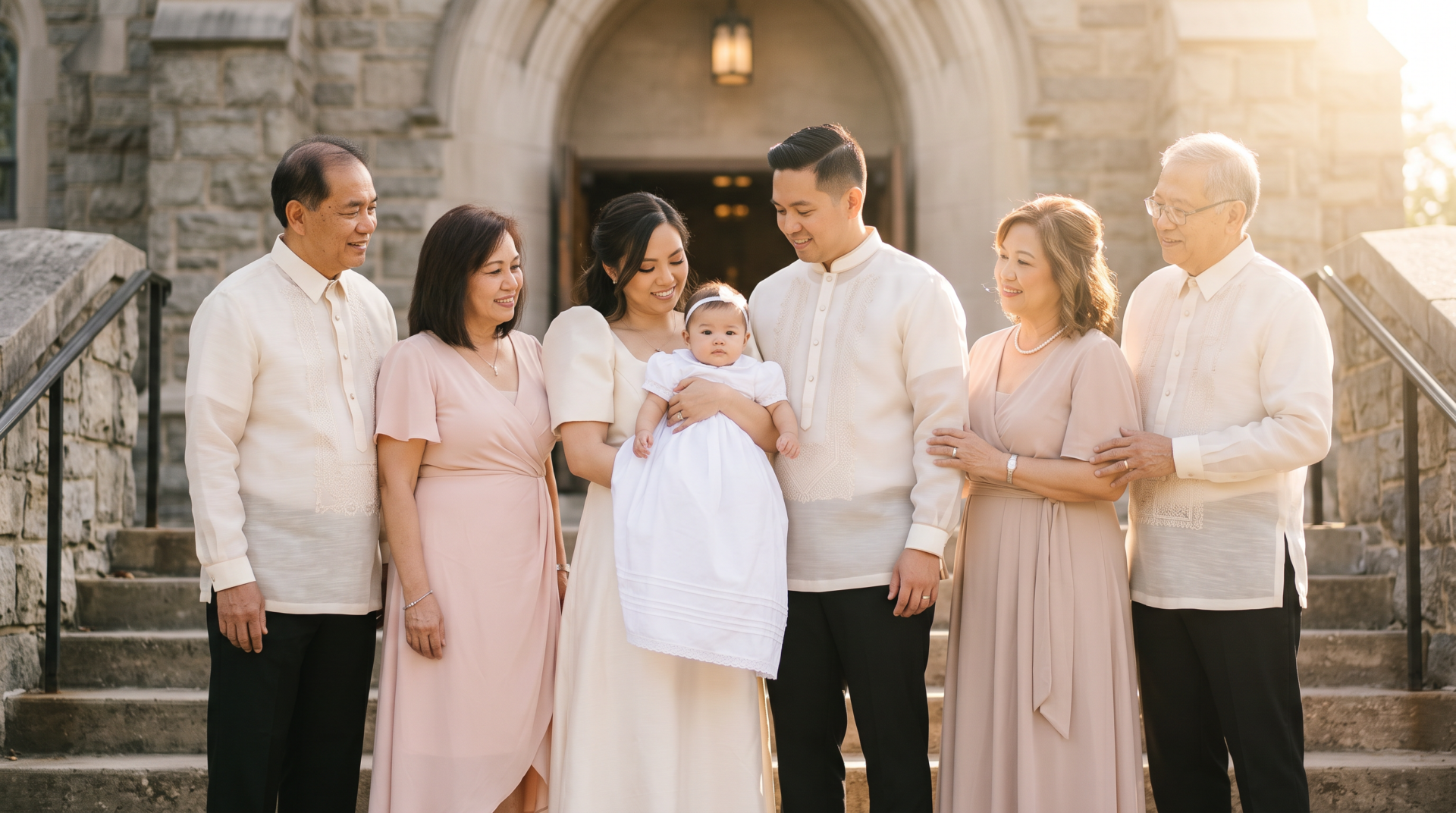
A Filipino baptism outfit carries real meaning. It welcomes a child into the family of faith, into the extended family of ninongs and ninangs, and into a long line of kapamilya who came before. This guide walks you through what the baby wears, what the parents and godparents wear, and how to choose pieces that feel right for the day.
What is a Filipino baptism, and why does the outfit matter?
In Filipino Catholic tradition, a baptism, or binyag, is one of the first major family gatherings a child will have. It is a sacrament, but it is also a homecoming. Grandparents fly in. Ninongs and ninangs are chosen with care. A meal is planned, sometimes for fifty people, sometimes for two hundred.
The outfit matters because the day is photographed, remembered, and often retold for years. Parents dress their child in white to mark the newness of baptismal life. The adults around the child dress with the same respect they would bring to a wedding. For many families in the United States, the baptism is also the first time the baby is seen by relatives back home through video, which raises the stakes gently but noticeably.
What are the Filipino baptism traditions American families still follow?
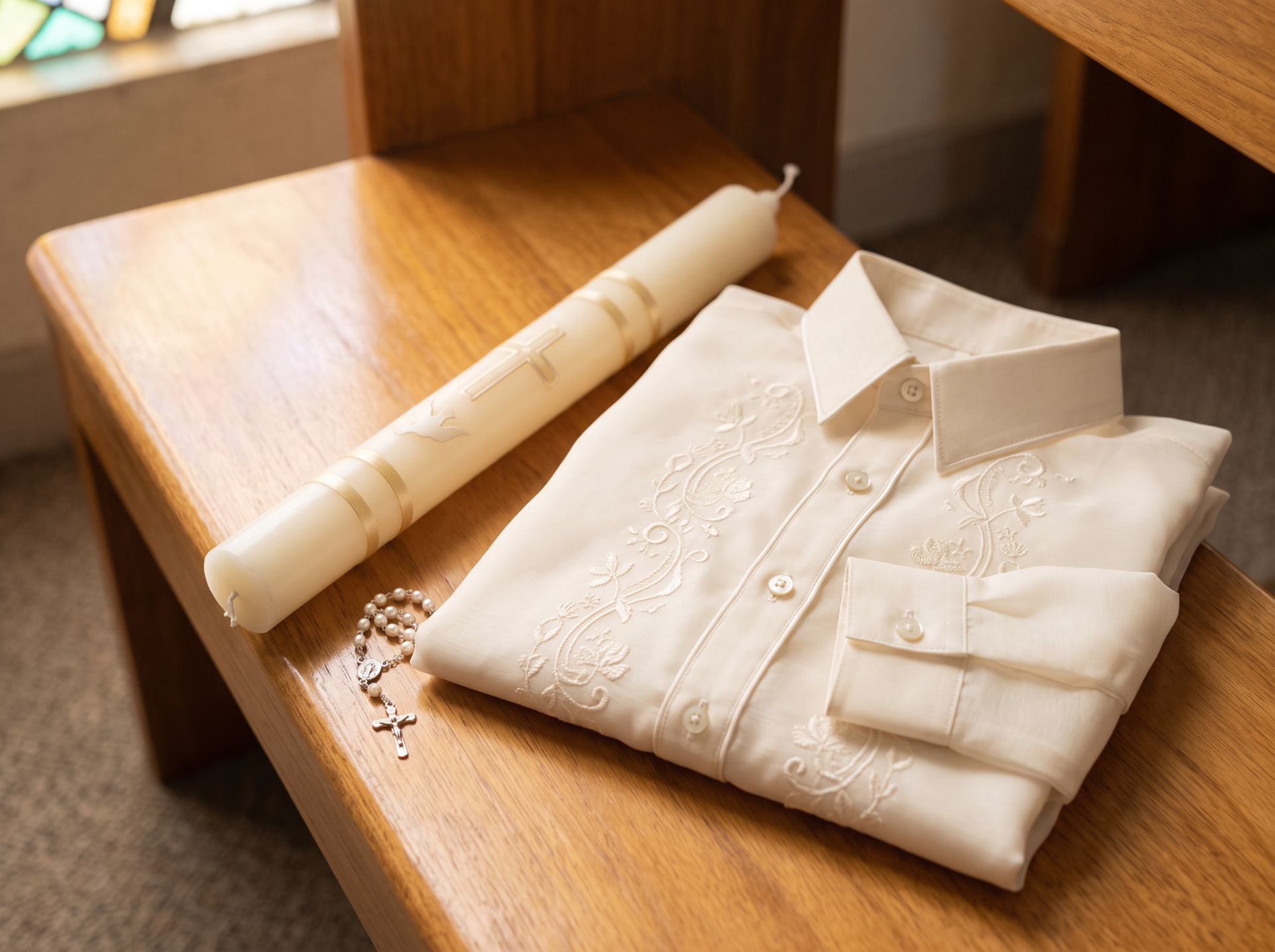
Most Filipino American families keep the core of the tradition even when they adapt the rest. The child is usually dressed in white. A baptismal candle is held by a ninong or ninang, and a white cloth, sometimes called the baptismal bib or stola, is placed on the child during the rite.
After the church ceremony, the family gathers for a meal. Godparents give pabaon, a small gift or envelope, to the child. Older relatives may pin money to the child’s outfit during a short dance at the reception, a practice families sometimes carry over from weddings. Padrinos and madrinas are not symbolic roles in Filipino culture. They are expected to be present at milestones for years to come, so the baptism is also when those relationships are formalized in front of the family.
The clothing choices tend to honor two things at once. The sacrament, which calls for modesty and white on the child. And the family, which calls for Filipino heritage dress on the parents and often the godparents too.
What should the baby wear to a Filipino baptism?
For girls, families often choose a white baptismal gown, sometimes long, sometimes shorter and paired with a bonnet. For boys, the two common choices are a white christening suit or romper, or a baby barong tagalog worn over a white shirt and white shorts or pants.
The baby barong is the choice that reads most clearly as Filipino. It gives the child a visual link to the father, the ninongs, and the lolos in the room, who are often wearing a barong themselves. Many families like the symmetry of a photo where three generations of men are in barong and the baby is the youngest in the line.
Whatever you choose for the baby, keep two practical things in mind. The church portion is short, usually under an hour, but the baby will be held, passed, and sometimes anointed with oil on the forehead and chest. Pick something that opens easily and will not stain in a way you cannot fix.
Choosing the best fabric for a baby barong baptism outfit
A baby barong needs to do three things. It needs to look like a real barong in photos. It needs to feel gentle against new skin. And it needs to survive a long day that includes a bottle, a nap, and at least one grandparent who wants to hold the baby during the meal.
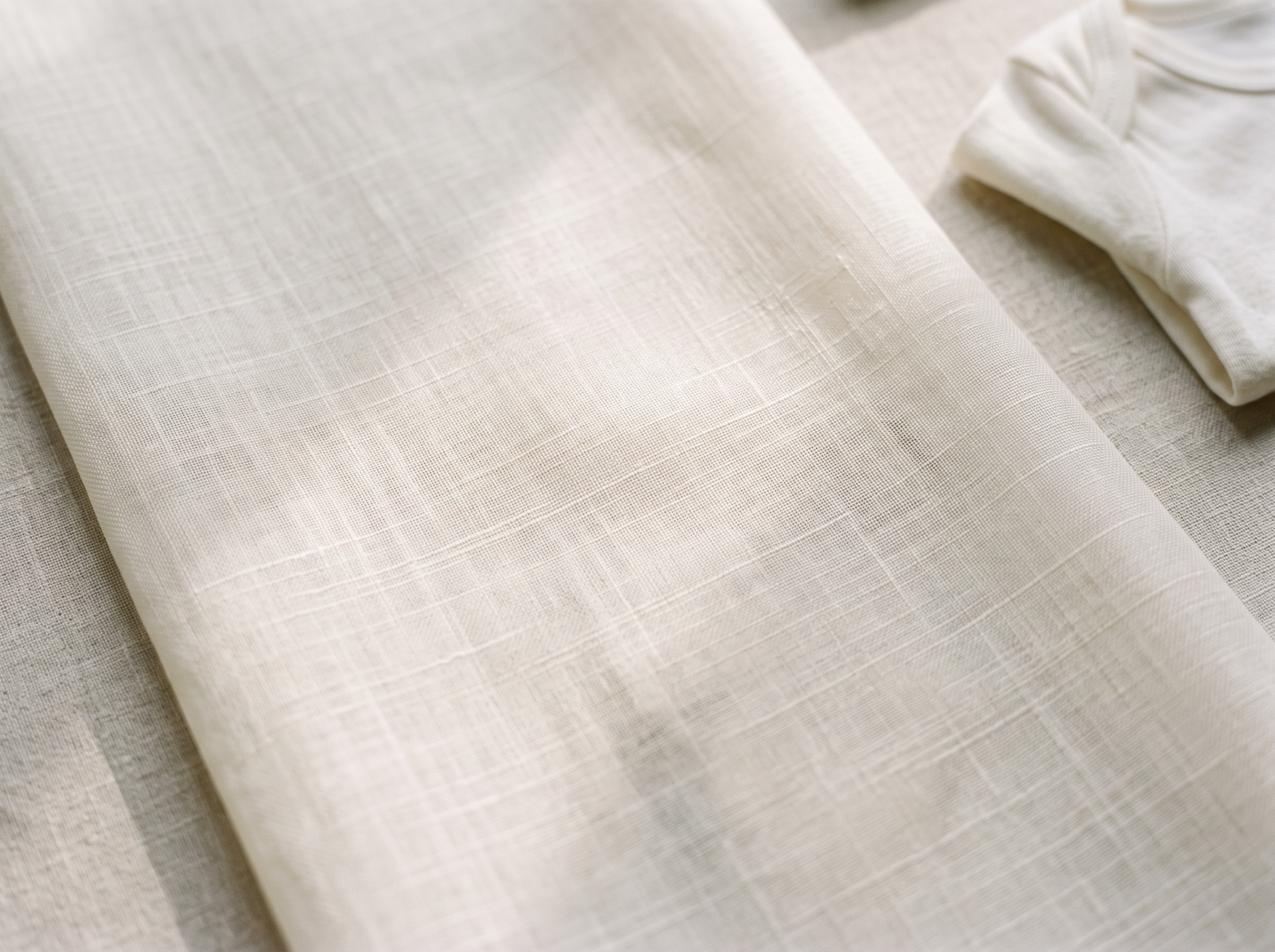
Lightweight, breathable fabrics are the safest choice. Babies run warm, and a baptism often means a warm church, warm arms, and warm sunlight for photos afterward. Look for a barong that feels soft to the touch on the inside, with no stiff seams along the neckline or underarms. A lining helps the garment hold its shape in photos without pressing texture into the baby’s skin.
Avoid anything that needs to be dry cleaned only if you can help it. Baptism outfits get spit up on. That is just the truth. A piece you can spot clean at home is the piece you will actually relax in.
For sizing, remember that Filipino sizing runs one step small compared to US sizing. If your baby wears 6 to 12 months in American brands, you will often want to size up when ordering from a Filipino maker. If you are between sizes, go up. A slightly loose barong photographs beautifully. A tight one does not.
What do the parents and godparents wear?
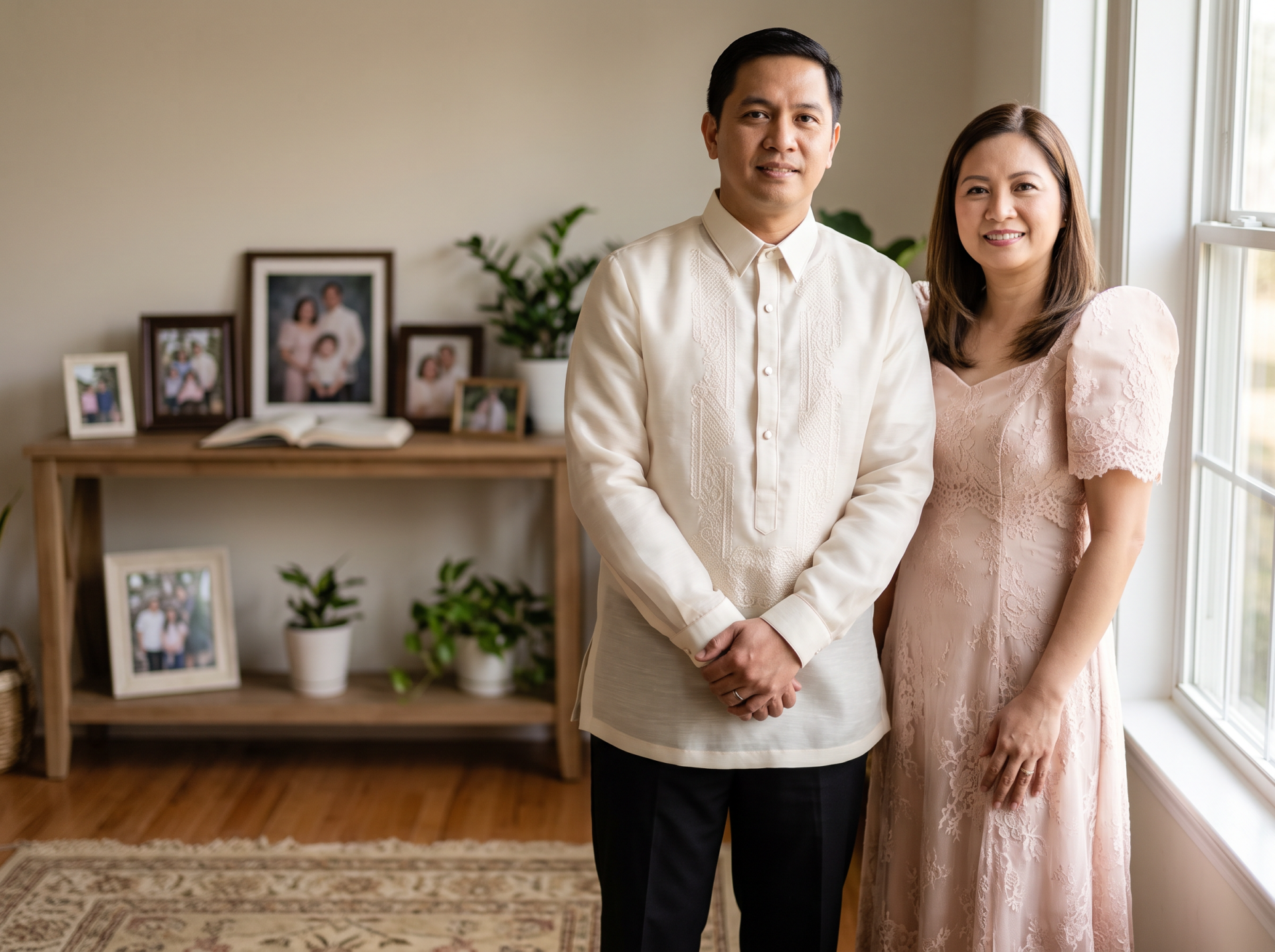
The father and the ninongs typically wear a barong tagalog. For a baptism, a classic long-sleeve barong in white or a soft neutral is the most traditional choice. Pair it with black dress pants and black leather shoes. A plain white undershirt is worn underneath. The barong is not tucked in.
The mother and the ninangs have more flexibility. A Filipiniana dress, whether a modern terno-inspired silhouette or a softer, more flowing gown, is appropriate and photographs beautifully next to the men in barong. Mothers often choose a dress in white, ivory, blush, or another soft tone that complements the baby’s gown without competing with it. Godmothers can wear a wider range of colors, though most families ask them to avoid pure white out of respect for the baby and the mother.
If you are coordinating a large group, pick one or two anchor tones and let everyone choose within that range. It reads more intentional in photos than a strict uniform.
Fit, fabric, and occasion: the practical checklist
A few things make the difference between an outfit that works and one that does not.
Fit. Barongs should sit at the hip, not the thigh, and the sleeve should end at the wrist bone. Filipiniana dresses vary more, but the shoulder line is the detail to check first. If the shoulder sits wrong, nothing else will look right. Order early so you have time to tailor.
Fabric. For a baptism, prioritize comfort for a long morning that often rolls into a long afternoon. Breathable, lightweight pieces travel better, wrinkle less in a car seat or garment bag, and photograph more softly in natural church light.
Occasion. A baptism is formal but not as formal as a wedding. You do not need the heaviest, most ornate piece in the collection. A clean, well-fitted barong and a graceful Filipiniana dress will carry the day.
Bringing it together
A Filipino baptism outfit is not about matching a trend. It is about dressing your child, and yourselves, in a way that honors where your family comes from on a day the family will remember. Choose pieces that feel like you, order early enough to adjust the fit, and give yourself room to breathe on the morning of.
When you are ready to look, our baptism and family occasions collection has baby barongs, men’s barongs, and Filipiniana dresses sized and styled for the day. Take your time with it.
Complete Your Ceremony Guide: Essential Filipino Formalwear & Styling Reads
To help prepare the entire family for milestone celebrations and ensure every heirloom piece is cared for, explore these related guides:
- The Ultimate Secret to Fitting a Filipino Bolero – Discover what a Filipino bolero is and how to style it. Learn sizing tips, layering ideas, and how to get the perfect Filipiniana jacket fit in the US.
- Filipino Debut Dress Code: Guest & Court of Honor Guide – Discover what to wear to a Filipino debut as a guest or Court of Honor member. Learn traditional Barong Tagalog rules, modern Filipiniana, and etiquette.
- Find Your Breathtaking Filipiniana Dress Near Me Now – Find the perfect Filipiniana dress near you with this US buyer’s guide. Learn about styles, US sizing, and how to shop online with confidence for any event.