

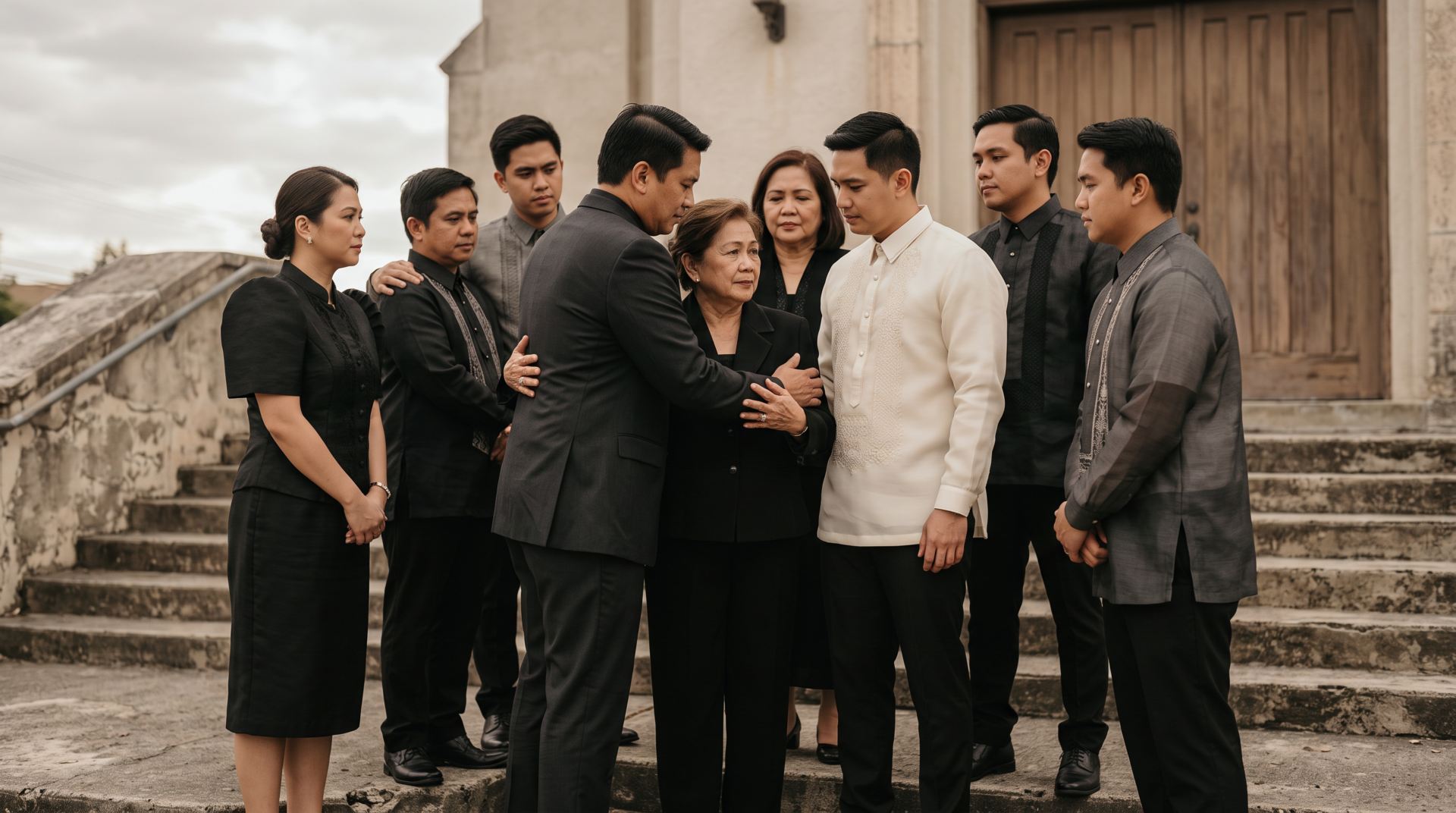
Funeral customs in Filipino culture carry deep meaning. From the nine-night prayer vigil called the *pabasa* to the final burial Mass, every part of the mourning process is shaped by family, faith, and community. Clothing is no different. If you are attending a Filipino wake or funeral and you are unsure what to wear, or if you are helping a loved one prepare, this guide will walk you through the expectations, the traditions, and the practical choices that show respect without causing stress.
Why Clothing Matters at a Filipino Funeral
In Filipino society, funerals are not quiet, private affairs. They are communal gatherings that can last for several days, drawing extended family, old friends, coworkers, and neighbors. What you wear signals your relationship to the family and your respect for the deceased. Showing up underdressed can feel jarring to the bereaved family, while overdressing in the wrong colors or fabrics can send unintended messages. Getting it right is a small act of love.
The Color Question: Black, White, or Both?
If you are asking what Filipinos wear to funerals, the first thing most people think about is color. The short answer is that black is the safest and most universally accepted choice, especially in urban Filipino communities and among Filipino Americans attending services in the United States.
However, white also has a long history in Filipino mourning customs. In older provincial traditions, white was actually the primary color of grief, and you will still see it worn at wakes in some regions of the Philippines, particularly in Visayas and parts of Mindanao. Some families even request all-white attire for the burial itself.
A few things worth knowing about color:
- Black is the default for most modern Filipino funerals, whether held in the Philippines or abroad.
- White is acceptable and even preferred in certain regional and religious contexts. When in doubt, ask a family member.
- Dark navy, charcoal gray, or deep purple are generally considered appropriate if you do not have black available.
- Bright colors, prints, and anything festive should be avoided. This includes floral patterns, bold reds, and casual pastels.
- All-black accessories are not strictly required, but they help keep the overall look respectful and understated.
What Men Typically Wear
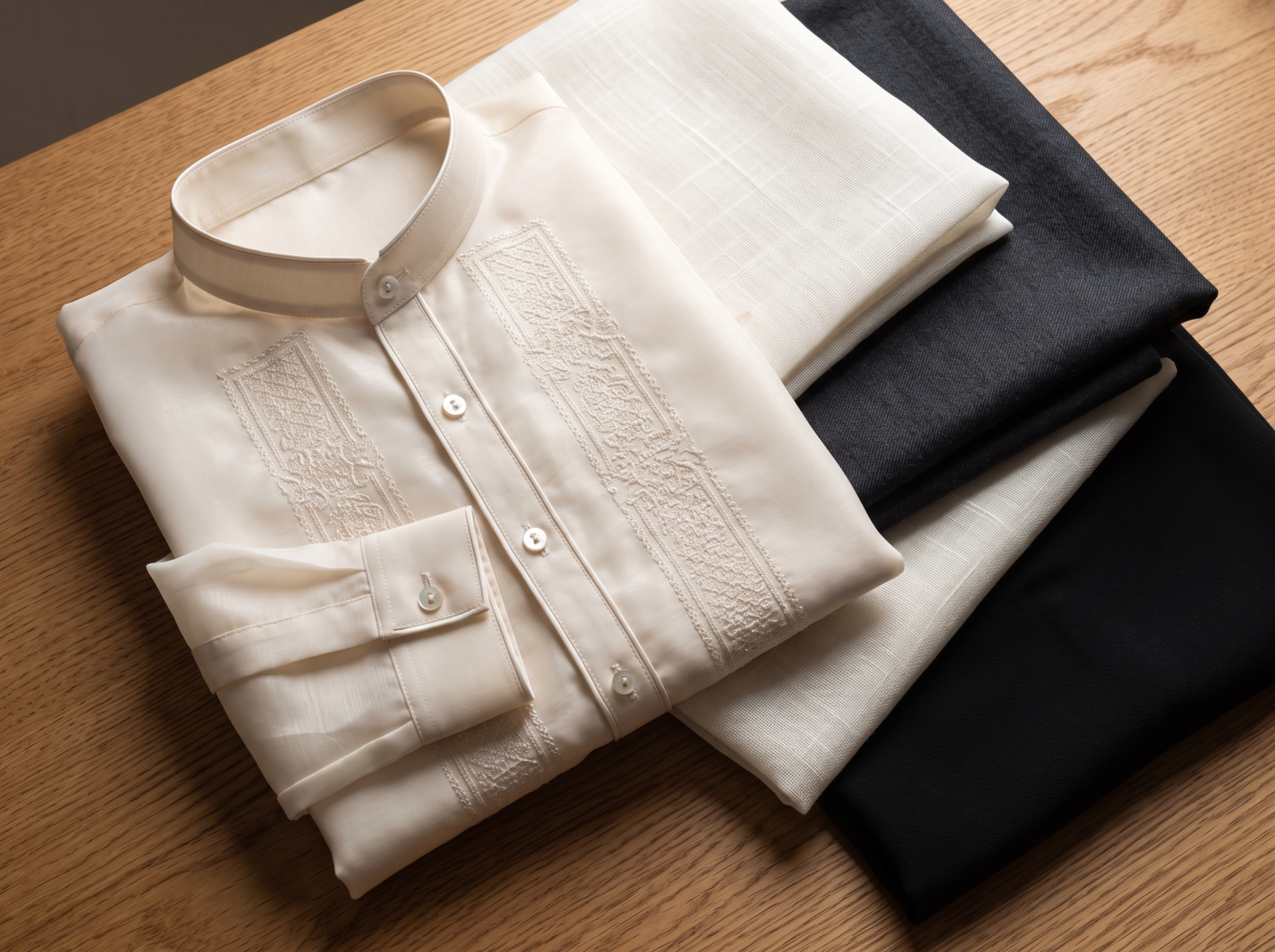
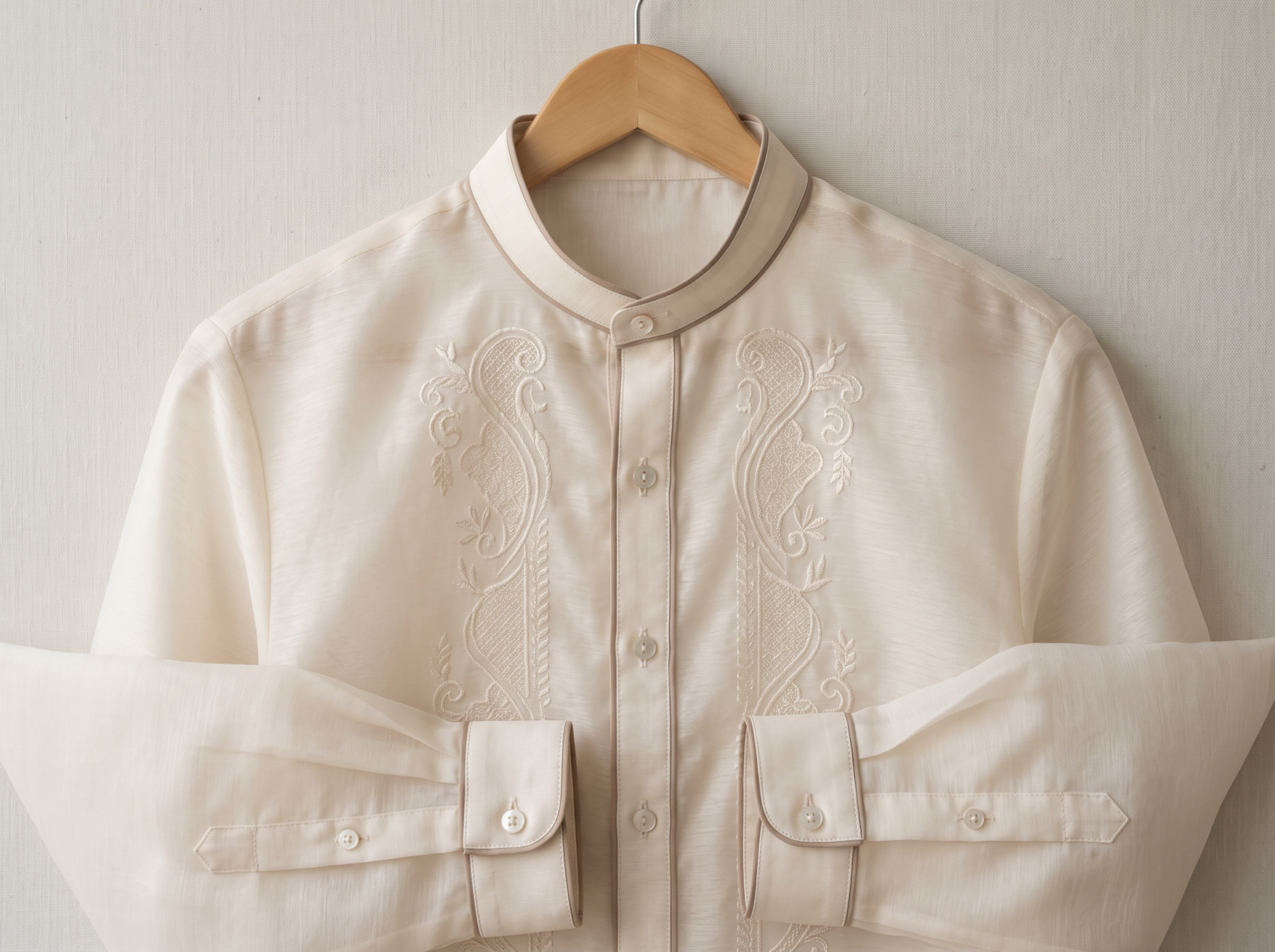
For Filipino men, the *barong tagalog* is a deeply respected choice for formal occasions, including funerals. The barong is the traditional Filipino formal shirt, usually made from delicate fibers like piña (pineapple fiber), jusi, or organza, and worn untucked over a plain undershirt. It is both culturally significant and visually elegant.
At a Filipino funeral, a barong tagalog in white or ivory is a common and honored choice, particularly for immediate family members. It communicates that the wearer is participating in a Filipino ceremony, not just a generic Western service. For non-family attendees, a black barong or a well-fitted dark suit works equally well.
If you choose a barong for a funeral, keep these points in mind:
- Pair it with black or dark slacks, never jeans.
- Wear a plain white or black undershirt underneath, since most barong fabric is semi-sheer.
- Keep accessories minimal: a simple watch, no flashy jewelry.
- Choose a barong with modest embroidery rather than heavily decorative designs.
- Make sure the fit is clean and the fabric is well-pressed.
Handmade barong tagalog pieces, like those crafted by small Filipino artisans, tend to have more refined embroidery and better fabric quality than mass-produced versions, which matters when you want to look genuinely respectful rather than just presentable.
What Women Typically Wear
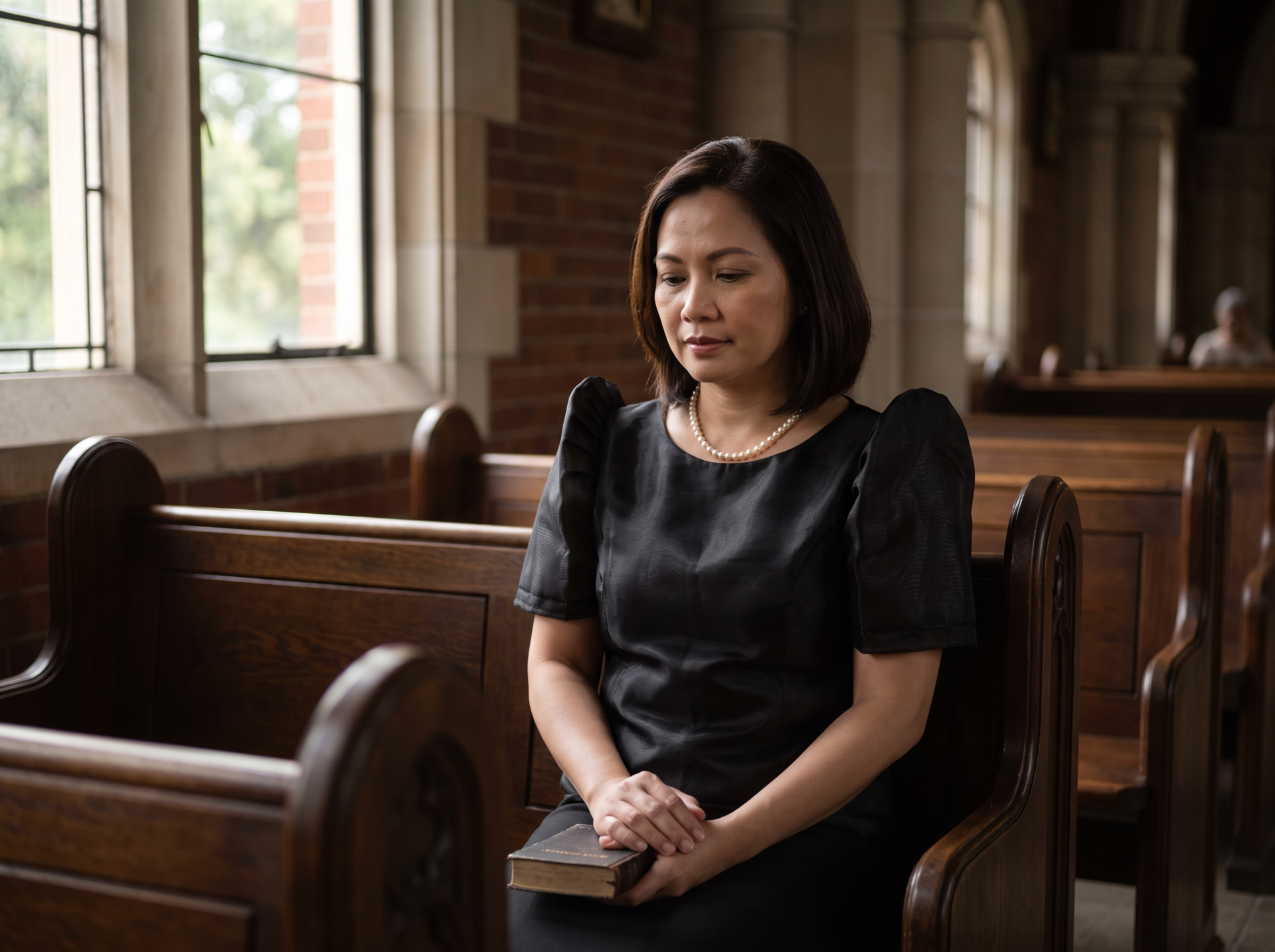
For Filipino women, funeral attire tends toward modest, structured formalwear in dark or neutral tones. A knee-length or below-the-knee black dress is the most common choice. Pantsuits in black or charcoal are also fully appropriate.
For those who want to honor Filipino cultural tradition, a *filipiniana* style blouse or a *baro’t saya* in black or white can be a beautiful and meaningful option. The filipiniana silhouette, with its butterfly sleeves and fitted bodice, is formal by nature and carries cultural weight without being showy. Many Filipino-American women choose this style specifically for funerals because it honors both their heritage and the solemnity of the occasion.
A few styling notes for women:
- Keep necklines modest and hemlines at or below the knee.
- Avoid open-toe shoes if the service is in a church or chapel.
- Simple jewelry is fine. Pearls, in particular, have long been associated with mourning in many cultures.
- A lightweight black cardigan or blazer is useful if the service moves between an air-conditioned chapel and an outdoor burial site.
- A *bolero* jacket over a filipiniana blouse works well for this purpose and keeps the look polished throughout a long service.
Regional and Generational Differences
It is worth acknowledging that Filipino funeral customs are not uniform. The Philippines has over 7,000 islands and dozens of distinct ethnic and linguistic groups, each with their own traditions around death and mourning.
In Ilocano communities, for example, mourning attire can be very strict, with close family members wearing black for an extended period after the burial. In some Cebuano families, white is the dominant color at the wake itself. Chinese-Filipino families may incorporate specific colors tied to Buddhist or Taoist mourning rites.
Generationally, younger Filipino Americans often follow general Western funeral dress norms (all black, business formal) while older relatives may expect more traditional choices. If you are unsure about a specific family’s expectations, it is always acceptable to quietly ask a close family member what the family prefers. They will appreciate the thoughtfulness.
Practical Tips Before You Get Dressed
Beyond color and style, there are a few practical details that can make a difference:
- Fabric matters. Philippine funerals, especially those held in the Philippines, can involve long hours in warm, humid conditions. Choose breathable fabrics like cotton, linen-blend, or lightweight jusi over heavy synthetics.
- Plan for a full day. Services often include a wake, a funeral Mass, and a burial. Wear shoes you can walk in comfortably, and dress in layers if you will be moving between air-conditioned and outdoor spaces.
- Err on the side of formality. If you are unsure whether something is too casual, it probably is. A Filipino funeral is a formal community event.
- Avoid strong perfume. Chapels and funeral homes are small, enclosed spaces with many mourners. Keep fragrance minimal.
- Children can wear white or light gray in many Filipino families, since the expectation of strict mourning dress is often relaxed for young children.
A Quick Reference Checklist
Here is a simple checklist you can use when preparing for a Filipino funeral:
- Outfit color: black, white, dark gray, or dark navy
- For men: barong tagalog (white or black) with dark slacks, or a dark suit
- For women: modest black dress, filipiniana in black or white, or a dark pantsuit
- Footwear: closed-toe, low-key, appropriate for church
- Accessories: minimal, no flashy or festive pieces
- Fabric: breathable and comfortable for a full day
- Ask a family member if you are uncertain about color or formality expectations
Funeral attire in Filipino culture is ultimately about honoring the deceased and supporting the grieving family. When you take the time to dress appropriately, you are participating in a tradition of communal care that runs deep in Filipino life. Whether you choose a carefully selected barong tagalog, a classic filipiniana, or a well-fitted black suit, the intention behind your choice is what the family will remember most.
Further Reading: Explore More Filipino Heritage & Etiquette Guides
Preparing for a family service or looking for respectful formalwear options? Explore these related guides and collections:
- How to Find the Best Barong Styles: Complete Guide – Compare classic and modern barong styles. Learn how to choose the right cut, sleeve length, fabric, and US fit for weddings, baptisms, and formal events.
- How to Find the Best Filipiniana Dress: Complete Guide – Shop for a Filipiniana dress with confidence. Explore traditional terno sleeves, modern silhouettes, US sizing conversions, and care tips for formal events.
- Choosing the Perfect Barong Fabric for Filipino Formalwear – Organza, Jusilyn, cocoon or cotton? How to choose a barong fabric by occasion, climate and fit, plus what piña and jusi mean (we don’t sell those).
- How to Wash a Barong Tagalog: The Expert Care Guide – Learn how to wash a Barong Tagalog safely at home. Step-by-step care for organza, Jusilyn, cocoon and cotton barongs, from washing and drying to ironing.
- Shop Barong Tagalog & Filipiniana Collections – Browse respectful white, ivory, and black Barong Tagalog and Filipiniana pieces ready to ship from our US store.