

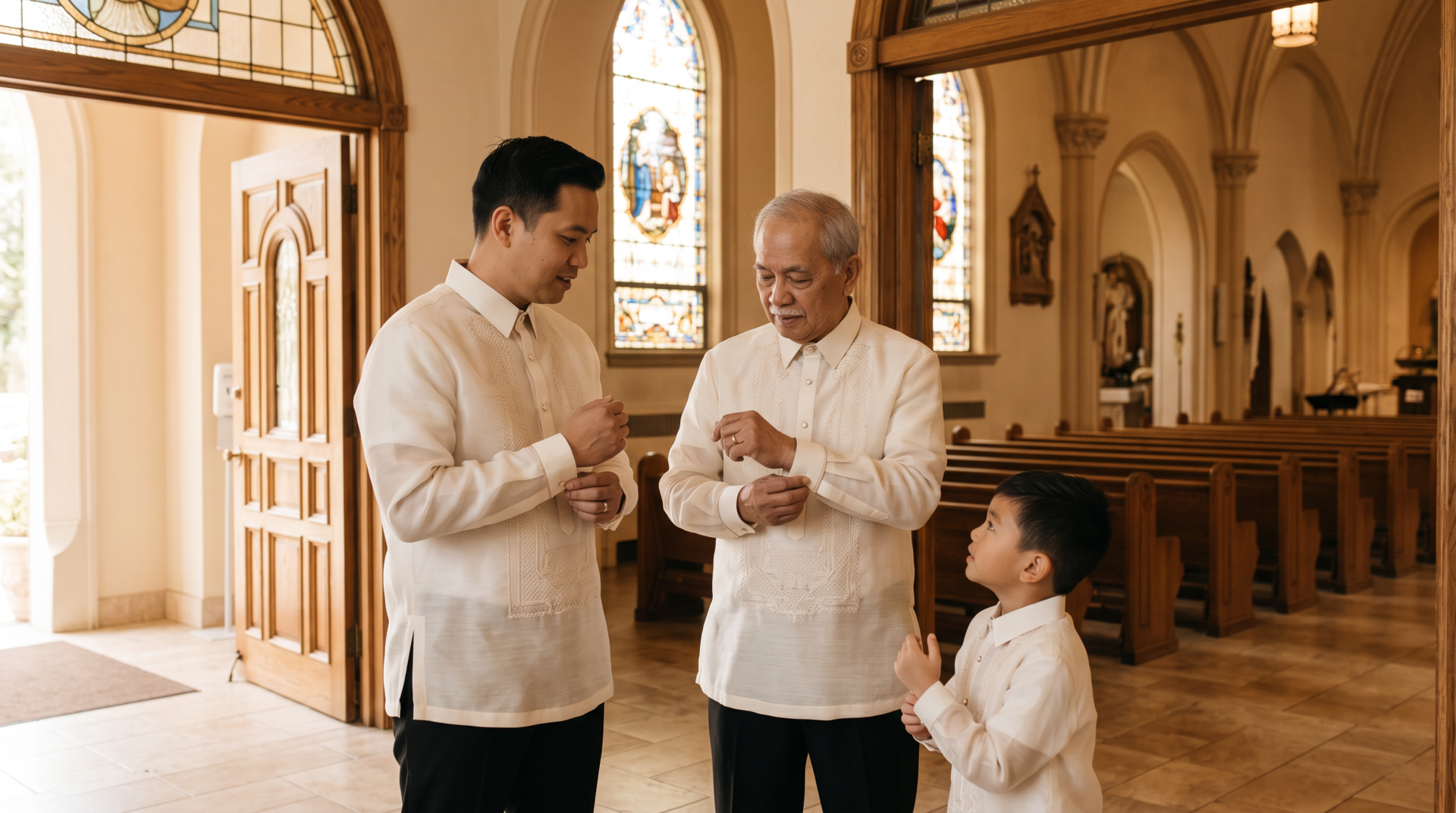
If you are researching barong styles for a wedding, a baptism, or a milestone family event, this guide walks you through the main cuts, sleeve lengths, and formality levels so you can choose with confidence. The barong tagalog is the national formal shirt of the Philippines, worn untucked over an undershirt, and it comes in more variations than most first-time buyers expect. Knowing the differences helps you pick one that fits the occasion and your role in it.
What are the main barong styles you should know?
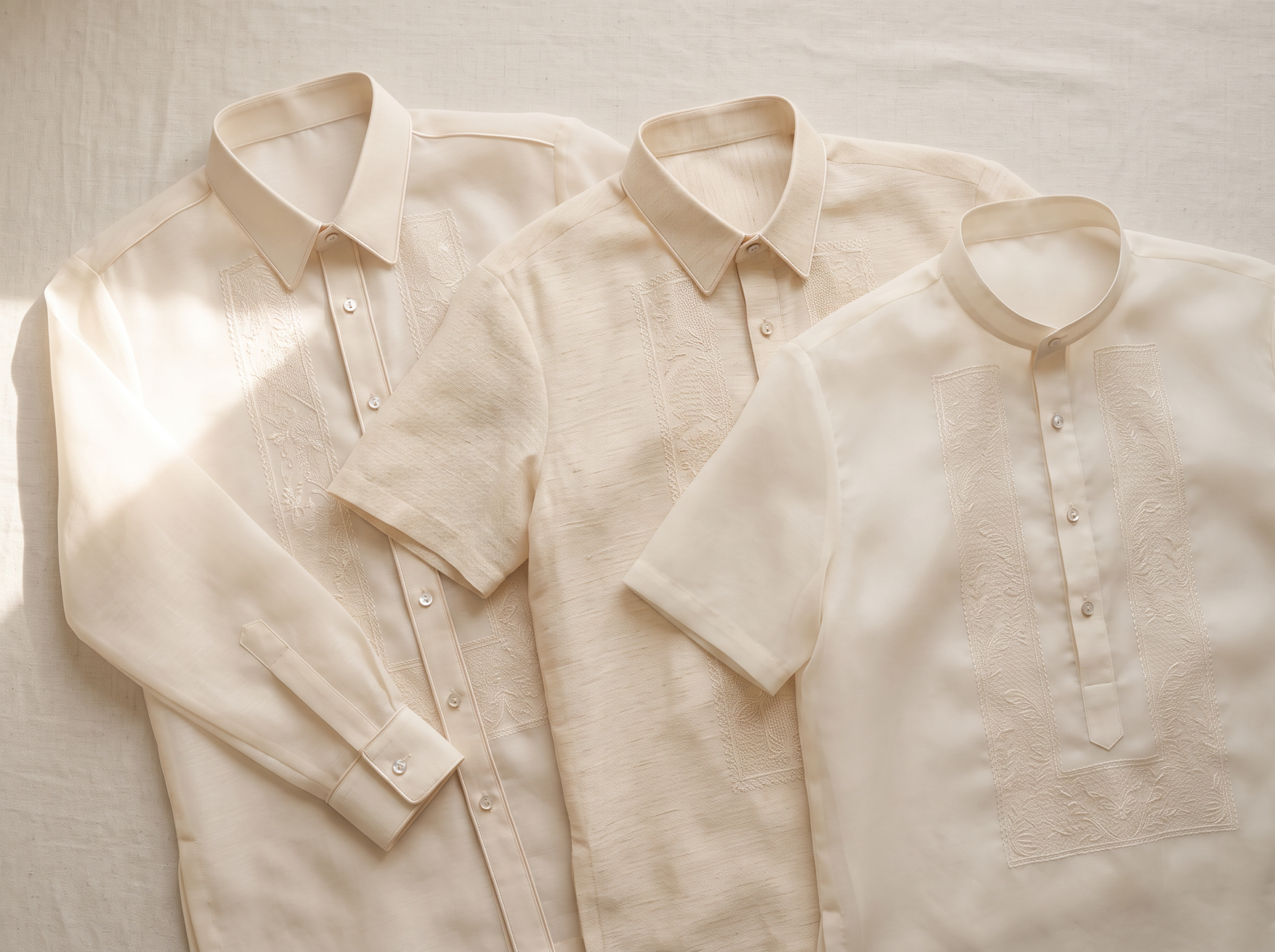
Most barongs you will encounter fall into a handful of recognized categories. The classic long-sleeve barong tagalog is the formal standard, worn for weddings, grand baptisms, and state occasions. It sits at the top of the formality scale and is what you will see on grooms, principal sponsors, and fathers of the bride.
The short-sleeve version, often called the polo barong, is the everyday cousin. It is appropriate for office wear, smart-casual gatherings, and less formal church events. It carries the same cultural weight as the long-sleeve but signals a lighter register.
Then there is the gusot mayaman style, named for its more textured, matte finish, and the barong chino, which swaps the traditional open placket for a mandarin collar and a pullover cut. Each of these answers a different need, and the right one depends on where you are wearing it and who else will be in the room.
How formal is a barong tagalog compared to a suit?
A long-sleeve barong tagalog is the Filipino equivalent of a tuxedo or a dark business suit. If an American wedding invitation says black tie, a formal barong tagalog is a culturally correct answer for a Filipino guest or member of the wedding party. You are not underdressed, and you are not in costume. You are in the formal dress of your culture.
For a semi-formal event, a lighter long-sleeve barong or a well-made polo barong works. For a casual family gathering, a polo barong with slacks or even dark denim reads as put-together without being stiff. The key is matching the sleeve length and finish to the weight of the occasion.
What are modern barong styles, and how do they differ from traditional ones?
Modern barong styles keep the silhouette of the traditional shirt but update the proportions. You will see slimmer sleeves, a shorter overall length that stops closer to the hip than the mid-thigh, and a trimmer body through the chest and waist. The embroidery placement is often more restrained, with the design concentrated on the chest panel rather than running the full front.
Traditional barongs, by contrast, favor a longer, roomier cut that drapes away from the body. The sleeves are fuller, the hem sits lower, and the embroidery can extend further down the placket. Older generations tend to prefer this cut because it reads as more formal and more rooted. Younger wearers often go slimmer because it photographs better and pairs more naturally with modern slacks and dress shoes.
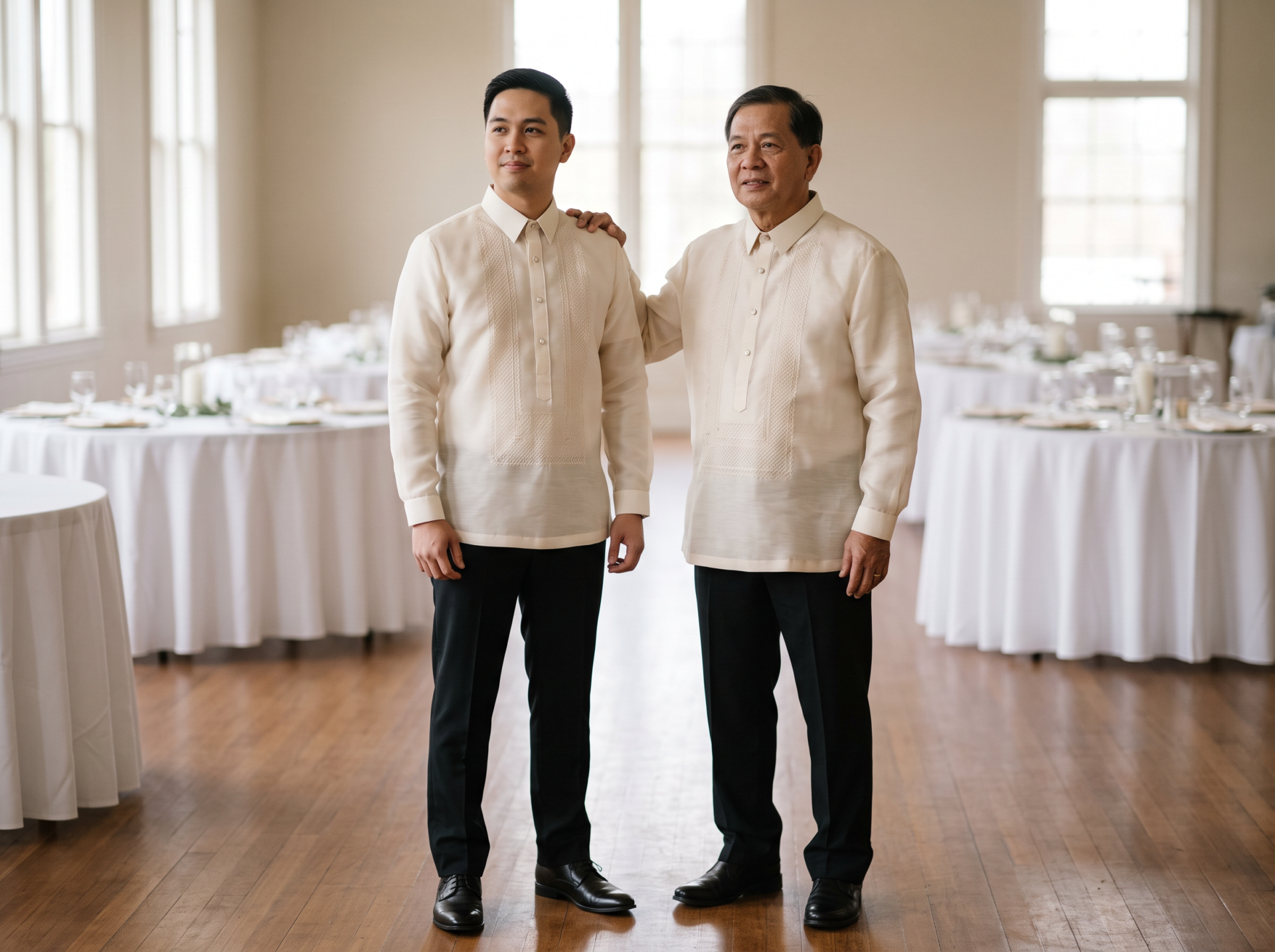
Neither is more correct. If you are the groom and your father is a principal sponsor, you might choose a modern cut for yourself and a traditional cut for him, and both will look right in the same photo.
Which barong style is right for a wedding?
For the groom, a long-sleeve barong tagalog with detailed hand embroidery is the standard choice. Many grooms choose a slightly more elaborate design than their groomsmen so the roles read clearly in photos. The groom’s barong is usually the lightest in color on the men’s side, with ivory, off-white, and cream being common.
For groomsmen and fathers, a long-sleeve barong in a coordinated but simpler embroidery works well. Principal sponsors, who hold a place of honor at Filipino weddings, typically wear formal long-sleeve barongs that match the dress code set by the couple.
For guests, a long-sleeve barong is safe for any formal Filipino or Filipino-American wedding. If the ceremony is on a beach or in a garden in warm weather, a polo barong is acceptable unless the invitation specifies otherwise.
Ring bearers and young boys in the entourage often wear scaled-down long-sleeve barongs that mirror the groom’s. This is one of the small details that makes a Filipino wedding feel cohesive.
What do you wear under a barong, and how should it fit?
A barong is worn over a plain white undershirt, called a camison or chamisa de chino. A crew neck undershirt is traditional. V-necks are acceptable but can show through the embroidered panel on lighter barongs, so crew neck is the safer choice.
On the bottom, wear dark dress slacks, usually black, with a leather belt and leather dress shoes. Black is standard for formal events. For less formal settings, dark navy or charcoal also works.
Fit matters more than most first-time buyers realize. The barong should skim the body, not cling to it. The shoulder seam should sit at the edge of your shoulder bone. The sleeves on a long-sleeve barong should end at the wrist bone, not past the thumb. The hem should fall somewhere between the top of your pants pockets and the middle of your seat, depending on whether you want a modern or traditional silhouette.
One note on sizing. Filipino sizing generally runs one step smaller than American sizing. If you normally wear a US large, you will often need an extra-large in a barong cut for the Philippine market. Check the measurements in inches before you order, and if you are between sizes, size up. A barong that is slightly roomy drapes correctly. A barong that is too tight pulls across the embroidery and looks wrong in photos.
How do you care for a barong before and after an event?
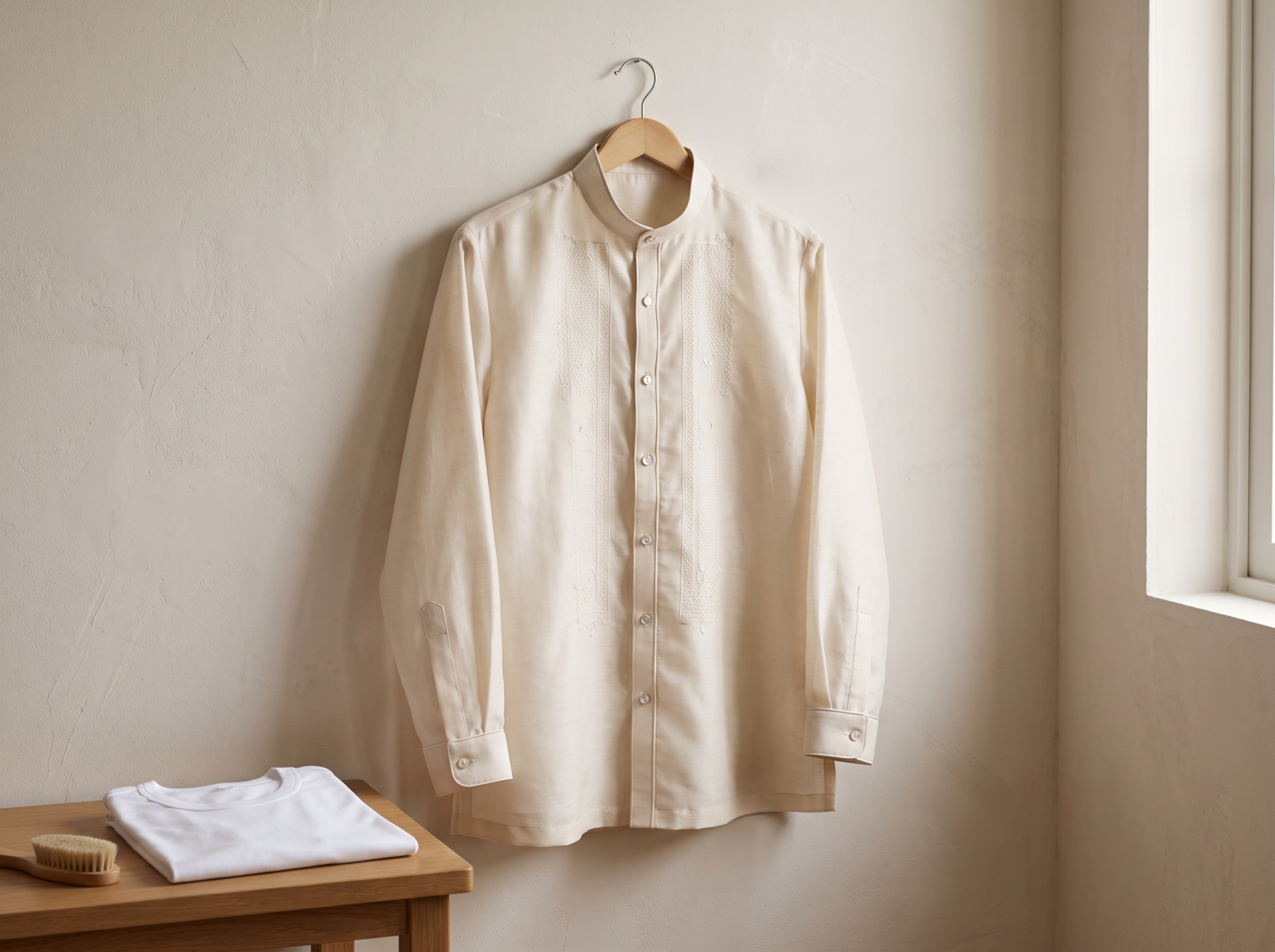
Store your barong on a padded hanger, not folded, so the embroidery does not crease. If it has been sitting in a garment bag, take it out the day before your event and let it hang so any travel creases relax.
Steaming is safer than ironing. If you must iron, use low heat and press from the inside, never directly on the embroidery. After the event, have the barong dry cleaned by a cleaner who has experience with delicate embroidered garments. Many pieces are passed down between generations when cared for this way.
Finding the right barong for your occasion
The barong you choose should match three things at once: the formality of the event, the role you are playing in it, and the way you want to carry yourself through the day. A guest at a garden baptism has different needs than a groom at a cathedral wedding, and both are served by this tradition.
If you are ready to look at specific cuts, our barong tagalog collection is organized by sleeve length and occasion so you can narrow in on what fits your event. Take your time, check the measurements, and reach out if you want a second opinion on sizing.
Complete Your Formalwear Guide: Related Styles & Heritage Reads
To help coordinate your entire entourage, compare fabrics, and maintain your piece, explore these related guides:
- How to Choose the Best Modern Barong Tagalog: Guide – Looking to buy a modern Barong Tagalog in the US? Discover expert tips on tailored fits, US sizing conversions, fabric choice, and wedding ordering timelines.
- What to Wear Under a Barong Tagalog: Undershirt Rules – Discover what to wear under a Barong Tagalog. Learn the rules for choosing the right Camisa de Chino, V-neck, or undershirt to master sheer fabrics.
- Filipiniana Dress Guide: A Simple Look at Heritage, Style & Elegance – Discover the ultimate guide to the Filipiniana dress! From classic Maria Clara styles to modern Ternos, explore top fabric choices, styling rules, and care.