The Renaissance of Philippine Heritage Wear
The international fashion landscape is undergoing a structural shift away from decorative excess toward intentional, value-driven self-expression. As global consumers embrace “quiet luxury,” a parallel movement is unfolding within the Filipino diaspora and domestic fashion scene. Traditional garments, once strictly reserved for formal occasions, weddings, and state ceremonies, are being refashioned for daily use. At the vanguard of this cultural renaissance is the evolution of the camisa blouse.
For decades, traditional Philippine dress for women evoked images of heavily starched fabrics, towering butterfly sleeves, and dense floral beadwork demanding rigid posture. However, in 2026, the overarching theme dictating Filipino style centers on modern minimalist Filipiniana. Modern women are asserting a collective demand for garments that respect cultural history while accommodating the kinetic needs of contemporary urban life.
The historical camisa—the loose, diaphanous blouse forming the structural core of the baro’t saya and the Maria Clara gown—has broken free from historical stiffness. In its place stands a versatile, highly sophisticated separate synthesizing fluid minimalist tailoring with the unique textures of indigenous Filipino craftsmanship. This analysis explores the historical trajectories, technical innovations, textile dynamics, and styling architectures defining camisa Filipina trends in 2026.
Historical Foundations: The Origins and Metamorphosis of the Camisa
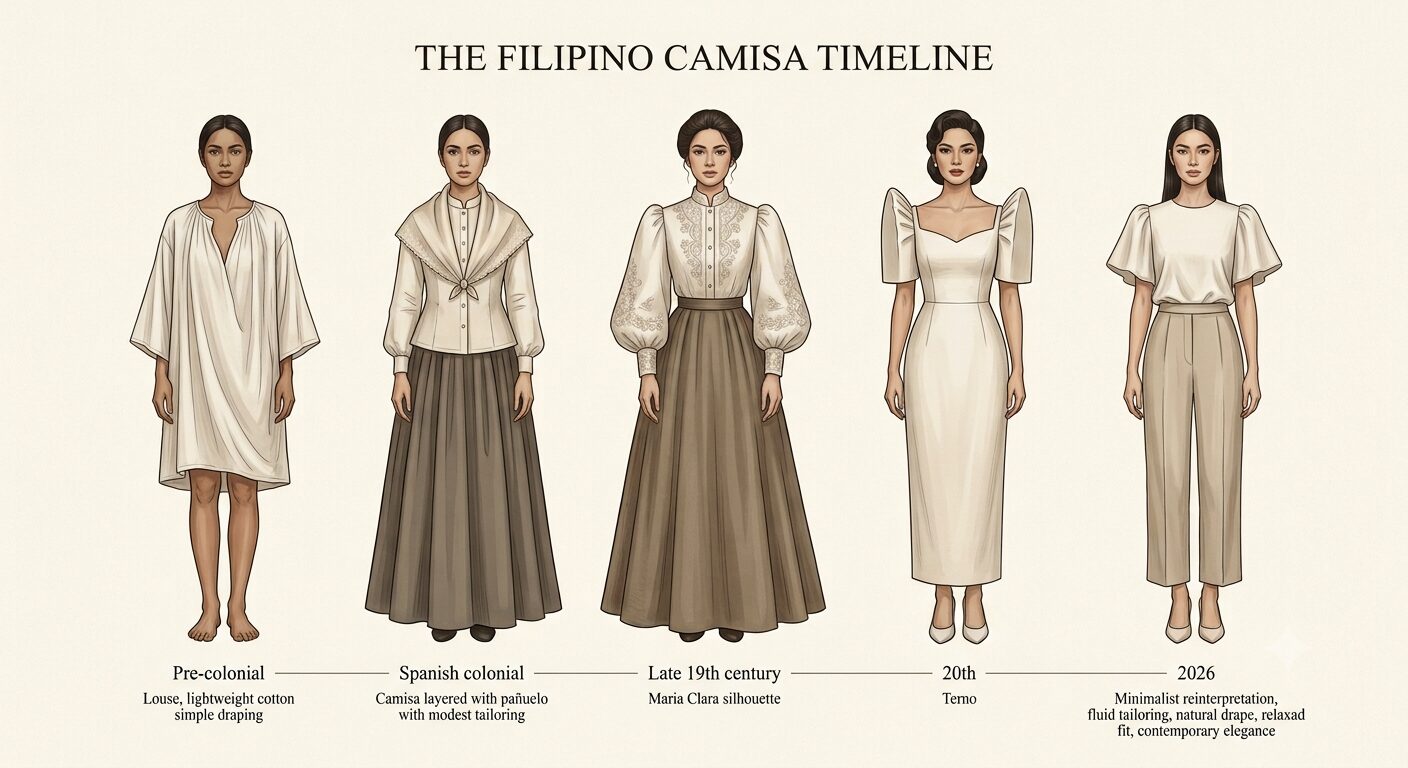
To appreciate modern minimalist Filipiniana, one must understand the evolution of its structural anchor: the camisa. Long before Western contact, women across the Philippine archipelago wore loose, unstitched garments engineered precisely for tropical heat and humidity.
Pre-Colonial Practicality: The Baro and Badu
In the pre-Hispanic era, daily wear for women across Tagalog and Visayan regions consisted of a simple, rectangular blouse known as the baro or badu. Made from coarse local plant fibers or processed tree bark, these short tunics covered the torso, leaving the midriff partially exposed, paired with a wrap-around skirt called a tapis. Jesuit missionaries, such as Francisco Ignacio Alcina in his 1668 records (Historia de las Islas e Indios de Bisayas), documented that these original tops prioritized maximum ventilation, allowing women to move unhindered through agricultural and maritime landscapes.
Colonial Intervention and the Birth of the Baro’t Saya
The arrival of Spanish colonizers in the late 16th century triggered a forced transformation in native dress. Scandalized by translucent textiles, Spanish clergy enforced European modesty codes. Native women were compelled to cover their torsos more comprehensively, giving rise to the baro’t saya (blouse and skirt).
To satisfy Catholic modesty and tropical survival, the camisa (the Hispanicized term for baro) evolved into a loose, wide-sleeved blouse. It was layered with an alampay or pañuelo—a stiff, triangular shawl draped over the shoulders to obscure the chest—while a darker, heavier tapis was wrapped over the voluminous saya skirt.
The 19th-Century Traje de Mestiza and Maria Clara
As the Manila Galleon Trade introduced fine Chinese fabrics and European lace, the camisa became a marker of social hierarchy. By the 19th century, elite women (illustradas and mestizas) developed the traje de mestiza and the iconic Maria Clara ensemble—named after the heroine of Dr. José Rizal’s novel Noli Me Tángere.
During this golden age of Philippine textile artistry, the camisa was elevated through key construction techniques:
- Fabric Refinement: Woven from delicate nipis (sheer) textiles, mostly piña (pineapple-leaf fiber) or soft jusi. We don’t sell piña or jusi; most of our Filipiniana blouses, boleros and dresses are polyester organza.
- Sleeve Volume: Influenced by Victorian fashion, sleeves widened into bell, pagoda, and leg-of-mutton shapes, starched with local root crops to maintain open volume and circulate cool air.
- Artisanal Surface Manipulation: Surfaces were decorated with delicate embroidery and specialized sombrado (shadow appliqué) techniques to project status and refined cultural identity.
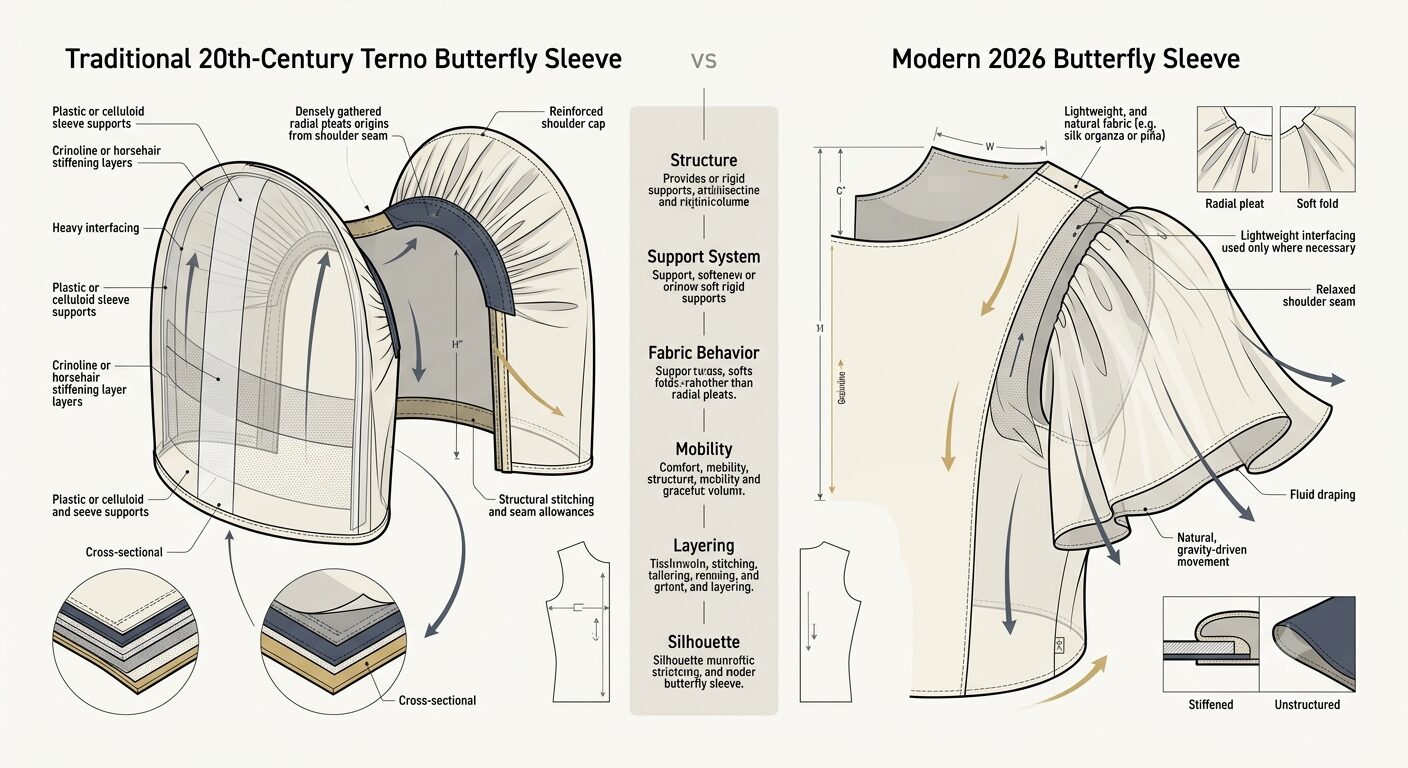
At the dawn of the 20th century, the traje de mestiza streamlined under American influence. National artists like Ramon Valera eventually synthesized the baro’t saya into a single garment, removing the pañuelo and fixing the sleeves into the flat, rigid, arched structures known today as classic terno sleeves.
The 2026 Shift: The Rise of Filipina Quiet Luxury Style
Today, the traditional camisa is shedding its historical rigidity for an elegant dialogue between historical nostalgia and future utility. Modern minimalism in 2026 centers on textured neutrals that offer depth, touch, and historical intent.
The concept of Filipina quiet luxury style leverages this structural shift. Rather than displaying wealth through massive silhouettes or blinding crystals, the 2026 look communicates authority through pristine tailoring, premium raw materials, and clean lines. This addresses a long-standing challenge: the isolation of heritage garments inside ceremonial closets. By embracing minimalism, the camisa transitions from an annual costume into a core component of a high-functioning capsule wardrobe.
Key Design Anatomy of the Modern Minimalist Camisa
The camisa Filipina trends in 2026 are defined by four distinct characteristics:
- Cleaner Lines and Refined Silhouettes
Boxy, rigid bodices are replaced with fluid tailoring that flatters the natural form without constricting movement. Modern camisa blouses use strategic darts, relaxed panels, and drop-shoulder seams to present a sleek look that sits effortlessly on the frame.
- Softer, Deconstructed Butterfly Sleeves
The defining breakthrough of 2026 is sleeve deconstruction. While the iconic silhouette remains recognizable, designers have reduced volume and eliminated stiff backing materials. The deconstructed butterfly sleeve features a softer structure, allowing fabric to cascade naturally down the arm. Wearers can move freely, fit easily into a modern blazer, and sit comfortably in standard workspace seating.
- Minimalist and Strategic Embroidery
Heavy floral stitching has given way to minimalist layouts. Designers apply embroidery selectively along a single placket, subtle cuffs, or tonal geometric motifs inspired by indigenous pre-colonial patterns. Techniques like calado (open-thread openwork) and sombrado create texture through negative space rather than heavy thread buildup.
- Textured Neutrals and Soft Pastels
In contrast to bright ceremonial whites or deep jewel tones, the 2026 palette favors warm, earthy colors and muted pastels. Cream, warm beige, stone gray, sand, blush pink, sage green, and dusty blue dominate the market, allowing the camisa to coordinate effortlessly with Western separates like raw denim, wide-leg trousers, and structured pencil skirts.
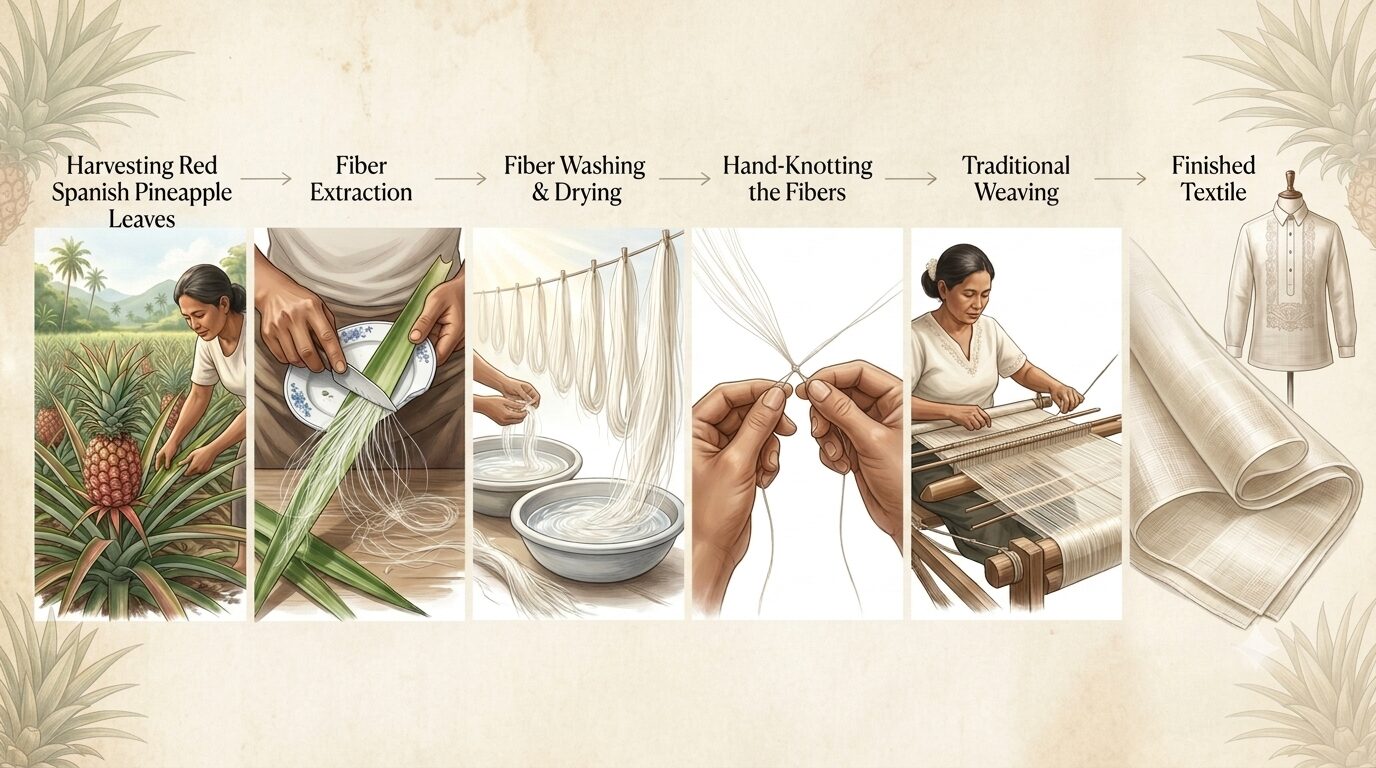
The foundation of high-quality modern minimalist Filipiniana is a fabric that is light, comfortable and simple to care for, so the camisa gets worn often, not just once a year.
Polyester Organza
Most of our Filipiniana blouses, boleros and dresses are polyester organza. It is light, with a soft sheen and a gentle sheerness that echoes the traditional camisa. Unlike stiff, starched fabrics, it lets a softened butterfly sleeve fall naturally down the arm.
Built for Everyday Wear
Because organza is light and holds its shape, a camisa made from it moves easily from a morning meeting to a dinner out. That makes it an easy pick for an office wear Filipiniana blouse.
Easy Care for a Busy Life
To fit the fast-paced lifestyle of the global diaspora, a modern camisa should travel well and stay simple to look after. Organza keeps the sheer look of traditional textiles while being easy care, so your camisa is ready for the next event.
The Hands Behind the Embroidery
Embroidery is where Philippine craft lives on in the modern camisa. Towns like Lumban, Laguna are known for generations of master embroiderers. Every piece we sell is hand-embroidered by artisans in the Philippines, so choosing modern minimalist Filipiniana helps keep that skill alive.
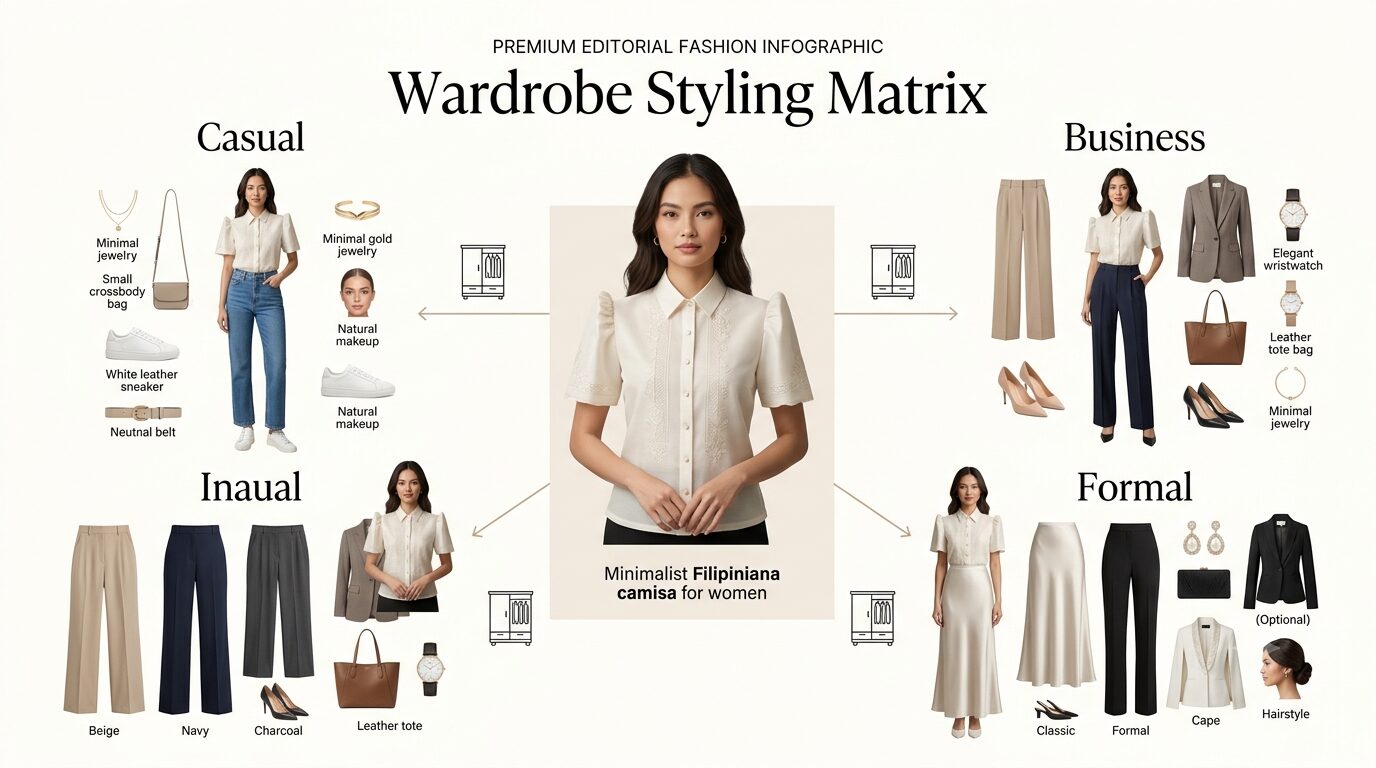
The defining feature of the everyday Filipiniana fashion movement is multi-functional versatility:
- The Casual Chic Blueprint: Pair a cream or warm sand organza camisa with mid-rise, straight-leg denim. The structure of relaxed butterfly sleeves contrasts nicely with raw indigo denim. Finish with sleek ballet flats or leather driving loafers and a structured handbag.
- The Corporate Power Tailoring Paradigm: As a cultural alternative to the white button-down shirt, tuck a minimalist embroidered camisa into high-waisted wide-leg wool trousers or a column skirt. Layer under an unbuttoned boyfriend blazer to frame delicate collar lines.
- The Semi-Formal Gala Elevation: Secure an artisanal metallic brooch at the collar of a sheer organza camisa to introduce personal storytelling. Pair with a satin midi skirt, architectural jewelry, and classic South Sea pearls for balanced cultural pride and sophisticated style.
Fabric Care Guide: Preserving Artisanal Masterpieces
To ensure longevity across generations, follow these care steps for embroidered Filipiniana:
- Hand Washing: Hand wash to protect the embroidery, even on easy-care organza. Submerge in lukewarm water mixed with a mild, pH-neutral baby shampoo or gentle detergent. Agitate gently without rubbing or wringing the fabric.
- Stain Mitigation: Gently dab spot stains using a soft microfiber cloth saturated with cold water and mild soap. Avoid harsh chemical detergents or bleaching agents.
- Drying: Air dry flat on a clean white towel or hang on a padded hanger out of direct sunlight. Never use a mechanical dryer.
- Ironing: Iron while slightly damp using low-to-medium heat. Always place a clean cotton pressing cloth between the iron and heritage fabric to protect detailed embroidery.
- Storage: Store in a cool, dry, well-ventilated space away from direct sunlight. Use wide, padded fabric hangers or store flat inside a breathable cotton garment bag.
Conclusion: Wearing Philippine Heritage with Confidence
The evolution of the camisa blouse is a case study in cultural resilience and design innovation. By embracing modern minimalist Filipiniana, designers have transformed a historical garment into a versatile staple for the modern wardrobe. In 2026, wearing a camisa is a conscious embrace of sustainable luxury, artisanal preservation, and personal cultural pride.
Shop the Heritage: Explore Our Collections
Ready to bring the modern minimalist aesthetic into your wardrobe? Experience the perfect fusion of tradition and contemporary elegance:
- Discover our curated Modern Filipiniana Collection featuring minimalist tops and dresses designed for the modern woman.
- Layer your outfit with an elegant, sheer Embroidered Organza Bolero for everyday utility or special events.
- Ensure a perfect, tailored fit by consulting our official Size Chart before placing your order.
Explore More Guides from the Heritage Fashion Desk:
- Rites & Ceremonies: Filipino Wedding Traditions: A Beautiful Guide to Rituals & Meaning
- Fabric Guide: Barong Tagalog Style Guide (USA): How to Choose & Wear
- Barong Heritage: Barong Tagalog Guide: A Powerful Journey to Modern Elegance