

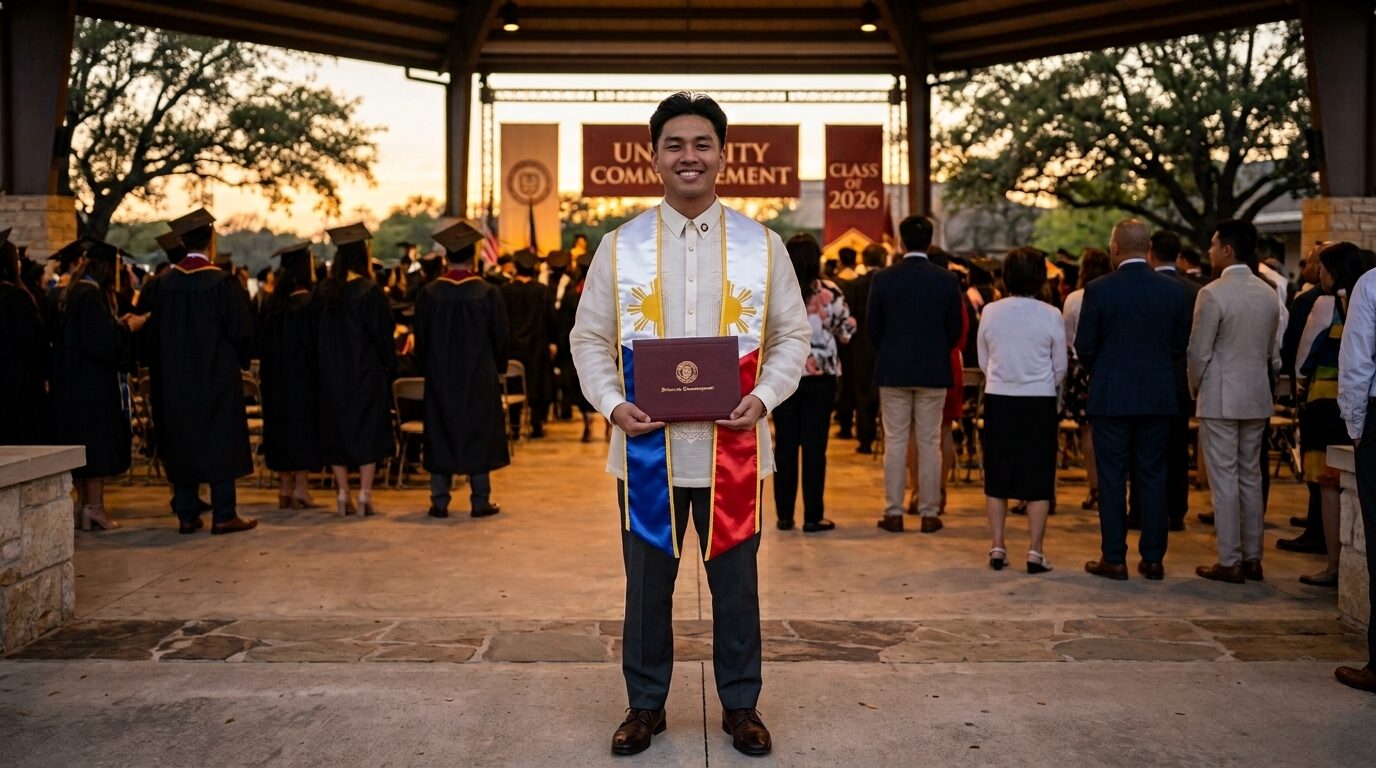
Introduction: Reclaiming Tradition on Commencement Day
Walking across the stage in a Barong or Filipiniana top under your cap and gown is a proud nod to the sacrifices your family made, bridging ancestral roots with modern academic triumph. For countless Filipino and Filipino-American students—whether crossing the stage after years of intense study in nursing, medical school, law school, or undergraduate programs—commencement day is much more than just a ceremony. It is a profound milestone that marks the culmination of late-night study sessions, financial hurdles, and generational resilience.
While standard polyester academic gowns and mortarboard caps are typical fixtures of Western graduation ceremonies, opting for a traditional graduation barong tagalog or a stunning filipiniana graduation dress allows students to inject deep cultural meaning into their big day. Wearing these hand-crafted garments transforms a standard milestone into a vibrant celebration of identity, paying homage to the motherland while standing out with elegance and grace. This comprehensive editorial guide explores everything you need to know about styling, sourcing, and respecting traditional Filipino attire for your upcoming commencement day.

Why Traditional Attire Matters for Modern Graduates
Reclaiming Identity Across the Global Diaspora
For second- and third-generation Fil-Am students, cultural connection can sometimes feel distant, bridged primarily through family gatherings, comfort food, and shared oral histories. Wearing a filipino cultural graduation attire piece on commencement day serves as a powerful bridge to that heritage. When you stand before your peers, professors, and family members wearing a garment hand-embroidered by local artisans back in the Philippines, you are wearing history. You are reminding the crowd of your origins, honoring parents or grandparents who migrated across oceans, and displaying a sense of unshakeable pride in your identity.
Breaking Away from Monotonous Academic Robes
Standard academic regalia is designed for uniformity, often reducing graduating classes into a sea of identical black or navy polyester robes. By incorporating traditional elements—such as a sheer, meticulously embroidered Barong Tagalog for men or a structural modern terno top for women—graduates break the monotony of the standard dress code while remaining fully compliant with university rules. Furthermore, a barong is light and airy, which keeps you comfortable under heavy academic hoods during long, warm outdoor graduation ceremonies.
The Historical Evolution of Graduation Barongs and Filipiniana
The Resilient History of the Barong Tagalog
The Barong Tagalog is far more than a formal shirt; it is a walking testament to Filipino history. Originating from the pre-Spanish era canga, the garment transformed during Spanish colonization when native indios were legally required to wear their shirts untucked and undeclared to distinguish them from the ruling class. Rather than accepting this suppression, Filipinos subverted the decree. They transformed the untucked silhouette into an exquisite symbol of elegance, eventually adopting it as a badge of national identity and resistance during the revolution against Spanish rule. Today, wearing a graduation barong tagalog connects the wearer directly to centuries of national pride, artistic craftsmanship, and dignity.
The Evolution of the Filipiniana and Modern Terno
Similarly, female formalwear has undergone a breathtaking evolutionary journey. From the modest pre-colonial baro’t saya—comprising a lightweight blouse and a wrapped skirt—to the opulent Maria Clara gowns of the Spanish era, Filipino women’s attire has always balanced modesty with striking artistic expression. In the mid-twentieth century, National Artist Ramon Valera revolutionized women’s fashion by stripping away restrictive undergarments and streamlining the voluminous silhouette into the modern terno, featuring iconic, upright butterfly sleeves. Today’s modern adaptations honor these rich historical roots while offering modern cuts that align seamlessly with contemporary fashion trends. To explore how these historical silhouettes influence everyday wardrobe choices, check out our insights on How to Style Modern Filipino Fashion with Heritage Influence.
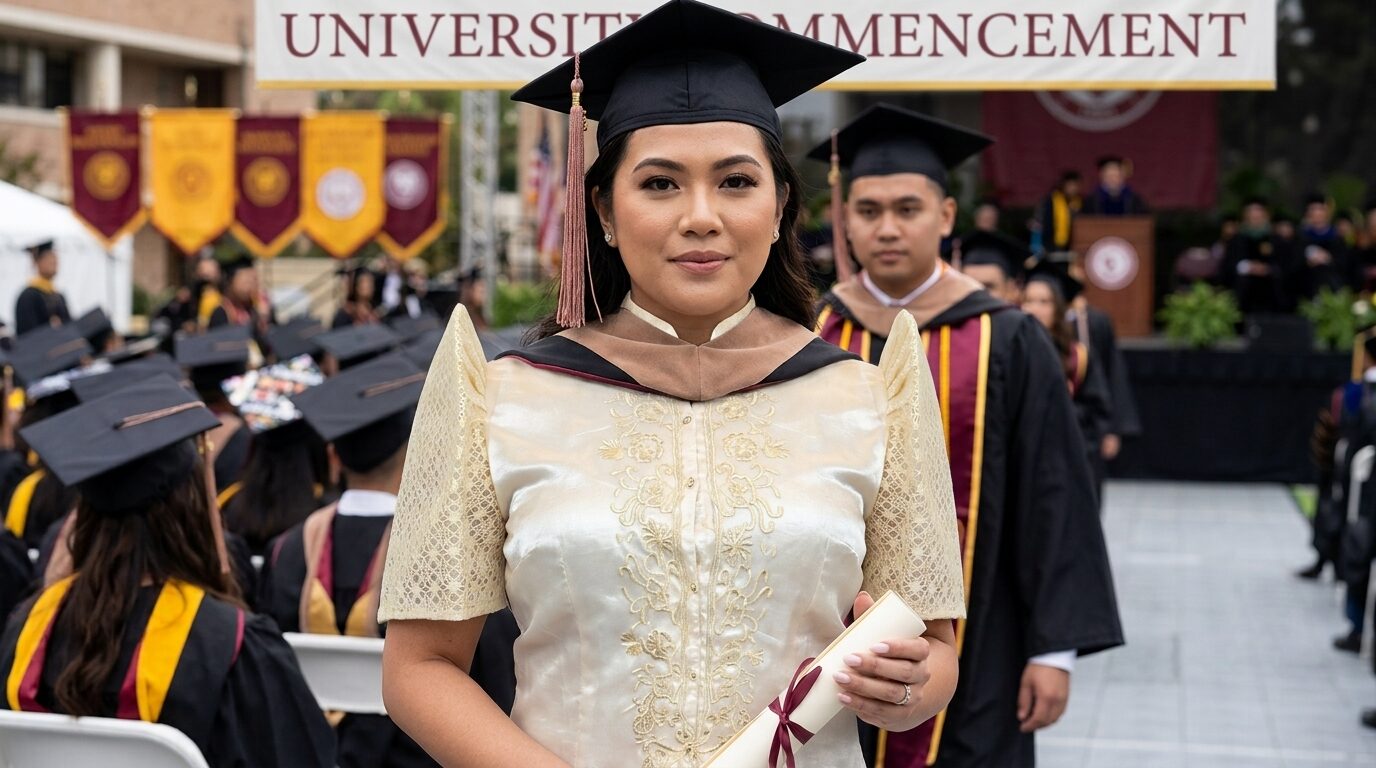
Choosing Your Graduation Look: Barong Styles and Filipiniana Silhouettes
Selecting the right outfit requires balancing personal style, institutional rules, and climate considerations. Here is a breakdown of the top options for graduates:
Men’s Barong Options for Commencement
- The Traditional Long-Sleeved Barong: The gold standard for formal ceremonies. Made from light fabrics like organza, Jusilyn or cocoon, a long-sleeved button-down barong features intricate hand-embroidery (calado or machine embroidery) along the front panel (pechera). It looks exceptionally sharp when worn underneath an academic hood or open graduation robe.
- The Polo Barong: For outdoor ceremonies or universities in scorching tropical climates, a short-sleeved polo barong offers a polished yet breathable alternative. While slightly more casual, a well-fitted polo barong worn with clean trousers maintains high formality.
Women’s Filipiniana Options for Commencement
- The Modern Terno Dress: A sleek, one-piece sheath or A-line dress integrated with the signature upright butterfly sleeves. This silhouette creates a statuesque, regal look that requires minimal styling because the sleeves themselves serve as a stunning architectural centerpiece.
- The Filipiniana Bolero or Separates: A modular approach featuring a structured crop jacket with butterfly sleeves layered over a clean slip dress or tailored trousers. This is a favorite choice for graduates who want the flexibility to remove the jacket during post-ceremony parties and celebrations.
- The Lady Barong: A button-down tunic cut specifically for women, combining the classic embroidery and collar of a men’s barong with a tailored, feminine fit that pairs wonderfully with slacks or pencil skirts.

Master the Fit: How to Wear a Barong Under Your Graduation Gown
Wearing a sheer, delicate garment like a Barong Tagalog or a translucent Filipiniana top requires careful attention to undergarment protocols and layering rules to ensure a polished appearance under your graduation gown.
The Golden Rule of Barong Undergarments
Because many Barongs are light and semi-sheer, what you wear underneath is just as important as the shirt itself. The undisputed standard for men is the Camisa de Chino—a solid white, long-sleeved, collarless cotton undershirt. The Camisa de Chino must be worn untucked so that its bottom hem aligns neatly with the outer Barong, creating a clean visual line at the waist. Avoid wearing short-sleeved t-shirts or low-collar V-necks, as the harsh lines of a short sleeve will show directly through the sheer fabric of the Barong, disrupting the intricate embroidery pattern.
Managing Sleeve Structures and Heat
For female graduates wearing a terno with structured butterfly sleeves, managing the fit beneath academic regalia requires foresight. Traditional butterfly sleeves are stiffly reinforced to stand upright. When pulling a heavy academic gown or doctoral hood over your shoulders, take care not to crush or bend the internal structure of the sleeves. Put your gown on carefully, and adjust the sleeves so they pop out cleanly from beneath the robe’s arm openings, ensuring your cultural silhouette remains visible and proud as you cross the stage.
Institutional Academic Dress Codes: Respecting Tradition
While celebrating your heritage is a wonderful personal expression, it is crucial to review your university’s specific commencement guidelines. Different institutions maintain strict rules regarding academic costumes.
Navigating University-Specific Rules
Many universities permit traditional cultural attire underneath standard graduation gowns. However, some institutions, such as the University of the Philippines, feature their own official indigenous academic regalia, like the Sablay. The Sablay replaces the traditional Western cap and gown, worn as a draped sash over the shoulder adorned with indigenous ukkil motifs and Baybayin scripts. When wearing institutional regalia alongside your traditional attire, ensure that your underlying colors (typically ecru, beige, or cream for formal barongs and dresses) harmonize with the guidelines. Furthermore, adhere strictly to footwear rules: many major universities mandate closed-toe shoes with broad or flat heels (strictly prohibiting stiletto heels or casual sneakers) to protect venue flooring and ensure safety during long marches across the stage.
Sourcing, Sizing, and Gifting Your Graduation Attire
Preparing your fil-am commencement outfit requires planning ahead, especially if you are ordering online.
Sizing Considerations for Online Orders
Because authentic Barongs and Filipiniana garments are handcrafted by specialized artisans in the Philippines, standard sizing often runs one to two sizes smaller than Western retail standards. Take precise measurements of your bust, waist, hips, and shoulder width using a flexible tape measure, and cross-reference them against the specific size chart provided by the boutique. When in doubt, ordering a size larger is generally recommended, as a local tailor can easily take in seams, whereas letting out a delicate, embroidered garment is exceptionally difficult.
The Ultimate Milestone Gift
For parents, mentors, and family members looking for a meaningful graduation present, gifting a high-end, heirloom-quality Barong or Filipiniana is a time-honored tradition. Passing down a handcrafted garment symbolizes trust, success, and the transition into professional life. To explore thoughtful curation and presentation ideas for milestone gifts, read our comprehensive Ultimate Guide to Gifting a Barong: A Timeless Elegance.
Frequently Asked Questions (FAQs)
Can I wear a short-sleeved Barong for my college graduation ceremony?
While short-sleeved polo barongs are popular for casual wear and warm outdoor events, formal university commencement ceremonies traditionally require a long-sleeved Barong Tagalog to maintain the high level of formality expected for academic regalia.
What is the proper undergarment to wear under a graduation Barong?
The traditional and most polished choice is a long-sleeved white Camisa de Chino. It provides clean coverage under sheer barong fabric and keeps your silhouette looking crisp throughout the ceremony.
How do I ensure my Filipiniana butterfly sleeves do not get crushed under my graduation gown?
Put your graduation robe on gently, and ensure your arms slip through the gown’s arm openings while guiding the butterfly sleeves outward so they rest proudly on top of or outside the gown shoulders rather than being compressed underneath.
Are non-Filipino graduates allowed to wear a Barong Tagalog?
Yes! Wearing a Barong Tagalog as a guest, supporter, or non-Filipino graduate is widely viewed as a respectful, welcoming gesture that honors cultural unity and community celebration.
Final Thoughts: Walk the Stage in Your Graduation Barong Tagalog or Filipiniana
Stepping onto the commencement stage is a defining moment in your academic journey. By choosing to wear a traditional graduation barong tagalog or an exquisite filipiniana graduation dress, you honor your ancestors, celebrate your family’s sacrifices, and wear your cultural identity with immense pride.
Ready to find your perfect commencement look? Explore our exclusive collection of Lightweight Barong Tagalog & Modern Filipiniana Tops today to discover masterfully handcrafted pieces designed to make your graduation day truly unforgettable.