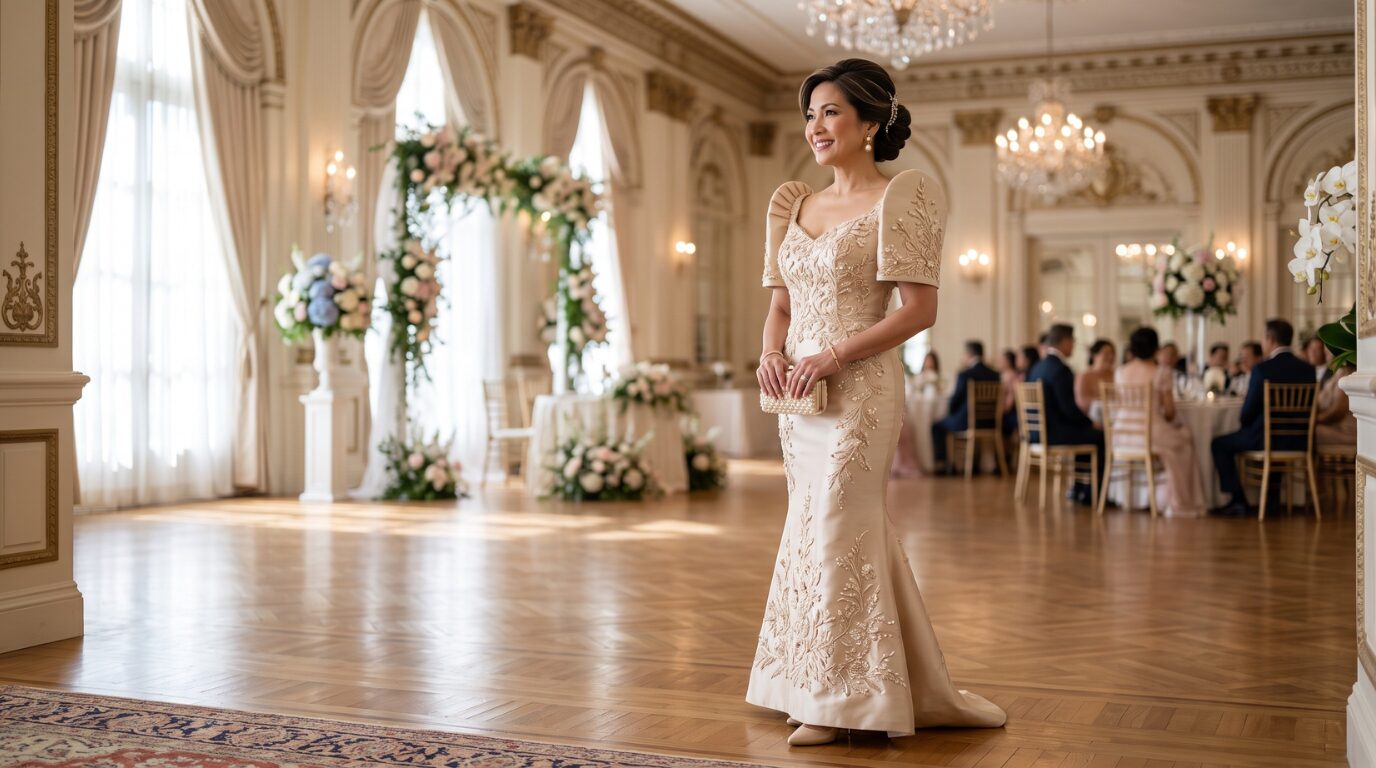
The global market for formal Filipino wear is experiencing a significant revival, driven by a desire among diaspora communities and local families to honor their cultural heritage during major milestones. When planning a wedding, the mothers of the couple hold a position of high honor. Finding a garment that balances traditional dignity with the physical comfort needed for a long celebration is a key priority for many families.
As you prepare for this monumental occasion, navigating the world of traditional and contemporary formalwear can feel overwhelming. “Mothers often tell us they want two things: timeless Filipina dignity and breathable comfort that lasts through a 6-hour reception…” This comprehensive guide is designed to help you find the ideal filipiniana mother of the bride outfit, ensuring you look breathtaking, feel at ease, and celebrate in style.
The Evolution of Heritage Elegance: From Pre-Colonial Roots to Modern Masterpieces
Traditional Filipino attire has evolved remarkably over centuries. Its origins trace back to the pre-colonial baro’t saya—a simple, elegant combination of a blouse (baro) and skirt (saya) worn by native Filipinas. Under Spanish influence during the colonial era, this modest ensemble transitioned into the aristocratic traje de mestiza or Maria Clara gown. This opulent style featured a wide-sleeved baro, a sweeping floor-length skirt (saya), a stiffened alampay or pañuelo (fichu shawl), and a layered tapis (overskirt).
By the 1920s, the voluminous bell sleeves of the nineteenth century were streamlined into the iconic, upright butterfly sleeves characteristic of the modern terno. For today’s filipiniana mother of the bride, this rich history provides a wealth of design avenues. Whether you are looking for a majestic terno gown for mother of the bride or a versatile filipiniana bolero for formal wedding celebrations, today’s market bridges centuries-old craftsmanship with modern tailoring.
For a deeper dive into the historical progression and classification of these cultural garments, explore our comprehensive [Filipiniana Dress Guide: A Simple Look at Heritage, Style & Elegance].
Understanding the Core Styles: The Classic Terno Gown vs. The Modern Bolero
Selecting the right style begins with deciding between a traditional, one-piece terno gown or a modular, two-piece bolero outfit. Both silhouettes offer distinct advantages in terms of formality, comfort, and long-term versatility.
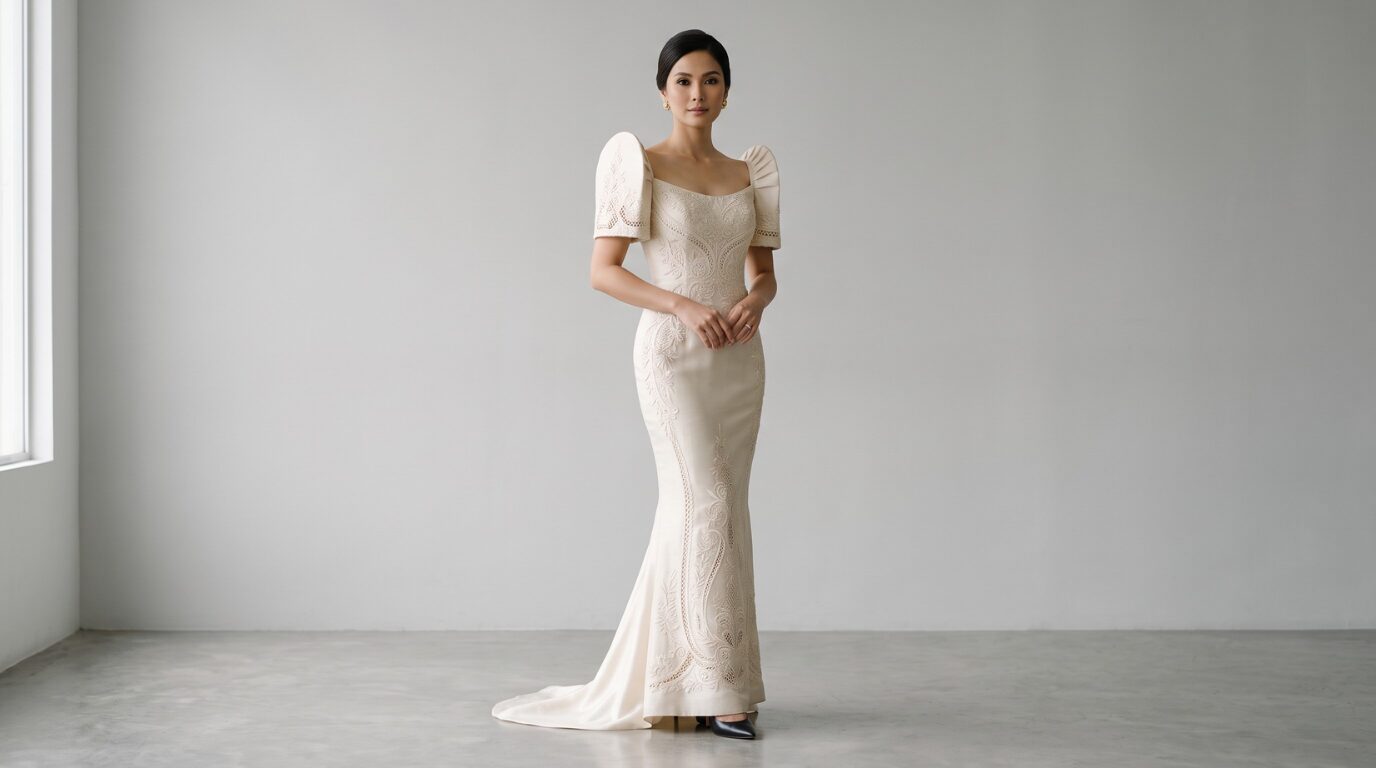
1. The Classic Terno Gown
The classic terno is a magnificent one-piece gown characterized by its integrated bodice and structured butterfly sleeves, which extend vertically from the shoulder seams. Modern terno options often feature streamlined skirts, such as an A-line, trumpet, or serpentina cut, made from contemporary fabrics like stretch crepe, mikado, or duchess satin.
- Best For: High-profile church ceremonies, grand hotel ballrooms, and mothers who desire a statuesque, uninterrupted silhouette.
-
Key Benefit: Offers uncompromised regal elegance that honors traditional formal protocols.
2. The Modular Filipiniana Bolero
For mothers who prioritize flexibility and thermal comfort, the modern filipiniana bolero for formal wedding settings is a phenomenal choice. This cropped, open-front jacket features the signature structured butterfly sleeves and is designed to layer over a sleek column dress, structured jumpsuit, or slip dress.
- Best For: Garden ceremonies, beach venues, or receptions where temperature regulation is vital.
- Key Benefit: Allows mothers to wear a traditional, highly formal look during the ceremony and formal portraits, with the option to remove or swap the outer layer for comfortable celebration during the dancing hours. This modularity also makes the garment easy to re-style for future milestones.
How to Choose the Most Flattering Silhouette for Your Body Type
A flattering fit is the foundation of confidence. When shopping for an elegant filipiniana dress, understanding how different cuts interact with your unique body proportions ensures you feel poised throughout the day.
Scaling the Butterfly Sleeves
The iconic butterfly sleeves are the centerpiece of any authentic Filipiniana. However, their proportions must complement your frame:
- Petite Frames: Opt for slightly smaller, more upright butterfly sleeves that add height without overwhelming your upper body. Avoid excessively wide, heavy-boned sleeves that dwarf your stature.
- Fuller Busts or Broad Shoulders: Choose sleeves with a softer slope or subtle pleating that draws the eye upward and inward, creating a balanced, proportionate vertical line. Traditional guidelines suggest that the sleeves should never touch the cheeks or extend past the elbow in an awkward angle.
Selecting Skirt Silhouettes
- A-Line and Empire Cuts: Universally flattering, these cuts skim gracefully over the hips and waist, offering effortless movement and comfort during long hours of standing and greeting guests.
- Serpentina and Mermaid Gowns: Perfect for mothers wanting a dramatic, figure-enhancing silhouette. Modern designers incorporate discreet stretch lining into these tailored cuts to ensure sitting and walking remain comfortable.
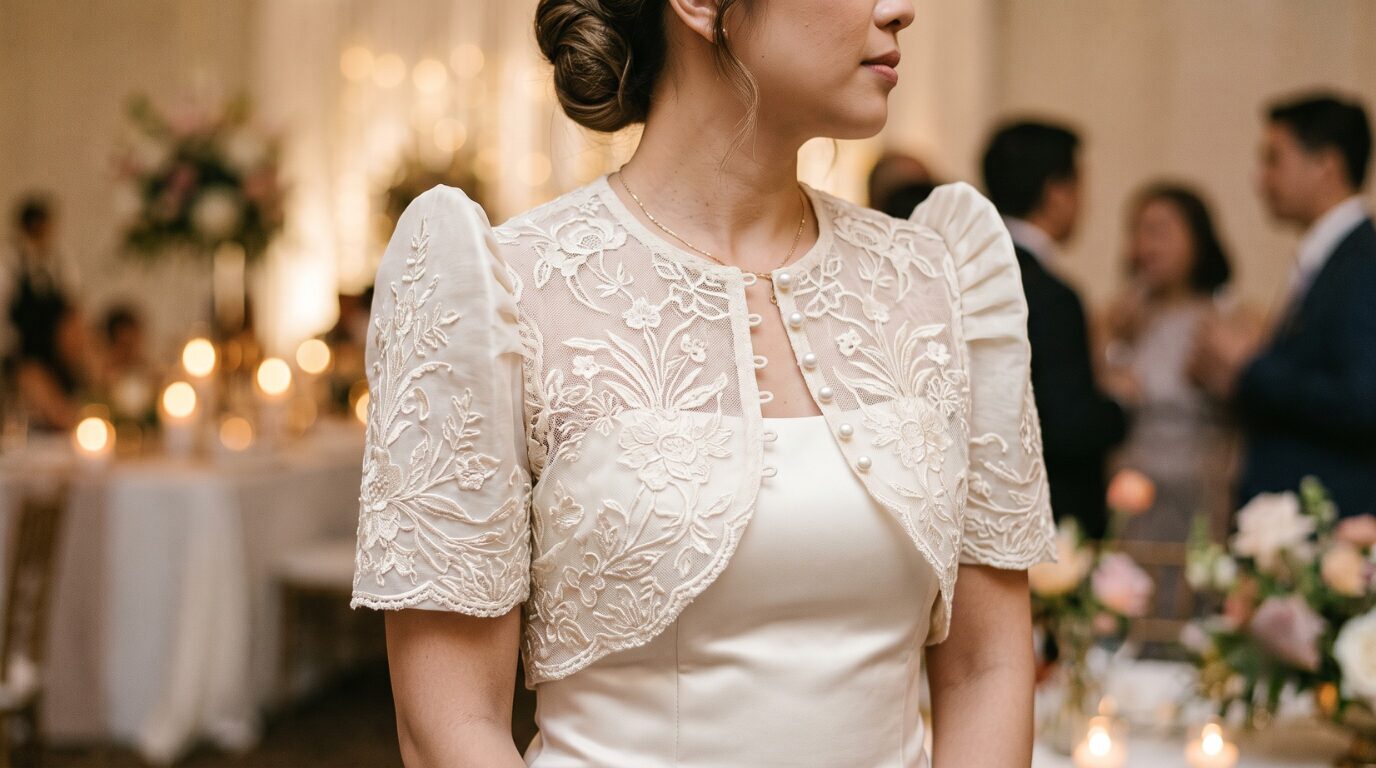
Modular Bolero Styling and Layering for Maximum Comfort
One of the greatest trends in contemporary Filipino formalwear is the rise of separate layering pieces. Whether you choose a sheer organza alampay or a heavily embroidered lace bolero, mastering the art of layering opens up incredible wardrobe flexibility.
When selecting a mother of the groom filipiniana dress or mother of the bride outfit featuring a detachable jacket, look for closures that lay flat against the bodice. Pairing a structured lace bolero with a clean, monochromatic inner slip dress creates an instant heirloom-quality look.
Furthermore, the versatility of these pieces extends far beyond wedding day protocols. To discover how you can repurpose your statement pieces long after the ceremony has ended, read our guide on [How to Style a Filipiniana Bolero with Everyday Denim]. Mixing heritage embroidery with casual staples is a chic, sustainable way to celebrate Filipino craftsmanship in your daily wardrobe.
Color Etiquette & Cultural Meanings for Mothers and Ninangs
When planning your attire, understanding color protocols prevents visual clashes with the bridal party and respects traditional wedding etiquette.
What Color Should the Mother of the Bride Wear?
Traditional etiquette suggests choosing hues that harmonize with the overarching wedding palette without directly matching the bridesmaids or blending into the venue background.
- Timeless Neutrals: Champagne, soft gold, warm beige, pewter, and silver are perennial favorites that exude understated luxury.
- Sophisticated Jewel Tones: For evening affairs or formal ballroom galas, rich colors like navy blue, deep sage green, dusty rose, and burgundy make a stunning visual statement.
- Colors to Avoid: Unless explicitly requested by the bride and groom for a themed monochrome celebration, mothers should steer clear of white, ivory, or pale cream to ensure the bride remains the absolute focal point of the day.
Fabric Profiles, Sizing Guides, and Navigating Online Orders
Investing in an authentic Filipiniana requires understanding traditional textiles and navigating sizing differences, especially when shopping across international platforms.
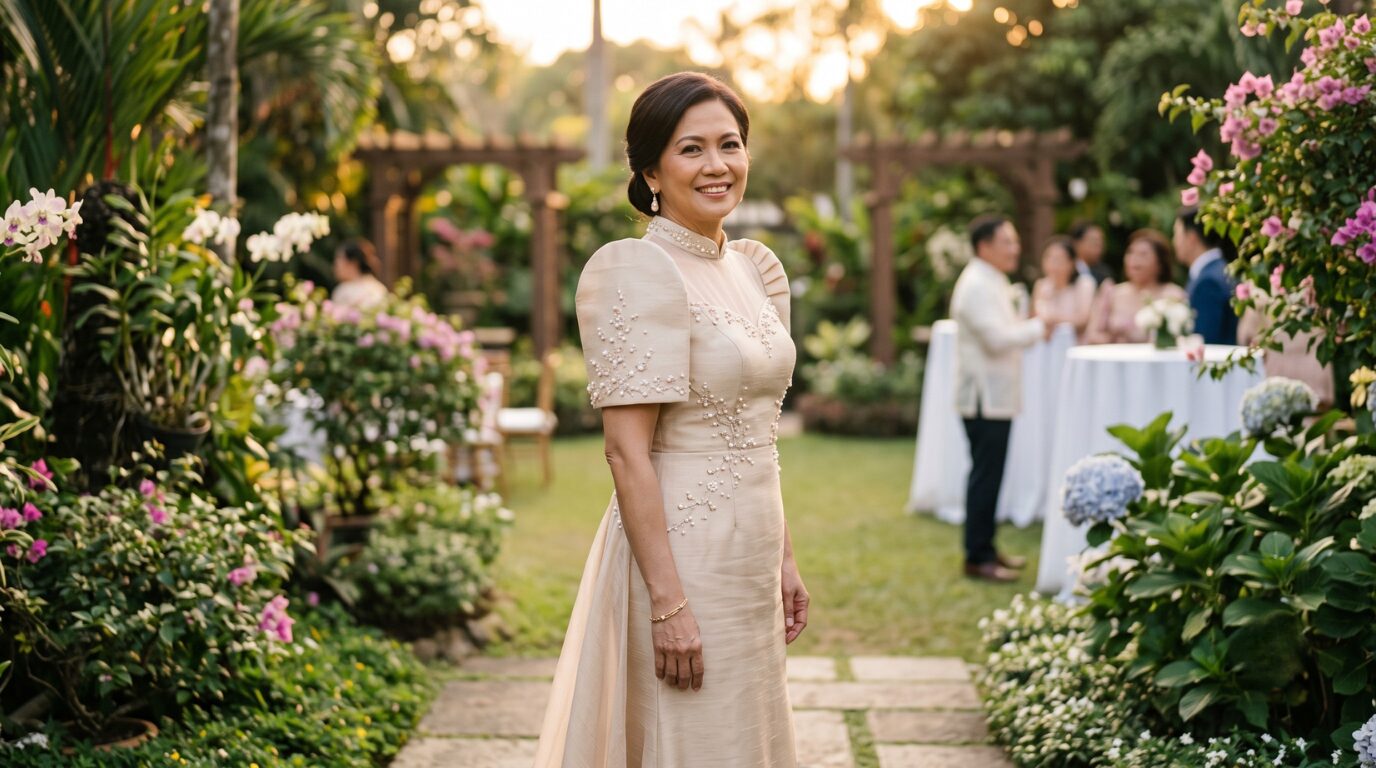
Fabrics: Polyester Organza and the Traditional Terms
- Polyester Organza: Most of our Filipiniana dresses, boleros and blouses are polyester organza. It is light with a soft sheen, holds structured butterfly sleeves well, and is easy to care for, a real plus for a long reception.
- Hand Embroidery: Our pieces are hand-embroidered by artisans in the Philippines, so small variations from piece to piece are normal and part of their character.
- Piña and Jusi (Heritage Terms): Historically, the classic terno was made from piña (pineapple-leaf fiber) or jusi. We don’t sell piña or jusi; our Filipiniana is mostly polyester organza.
Navigating the Filipiniana Size Chart Online
Because authentic Filipiniana garments are handcrafted by specialized artisans in the Philippines, standard sizing often runs one to two sizes smaller than Western or US retail standards.
- Take Accurate Measurements: Secure precise measurements for your bust, waist, hips, and shoulder width using a flexible tape measure.
- Consult the Seller’s Guide: Compare your measurements directly against the specific filipiniana size chart online provided by the boutique.
- When in Doubt, Size Up: Ordering one size larger is generally recommended when purchasing online, as it is significantly easier for a local tailor to take in seams than to let out delicate, hand-embroidered fabric.
Frequently Asked Questions (People Also Ask)
Can non-Filipinas wear a Filipiniana dress?
Yes, non-Filipinas can absolutely wear a Filipiniana dress. It is widely viewed as a respectful, deeply welcoming gesture for non-Filipina mothers, family members, or guests to wear traditional attire to celebrate cross-cultural unions and honor Filipino heritage. To ensure cultural respect, buyers should choose authentic garments crafted by local Filipino artisans and avoid sacred or restricted motifs.
What color is appropriate for the Mother of the Bride or Groom?
Traditional etiquette dictates choosing refined colors that complement the wedding palette without matching the bridesmaids or clashing with the venue. Timeless neutrals like champagne, gold, warm beige, and silver are sophisticated choices. For formal evening receptions, rich jewel tones like navy blue, sage green, and burgundy are exceptionally popular. Always avoid white, ivory, or pale cream unless specified by the couple.
How do you determine the correct Filipiniana size when buying online?
Because traditional garments are handcrafted, sizing typically runs one to two sizes smaller than standard US commercial sizes. Buyers should take exact bust, waist, hip, and shoulder measurements and cross-reference them with the seller’s specific size guide. When in doubt, ordering a size larger is a practical approach, as tailoring a garment inward is much safer than attempting to expand delicate embroidered fabric.
What is the proper way to wash and preserve traditional Filipiniana fabrics?
Embroidered Filipiniana pieces, including organza, need gentle care. They should never be machine washed or tumble dried, and harsh chemical dry-cleaning is best avoided. The recommended cleaning method is gentle hand-washing in cool water with mild soap, followed by flat or drip drying on a wide hanger. To maintain their structure, terno gowns and structured boleros must always be hung rather than folded, protecting the delicate inserts inside the butterfly sleeves from permanent creasing.
Conclusion
Choosing your wedding attire is a cherished milestone in the wedding planning journey. By balancing timeless cultural dignity with modern comfort, your chosen classic terno gown or mestiza bolero will allow you to stand proudly beside your child, exuding grace, elegance, and unshakeable poise.
Ready to find your dream heirloom piece? Be sure to consult our Measurement Studio & Sizing Chart to ensure a flawless fit, and check our Fabric Expert Guide to learn more about the fabrics we carry. When you’re ready, explore our exclusive Premium Filipiniana Dress & Terno Collection today to discover gowns, boleros and blouses with hand embroidery, in a range of sizes for honored mothers and wedding sponsors.