If you have ever shopped for a barong tagalog or a filipiniana gown, you have probably seen two fabric names on product listings and in tailoring shops: piña cocoon and piña jusi. Very few descriptions explain what sets them apart, so here is the plain-language version.
First, to be clear: Handmade Kapamilya doesn’t sell piña or jusi. Our barongs and Filipiniana are mostly polyester organza, with a few barongs in Jusilyn, cocoon fabric and cotton. Use this guide to decode the traditional names, then see how the fabrics we carry compare.
A Quick Note on Piña Fabric
Piña is a traditional Philippine textile woven from the fibers of pineapple leaves, usually the Red Spanish variety. The fiber is extracted, knotted and woven by hand, which makes pure piña slow and costly to produce.
For centuries it has been a prestige fabric, worn by Philippine presidents and diplomats on the most formal occasions. Piña cocoon and piña jusi are names for blends that mix it with other fibers.
What Is Piña Cocoon?
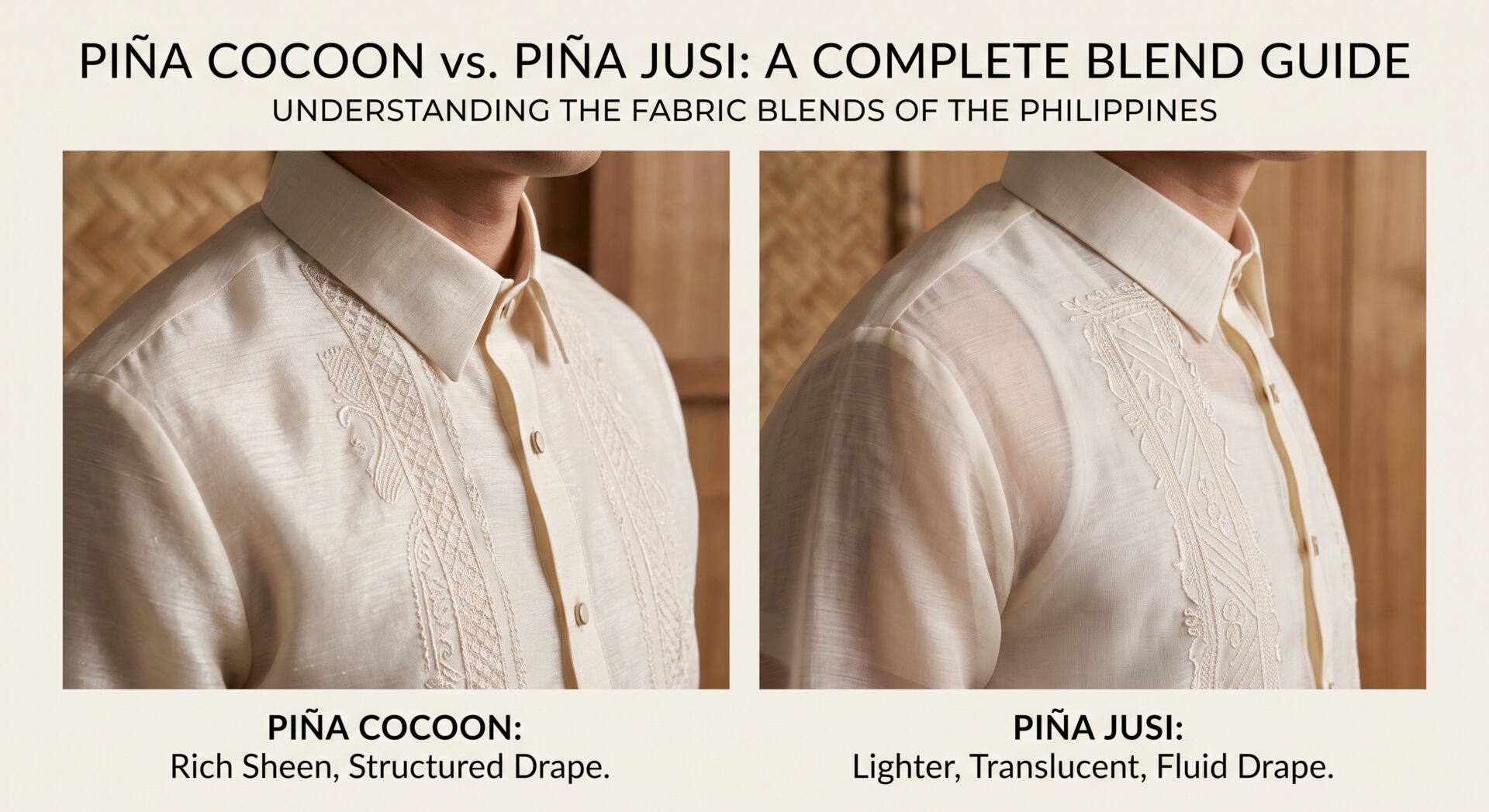
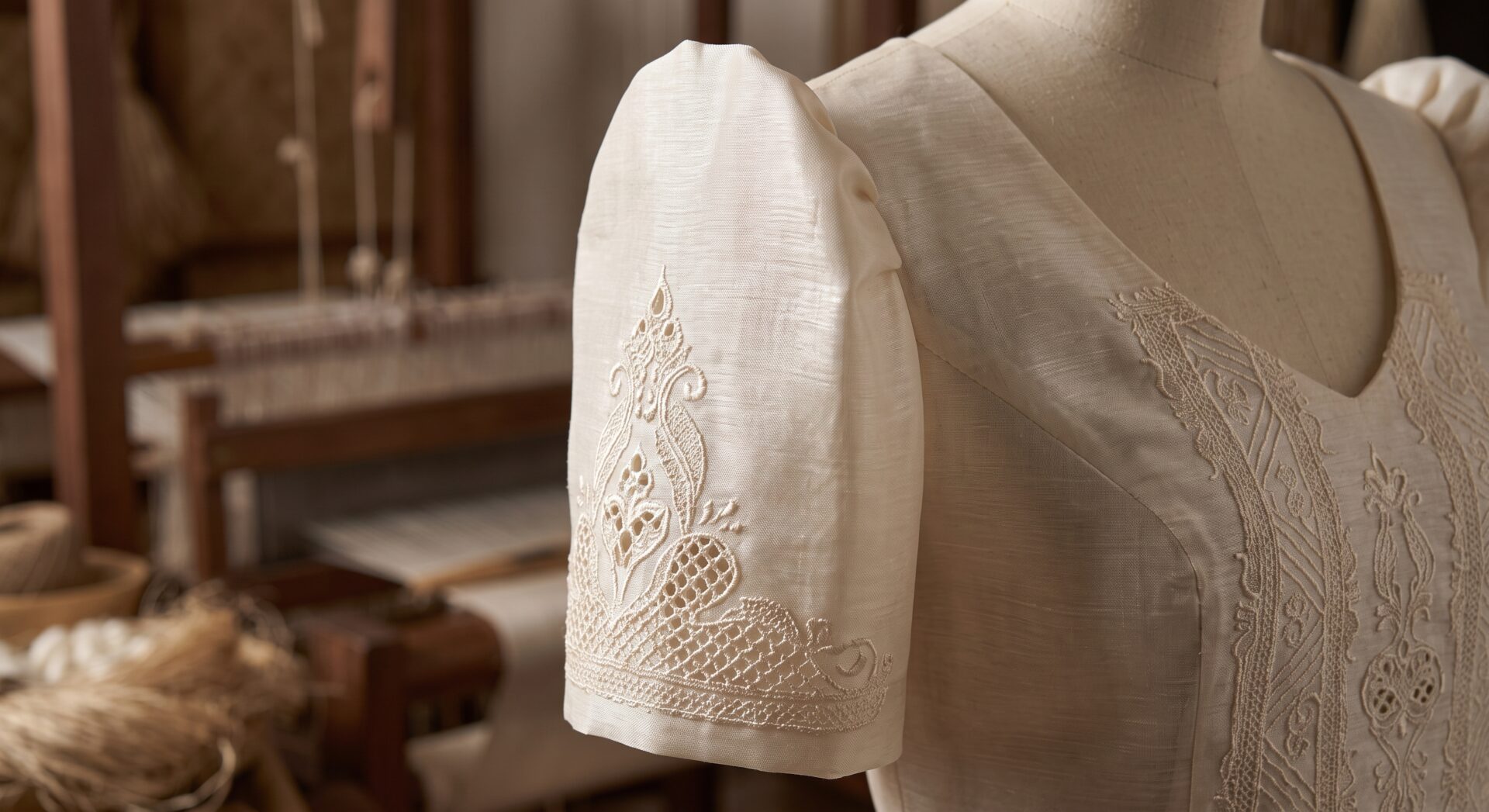
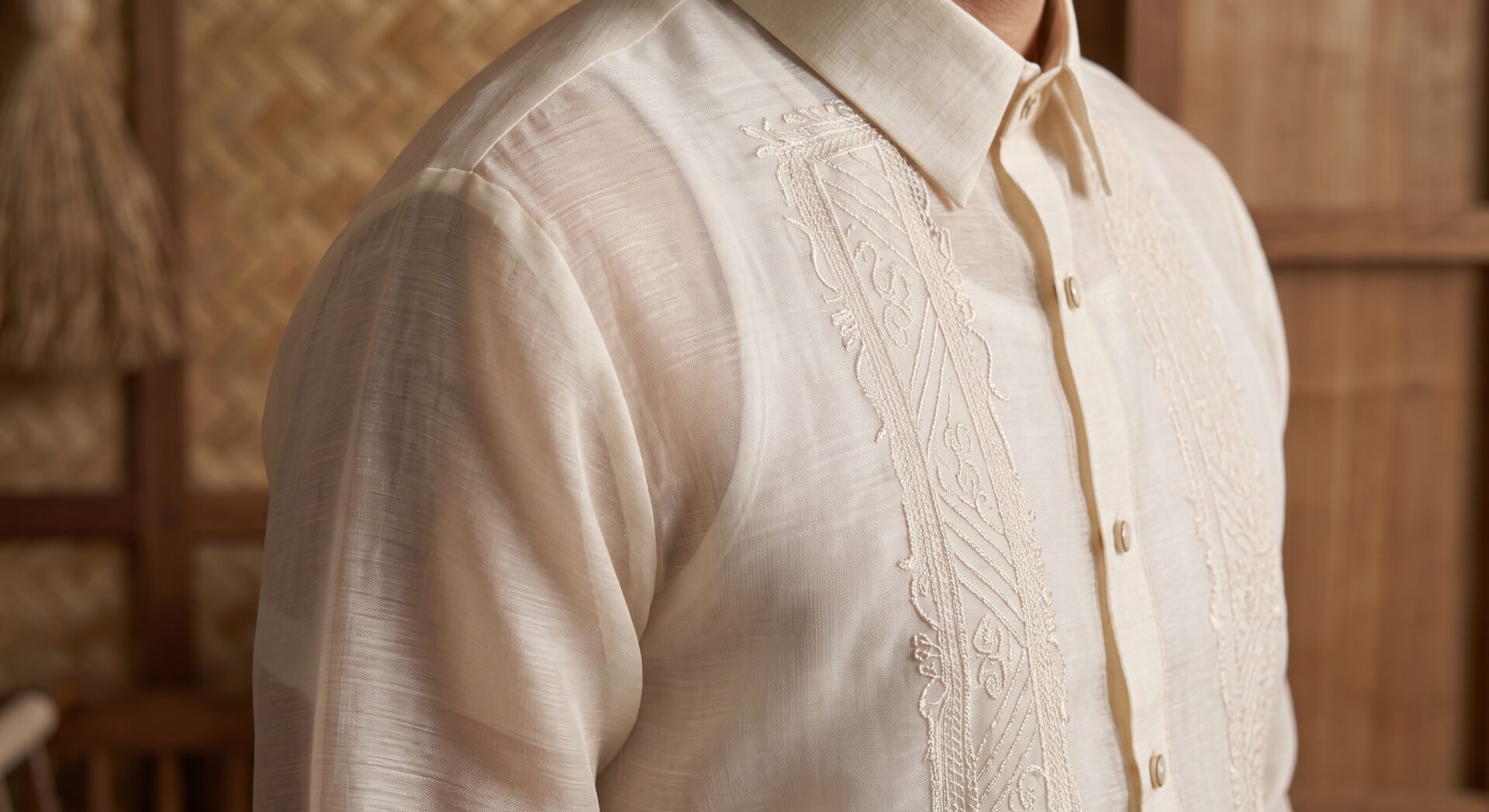
The name describes piña blended with silk from silkworm cocoons. It is usually semi-opaque, with a soft, almost pearly sheen and a slightly structured feel, and it is the dressier of the two names. The exact blend varies by seller.
Our Ivory Cocoon Barong is a different thing. In our barong, “cocoon” describes the weave: single-layer, with a slubby crosshatch texture and a soft, dry luster. There is no piña or silk in it.
What Is Piña Jusi?
Jusi is a traditional Philippine fabric, historically woven from banana or abaca fiber, or from silk. Piña jusi blends piña with jusi. It is usually lighter, smoother and more see-through than piña cocoon, so it is worn over an undershirt. Today the name is used loosely, and the fiber content on the label tells you more than the name does.
Piña Cocoon vs Piña Jusi: A Direct Comparison
Side by side, the two names usually mean this:
- Piña cocoon: semi-opaque, pearly sheen, more structured, dressier.
- Piña jusi: more translucent, lighter, with a smoother drape.
Neither is something we sell. Here is how the fabrics we do carry compare:
- Organza: most of our pieces are polyester organza, from our flagship Ivory White Organza Barong to our colored, kids’ and infant barongs and most of our Filipiniana dresses, boleros and blouses. Light, with a soft sheen. On our men’s barongs it is double-layered and opaque. Easy care.
- Jusilyn: used in two barongs, the White Jusilyn Barong and the Deluxe Intricate Jusilyn Barong. A lightweight, single-layer synthetic with a fine crosshatch texture. Lightly translucent. The name is close, but Jusilyn isn’t jusi.
- Cocoon: our Ivory Cocoon Barong for grooms. Single-layer, with a slubby crosshatch weave and a soft, dry luster.
- Cotton: our navy short-sleeve polo barongs, the casual option.
How to Choose the Right Fabric for Your Occasion
A few questions can help you narrow down your choice quickly.
Are you wearing this for a once-in-a-lifetime event? For a wedding, a debut, or a principal sponsor role, an ivory organza barong is the classic choice and photographs clean and crisp. A groom who wants more texture can choose our Ivory Cocoon Barong.
Is this for a recurring formal occasion? For graduation ceremonies, baptisms, family reunions, or church events where you expect to wear the garment more than once, organza is easy to care for between wears and comes in the most colors and styles.
Do you run warm or live in a hot climate? Our Jusilyn barongs are single-layer and lightweight, so they feel lighter than our double-layered organza. Jusilyn is lightly translucent, so wear a plain undershirt. For casual outdoor parties, the short-sleeve cotton polo barong is the easy pick.
Are you buying for a child or teenager? Our kids’ and infant barongs are organza, which is easy to care for. That makes sense for younger wearers, given how quickly children grow and how often formal garments get outgrown before they are worn out.
Caring for Your Barong or Filipiniana
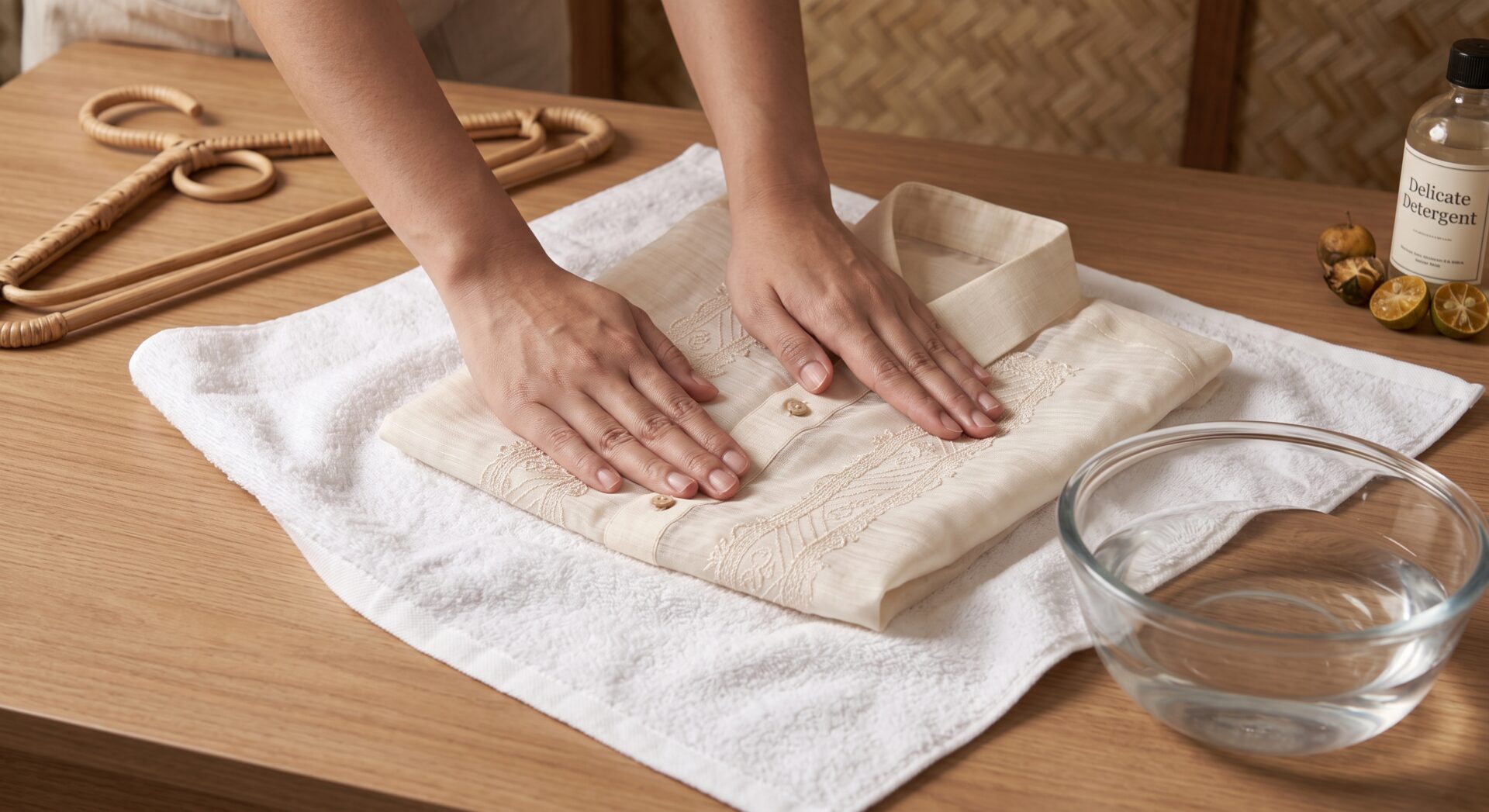
Whichever fabric you choose, proper care will extend the life of your garment significantly. Rough handling can damage the embroidery, so check the care label first and go gently.
- Hand wash gently in cold water with a mild, pH-neutral detergent, or follow the care label instructions.
- Never wring or twist the fabric. Press out water gently by rolling the garment in a clean towel.
- Lay flat to dry away from direct sunlight, which can cause yellowing over time.
- Iron on low heat with a pressing cloth between the iron and the fabric to protect the embroidery.
- Store folded or hanging in a breathable garment bag, away from moisture and direct light.
- Dry cleaning is a safe option for heavily embroidered pieces or if you are unsure about hand washing.
With the right care, a well-made barong or Filipiniana can last through years of family events, and even be passed down.
Finding the Right Piece
At Handmade Kapamilya, our barong tagalogs and filipiniana styles are hand-embroidered by artisans in the Philippines. The garments are available in several sizes to accommodate a range of fits, and the embroidery work reflects traditional Filipino design sensibilities.
Whether you are shopping for a milestone event or building out your formal wardrobe, knowing what fabric names really mean puts you in a much better position to choose with confidence. The fabric is not just a technical detail. It is part of the story you wear.
Explore More About Filipino Heritage Wear
If you enjoyed learning about barong fabrics and want to dive deeper into Philippine traditional attire, check out these related guides:
- The Evolution of the Camisa: Modern Minimalist Filipiniana for 2026: Explore the renaissance of Philippine heritage wear. Discover modern minimalist Filipiniana and the evolution of the camisa blouse for everyday luxury.
- How to Style a Filipiniana Bolero with Denim: Modern Outfits: Elevate your casual style by pairing a Filipiniana Bolero with denim. Get 5 chic outfit ideas, modern styling rules, and essential fabric care tips.
- The Ultimate Guide to Barong Tagalog Traditions: Master Barong Tagalog traditions for weddings and galas. Learn about fabrics, history, and etiquette with the experts at Handmade Kapamilya.
- How to Wash a Barong Tagalog: The Expert Care Guide: Learn how to wash a Barong Tagalog safely at home. Our guide covers washing, drying, ironing and storage. Preserve your Filipino heritage for a lifetime.