

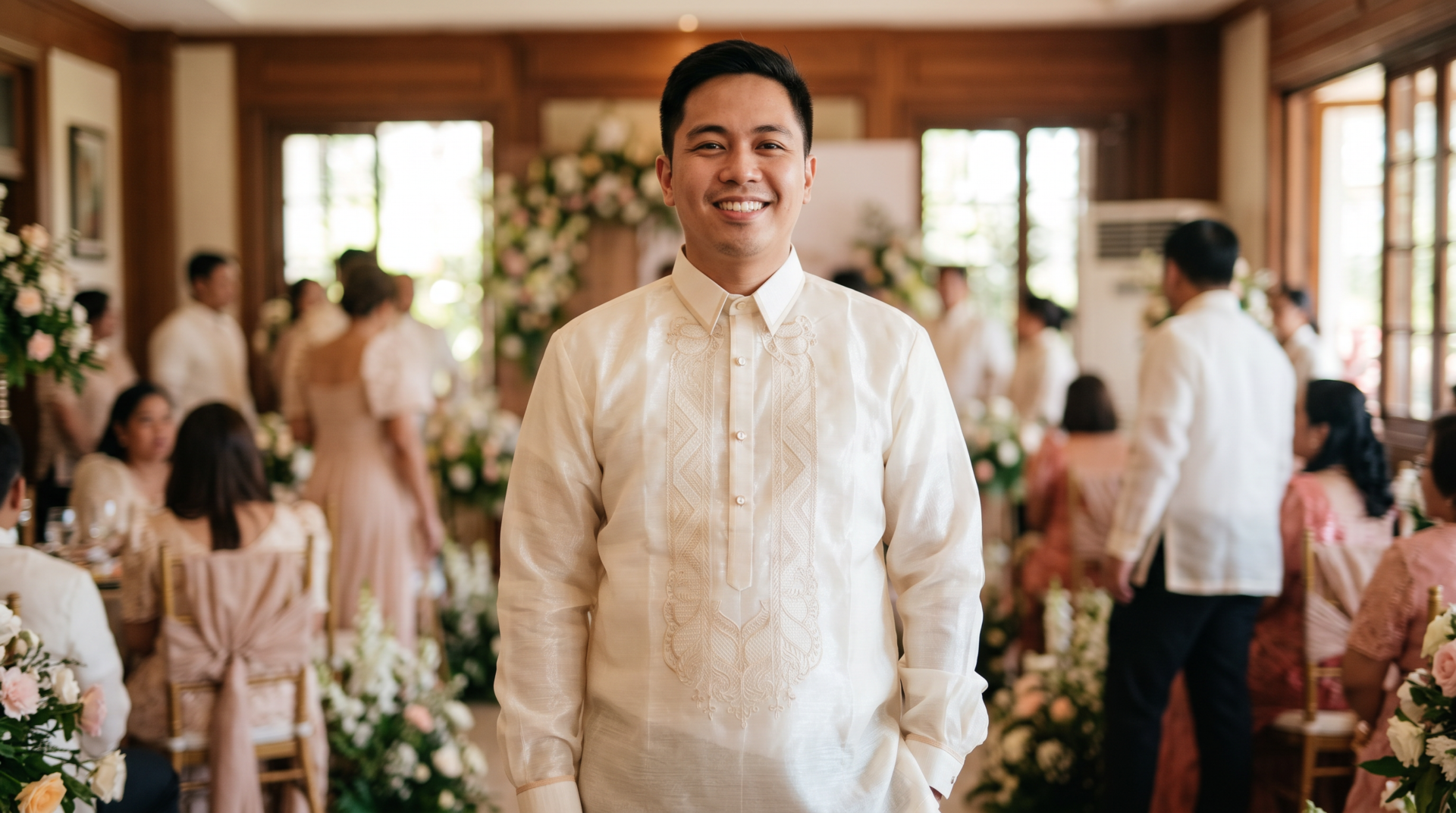
If you are shopping for Filipino formal wear for the first time, or if you are returning to your roots after years away, the barong is probably the garment you keep coming back to. It is elegant, it is distinctly Filipino, and it carries centuries of cultural meaning. Whether you are preparing for a wedding, a debut, a baptism, or a graduation ceremony, understanding what a barong actually is will help you choose the right piece and wear it with confidence.
What Is a Barong, Exactly?
The barong (short for barong tagalog, which translates roughly to “clothing of the Tagalog people”) is a traditional Filipino formal shirt worn by men. It is typically made from sheer or semi-sheer fabric and is almost always worn untucked over a plain white or colored undershirt (camisa de chino). That untucked silhouette is not a casual choice—it is a deliberate design tradition rooted in centuries of Philippine history.
The garment is recognized as the Philippine national dress for men, standing alongside the women’s filipiniana dress, and has been worn by presidents, diplomats, and grooms for generations. Today it also appears on international red carpets and at Filipino community events across the United States, Canada, and beyond.
A Quick Look at the History
The origins of the barong tagalog stretch back to the pre-colonial Philippines, though the garment evolved significantly during the Spanish colonial period. One widely cited explanation for the untucked, sheer design is that Spanish colonial rulers required indigenous Filipinos to wear their shirts untucked so they could be visually distinguished from the ruling class. Whether or not that specific account is fully accurate, what is certain is that Filipinos transformed the garment into a symbol of national pride over time.
By the mid-twentieth century, President Ramon Magsaysay popularized wearing the barong tagalog as formal and even presidential attire, cementing its status as a garment of dignity rather than servitude. Today, wearing a barong to a formal event is considered a mark of cultural pride, not just a dress-code requirement.
Styles and Fabric Types
Not all barongs look the same, and the differences matter when you are shopping. The key variables are fabric, embroidery style, and formality level. For a plain-English breakdown of the fabric names you will see online, read our guide to barong fabric labels.
You will see heritage fabrics like piña (pineapple-leaf fiber) and jusi mentioned often, but we don’t sell piña or jusi. Here are the fabrics we do carry:
- Polyester organza: Light, with a soft sheen, and easy to care for. Most of our barongs are organza, including our flagship Ivory White Organza Barong and our kids’ and infant barongs. On our men’s barongs it is double-layered, so the body is opaque.
- Jusilyn: A lightweight, single-layer synthetic with a fine crosshatch texture. Lightly translucent, for a lighter formal look.
- Cocoon fabric: A single-layer, slubby crosshatch weave with a soft, dry lustre. A good choice for a groom who wants texture.
- Cotton: Used for casual short-sleeve polo barongs, a relaxed pick for parties and warm weather.
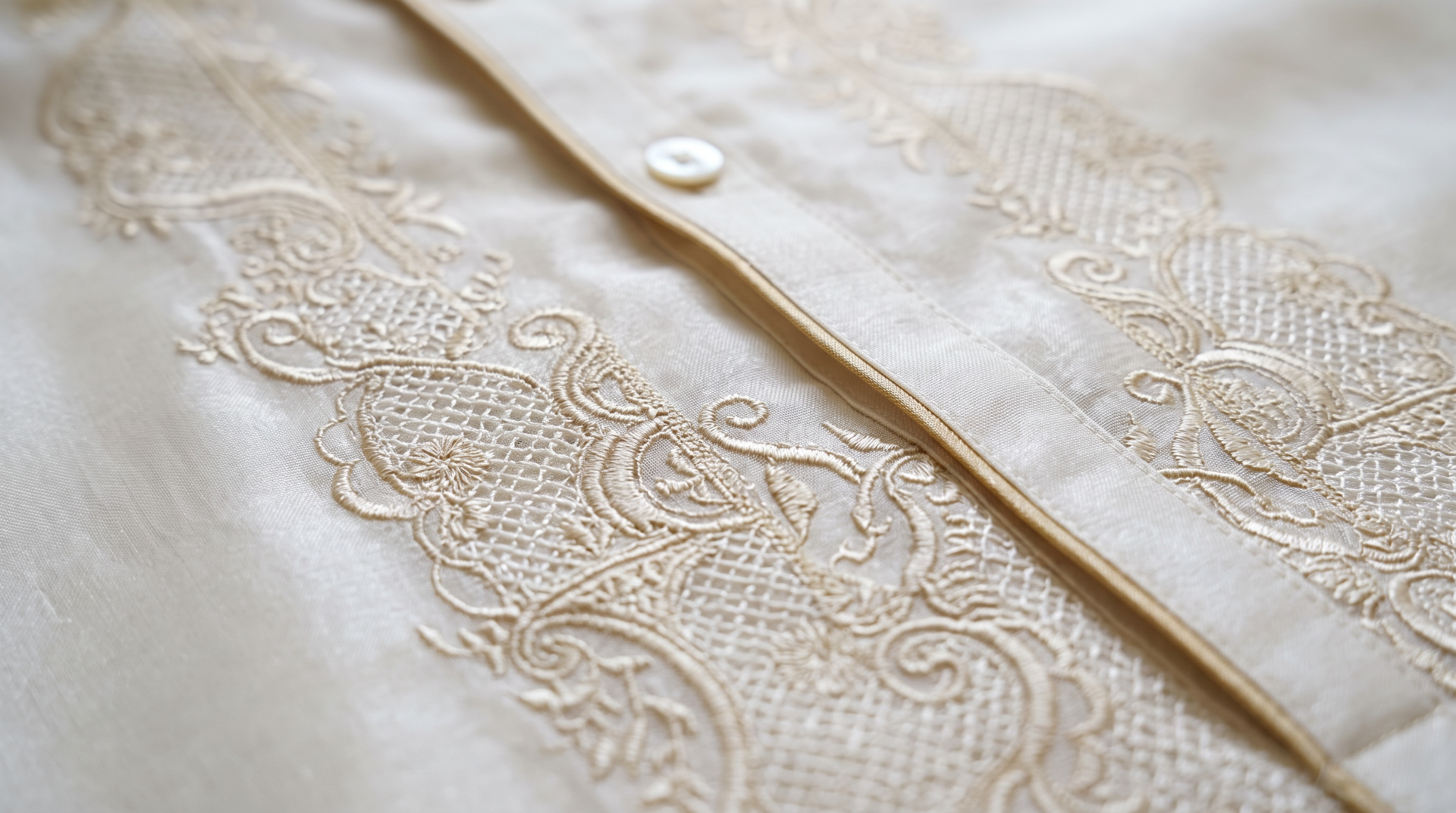
Embroidery styles range from minimal tone-on-tone stitching along the placket to elaborate floral or geometric calado (drawn-thread) work across the chest and sleeves. The more detailed the embroidery, the more formal the garment is considered.
Choosing the Right Fit
Fit is one of the most common pain points when buying a Barong Tagalog online in the US, especially for shoppers in the Filipino-American community who may not have access to a local tailor. Here are practical tips to help you size correctly:
- Measure your chest and shoulders first. The barong should drape loosely but not look oversized. It is not a slim-fit garment by design, but it should not billow.
- Check sleeve length. Sleeves should reach your wrist bone and show a small amount of your undershirt cuff if you are wearing a long-sleeve inner layer.
- Consider the undershirt. A white crew-neck or collarless undershirt is traditional. Make sure your undershirt color is visible but not distracting through the sheer fabric.
- Look at the collar style. Most barongs have a straight, band-style collar. Make sure it sits comfortably at your neck without pulling.
- Read size charts carefully. Filipino sizing and US sizing often differ. Many brands offer size charts in inches. When in doubt, size up and have a tailor take in the sides.
- Check return or exchange policies before purchasing, particularly when buying for a special occasion with a fixed date.
When to Wear a Barong
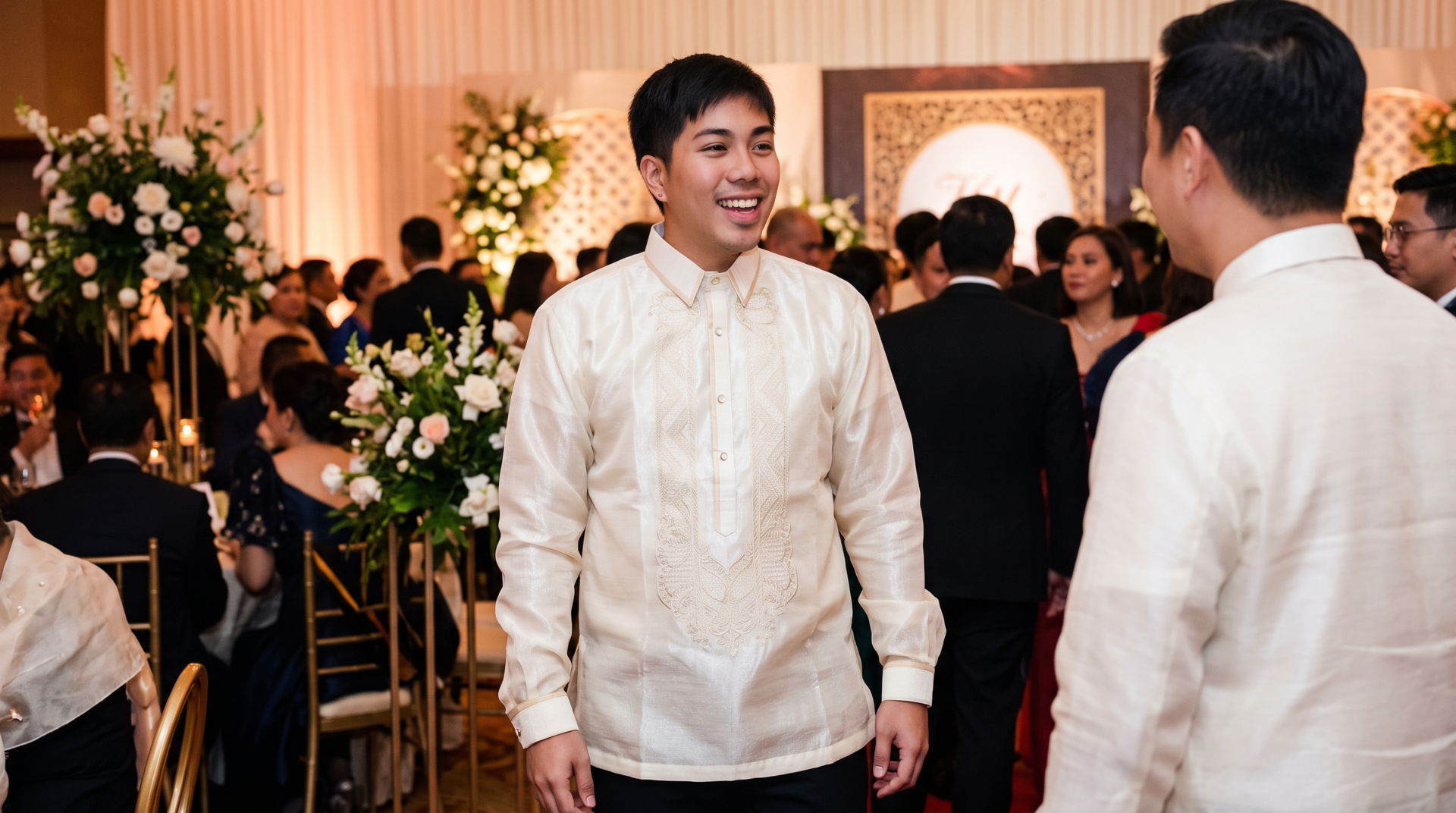
The barong tagalog is appropriate for a wide range of formal and semi-formal Filipino occasions. If you are unsure whether it fits the dress code, the short answer is: if the event is Filipino and formal, a barong is almost always welcome and often preferred.
Common occasions include:
- Weddings: For grooms, fathers of the bride or groom, ninongs, and male guests (learn more about traditional Filipino wedding attire).
- Debut ceremonies: For the escort group or the debutante’s father (explore our Filipino debut dress code guide).
- Baptisms and christenings
- Graduation ceremonies and academic convocations
- Filipino cultural festivals and community galas
- State and diplomatic events involving Filipino dignitaries
For non-Filipino formal events, such as American-style black-tie dinners, the barong tagalog is generally accepted as an equivalent to a tuxedo or suit jacket when worn with dark dress trousers.
Caring for Your Barong
Whatever the fabric, proper care extends the life of a barong significantly. For step-by-step cleaning instructions, see our detailed guide on how to wash and care for your Barong Tagalog.
- Hand wash organza barongs in cold water, or use the delicate cycle in a mesh bag. The embroidery is vulnerable to rough agitation and heat.
- Hand wash Jusilyn and cocoon barongs in cold water with a gentle detergent. Avoid wringing or twisting, and hang to dry. Cotton polo barongs can go in the machine, cold on gentle.
- Store your barong flat or on a padded hanger to preserve the shape of the collar and shoulders.
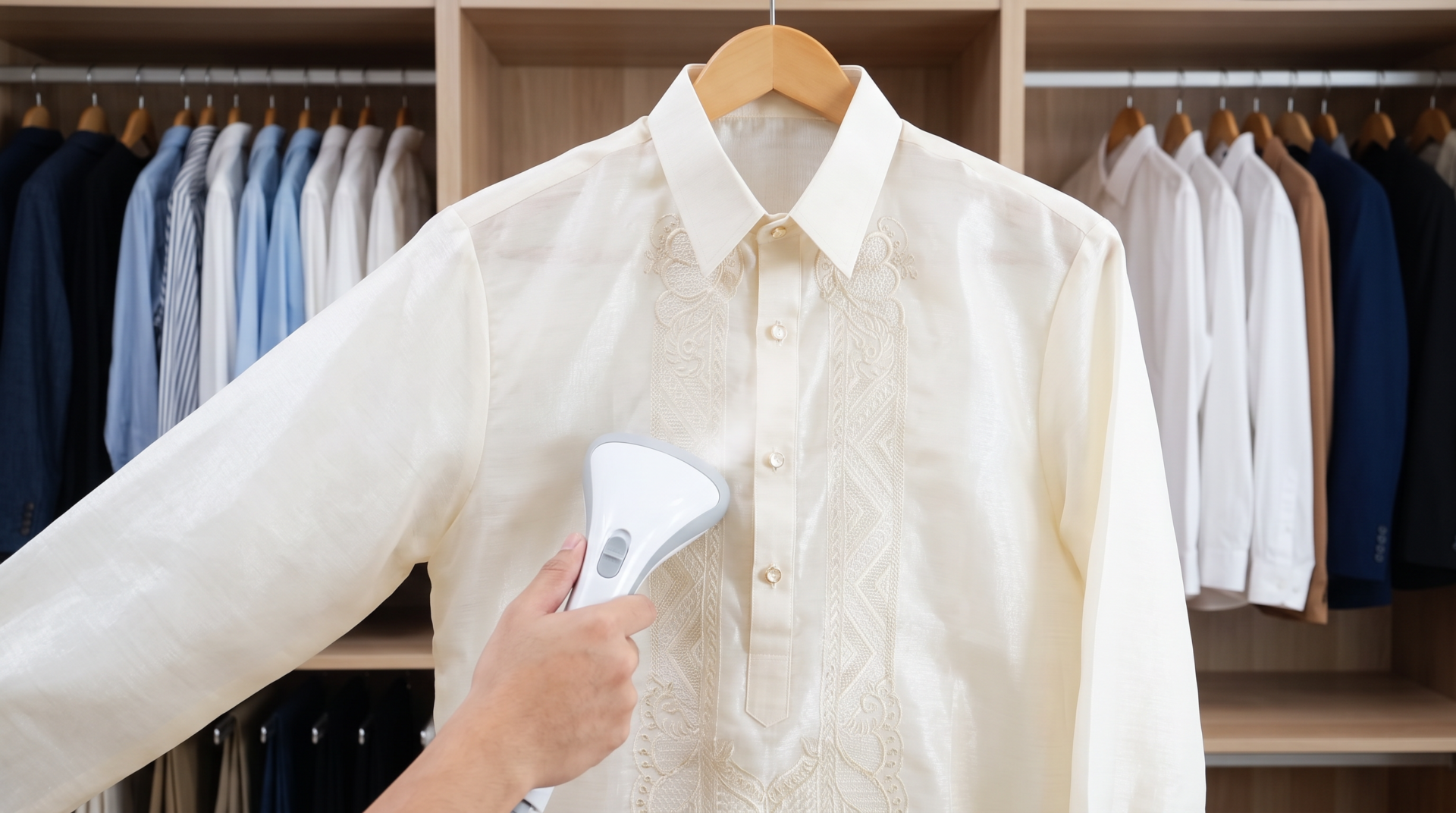
- Steam, or iron organza on low heat with a pressing cloth between the iron and the fabric. For Jusilyn and cocoon, a steamer is all you need.
- Address stains immediately by blotting (not rubbing) with cold water. Take the garment to a dry cleaner as soon as possible for set-in stains.
- Avoid prolonged exposure to direct sunlight during storage. White and ivory barongs can yellow over time.
What to Look for When You Buy
Whether you are shopping on Amazon or through a specialty Filipino clothing retailer, a few quality indicators will help you separate well-made pieces from lower-quality options:
First, look at the embroidery. On a well-made barong, the stitching is even, the thread matches or complements the base fabric, and there are no loose threads or puckering around the embroidered areas. Second, check the collar construction. A well-finished collar will lie flat and have clean, tight stitching at the corners. Third, confirm the fiber content in the product description. Reputable sellers clearly state what the fabric is (for example, polyester organza) and don’t borrow heritage fabric names loosely. Finally, read recent buyer reviews for fit feedback, especially from shoppers with a similar build or who attended a similar type of event.
At Handmade Kapamilya, our barong tagalog pieces are hand-embroidered by artisans in the Philippines. Most are polyester organza, with a few in Jusilyn, cocoon fabric and cotton. If you are looking for a starting point, browsing a brand that specializes in Filipino formal wear and holds Amazon brand registration can give you added purchase protection and easier returns.
Final Thoughts
The barong is more than a shirt. It is a garment with deep roots in Filipino identity, and wearing one—whether you are Filipino yourself or attending a Filipino event as a guest—is a gesture of respect and appreciation for that culture. Take your time choosing the right fabric, fit, and style for your occasion, care for it properly, and it will serve you well for many events to come.
Explore More Guides on Filipino Culture & Heritage
- Weddings & Customs: Filipino Wedding Traditions: A Beautiful Guide to Rituals & Meaning
- Women’s Formalwear: Filipiniana Dress Guide: A Simple Look at Heritage, Style & Elegance
- Textile Comparison: Barong Fabric Labels Explained: A Guide for Shoppers
- Shopping in the US: Where to Buy Barong Tagalog in the US: Authentic Guide