

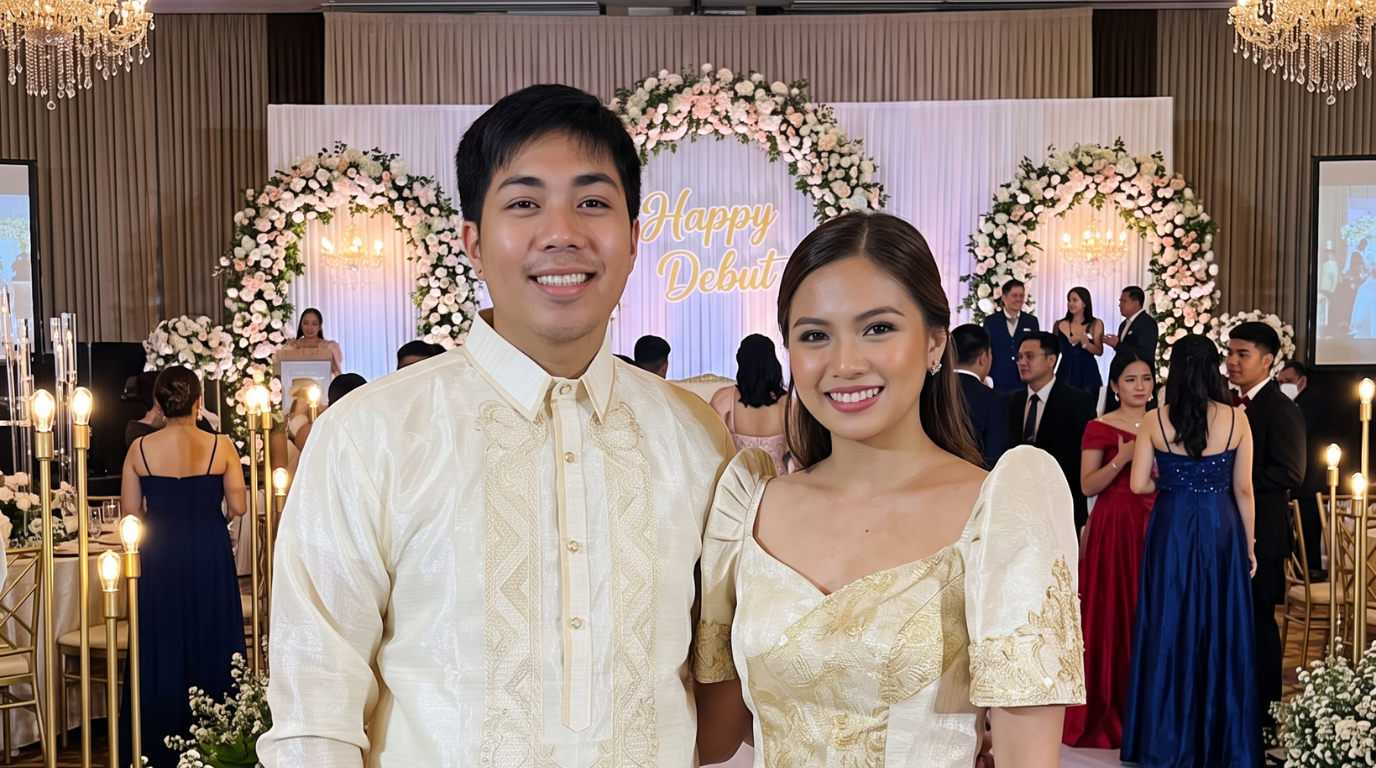
Attending a Filipino debut is far more than responding to a birthday party invitation. In Philippine culture, the eighteenth birthday represents a paramount milestone—a formal coming-of-age celebration that marks a young woman’s transition into adulthood. Tracing its historical roots back to European debutante balls adapted through Spanish colonial traditions and American social structures, the modern debut has evolved into a grand family production. Celebrated with elaborate catering, multi-tiered program rituals, custom floral design, and guest lists spanning multiple generations, a debut often rivals a formal wedding in both scale and cultural weight.
Because the debutante’s family invests immense care into curating the visual and ceremonial aesthetic of the evening, dressing appropriately is an essential mark of respect. Arriving underdressed signals a disregard for the formal occasion, while wearing an inappropriate color or cut can distract from the celebrant during once-in-a-lifetime photography. Whether you are a close friend, a respected godparent (ninong or ninang), an escort in the 18 Roses ceremony, or a member of the Cotillion de Honor court, understanding the dress code guarantees you look polished, culturally respectful, and perfectly aligned with the evening’s theme.
Deciphering the Guest Dress Code: The Six Tiers of Attire
Filipino debut invitations employ a blend of international formalwear terms and distinct Philippine cultural dress codes. Because themes vary widely—from ultra-exclusive luxury hotel balls to relaxed outdoor garden receptions—interpreting the specified dress code tier correctly is your first line of defense against styling errors.
To help you navigate these instructions seamlessly, the table below breaks down the appropriate silhouettes, textiles, and footwear choices across all six common debut dress code tiers.
Guest Styling Matrix by Dress Code Tier
| Dress Code Tier | Visual Environment & Typical Venues | Essential Men’s Attire | Essential Women’s Attire | Accessories & Styling Details |
| Black Tie | Grand hotel ballrooms, high-end gala spaces. | Black tuxedo with satin lapels, white French-cuff dress shirt, black satin bow tie, and black dress socks. | Floor-length evening gown in luxurious fabrics such as satin, chiffon, or structured velvet. | Cufflinks, pocket square, polished black Oxford leather shoes, formal evening clutch, and a shawl. |
| Formal | Ballroom venues, country clubs, and formal banquet halls. | Dark two-piece or three-piece suit (navy, charcoal, or black) with tie, or a long-sleeved Barong Tagalog. | Formal midi dress, high-end cocktail dress (knee-length to mid-calf), or elegant long gown. | Conservative necktie, matching leather belt, polished dress oxfords, statement earrings, and closed-toe heels. |
| Semi-Formal | Intimate indoor venues, garden pavilions, and daytime halls. | Long-sleeved button-down shirt with dress slacks (tie optional), or a tailored blazer with trousers. | Dressy cocktail dress, sophisticated midi dress, or polished separates like a blazer with wide-leg trousers. | Leather loafers or derby shoes, minimal jewelry, block heels, kitten heels, or refined dressy flats. |
| Cocktail Attire | Modern evening receptions, chic lounges, and art spaces. | Tailored suit without a tie, or an open-collar dress shirt paired with a structured blazer and dress slacks. | Knee-length to mid-length cocktail dress, elegant dressy jumpsuit, or matching modern separates. | Leather dress loafers, leather-strap watch, minimalist clutch, and stylish block or kitten heels. |
| Filipiniana Formal | Heritage-themed events, ancestral homes, and culturally focused celebrations. | Long-sleeved Barong Tagalog (organza, Jusilyn or cocoon), plain white camisa de chino underneath, and dark dress slacks. | Modern terno gown with structured butterfly sleeves, mestiza dress, or an alampay ensemble. | Fine Philippine pearls, heirloom gold jewelry, inabel accents, and high-shine black leather shoes. |
| Smart Casual | Casual outdoor venues, private residences, and daytime parties. | Long-sleeved collared shirt or high-quality knit polo, paired with tailored chinos or dark trousers. | Midi-length dress, dressy romper, or coordinated blouse-and-skirt separates. | Clean leather dress sneakers or loafers with matching belt, minimal jewelry, and dressy flat sandals. |
Semantic Clarification: Social Debut Court of Honor vs. Scout Court of Honor
When researching guidelines for a “Court of Honor dress code” in the Philippines, search results frequently yield information regarding two distinct cultural events. To prevent confusion and ensure you dress appropriately for your specific event, it is crucial to recognize these differences.
- The Social Debut Court of Honor: Refers to the teenage or young adult entourage selected by the debutante. This group usually consists of eighteen couples (or nine male escorts and nine female members) who perform the traditional Cotillion de Honor waltz, participate in symbolic ceremonies, and wear high-fashion formalwear or coordinated Filipiniana attire.
- The Boy Scouts of the Philippines (BSP) Court of Honor: Refers to an official institutional ceremony where scouts receive rank advancements, merit badges, and high honors. This event mandates the strict wearing of official BSP field uniforms (Type-A or Type-B) governed by national organizational guidelines.
The table below provides a side-by-side semantic comparison between these two settings.
Semantic Comparison of Philippine “Court of Honor” Concepts
| Parameter | Social Debut Court of Honor MD+ 1 | Boy Scouts of the Philippines Court of Honor MD+ 2 |
| Occasion Nature | A private family milestone and formal social ball celebrating a young woman’s 18th birthday. | A structured, official institutional ceremony recognizing character development and scout rank advancement. |
| Core Attire Style | High-fashion formalwear, modern Filipiniana, coordinated evening gowns, custom suits, or Barong Tagalogs. | Official Scout Field Uniform (Type-A or Type-B) matching the specific scout rank. |
| Primary Garments (Men/Boys) | Tailored tuxedo, dark suits, or hand-embroidered organza long-sleeved Barong Tagalog over a camisa de chino. | Light khaki or light brown shirt, dark brown trousers/shorts, official brass-buckled web belt, and black leather shoes. |
| Primary Garments (Women/Girls) | Coordinated floor-length gowns, modern terno dresses with butterfly sleeves, or elegant midi cocktail dresses. | Official Senior Scout uniform with red neckerchief or official female scouter field uniform. |
| Key Accessories | Boutonnieres, wrist corsages, minimalist gold or pearl jewelry, and formal evening clutches. | Official rank neckerchief, carabao slide, merit badge sash, and scout insignia patches. |
| Aesthetic Objective | Visual cohesion that complements the venue styling while keeping the focus on the debutante. | Absolute uniformity, cleanliness, and symbolic representation of scout ideals, honor, and outdoor readiness. |
The Gentleman’s Guide: Western Suits vs. Traditional Barong Tagalog
Male guests attending a Filipino debut generally choose between two time-honored formal options: a classic Western suit or the national garment of the Philippines, the Barong Tagalog. Both choices project high elegance, but each follows distinct styling protocols.
The Western Suit: Standard Tailoring and Fit
For evening debuts hosted in grand hotel ballrooms, dark conservative suits in charcoal gray, midnight navy, or deep black are ideal.
- The Shirt: Pair your suit with a crisp, long-sleeved white or light blue dress shirt featuring a structured collar.
- The Necktie: Choose a subtle, solid-colored tie or a fine pattern. Avoid loud novelty prints or neon shades that clash with the event’s color palette.
- Footwear & Accessories: Leather Oxfords or Derbies polished to a mirror shine, paired with dark mid-calf socks and a matching leather belt, complete the look.
The Barong Tagalog: Essential Fit, Materials, and Undergarment Rules
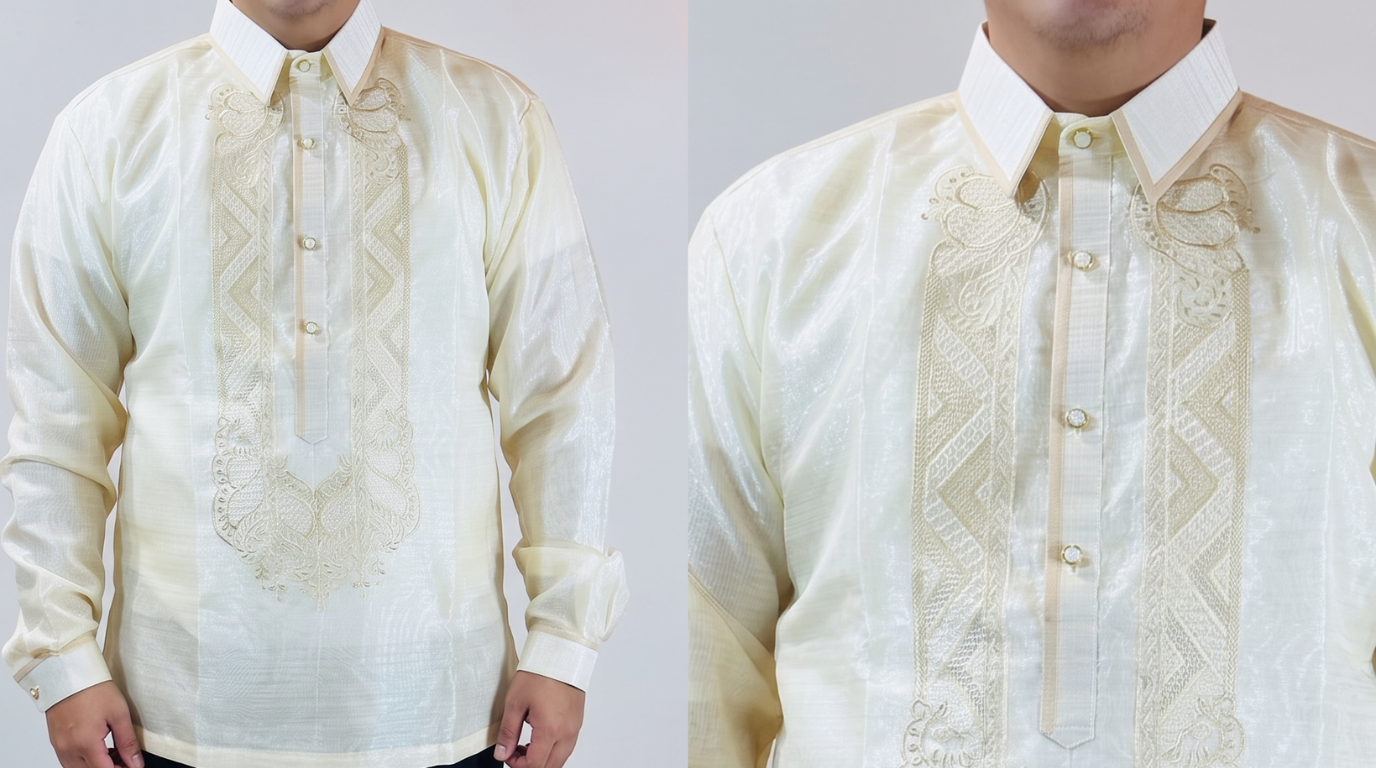
The Barong Tagalog is a lightweight, semi-sheer, hand-embroidered formal shirt worn untucked. Because of its breathability and rich cultural heritage, it is often the preferred choice for formal Filipino gatherings.
- Textile Selection:
- Organza: Polyester organza is the go-to for most guests and entourage members. It is light with a soft sheen, double-layered and opaque on men’s barongs, and easy to care for.
- Cocoon: A single-layer fabric with a slubby crosshatch weave and a soft, dry lustre, a good pick for an honored guest or escort who wants visible texture.
- Jusilyn: A lightweight, single-layer synthetic with a fine crosshatch texture. It is lightly translucent, for a lighter, more traditional sheer look.
- The Undershirt Rule (Camisa de Chino):
- Mandatory Protocol: Because authentic Barongs are sheer, wearing a dedicated undershirt is mandatory.
- What to Wear: You must wear a plain white, solid, long-sleeved camisa de chino (a collarless cotton shirt) or a snug white crew-neck undershirt.
- What to Avoid: Never wear a short-sleeved t-shirt with visible graphic logos, an unbuttoned tank top (sando), or a colored shirt underneath your Barong. The sleeve line of a short-sleeved undershirt creates an unflattering horizontal line across your arms under sheer fabric.
- Trousers, Shoes, and Accessories:
- Trousers: Pair your Barong with dark, flat-front dress slacks in black or deep navy blue.
- Footwear: Polished black leather Oxford or Derby dress shoes paired with dark mid-calf dress socks are required.
- Accessories: Never wear a necktie, bow tie, or pocket square with a Barong Tagalog. Keep jewelry minimal so it does not distract from the front placket’s embroidery.
Barong Tagalog Assembly and Styling Protocols
| Garment Detail | Traditional Protocol | Styling Specifications | Common Styling Errors to Avoid |
| Undershirt | Mandatory long-sleeved or fitted undergarment. | Solid white long-sleeved camisa de chino or fitted white cotton top. | Short-sleeved t-shirts, graphic tees, dark undershirts, or bare chest. |
| Bottoms | Formal tailored slacks. | Tailored black or dark charcoal flat-front dress trousers. | Blue jeans, chinos, cargo pants, or shorts. |
| Footwear | High-shine formal leather footwear. | Black leather Oxfords or Derbies with black dress socks. | Casual sneakers, boat shoes, sandals, or white sports socks. |
| Neckwear & Accessories | Unadorned collar area. | Neat collar fold; buttoned up or open top button depending on cut. | Wearing neckties, bow ties, or inserting pocket squares. |
The Modern Filipina: Evening Gowns, Cocktail Dresses, and Modern Filipiniana
Female guests at a debut have an array of elegant silhouettes to explore, ranging from Western formal gowns to modern interpretations of traditional Philippine garments.
Western Evening Gowns and Cocktail Dresses
- Floor-Length Gowns: Mandatory for Black Tie debuts and highly encouraged for Formal ballroom receptions. Choose rich fabrics like crepe, satin, lace, or structured taffeta that drape beautifully under evening lighting.
- Cocktail and Midi Dresses: Ideal for Semi-Formal or Cocktail dress codes. Hemlines should fall between knee-length and mid-calf. Ensure cuts remain tasteful—overly revealing necklines or ultra-short hemlines are discouraged out of respect for the multi-generational guest list.
The Rise of Modern Filipiniana
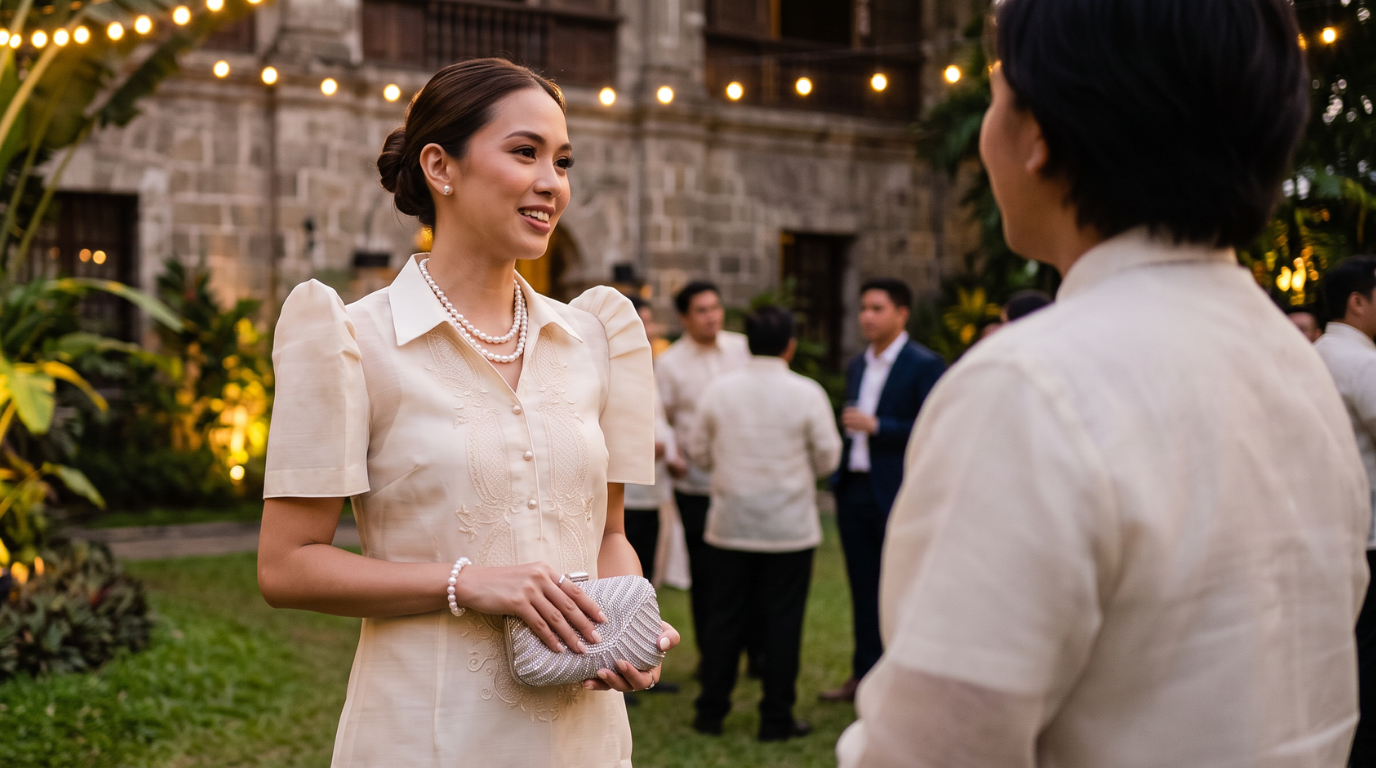
In recent years, modern Filipiniana fashion has seen a magnificent resurgence at debuts and formal events. Incorporating traditional elements offers a chic ways to honor Philippine heritage:
- The Modern Terno: Characterized by its iconic, stiffened, arched butterfly sleeves. Modern versions feature streamlined sheath or A-line skirts rather than heavy traditional layers.
- The Mestiza Dress: A structured formal dress highlighting shoulder accents and intricate needlework, such as calado embroidery.
- Filipiniana Boleros and Alampay Wraps: Detachable butterfly-sleeve jackets (boleros) or embroidered neck scarves (alampay) that can be layered over a simple cocktail dress or tailored jumpsuit, offering versatility for modern guests.
The Debutante & Entourage “Double-Look Strategy”
It is increasingly common for the debutante and her entourage to employ a “Double-Look Strategy”:
- The Primary Formal Outfit: A grand, traditional ball gown or structured Terno worn during the grand entrance, formal dining, 18 Roses dance, and official photography.
- The Party Outfit: A lighter, knee-length cocktail dress or modern jumpsuit donned later in the evening when the formal program transitions into a dance party.
Court of Honor & Entourage Attire Protocols
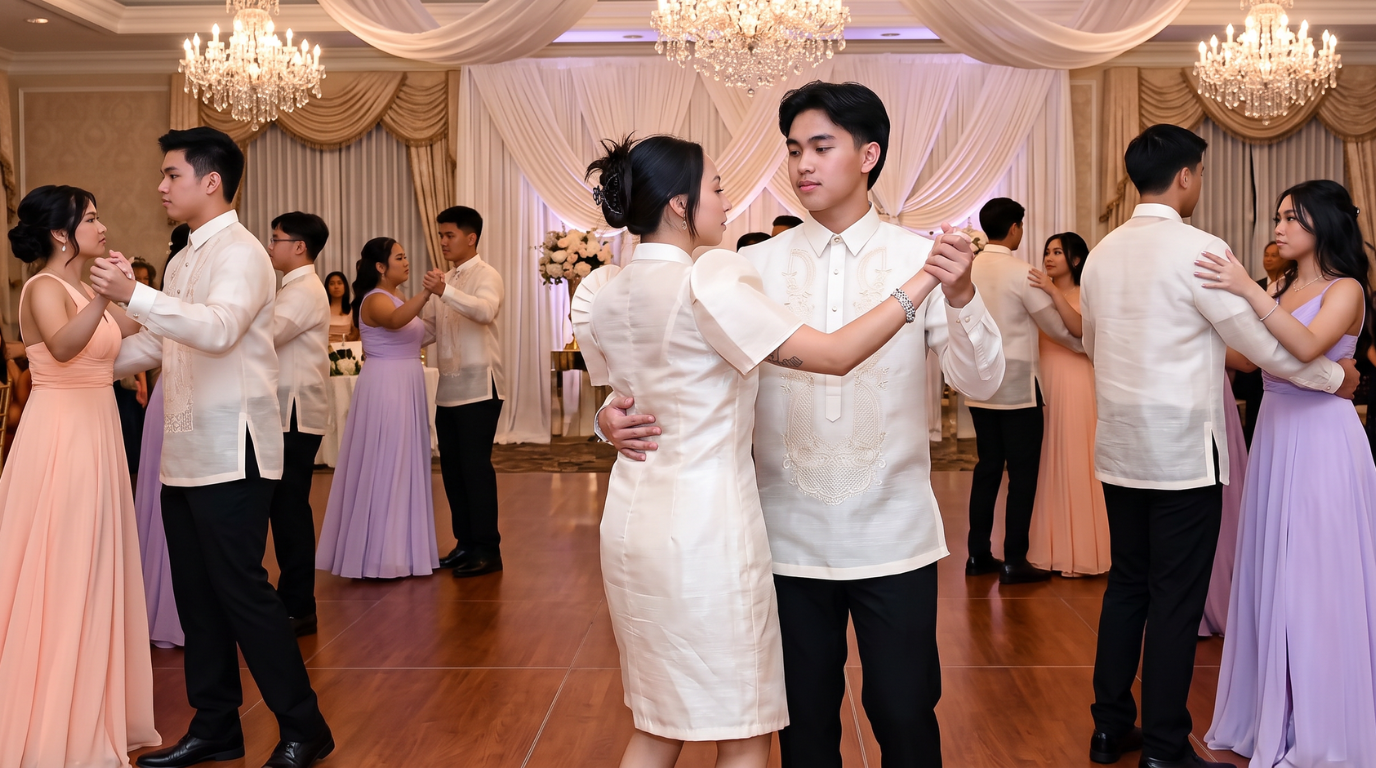
If you are selected to be part of the debutante’s entourage or Court of Honor, your outfit requirements are subject to strict visual coordination overseen by the family or event stylist. The entourage participates in core ceremonial segments that structure the debut program:
- 18 Roses (Male Escorts): Eighteen prominent male figures in the debutante’s life—father, grandfathers, brothers, uncles, and close friends—who each present a pink or red rose and dance a slow waltz with her.
- 18 Candles (Female Mentors & Peers): Eighteen women who deliver personal speeches, wishes, and advice while lighting a symbolic candle representing guidance for the celebrant’s future.
- 18 Treasures (Gift-Givers): Family members or godparents who present meaningful gifts or financial tokens symbolic of life wisdom and support.
- 18 Shots / Toasts: A modern adaptation where close adult peers give short speeches followed by a celebratory toast or shot.
- Cotillion de Honor: An entourage of synchronized dance couples who perform a choreographed opening waltz to open the ballroom floor.
Entourage and Special Ritual Attire Protocols
| Ceremonial Role | Participant Composition | Standard Attire Protocol | Color & Stylistic Coordination Rules |
| 18 Roses Escorts | 18 key men (father, brothers, escorts, close friends). | Matching Barong Tagalogs or tailored dark suits with boutonnieres. | Exact color-matching of ties, pocket squares, or embroidery threads to the debutante’s color motif. |
| 18 Candles | 18 female mentors, godmothers, sisters, and close friends. | Formal evening gowns, formal midi dresses, or modern Filipiniana. | Attire must adhere strictly to the specified motif palette (e.g., blush, sage, gold) assigned by the family. |
| 18 Treasures / 18 Shots | Honored elders, godparents (ninongs/ninangs), or close peers. | Standard formal or Filipiniana formal attire. | High formal standard; ninongs in Barongs/suits and ninangs in formal gowns or Filipiniana. |
| Cotillion de Honor Court | 9 or 18 synchronized couples performing the opening waltz. | Custom matching gowns for women; identical Barong Tagalogs/suits for men. | Tailored as a uniform collection to ensure perfect symmetry on stage and in video recordings. |
The Guest Color Code and Etiquette Handbook
Navigating a debut successfully requires adhering to unwritten social rules regarding colors, venue adjustments, and program decorum.
The Strict “No-White” Rule
The single most critical attire rule for a Filipino debut guest is to avoid wearing white.
- Colors to Avoid: Pure white, off-white, ivory, cream, champagne, and extremely pale blush shades that photograph as white under flash photography.
- Why It Matters: White is traditionally reserved exclusively for the debutante to ensure she stands out as the focal point of her celebration.
- The Only Exception: Guests may wear white only if the debut invitation explicitly states an all-white dress code theme.
Respecting the Color Motif
Invitations frequently list a specific color motif (e.g., emerald green, rose gold, dusty blue, navy).
- General Guests: You are encouraged to wear shades within or complementary to the motif palette. However, do not try to replicate the exact design or color of the debutante’s main gown.
- Entourage Members: You must match the designated hue assigned to your specific group precisely.
Venue Considerations and Footwear Selection
- Hotel Ballrooms & Indoor Venues: Air conditioning in Philippine function halls is notoriously cold. Female guests should bring an elegant shawl, wrap, or tailored blazer.
- Garden & Outdoor Venues: For outdoor receptions, garden lawns, or rustic pavilion venues, avoid thin stiletto heels that sink into grass or gravel. Opt for dressy block heels, wedge sandals, or sleek dressy flats.
What to Pack: Essential Debut Emergency Kit
Given that formal debuts run for four hours or more, bringing a small emergency kit ensures comfort throughout the night:
- For Women: Compact mirror, touch-up lipstick, oil-blotting sheets for humidity, tissue packet for emotional speech segments, foldable flat shoes for dancing, and a phone power bank.
- For Men: Small pocket handkerchief, mints, phone power bank, and extra cufflinks.
Frequently Asked Questions (FAQs)
What should women wear to a Filipino debut party?
Women should wear a floor-length evening gown for Black Tie or Formal events, or a structured formal midi or cocktail dress for Semi-Formal celebrations. Modern Filipiniana gowns featuring iconic butterfly sleeves (Terno) or elegant dressy jumpsuits are also highly appropriate. Always verify that your chosen color does not conflict with the debutante’s gown or break the “no-white” rule.
Can guests wear white at a Filipino debut?
No, guests must avoid wearing white, off-white, ivory, cream, or pale blush, as these shades are strictly reserved for the debutante. The only exception is if the host family explicitly requests an all-white dress code theme on the formal invitation.
What is the dress code for 18 Roses male escorts?
Male escorts in the 18 Roses ceremony wear formal dark Western suits with matching neckties or traditional, long-sleeved Barong Tagalogs (usually organza, so the escorts match) paired with a white camisa de chino, dark dress slacks, and polished black leather shoes. Their accessories or neckwear are frequently color-coordinated with the debutante’s motif.
Are cocktail dresses appropriate for a Filipino debut?
Yes, cocktail dresses are appropriate for debuts specified as Formal, Semi-Formal, or Cocktail Attire. Hemlines should sit between knee-length and mid-calf, constructed from rich formal fabrics like crepe, satin, or lace, and styled with heels and formal accessories.
What is the difference between a social debut Court of Honor and a Boy Scout Court of Honor?
A social debut Court of Honor is the entourage of young men and women who perform the Cotillion de Honor dance and celebrate an 18th birthday in high-fashion formalwear. A Boy Scout Court of Honor is an official advancement ceremony where scouts receive rank promotions while wearing official Scout field uniforms governed by organizational regulations.