
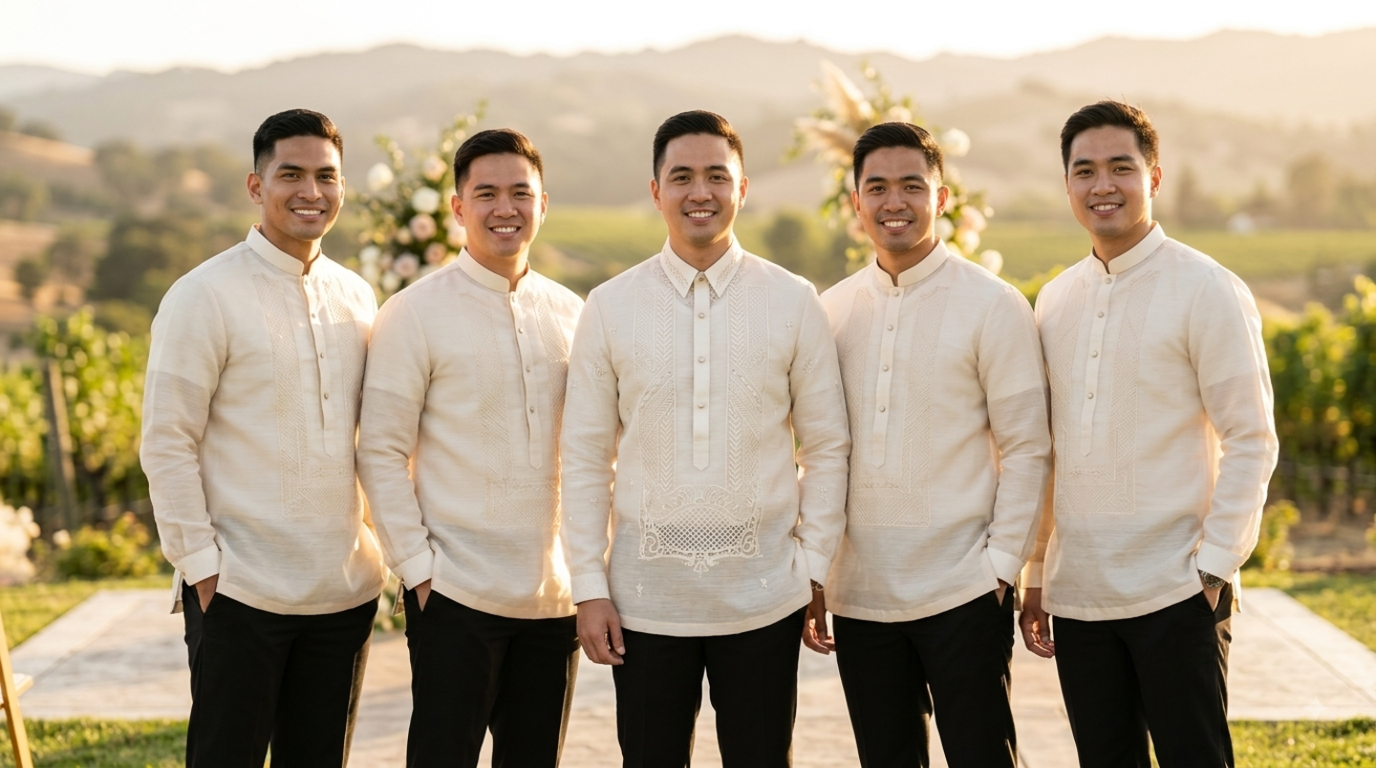
Mabuhay! Kumusta po? If you are currently planning your wedding day, congratulations! Organizing your barong tagalog groomsmen attire is one of the most exciting cultural milestones of your wedding prep. However, orchestrating a lineup of men—often scattered across different cities or time zones—to look unified, sharp, and sophisticated can quickly feel overwhelming.
Between balancing traditional heritage with modern tailoring, navigating sheer fabrics under bright photography flashes, and choosing colors that match your bridal theme, the details add up fast. At Handmade Kapamilya, we hear from Fil-Am grooms every season who ask us the exact same question: How do I make my groomsmen look effortlessly coordinated without outshining my own groom’s barong?
This guide is our masterclass for you. Drawing from the questions wedding parties across the United States bring us, we break down everything you need to know: groom-versus-groomsmen visual hierarchy, fabric selections, collar cuts, 2026 color trends, accessory rules, and sizing logistics.
Why Coordinated Groomsmen Barong Attire Matters
Selecting a standardized dress code for your wedding entourage is not merely about aesthetic symmetry; it is an act of cultural pride and respect. As the national formalwear of the Philippines, the Barong Tagalog carries deep historical dignity while offering a lightweight, breathable, and regal alternative to the heavy Western tuxedo.
When your groomsmen step up to the altar wearing properly fitted Barong Tagalogs, three critical elements come together:
- Visual Harmony in Photography: The translucent weave of traditional Barong fabrics naturally catches light. Inconsistencies in undertones, undershirt sleeve lengths, or fabric weight become instantly magnified in high-definition wedding photography. Coordinated attire ensures smooth visual cohesion across your entire bridal party.
- Cultural Representation: For many Fil-Am groomsmen or non-Filipino wedding party members, wearing a Barong Tagalog is their first immersion into Filipino formal etiquette. A well-curated outfit allows them to wear the heritage proudly and correctly.
- Clear Hierarchy at the Altar: A structured styling plan clearly distinguishes the groom from his groomsmen, fathers, and principal sponsors (ninongs) while keeping the overall palette connected.
Groom vs. Groomsmen Hierarchy: Defining Roles Through Design
One of the most frequent mistakes we see is ordering the exact same Barong design for both the groom and his groomsmen. In Filipino formal etiquette, the groom should always stand out as the centerpiece of the lineup.
Here is how we structure visual hierarchy across the wedding party:
- The Groom: Regal, Intricate, and Luxurious
The groom’s Barong Tagalog should feature the finest fabric and the highest concentration of hand embroidery.
- Fabric: Cocoon fabric, like our Ivory Cocoon Barong, for a textured look that stands apart, or a heavily embroidered organza barong.
- Embroidery: Intricate calado (drawn-thread needlework) or an elaborate full-open Coat Barong silhouette.
- Shade: Natural ivory or rich off-white cream to complement the bride’s gown.
- The Groomsmen: Sleek, Cohesive, and Balanced
Your barong tagalog groomsmen lineup should echo the groom’s style without competing with it.
- Fabric: Polyester organza for most lineups, or Jusilyn for a lighter single-layer look.
- Embroidery: Classic Pechera (U-shaped front chest panel design) or subtle vertical border embroidery.
- Shade: Uniform natural cream, soft off-white, or colored organza barongs matching the bridesmaids’ palette.
- Fathers & Principal Sponsors (Ninongs): Traditional Distinction
Fathers of the bride and groom, along with the Ninongs, represent honor and mentorship.
- Style: An organza or Jusilyn barong with classic full-chest embroidery.
- Tone: Soft champagne, neutral cream, or warm metallic undertones to sit gracefully between the groom and the groomsmen.

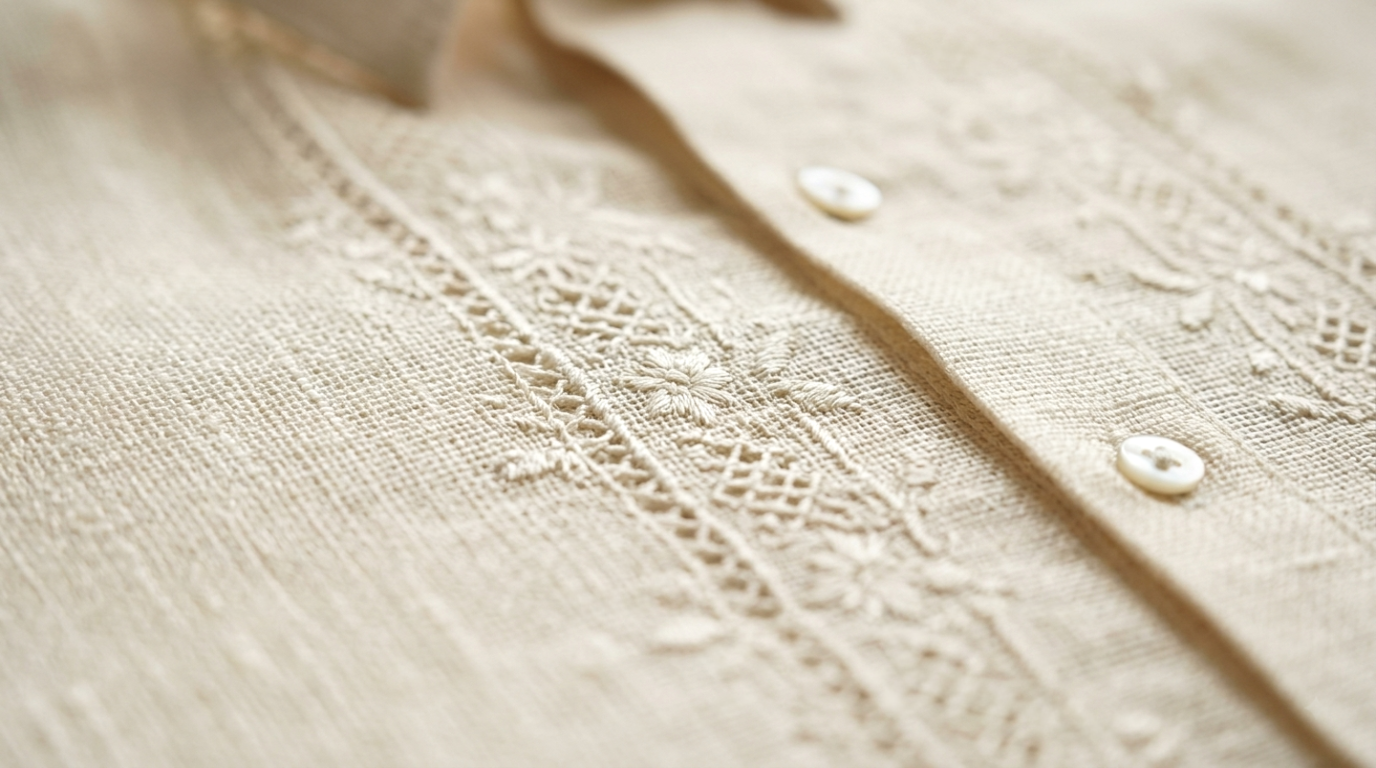
Selecting the Best Barong Tagalog Groomsmen Fabric: Organza, Cocoon, or Jusilyn?
The foundation of a handsome Barong lies in its fabric. Because your groomsmen will be wearing their attire through heat, long ceremony photos, and dancing at the reception, choosing the right material is essential.
Polyester Organza (Our Top Recommendation for Groomsmen)
Polyester organza is the fabric behind most of our barongs, including the flagship Ivory White Organza Barong and our colored barongs. It is light with a soft sheen, and on our men’s barongs it is double-layered, so it looks opaque and clean in photos.
- Pros: Easy care, holds a crisp shape through a long wedding day, and keeps color consistent across a big lineup.
- Best For: Groomsmen lineups of any size, colored barongs matched to the bridal palette, and fathers and ninongs.
Cocoon Fabric (For the Groom)
Cocoon fabric is a single-layer weave with a slubby crosshatch texture and a soft, dry lustre. We carry it in one groom barong, the Ivory Cocoon Barong.
- Pros: Rich texture, a warm ivory tone, and a quieter lustre that reads differently from organza at a glance.
- Best For: The groom who wants to stand apart from a lineup of groomsmen in organza.
Jusilyn
Jusilyn is a lightweight, single-layer synthetic barong fabric with a fine crosshatch texture. It is lightly translucent, so a clean undershirt matters. We carry two: the White Jusilyn Barong and the Deluxe Intricate Jusilyn Barong.
- Pros: Smooth, light feel and an airy drape. It packs small for travel.
- Best For: Destination weddings where groomsmen must pack their Barongs in carry-on luggage.
What About Piña and Jusi?
Historically, the most formal barongs were made from piña (pineapple-leaf fiber) or jusi. We don’t sell piña or jusi; our barongs are polyester organza, with a few in Jusilyn, cocoon fabric and cotton.
Mastering Barong Cuts, Collars, and Silhouettes
The silhouette of a Barong Tagalog dictates how formal and modern your entourage looks. When outfitting your barong tagalog groomsmen, choose one consistent cut for the entire party.
Half-Open Pechera Barong (The Timeless Standard)
The traditional Pechera features a buttoned placket that extends midway down the chest in a classic U-shape.
- Style Note: Slip-on convenience with a clean, continuous fabric front below the chest.
- Vibe: Classic, dignified, and universally flattering across all body types.
Full-Open Barong (Coat Barong Style)
A full-open Barong buttons completely down the front like a contemporary Western dress shirt or lightweight dress jacket.
- Style Note: Provides a structured, tailored jacket look.
- Vibe: Modern, sleek, and exceptionally comfortable for groomsmen who prefer easier dressing.
Collar Choices: Mandarin vs. Classic Pointed
- Mandarin (Chinese Standing) Collar: Sleek, modern, and youthful. It frames the neck sharply and eliminates the need for ties or collar accoutrements. Highly popular among contemporary Fil-Am wedding parties.
- Classic Pointed Collar: Traditional and versatile. Offers a timeless silhouette that honors classic Philippine formalwear etiquette.
Barong Tagalog Wedding Color Trends for 2026
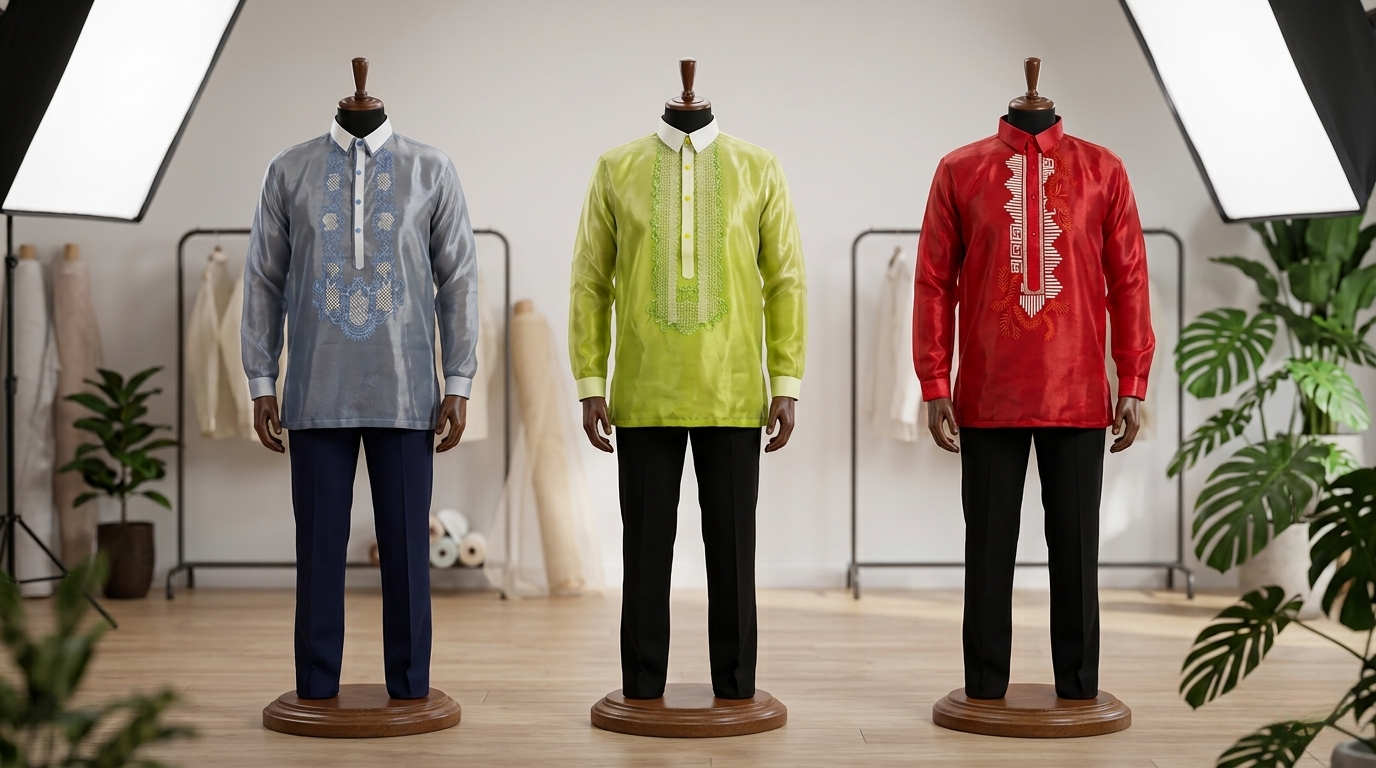
While natural ivory and cream will always remain the classic foundation of Filipino formalwear, modern couples are increasingly infusing subtle colors into their groomsmen attire.
- Natural Cream & Warm Off-White (The Undefeated Classic)
Natural cream lets the hand embroidery take center stage. It pairs seamlessly with traditional black trousers and provides a timeless, regal contrast against dark church altars or lush garden backdrops.
- Earthy Sage Green & Terracotta
Inspired by tropical Philippine flora and landscape aesthetics, sage green and soft terracotta colored Barongs have emerged as major wedding trends. These muted tones tie the groomsmen directly into the bridal party floral theme without appearing overly bright.
- Dust Blue & Slate
Dust blue offers a crisp, cool undertone that looks striking in outdoor and beach destination photography. It complements ocean views while maintaining formal distinction.
- Champagne & Warm Gold
For evening receptions, black-tie galas, or hotel ballroom ceremonies, soft champagne barongs deliver an opulent, sun-kissed warmth that pairs exceptionally well with gold jewelry accessories.
The Golden Rules of Styling & Accessories
Even the finest Barong Tagalog can be let down by the wrong accessories. Here are the rules we share with every groom to keep his entourage looking flawless:
- The Camisa de Chino (Undergarment Etiquette)
A Barong Tagalog should never be worn over a standard graphic tee or a ribbed athletic tank top. The sheer nature of Barong fabric will reveal tank top lines instantly under camera flash.
- The Solution: Pair every Barong with an authentic Camisa de Chino—a collarless, lightweight cotton undershirt designed specifically for Filipino formalwear.
- Sleeve Length: Match long-sleeve Barongs with long-sleeve Camisas, and short-sleeve Barongs with short-sleeve Camisas.
- Color Selection: Choose an off-white or light cream Camisa de Chino rather than stark bright white. Cream blends seamlessly beneath sheer Barong fibers for a smooth, invisible finish.
- Trousers & Footwear Selection
- Formal Church & Ballroom Ceremonies: Tailored black formal trousers with black leather dress shoes (oxfords or sleek dress loafers).
- Outdoor, Garden & Beach Weddings: Dark navy, charcoal gray, or pale khaki linen-blend trousers paired with clean leather loafers.
- Style Rule: Trousers should feature a clean break over dress shoes. Avoid casual chinos, jeans, or athletic footwear.
- Boutonnieres vs. Collar Pins
Here is a critical warning: Do not use traditional safety pins or floral pins on a sheer Barong Tagalog! Standard pin stems can snag and tear sheer organza, Jusilyn, or cocoon fabric, leaving permanent holes.
- Alternative 1: Magnetic Boutonnieres: Secure floral arrangements using high-strength dual magnets that clamp across the fabric without piercing a single thread.
- Alternative 2: Heritage Collar Pins: Ditch heavy floral boutonnieres altogether and opt for refined gold or brass collar pins. They add a sleek, metallic accent while protecting the garment.
Fit, Sizing, and Logistics for Overseas & Fil-Am Wedding Parties
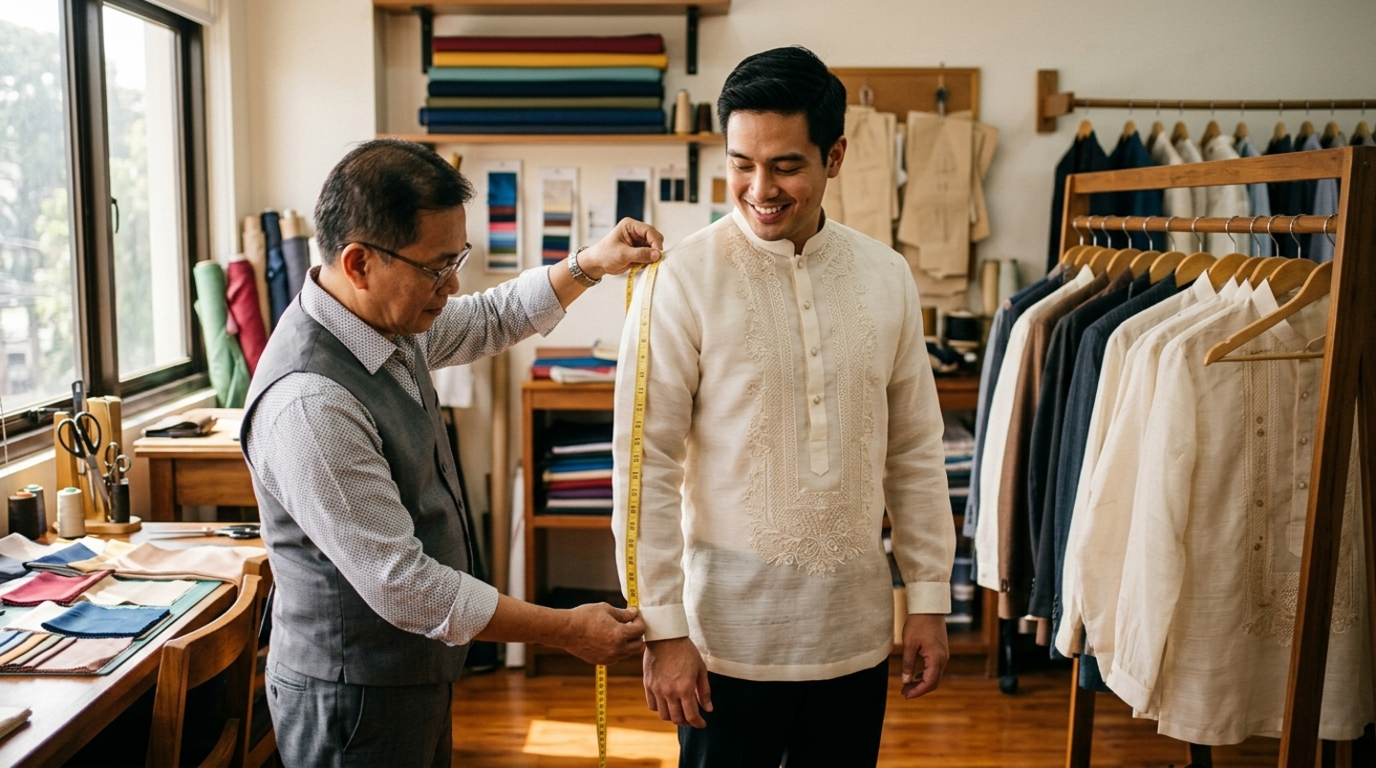
If your groomsmen are spread out across California, New York, Texas, or Hawaii, coordinating fittings can feel stressful. At Handmade Kapamilya, every barong ships from our stock in Minnesota, so the whole lineup can order from one place and try everything on at home.
Understanding US Sizing vs. Philippine RTW Sizing
Standard off-the-rack Barongs from the Philippines often run small through the shoulders, armholes, and chest compared to standard American sizing.
- Shoulder Breadth: A Barong must sit square on the shoulders without pulling across the upper back.
- Sleeve Length: The cuff should rest right at the wrist bone, allowing half an inch of shirt cuff space.
- Body Drape: A Barong Tagalog is designed to drape smoothly over the body, not skin-tight. It should allow comfortable movement for raising glasses during toasts and dancing at the reception.
Timeline Strategy for Group Orders
To ensure every groomsman receives his perfectly fitted ensemble with ample time for minor local adjustments, follow this timeline:
- 6 to 8 Months Before Wedding: Finalize fabric selection, collar styles, and color palettes.
- 4 to 5 Months Before Wedding: Collect accurate chest, shoulder, arm length, and neck measurements from all groomsmen.
- 2 to 3 Months Before Wedding: Receive garments, conduct try-on fittings, and organize any minor hem adjustments.
Barong Care, Packing, and Wedding Day Prep
When your groomsmen receive their Barongs, proper care will keep them crisp and wrinkle-free on the wedding morning.
- Steaming over Ironing: Never apply a hot flat iron directly to organza, Jusilyn, or any sheer Barong fabric. Use a garment steamer on medium heat from the inside out. If an iron must be used, place a clean cotton press cloth between the iron and the Barong.
- Hanger Storage: Always hang Barongs on broad, padded wooden coat hangers to preserve the structure of the shoulder padding.
- Packing for Destination Weddings: Roll the Barong gently around a layer of tissue paper inside a breathable garment bag. Hang the garment in the bathroom during a hot shower upon arrival to let natural steam release transit creases.
3 Common Groomsmen Barong Mistakes to Avoid
- Visible Undershirt Lines: Wearing a short-sleeved white undershirt beneath a sheer long-sleeved Barong creates an awkward visual horizontal line across the arms. Always match undershirt sleeve lengths.
- Forcing Tight Western Tailoring: A Barong Tagalog is naturally designed with relaxed breathability. Forcing an ultra-skinny fit will strain delicate seam stitching and restrict comfort.
- Mismatched Hardware & Accessories: Ensure all groomsmen wear matching belt leather, shoe colors, and metallic accents (cufflinks or collar pins) for unified group photos.
Frequently Asked Questions (FAQs)
Can groomsmen wear short-sleeve Barongs to a formal wedding?
Short-sleeve Barongs (often called Polo Barongs) are generally reserved for semi-formal events, daytime office wear, or casual rehearsal dinners. For formal evening ceremonies and church weddings, long-sleeve Barongs are strongly recommended.
Is it acceptable for the groom to wear a Western suit while groomsmen wear Barongs?
While the groom can wear a tuxedo while groomsmen wear Barongs, it can sometimes create a visual disconnect in group portraits. If the groom prefers a Western suit, we recommend selecting a sharp Coat Barong for the groom or keeping the entire entourage in coordinated Barongs to maintain unified heritage styling.
How do non-Filipino groomsmen feel about wearing a Barong?
In our experience, non-Filipino groomsmen love wearing the Barong Tagalog! They frequently comment on how lightweight and comfortable it feels compared to heavy tuxedo jackets, and they appreciate participating in a meaningful cultural tradition.
Step Up Your Wedding Entourage with Handmade Kapamilya
Ready to elevate your wedding party with authentic, perfectly fitted formalwear? At Handmade Kapamilya, we keep outfitting your groomsmen simple. From organza barongs for the whole lineup to a textured cocoon barong for the groom, all hand-embroidered by artisans in the Philippines, we are here to help you every step of the way.
Salamat for letting us be part of your heritage journey. Mabuhay ang bagong kasal!
👉 Explore Our Collections & Wedding Party Services:
💡 Keep Exploring: Build Your Ultimate Barong Knowledge
-
Unsure about materials? Dive into Barong Tagalog Fabrics: How to Choose the Right One to find the perfect weight and weave for your big day.
-
Planning a US wedding? Grab Filipino Wedding Traditions: A Beautiful Guide to Rituals & Meaning for a stress-free countdown to the altar.
-
Want it looking fresh forever? Master post-wedding care with How to Wash a Barong Tagalog: The Expert Care Guide.