

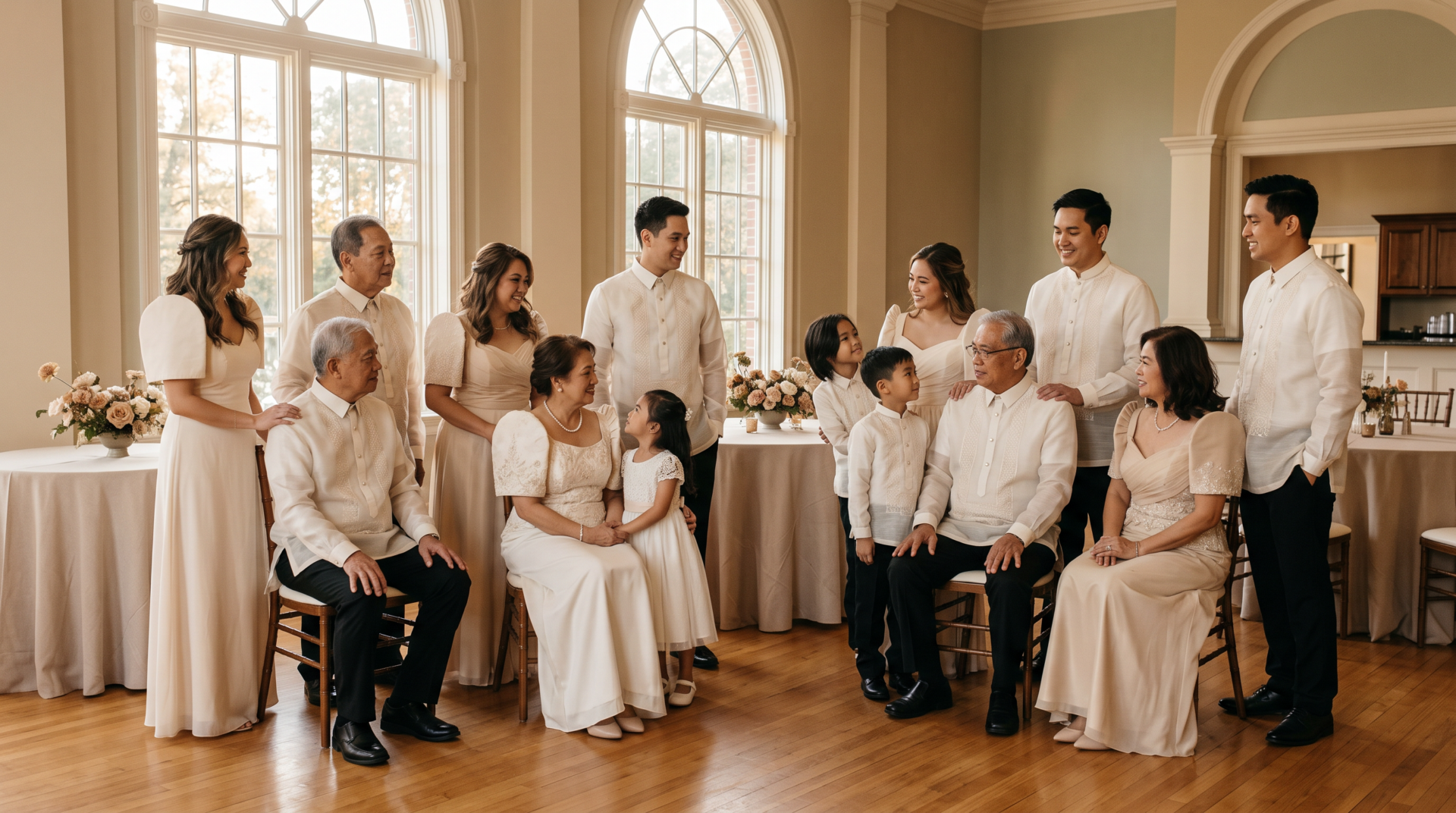
Traditional Filipino clothing is the family of garments Filipinos wear to the moments that matter most, from the barong tagalog worn by the groom to the Filipiniana worn by the mother of the bride. If you are shopping from the United States for a wedding, a baptism, a graduation or a funeral, this guide will help you understand what to buy, how it should fit, and what each piece actually means.
We write this as a Filipino brand that ships formalwear to kapamilya across the US every week. The goal here is not to sell you something today. The goal is to help you walk into your occasion knowing you are dressed correctly.
What counts as traditional Filipino clothing?
Traditional Filipino clothing refers to a small group of garments that developed over centuries of Spanish, Chinese, Malay and American influence, then settled into the forms Filipinos recognize today.
For men, the central piece is the barong tagalog. It is a long sleeved, lightweight, often sheer shirt worn untucked over an undershirt, with a straight hem and no breast pocket on the formal versions.
For women, the central piece is the Filipiniana, sometimes called the terno when it has the stiff butterfly sleeves, or the Maria Clara when it is the older ensemble with a pañuelo across the shoulders. Modern Filipiniana ranges from floor length gowns to tea length dresses and separates.
There are also pieces for children, accessories like the pañuelo and tapis, and regional dress from the Cordillera, Mindanao and the Visayas that sits outside the Hispanic-influenced lowland tradition. For most American weddings and family events, you are looking at the barong tagalog and the Filipiniana.
What do Filipino men wear to formal events?
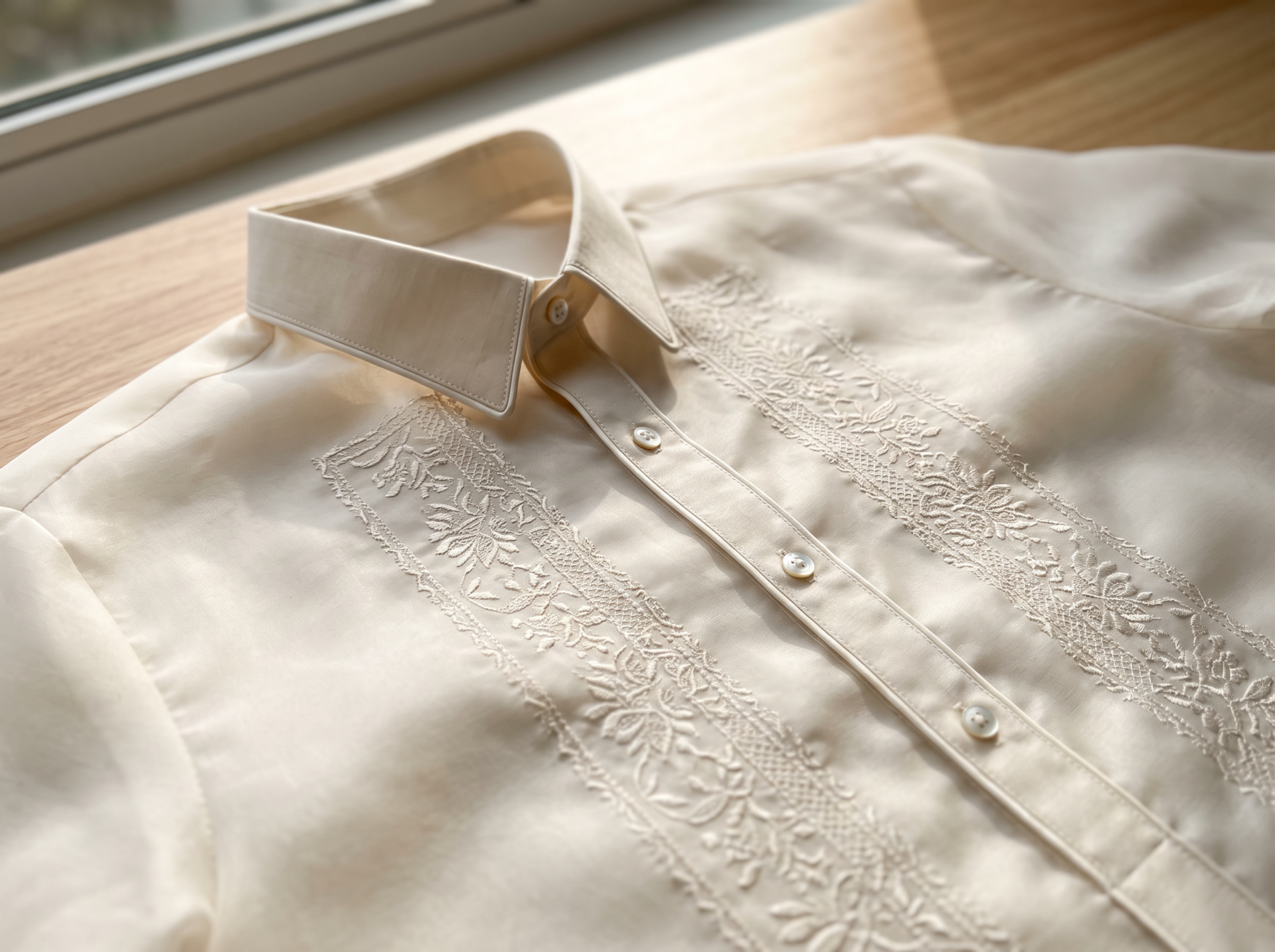
The traditional Filipino shirt for men at any formal event is the barong tagalog. In the Philippines it is the national dress for men and it is acceptable, and often expected, at weddings, baptisms, debuts, inaugurations and state functions.
The barong is worn over a plain white undershirt, with dark trousers and dark leather shoes. The shirt is never tucked in. The cuffs are closed with cufflinks on the more formal versions, or buttoned on the everyday versions.
For a wedding, the groom and the male principal sponsors usually wear the most formal barong, often fully embroidered down the front panel. Fathers, ninongs and guests wear a slightly simpler version. Groomsmen are often matched to the groom in a lighter or coordinated piece. If you are a guest and unsure, a mid-formality barong in a neutral tone is almost always correct.
What do Filipino women wear to formal events?
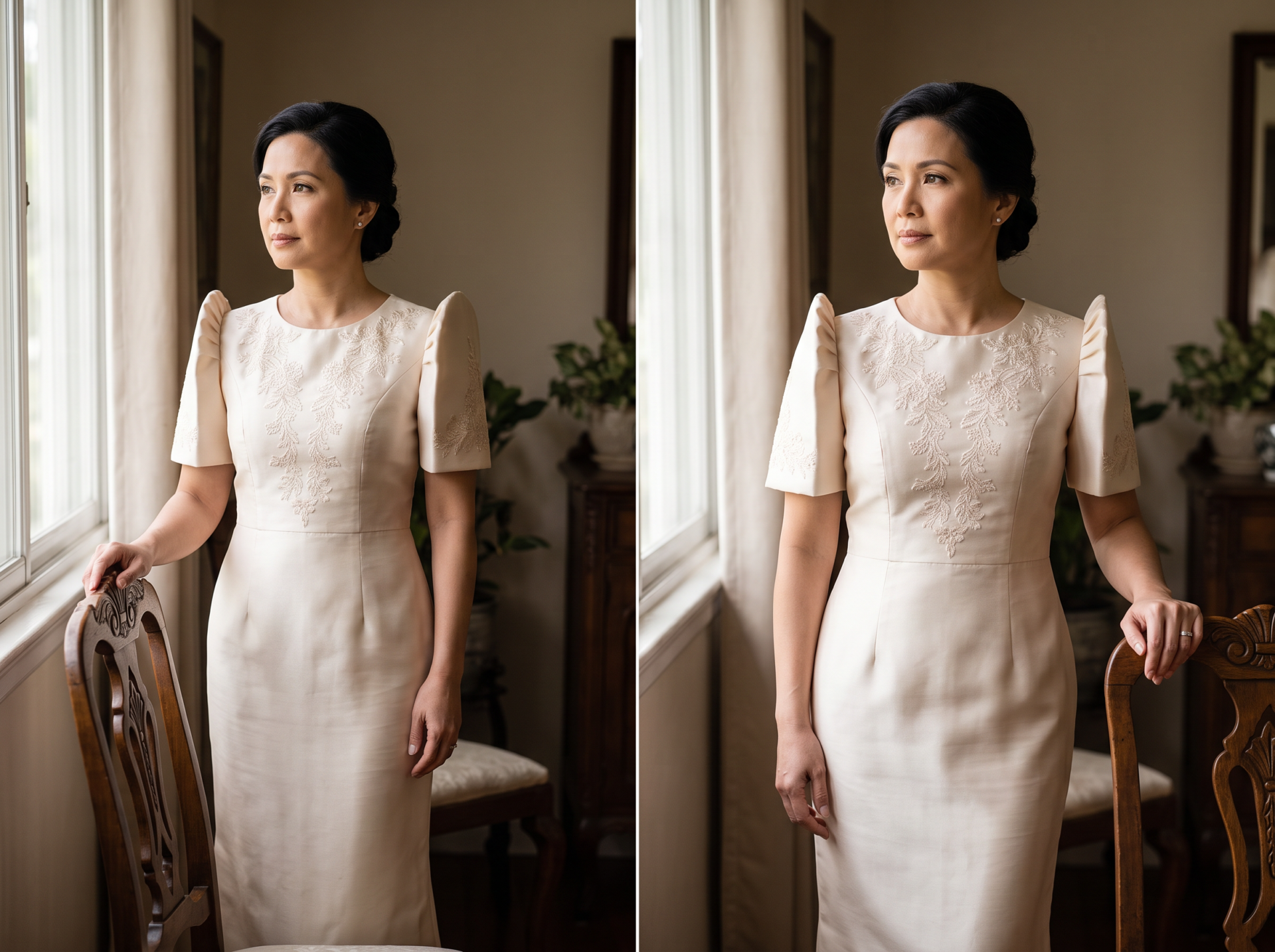
A traditional Filipino dress for women is almost always some form of Filipiniana. The most recognizable version is the terno, with its single-seam butterfly sleeves that stand up stiffly from the shoulder. It is the dress most people picture when they think of Filipino gowns.
For weddings, mothers and principal sponsors often wear a full length Filipiniana gown, sometimes with a traditional Filipino shawl or pañuelo for the ceremony. Female guests can wear a modern Filipiniana dress, which may be tea length, off shoulder, or styled as a top and skirt. Younger women often choose a Filipiniana blouse with a long skirt as a lighter option.
Embroidery is a signature of traditional Filipino dress. The patterns are usually floral, geometric or inspired by the piña weave itself. On women’s pieces, embroidery often sits across the yoke, the sleeves or the hem.
What do children wear?
Traditional Filipino attire for kids follows the same logic as adult formalwear, scaled down. For boys, that means a smaller barong tagalog worn with dark trousers. Many families dress ring bearers, young ninongs and little brothers in a barong that coordinates with the groom.
For girls, that means a Filipiniana dress, often with a softer sleeve than the adult terno so a child can move comfortably. Flower girls, young principal sponsors and junior bridesmaids are usually dressed this way.
Children grow, so most Filipino families buy a size up and have the sleeves and hem adjusted. If you are ordering from the US and the event is more than a few months away, factor in growth before you commit to a size.
What is appropriate for a Filipino funeral?
Traditional Filipino funeral attire is quiet, covered and respectful. For men, that is a plain barong in a subdued tone, worn with dark trousers. The barong is not reserved for celebration. It is the correct Filipino shirt for a wake, a funeral mass and a burial, and wearing one honors the family.
For women, a dark Filipiniana blouse with a long skirt, or a simple dark dress with a shawl, is appropriate. Black is standard, though deep neutrals are also accepted. Avoid heavy embroidery, bright embellishment and anything that reads as celebratory.
If you are attending a novena or the forty day remembrance, the same guidance applies. Families appreciate when guests show up dressed in the tradition, even quietly.
Fit, fabric and occasion
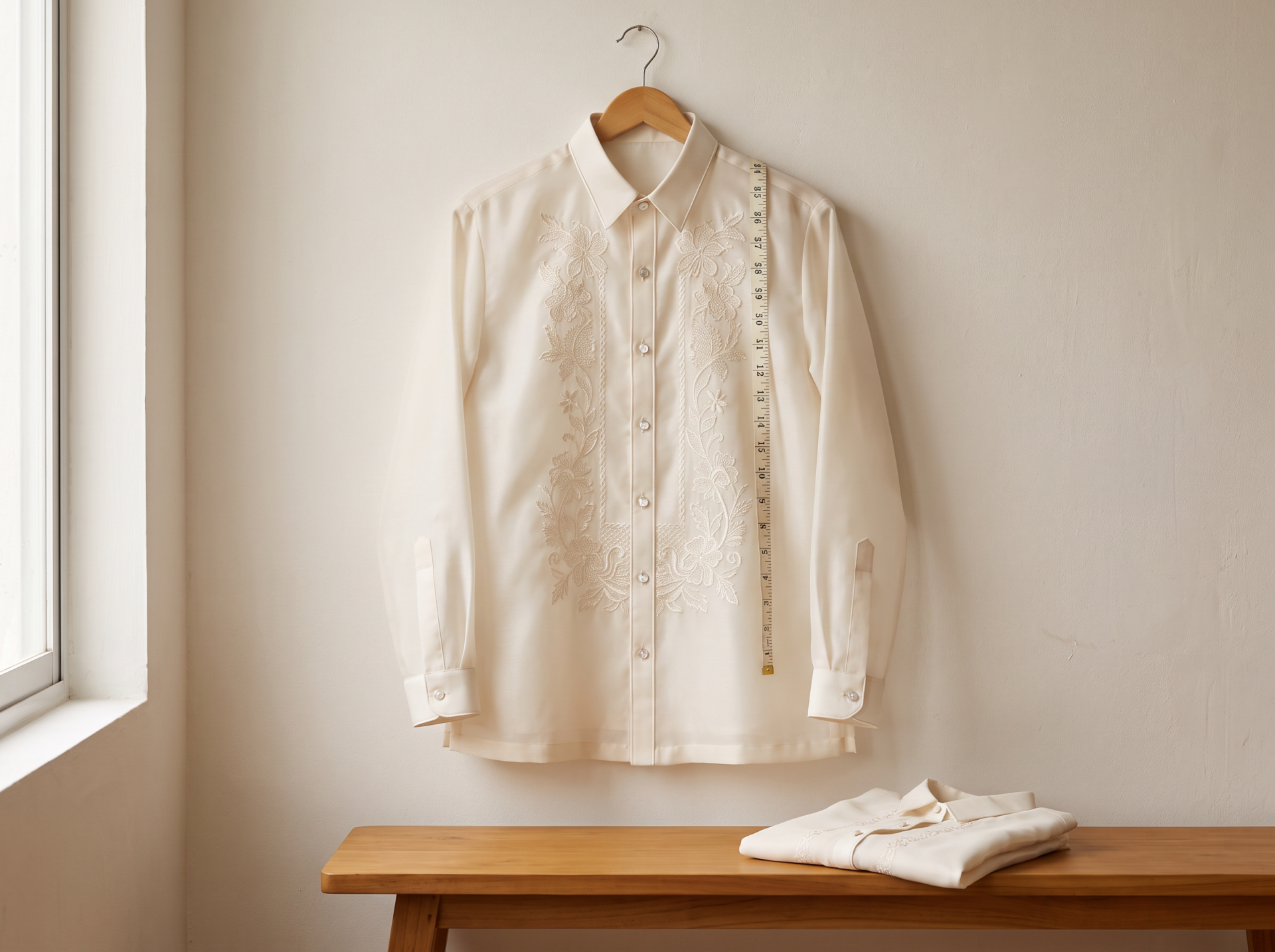
Fit is where most first time buyers get caught out. Filipino sizing runs one step small compared to US sizing, so a man who wears a US large in American shirts will often need an extra large in a barong cut to Philippine measurements. Reputable Filipino formalwear sellers in the US list garments in US sizes to remove the guesswork. Check the size chart against your chest, your shoulder and your sleeve length before you order.
The barong should sit at the hip or just below, with the hem landing somewhere between the top of the thigh and mid-thigh. The shoulder seam should sit on your actual shoulder, not down your arm. Sleeves end at the wrist bone.
For women, a Filipiniana gown should skim rather than cling. The sleeve, especially on a terno, should hold its shape without digging into the shoulder. If you are between sizes, size up and have the waist taken in locally. Alterations on Filipino formalwear are straightforward for any competent tailor.
Fabric choice depends on climate and formality. Lighter, more sheer weaves are the most formal and the most breathable, which is why they are the standard for weddings. Heavier, more opaque weaves are easier to care for and travel better, which makes them a sensible pick for guests flying in for an event. For a winter wedding in the US, you can layer a plain undershirt without changing the look of the barong.
Order early. For a wedding party, we recommend eight to twelve weeks before the event so there is room for fitting and alterations once the pieces arrive.
Dressing for your occasion
Traditional Filipino clothing carries memory. When you wear a barong or a Filipiniana to your sister’s wedding, your lola’s funeral or your son’s baptism, you are standing inside a long line of Filipinos who dressed this way for the same reasons.
If you are getting ready for an upcoming event, you can browse our barong tagalog and Filipiniana collections to see what fits the occasion you are dressing for. We are happy to answer sizing questions before you order.
Further Reading & Related Guides
To dive deeper into specific garments, occasion etiquette, and care instructions, explore these related guides:
- How to Choose the Best Funeral Barong – Learn specific rules for mourning attire, somber color choices, and appropriate embroidery styles for services.
- The Ultimate Secret to Fitting a Filipino Bolero – Everything you need to know about choosing, sizing, and styling a Filipiniana jacket or overpiece in the US.
- Piña Jusi vs. Piña Cocoon: Which Fabric Should You Choose? – Compare sheer weaves, opacity levels, and fabric weights to pick the right material for your event’s climate.
- Find Your Breathtaking Filipiniana Dress Near Me Now – Practical guidance on navigating US sizing conversions, ordering timelines, and shopping online for full ensembles.
- How to Wash a Barong Tagalog: The Expert Care Guide – Step-by-step instructions for safely washing, steaming, pressing, and storing delicate woven formalwear.