

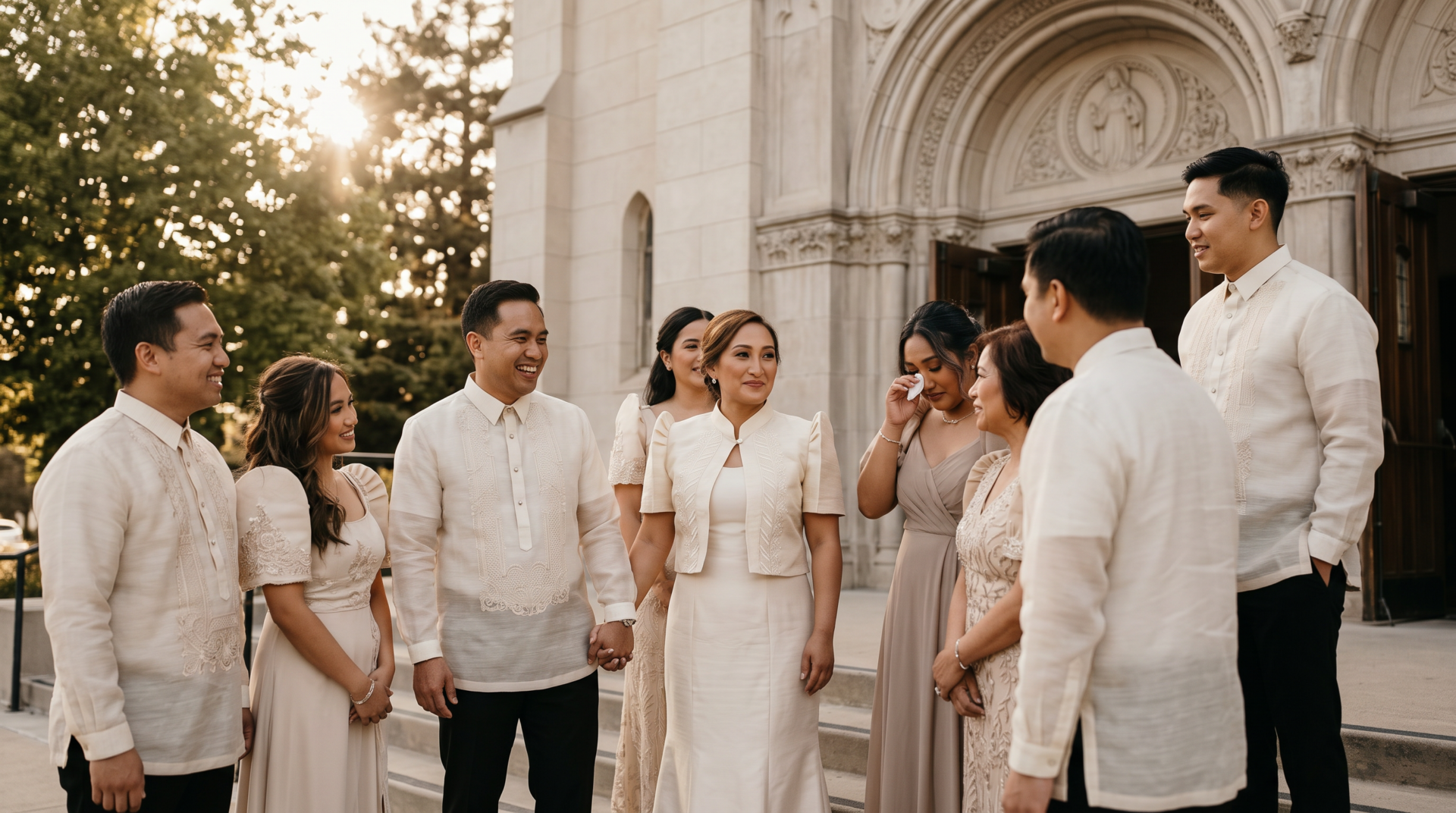
A filipino bolero is a short, structured jacket worn over a Filipiniana gown or blouse, most often for weddings, baptisms, graduations, and formal cultural events. It sits at the waist or just above it, and it can be sleeveless, capped, or long-sleeved depending on the occasion. If you are shopping for one from the United States, this guide walks you through what it is, when it is worn, and how to get the fit right the first time.
What is a filipino bolero?
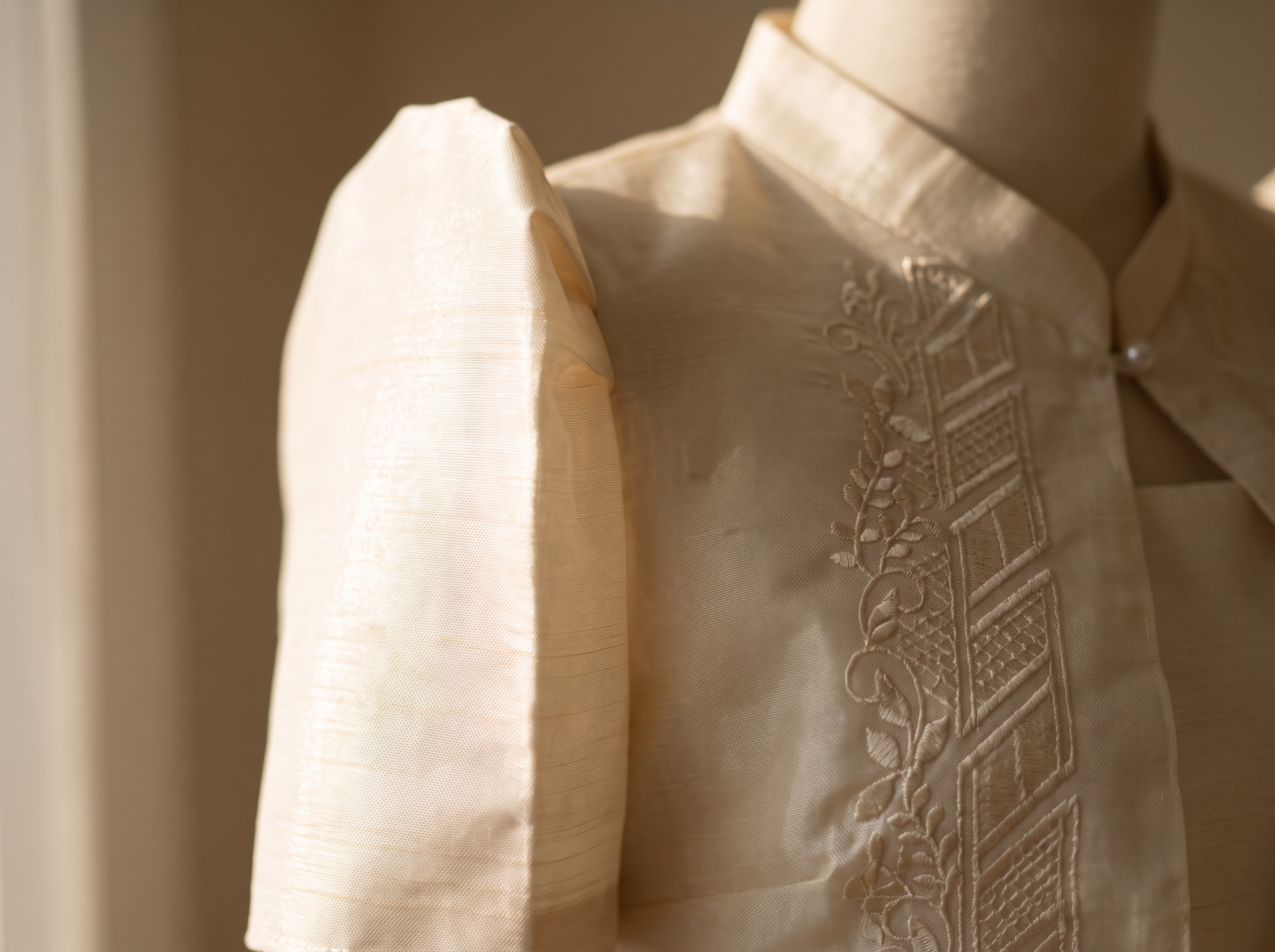
A bolero, in the Filipiniana context, is a cropped overpiece worn on top of a terno, a saya, or a modern Filipiniana dress. It is closer in spirit to a formal jacket than a shrug. The silhouette is clean, the shoulders are defined, and the closure is usually minimal so the piece lays flat over the gown underneath.
Historically, the bolero came into Filipino women’s wardrobes during the Spanish colonial period, alongside the camisa, the pañuelo, and the saya. Over time it settled into its modern role: a finishing layer that adds structure to a Filipiniana look and gives the wearer coverage for church, for ceremony, and for photographs.
It is not a costume piece. It is formalwear, in the same category as a barong tagalog for men, and it is worn for the same milestones.
When do Filipino women wear a bolero?
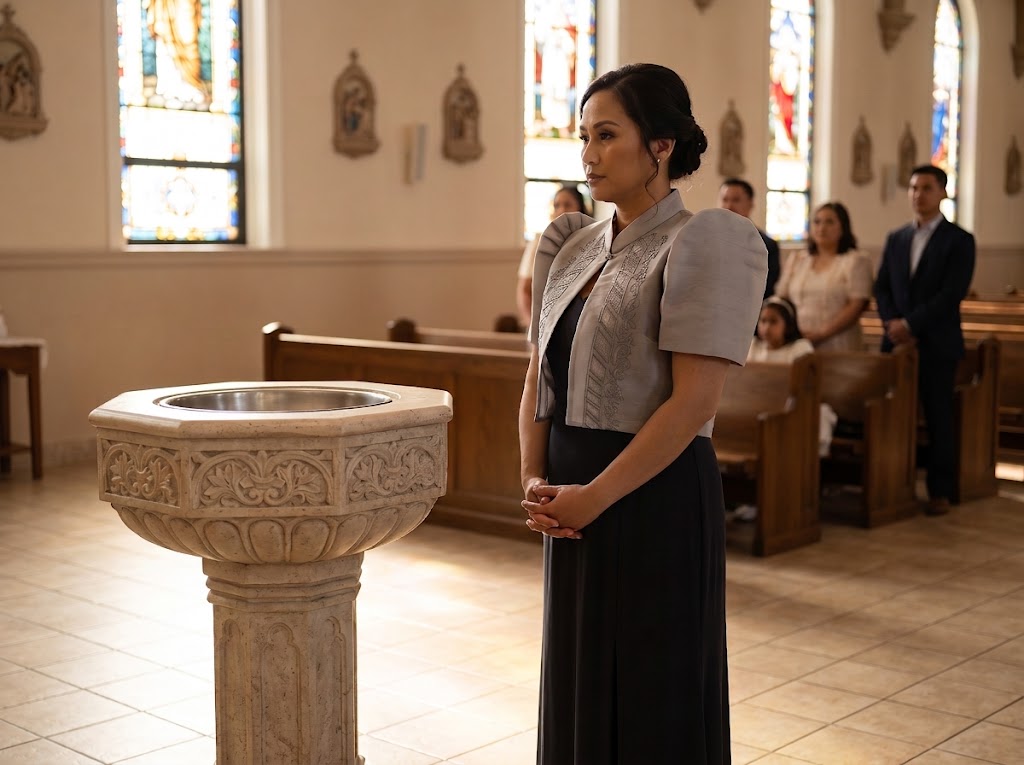
You will see a bolero worn most often at these occasions:
- Church weddings, both for the bride’s family and for principal sponsors
- Baptisms and confirmations, especially for godmothers
- Debuts and cotillion presentations
- Graduation ceremonies
- Diplomatic and government functions
- Filipino American cultural events, galas, and heritage month programs
- Funerals and memorial services, in darker tones
The common thread is that the event calls for something more considered than a dress alone. A bolero signals that the wearer is dressed for a ritual, not for a party. This matters at Catholic ceremonies in particular, where sleeved shoulders are still the norm during Mass.
Bolero, chaqueta, or shrug: what is the difference?
These three words get used interchangeably online, and that is part of why shopping is confusing. Here is how we use them.
A bolero is short, structured, and stops at or just above the natural waist. It has defined shoulders and holds its shape.
A chaqueta is the older Spanish-Filipino term for the same category of short jacket. Some Filipiniana designers still use it, especially for pieces cut closer to the historical shape.
A shrug is softer, usually knit or lightweight, and drapes rather than stands. A shrug is a nice layer for a cool evening, but it is not a substitute for a bolero at a formal event.
If a listing calls something a bolero but the photos show a soft, unstructured piece with no shoulder line, it is closer to a shrug. That is fine for casual wear. It will not read the same way in wedding photos.
What do you wear under a filipino bolero?
The bolero is a layering piece, so what sits underneath matters as much as the jacket itself.
The most traditional pairing is a Filipiniana gown with butterfly sleeves already built in. In that case the bolero is a decorative and modest layer worn over the bodice, and the butterfly sleeves peek out or frame the bolero’s opening.
The more modern pairing is a sleeveless or strappy formal dress underneath, with the bolero doing all the work of shaping the shoulders. This is a popular choice for godmothers and mothers of the bride who want one gown that can move from ceremony to reception. Keep the bolero on for the church, then remove it for dinner and dancing.
For daytime events like graduations, a bolero over a simple blouse and skirt works well and photographs cleanly.
How should a filipino bolero fit?
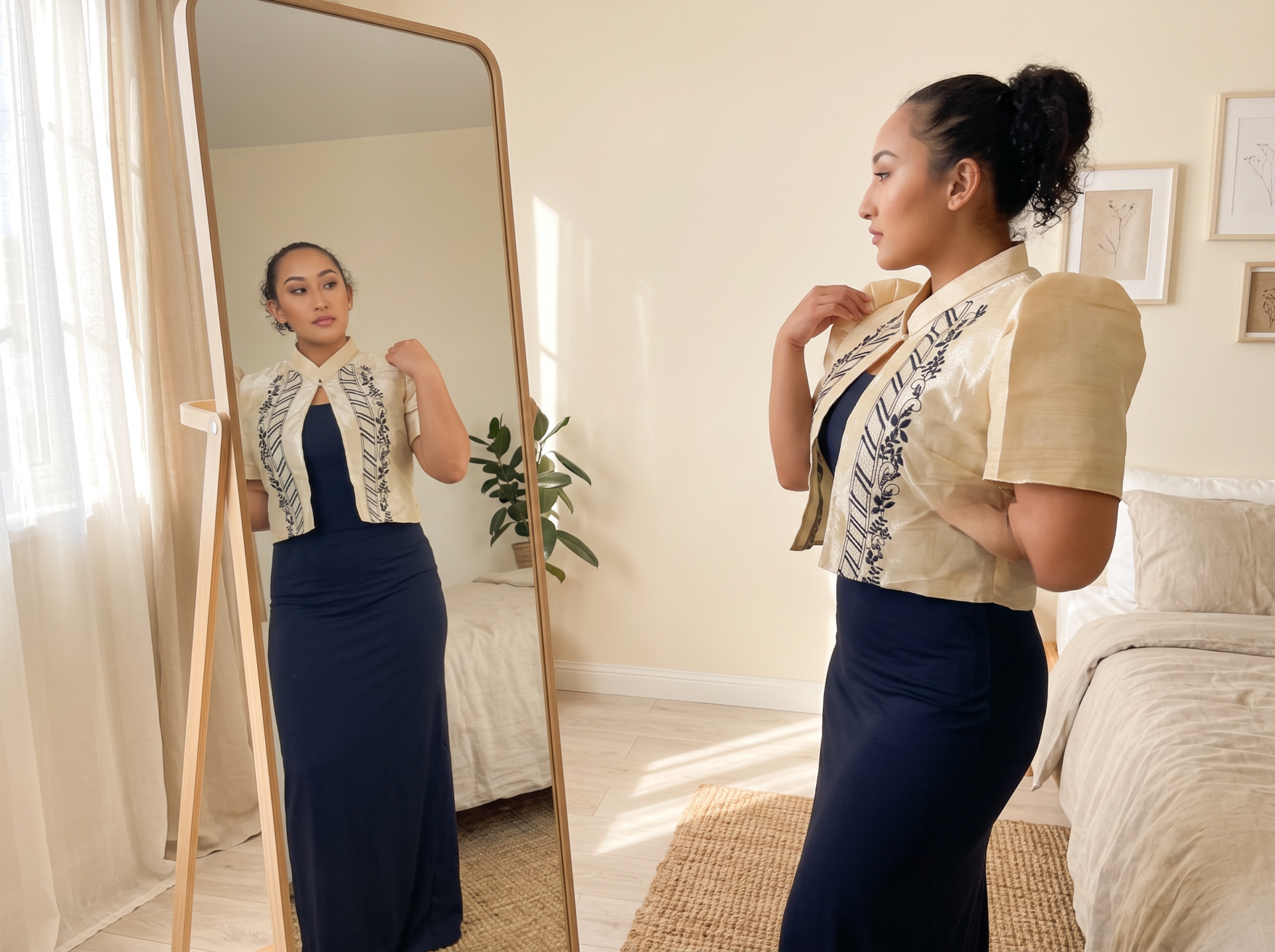
Fit is where most first-time buyers get tripped up, so read this section carefully.
Shoulders first. The shoulder seam should sit exactly at the edge of your shoulder, not past it. A bolero that drops off the shoulder loses its structure and starts to look like a shrug.
Length at the waist. A traditional bolero ends at the natural waist or slightly above. If it falls below the waist, it will fight with the silhouette of the gown underneath, especially on a fitted Filipiniana.
Room across the bust. You want the front panels to meet or nearly meet at the center without pulling. If the piece is designed to be worn open, the front edges should still hang parallel, not flare apart.
Sleeve length. For church and formal ceremonies, three-quarter or long sleeves are the safer choice. Cap sleeves and sleeveless boleros suit warmer venues and evening receptions.
On sizing, remember that Filipino sizing runs one step small compared to US sizing. If you normally wear a US medium, a piece cut to Filipino sizing will often fit closer to a US small. When in doubt, size up, or check the garment measurements against a jacket you already own that fits well.
Fabric and occasion: matching the bolero to the event
The fabric of your bolero should match both the season and the formality of the occasion.
For weddings and formal evening events, look for pieces with body and shape. These fabrics hold the shoulder line, take embroidery well, and photograph beautifully under church lighting and flash.
For daytime events in warm weather, lighter woven fabrics breathe better and feel less heavy under the arms during a long ceremony.
For funerals and memorials, keep the fabric restrained and the surface detail minimal. The bolero should read as respectful, not decorative.
Color is worth a word too. Ivory, cream, champagne, and blush read as bridal or principal sponsor territory. If you are a guest, check with the family before wearing anything in that range. Neutrals like taupe, soft gray, and navy are safe for most family roles. Black is appropriate for evening formal events and for funerals.
Caring for your bolero
A well-made bolero will outlast the event it was bought for and become the piece you reach for at every family milestone.
Store it on a padded hanger to protect the shoulder shape. Do not fold it for long periods, especially if it has any embroidery or beadwork. For cleaning, follow the care label, and when in doubt, take it to a dry cleaner who has experience with formalwear and hand embroidery. Steam rather than iron, and never press directly on embroidered areas.
If you are traveling with it, pack it flat on top of your other clothes or carry it in a garment bag.
Ready to find yours
A filipino bolero is a small piece of clothing that does a lot of work. It signals respect for the occasion, it honors a long tradition of Filipino formal dressing, and it lets you show up to the moments that matter looking like yourself.
When you are ready to see what is available, browse our Filipiniana collection for boleros and matching pieces cut for the American market, with sizing notes written for how you actually shop.
Further Reading & Related Guides
To complete your outfit and prepare for your upcoming event, explore these related guides:
- How to Style a Filipiniana Bolero with Denim: Modern Outfits – Discover creative ways to re-wear your bolero after formal ceremonies by styling it with modern wardrobe staples.
- Filipiniana Dress Guide: Heritage, Style & Elegance – Learn how to pair your bolero with classic silhouettes, ternos, and formal under-dresses.
- Filipino Debut Dress Code: Guest & Court of Honor Guide – Get tailored dress code tips for godmothers, guests, and entourage members attending formal celebrations.
- Find Your Breathtaking Filipiniana Dress Near Me – Navigate US sizing conversions, ordering timelines, and online shopping for full Filipiniana attire.
- How to Wash a Barong Tagalog: The Expert Care Guide – Care and storage tips for protecting delicate wovens, fine embroidery, and structured shoulder lines.