

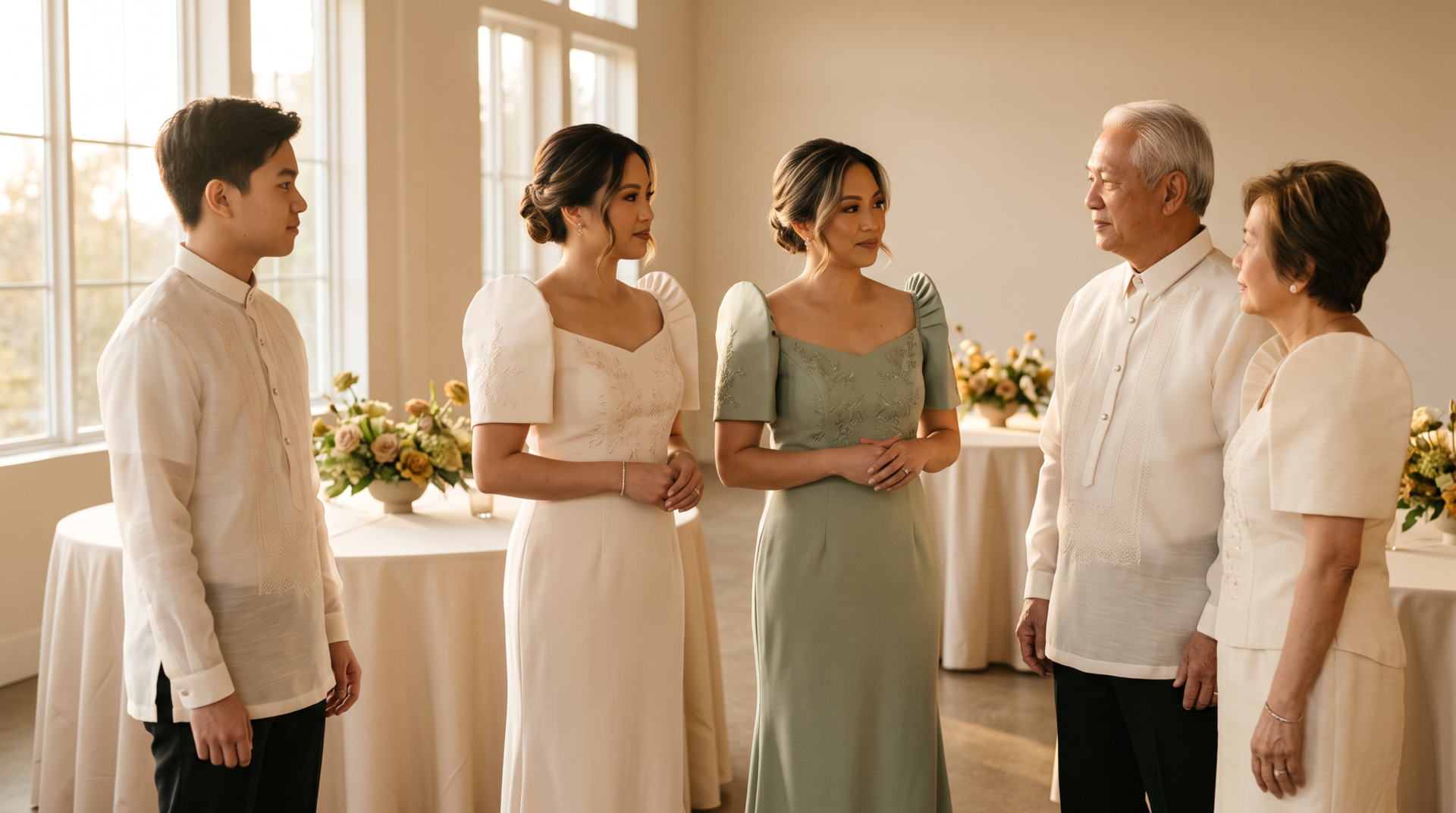
A Filipiniana dress is the traditional formal attire worn by Filipino women for weddings, baptisms, graduations, state occasions and cultural celebrations. It is recognized by its sculpted butterfly sleeves, structured bodice and floor-length or tea-length silhouette. If you are shopping for one in the United States, this guide walks you through what it is, how it has evolved, how to choose the right fit, and when to wear it.
What is a Filipiniana dress?
A Filipiniana is the women’s counterpart to the barong tagalog. It developed over centuries of Philippine history, drawing from pre-colonial garments and shaped later by Spanish and American periods. The result is a silhouette that is unmistakably Filipino: elegant, modest and architectural.
The most recognizable version today is the terno, a one-piece gown with stiffened butterfly sleeves that rise from the shoulders. Older forms include the traje de mestiza, the maria clara (a four-piece ensemble with a camisa, saya, pañuelo and tapis), and the baro’t saya, which is the simpler everyday predecessor of all of them.
When Filipinos refer to a Filipiniana dress today, they usually mean either a classic terno for a formal event or a modern Filipiniana cut for a less traditional occasion. Both belong to the same family.
What are the parts of a Filipiniana dress?
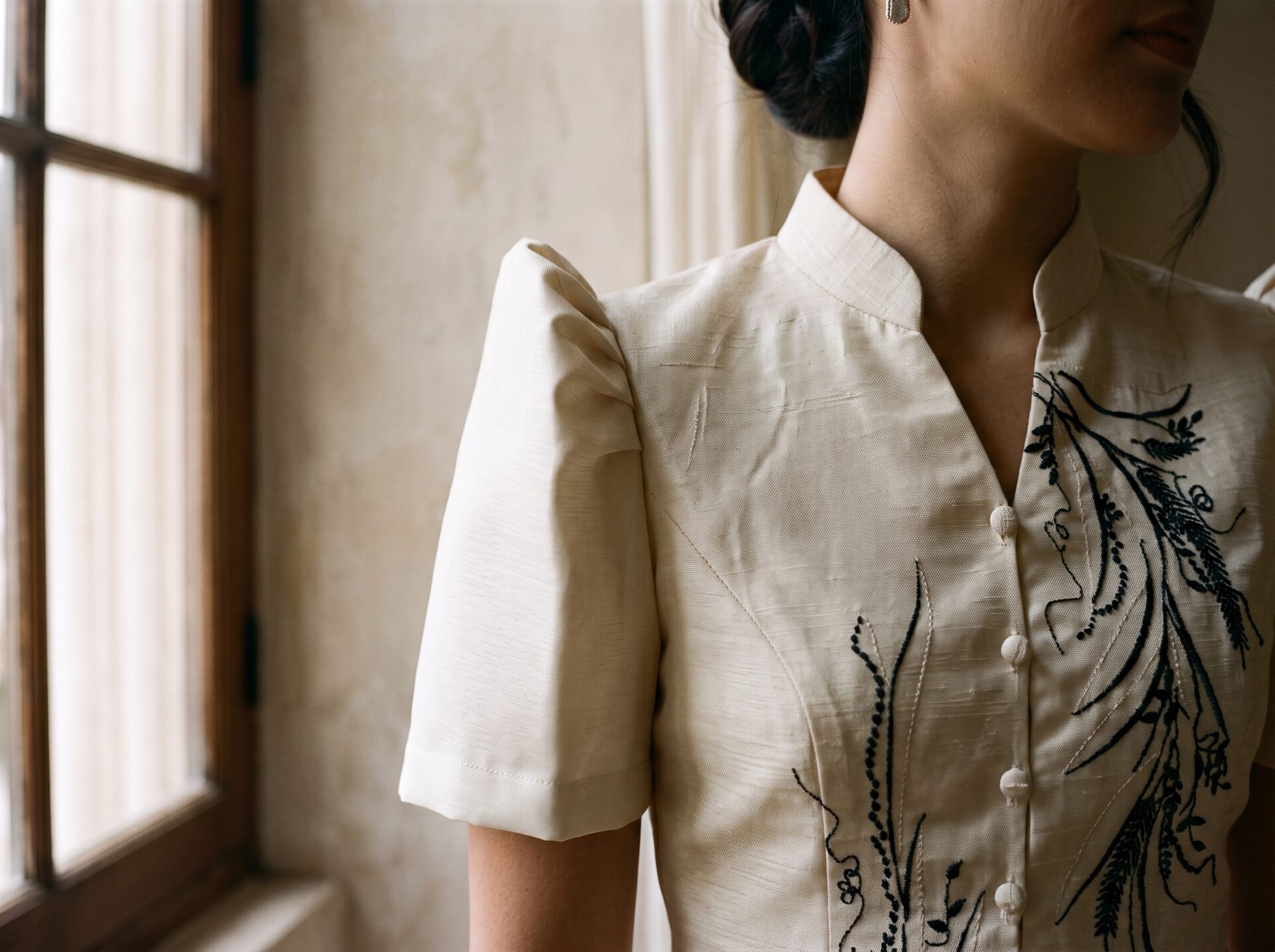
Knowing the parts helps when you are comparing styles online or talking to a tailor.
- Butterfly sleeves (alas de mariposa): The signature element. They sit high on the shoulder, stiffened to hold their shape. On a classic terno they are large and sculptural. On modern pieces they are often softened or scaled down.
- Bodice: Fitted through the torso. On traditional cuts the bodice meets the sleeve in a clean seam at the shoulder.
- Skirt: Historically long and flowing. Contemporary versions include tea-length, midi and even separates.
- Pañuelo: A folded shawl or kerchief worn over the shoulders in maria clara ensembles. Most modern Filipiniana dresses do not include one.
- Tapis: An overskirt panel worn over the main skirt in older ensembles. Rare in contemporary designs but still seen in heritage pieces.
If you are shopping for a single-piece dress, you will mostly be comparing bodice shape, sleeve size and skirt length.
What is a modern Filipiniana dress?
A modern Filipiniana keeps the butterfly sleeve as its anchor and updates everything else. Instead of a full gown, you might see a cocktail length, a jumpsuit, a two-piece with a cropped top, or a sleek column dress. The sleeves may be smaller, sheerer, or detachable. The bodice may be off-shoulder, sweetheart or wrap style.
These versions are popular for engagement parties, rehearsal dinners, cultural nights, Filipino American History Month events and weddings where the dress code leans contemporary. They read as Filipino without the formality of a full terno, which makes them easier to wear more than once.
If you are searching for a modern Filipiniana dress for a party, this is the category to look at. A full terno can feel heavy at a cocktail event, while a modern cut moves well on a dance floor and still honors the tradition.
When should you wear a Filipiniana dress?
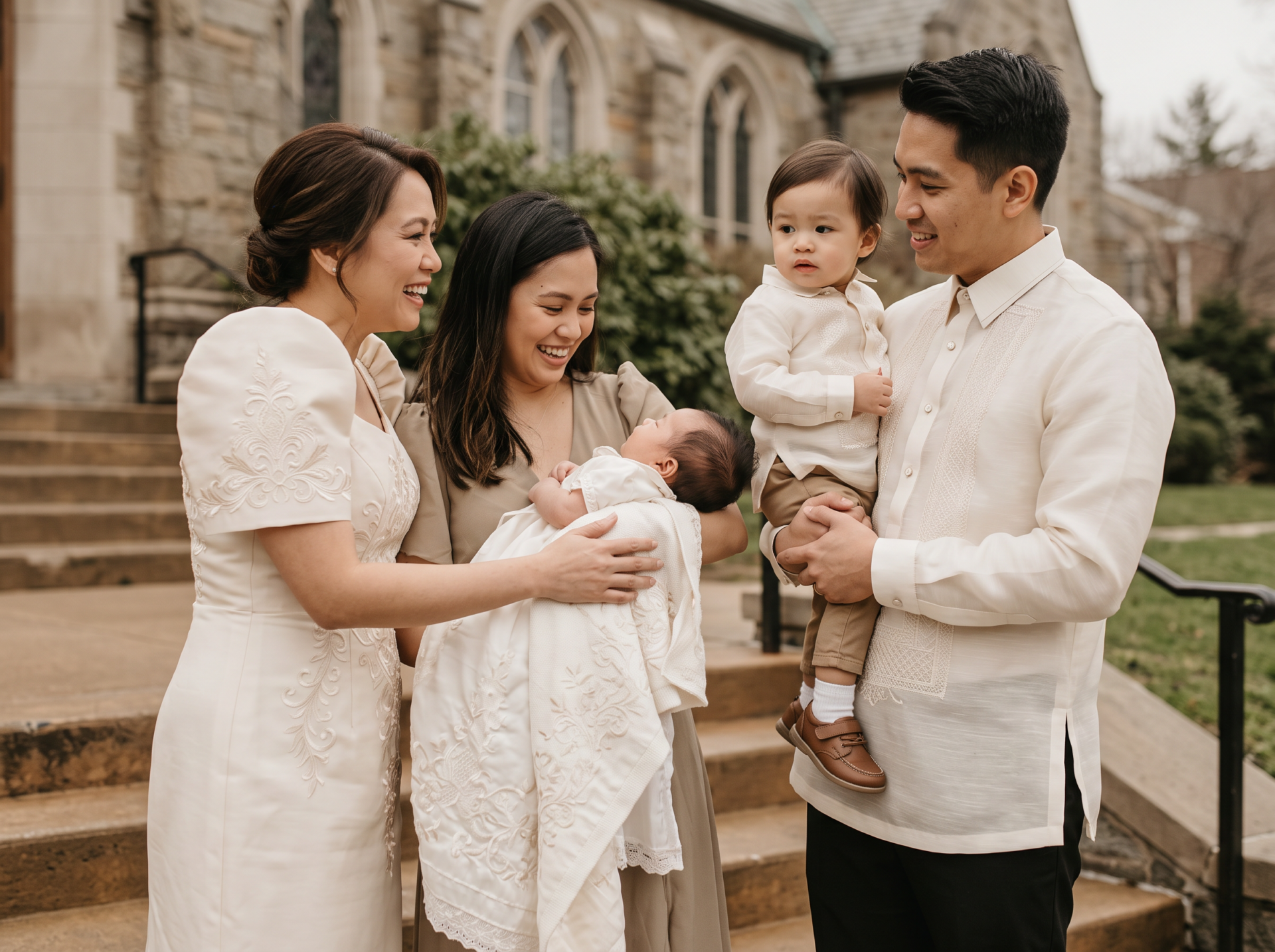
The short answer: any occasion where you would otherwise wear a formal gown or a nice cocktail dress, and where you want to show up as Filipino.
Common occasions include:
- Weddings: As a bride, as part of the ninang (godmother) party, or as a guest at a Filipino wedding. Pairing with a groom or ninong in a barong tagalog is a quiet, lovely way to anchor the ceremony.
- Baptisms and christenings: Ninangs often wear a softer Filipiniana. Mothers sometimes choose a full terno.
- Debuts: The debutante and her court frequently wear Filipiniana, and the eighteen roses and candles often coordinate.
- Graduations: Many Filipino families wear traditional attire to Philippine university graduations and to US ceremonies with a cultural component.
- Funerals and memorials: A simple, dark Filipiniana is appropriate and respectful.
- Independence Day, Filipino American History Month, embassy events and cultural galas: These are common occasions in the United States where guests dress traditionally.
A Filipiniana is heritage dress, not a costume. It is worn with the same seriousness as any formal attire for a wedding or a state occasion.
How should a Filipiniana dress fit?
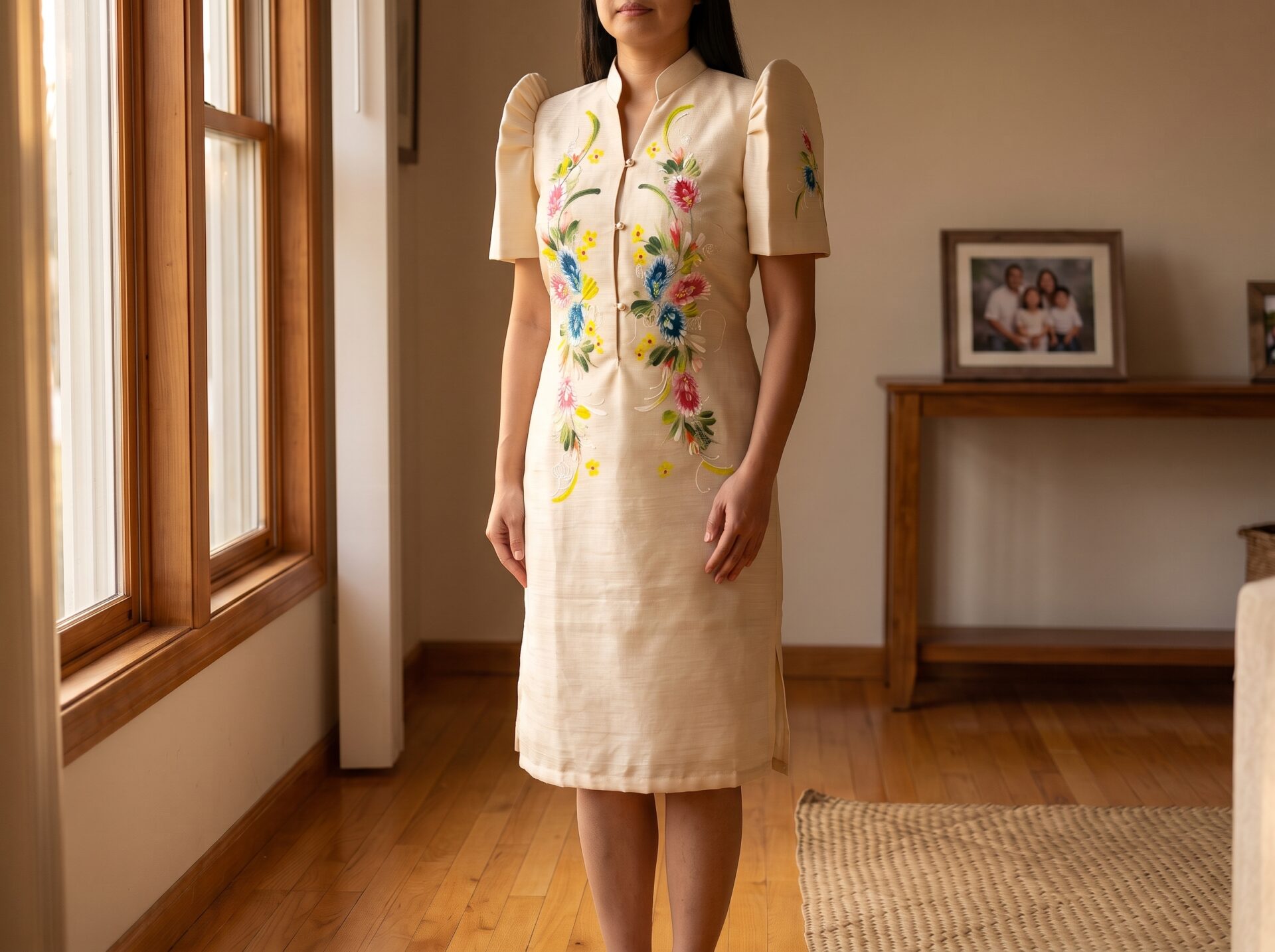
Fit matters more on a Filipiniana than on most gowns because the sleeves and bodice are structured. If the shoulders are off, the whole silhouette is off.
A few things to check:
- Shoulder seam: It should sit right at the edge of your shoulder, not slip down the arm. This is what keeps the butterfly sleeves standing correctly.
- Bodice length: The waist seam should hit your natural waist. Too high and the sleeves look oversized. Too low and the proportions flatten.
- Bust: A fitted bodice needs to be measured, not guessed. If you are between sizes, size for the bust and have the waist taken in locally.
- Skirt length: For a full gown, aim for the hem to graze the floor with your intended shoes. For modern cuts, the hem rules follow the style you have chosen.
Filipino sizing tends to run one step small compared to US sizing. If you normally wear a US medium, you will often need a Filipino large. Check the measurements in inches rather than relying on letter sizes, and compare them to a dress you already own and love.
What about fabric and care?
Traditional Filipiniana has been made in many fabrics over the years, from very fine heritage weaves to sturdier everyday materials. Modern Filipiniana designers work with a wide range, including structured fabrics that hold the butterfly sleeve without extra boning.
Whatever the fabric, a few care habits apply. Store the dress hanging, with the sleeves supported, rather than folded. Steam rather than iron when possible, and never iron directly on embroidery. For dry cleaning, use a cleaner who has handled formalwear or heritage garments before, and point out the structured sleeves specifically.
If you are traveling with your Filipiniana, pack it flat in a garment box if you can. If you must fold it, pad the sleeves with tissue so they do not crease at the shoulder.
How do a Filipiniana dress and a barong tagalog work together?
Many of our customers shop for both at once, usually for a wedding or family portrait. The barong tagalog is the men’s formal shirt, worn long over dark trousers. The Filipiniana is its counterpart. Worn together, they read as a matched Filipino formal couple without needing to be identical in color or embroidery.
For wedding parties, it is common to put the groom and groomsmen in barong tagalog and the bride and ninangs in Filipiniana. Pageboys and flower girls often wear small versions of the same.
Where to find a Filipiniana dress in the United States
If you have been searching for a Filipiniana dress near you, shipping from a specialist is often the better route than hunting locally. Pieces are made and embroidered in the Philippines by artisans, and most American cities do not have a dedicated Filipino formalwear boutique. Shopping online from a seller who ships from within the United States saves you the customs and timing risk of ordering direct from Manila for an event date.
You can see our current Filipiniana collection, including classic and modern cuts, on the Filipiniana page. If you have an event date in mind, reach out before you order so we can help you choose the right size and style for the occasion.
Complete Your Formalwear Guide: Related Heritage & Styling Reads
To help coordinate couples’ attire, explore complementary women’s wraps, and plan wedding entourage looks, explore these related guides:
- How to Find the Best Barong Styles: Complete Guide – Compare classic and modern barong styles. Learn how to choose the right cut, sleeve length, fabric, and US fit for weddings, baptisms, and formal events.
- How to Style a Filipiniana Bolero with Denim: Modern Outfits – Elevate your casual style by pairing a Filipiniana Bolero with denim. Get 5 chic outfit ideas, modern styling rules, and essential fabric care tips.
- How to Style Modern Filipino Fashion with Heritage Style – Style your Barong Tagalog or Filipiniana with modern accessories for weddings and galas—while honoring Filipino culture and tradition.