

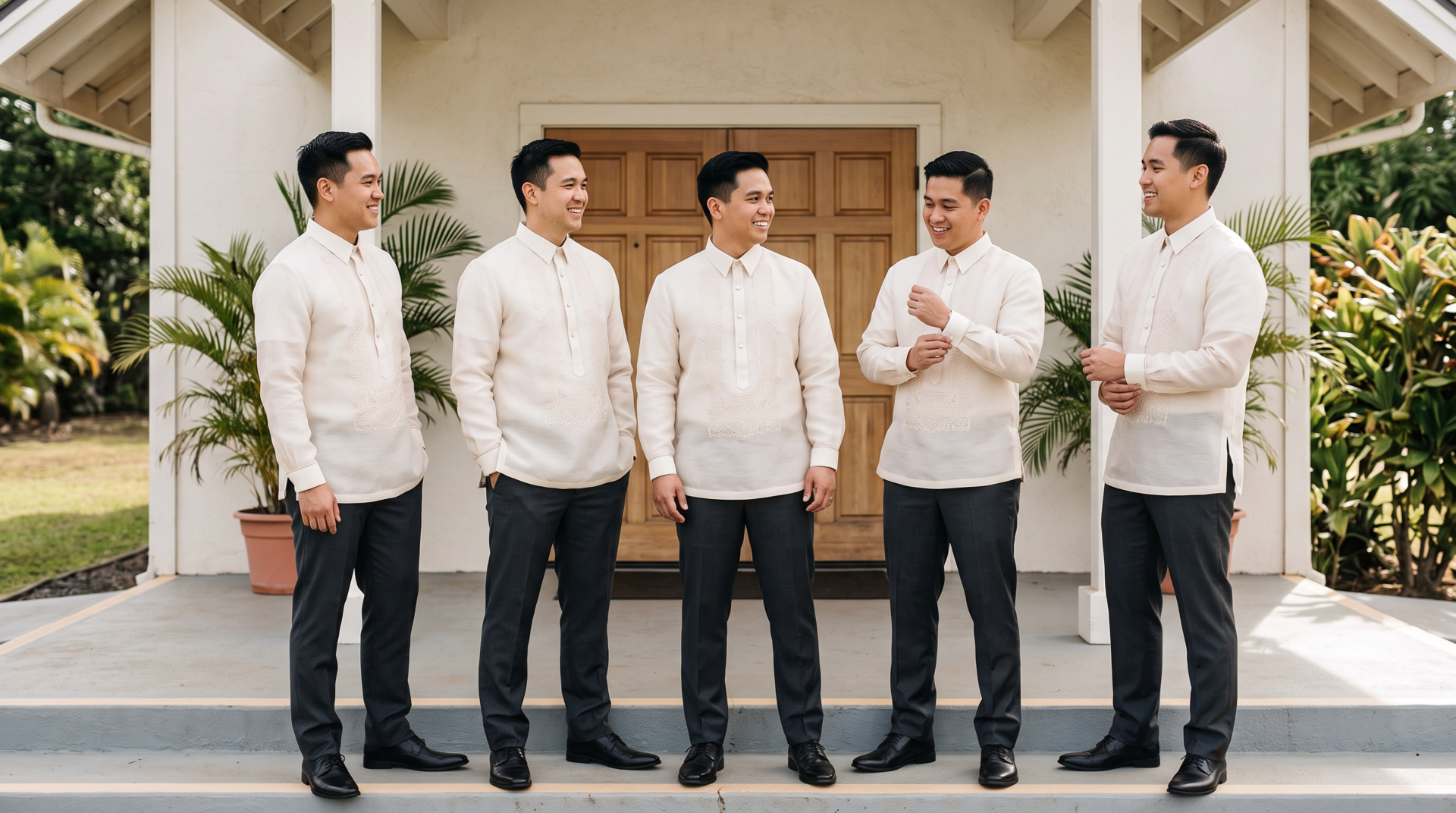
An organza barong is the crisp, camera-ready version of the barong tagalog that today’s grooms and groomsmen reach for when a wedding has to look sharp in photos and survive a flight in a garment bag. It sits beautifully on the shoulder, holds its collar line through a long reception, and takes color in a way that lets you coordinate a full entourage. If you are planning a destination ceremony or dressing a group of ninongs and groomsmen, this is the fabric family to understand first.
Below is what US shoppers actually need to know before ordering, from styling to sizing to care.
The Architecture of Sheer: What Makes an Organza Barong Distinct?
Organza is a tightly woven, lightweight fabric with a smooth hand and a quiet sheen. In a barong tagalog, that tight weave is what gives the garment its architecture. The collar stands cleanly. The placket lies flat. The cuffs hold their shape from the first look to the last dance.
That structure is also what makes embroidery read so well on an organza barong. Because the ground fabric is even and slightly translucent, hand embroidery and calado openwork sit on the surface with real depth. You see the pattern, you see the stitching, and you see the shape of the shirt underneath. It is a formal silhouette that feels intentional rather than stiff.
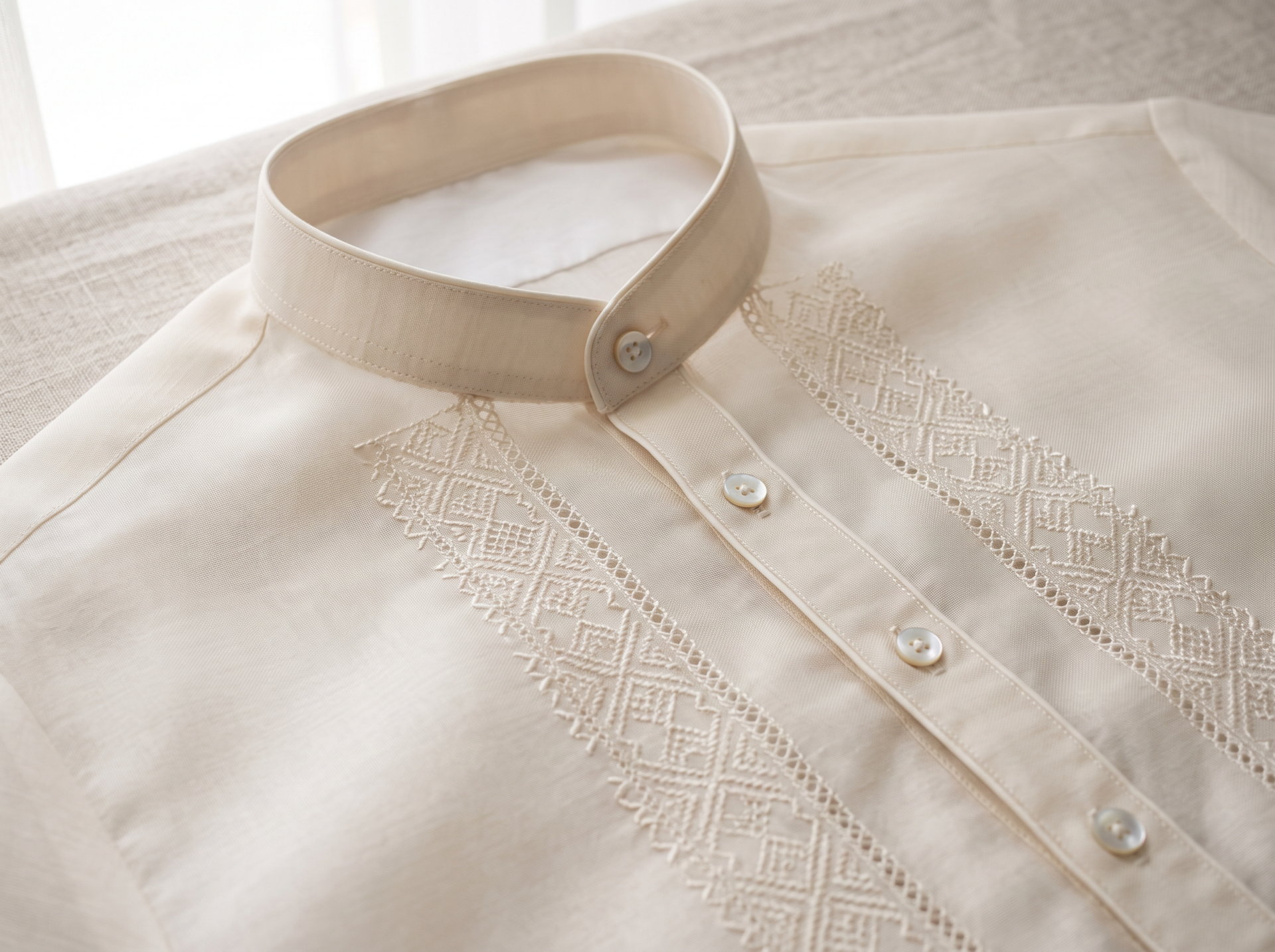
The sheerness is part of the tradition, not a quirk to hide. A barong is meant to be worn over a white undershirt, and the fabric is meant to let light pass through it. Organza does that job cleanly without feeling fragile.
Why an Organza Barong Tagalog Wins for Weddings and Travel
For a wedding, you are not just choosing a shirt. You are choosing something that has to travel, photograph, coordinate with a partner, and look the same on five or ten people standing in a line. An organza barong tagalog handles all four of those jobs well.
It travels. Organza has natural resilience compared to more delicate heritage weaves. Folded carefully into a garment bag or laid flat in a suitcase, it arrives at the venue needing a light steam rather than a rescue mission. For destination weddings in Hawaii, the Caribbean, or back home in the Philippines, that matters.
It photographs. The soft sheen catches daylight and flash cleanly. You do not get the flat, chalky look that heavier opaque fabrics sometimes produce in photos, and you do not get hot spots either. Embroidery stays legible in both wide shots and close-ups.
It takes color. Classic ecru and ivory are only the beginning. Organza accepts rich dyes well, which is why you see modern organza barong styles in champagne, sage, navy, deep burgundy, and black. That gives you room to match a color palette instead of defaulting to off-white.
It keeps the entourage consistent. When you are ordering a barong for a wedding entourage of groomsmen, ninongs, and fathers, you want the same shade and the same embroidery pattern across every shirt. Organza holds color evenly from piece to piece, which keeps your lineup looking like a lineup.
Mastering the Sheer Look: Undershirt and Styling Rules
The camisa de chino undershirt is the quiet partner to every barong. It is the plain, usually white, crew or V-neck shirt worn underneath. Get this layer right and the whole outfit works.
For a traditional look, wear a clean white camisa de chino. The contrast gives you that classic barong silhouette and lets ecru or ivory embroidery read softly against the white ground.
For a more modern take, especially with a colored organza barong, try a skin-tone or lighter neutral crew neck. The embroidery pops harder because there is less visual competition underneath, and the barong itself reads as a single sculptural piece rather than two shirts layered together.
Trousers should be tailored and simple. Dark wool or wool-blend dress pants in black, charcoal, or deep navy are the standard. Keep the break clean and the waist properly fitted. Black leather dress shoes, polished, finish the look.
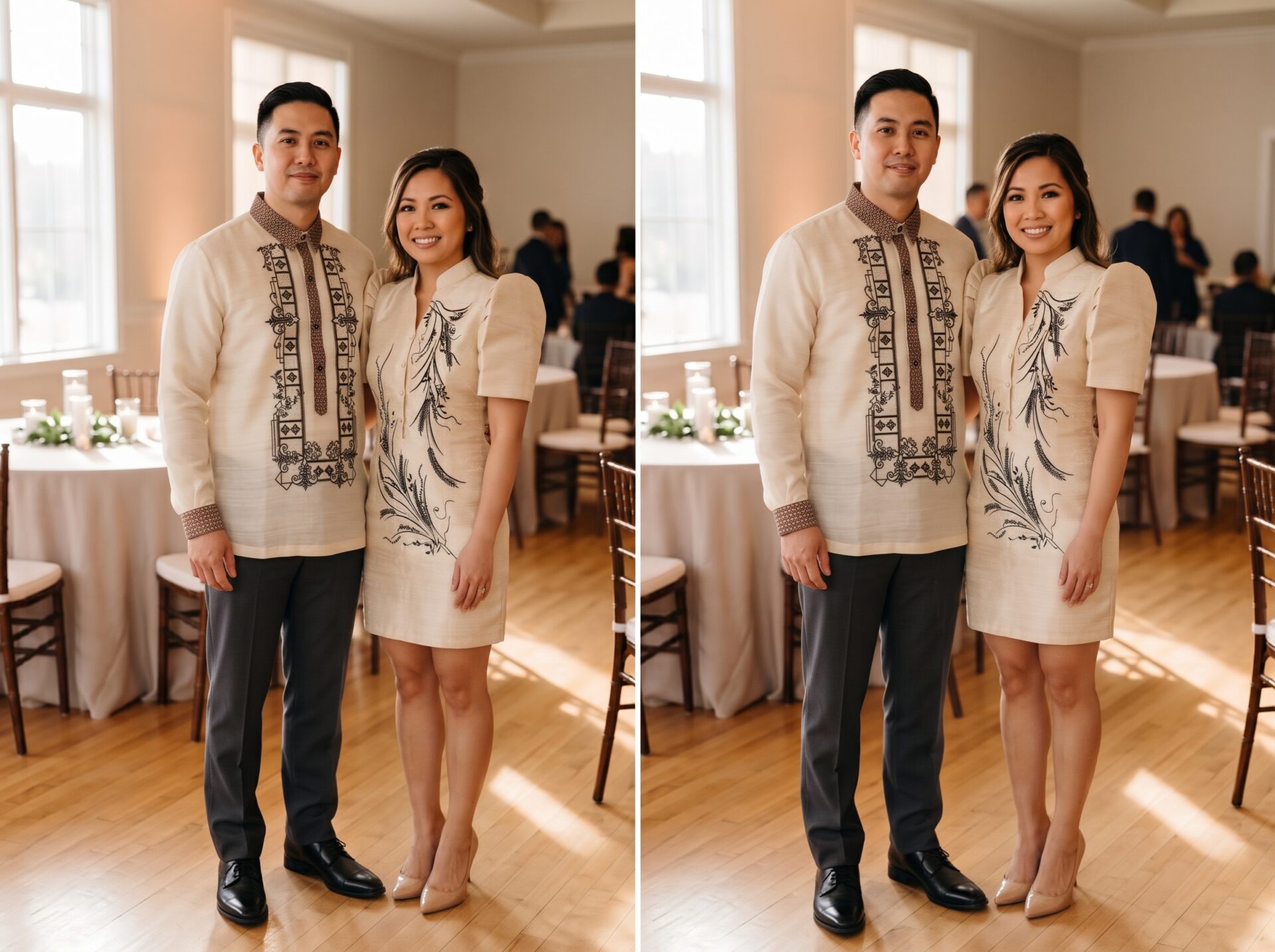
If you are coordinating with a partner in a modern Filipiniana, talk about tone before you order. A warm ivory barong can sit next to a blush or champagne Filipiniana beautifully. A deep navy or black organza barong gives a bride in classic white a sharper, more editorial contrast. Share fabric swatches between both sides of the outfit before anyone commits.
How to Keep Your Organza Barong Crisp
Care for an organza barong is simple if you respect the fabric.
Steam, do not iron directly. A handheld garment steamer on a low setting, held a few inches away, will relax travel wrinkles without flattening the embroidery. If you must use an iron, use a low heat with a pressing cloth between the iron and the barong, and never press directly over embroidered sections.
Hang it on a wide wooden or padded hanger. Thin wire hangers will deform the shoulder line over time. A proper hanger preserves the structure that made you choose organza in the first place.
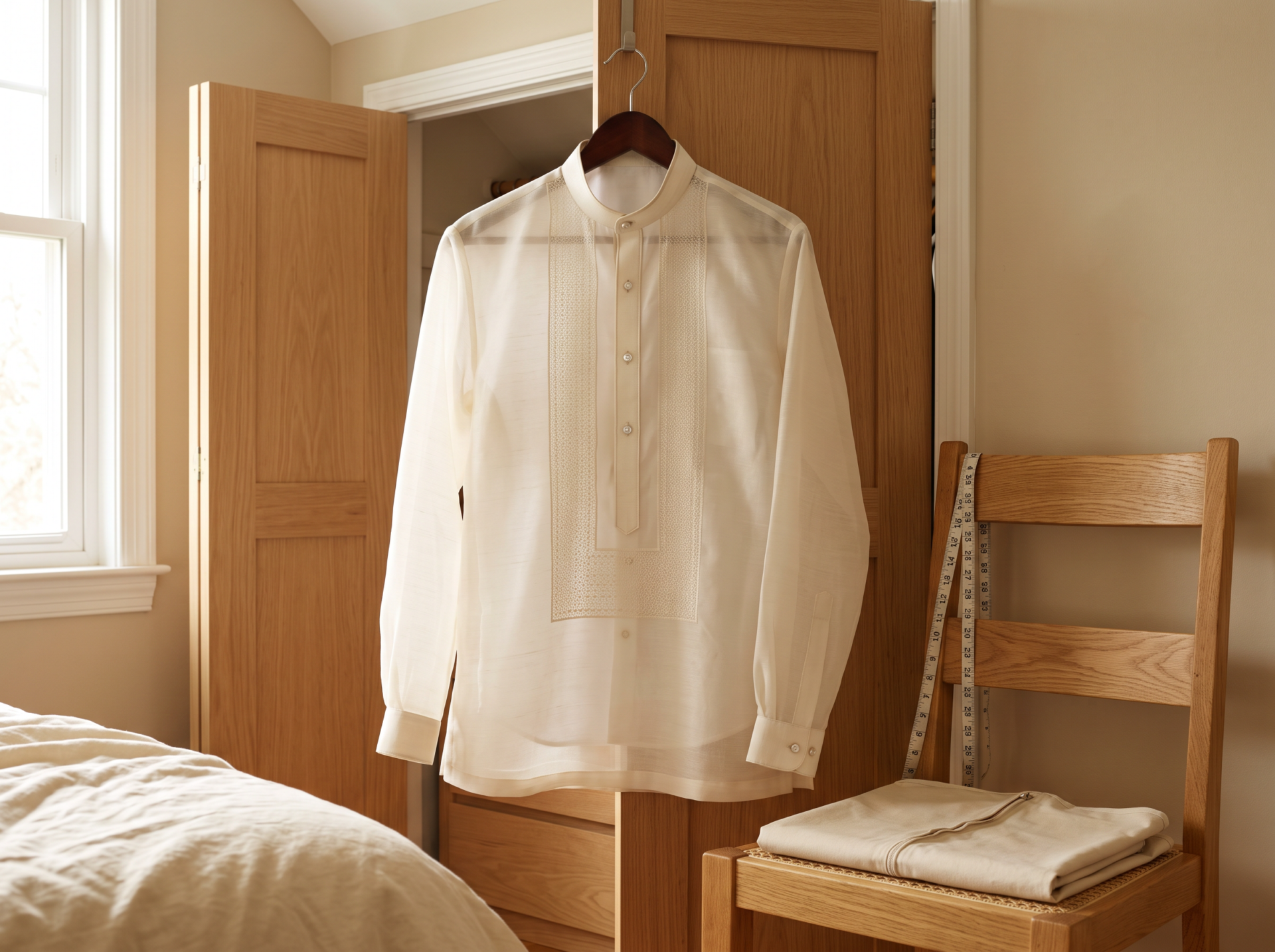
Wash gently. Hand washing in cool water with a mild detergent is safest. If the care label allows machine washing, use a mesh garment bag on a delicate cycle and lay flat or hang to dry. Skip the dryer. Always check the care label that comes with your specific barong.
Between wears, store it in a breathable garment bag, not plastic.
Shopping for an Organza Barong in the United States
Two things matter most when you are buying from the US: sizing and timing.
Filipino sizing generally runs one step smaller than US sizing. A man who wears a US Large often needs an XL in a barong cut in the Philippines. The safest move is to measure chest and shoulder width in inches and compare those numbers directly to the size chart on the product page. Measure over a thin undershirt, not over a sweater, and have someone else hold the tape for accuracy.
For a wedding entourage, order early and order together. Getting all the barongs from the same production run keeps the color and embroidery consistent across the group. Build in time for try-ons and any small alterations at a local tailor, particularly sleeve length and waist taper.
Ordering from a US-based specialist means your barongs ship domestically. You avoid overseas customs delays, and if something needs to be exchanged before the ceremony, you are not waiting on international mail.
Ready to Dress Your Entourage
An organza barong gives you structure, sheen, color flexibility, and the kind of travel resilience a wedding actually demands. It is a thoughtful choice for a modern Filipino American ceremony, and it carries the same respect for tradition that the garment has always carried.
When you are ready to see what works for your wedding party, browse our organza barong collection and reach out if you want help coordinating sizes for the whole group.
Complete Your Wedding & Heritage Style Guide: Further Reading
Planning a Filipino wedding, coordinating an entourage, or comparing traditional weaves before you order? Explore these related guides and collections:
- Shop Our Men’s Organza Barong Tagalog Collection – Browse crisp, lightweight organza barongs in classic ecru, ivory, and modern hues—ready to ship from the United States for grooms, ninongs, and wedding guests.
- How to Find the Best Barong Styles: Complete Guide – Compare classic and modern barong styles. Learn how to choose the right cut, sleeve length, fabric, and US fit for weddings, baptisms, and formal events.
- Choosing the Perfect Barong Fabric for Filipino Formalwear – Organza, Jusilyn, cocoon or cotton? How to choose a barong fabric by occasion, climate and fit, plus what piña and jusi mean (we don’t sell those).