Slide toggle
Monday - Friday: 09:00 - 5:00 CT 9001 Griggs Avenue Unit 243, Circle Pines, MN 55014 612-239-1469 orders@handmadekapamilya.com

Tag: care

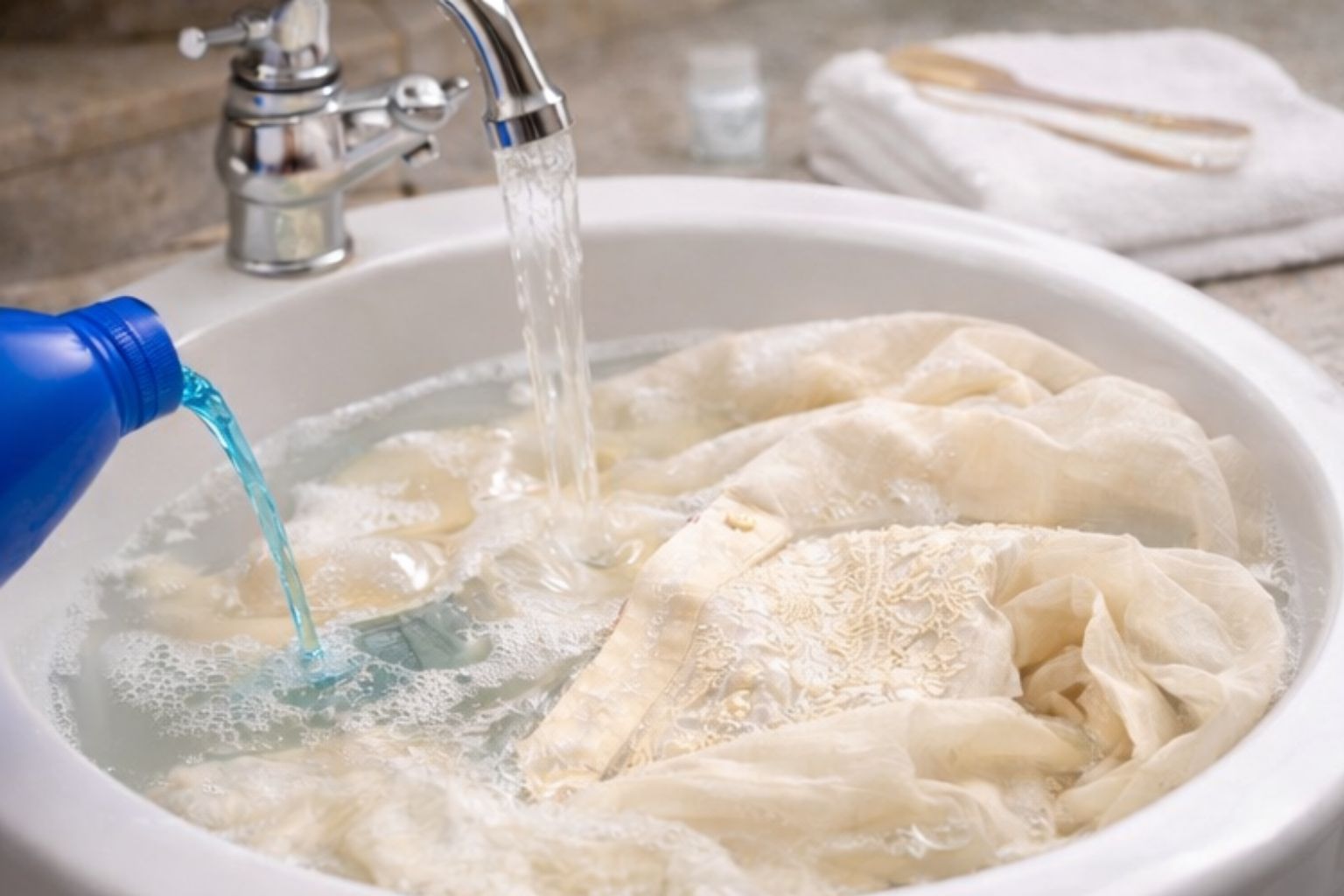
Handwash delicate piña Barong

How to Wash a Barong Tagalog Without Ruining It

A Complete Guide to Washing, Ironing, and Storing Piña, Jusi & Cocoon Fabrics

You finally wore your Barong Tagalog—whether for a wedding, gala, or milestone celebration. Then comes the moment every owner dreads: sweat on the collar, makeup on the embroidery, or a stray drop of lechon sauce.

Panic is natural.
A Barong is not a regular dress shirt—and washing it the wrong way can permanently damage delicate Piña, Jusi, or Cocoon fibers.

At Handmade Kapamilya, we work with premium Barong Tagalog fabrics every day. This guide will show you exactly how to wash a Barong Tagalog at home, how to iron it safely, and how to store it so it lasts for decades—not months.

Kumusta po. Let’s protect your heirloom.

Why Barong Tagalog Care Is Different

Unlike Western formalwear, the Barong Tagalog is made from indigenous and silk-based fibers that are lightweight, breathable, and extremely sensitive to heat, friction, and harsh chemicals.

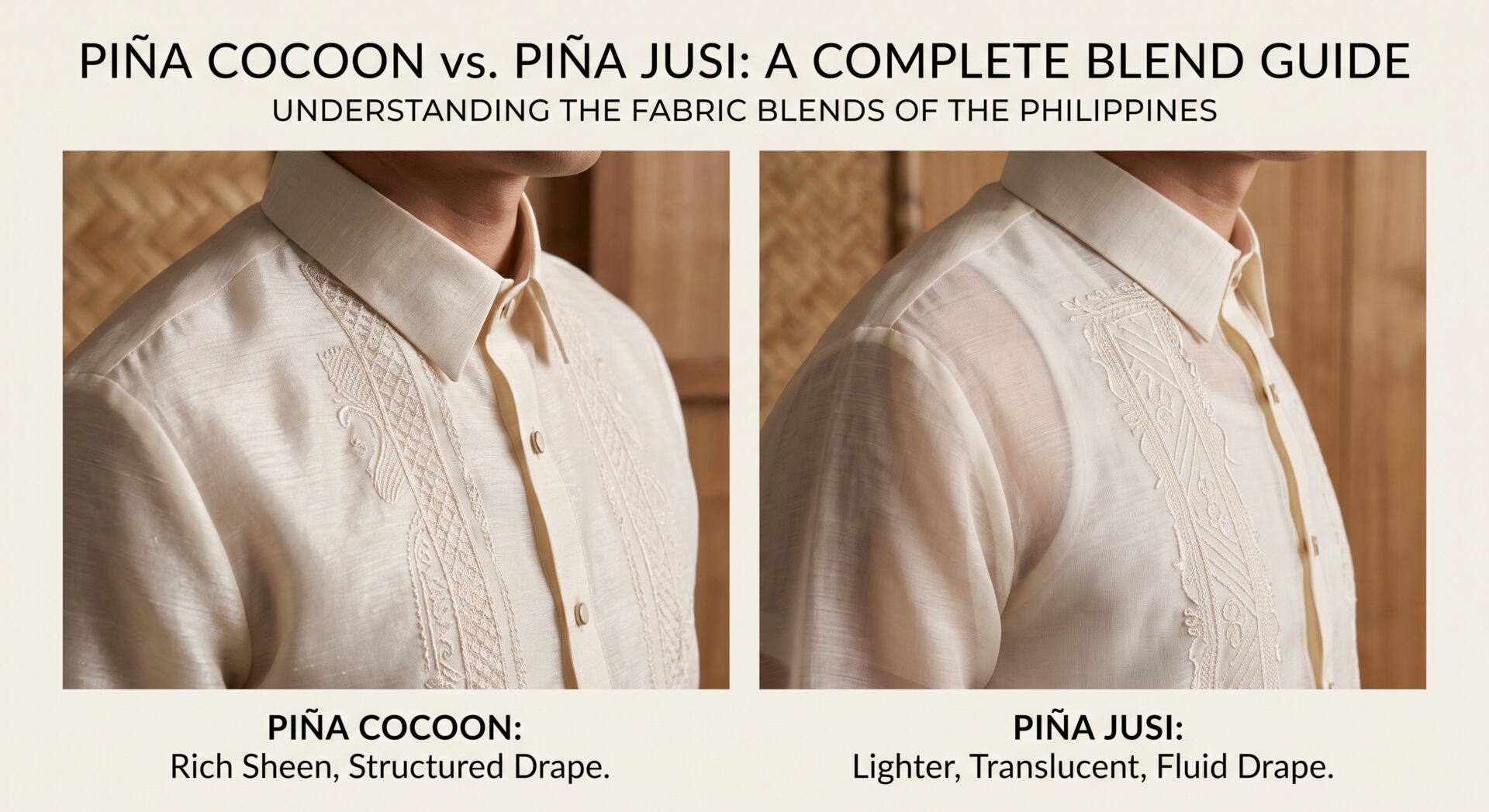
Common Barong Fabrics Explained

  • Piña – Pineapple fiber; ultra-delicate and prone to brittleness
  • Jusi – Traditionally silk; modern blends still require gentle care
  • Cocoon – Premium silk with structure, but heat-sensitive
  • Organza – More affordable, but can melt under high heat

Bottom line: Caring for a Barong is about preservation, not just cleanliness.

Can You Wash a Barong Tagalog at Home?

Yes—but only by hand.
Never machine-wash a Barong Tagalog, even on “delicate.”

Step-by-Step: How to Wash a Barong Tagalog (Hand-Wash Method)

Handwash Barong Tagalog Delicately

What You’ll Need

  • Clean basin or sink
  • Lukewarm water
  • Mild liquid detergent (Woolite or Perla)
  • Soft toothbrush (for spot cleaning only)

Step 1: Inspect Before Washing

Check:

  • Collar & underarms (sweat salts weaken fibers)
  • Cuffs
  • Embroidery (food or makeup stains)

Step 2: Prepare the Wash

  • Fill basin with lukewarm water
  • Add a small amount of detergent
  • Mix before submerging (never pour soap directly on fabric)

Step 3: Gentle Soak

  • Submerge the Barong fully
  • Let soak 15–30 minutes
  • Do not scrub or twist

Step 4: Spot Clean Carefully

  • Use fingertips or a soft toothbrush
  • Very light pressure only
  • Focus on collar, not embroidery

Step 5: Rinse Properly

  • Rinse with cool water until soap is gone
  • Never wring or twist
  • Gently press water out using hands

How to Dry a Barong Tagalog Correctly

Barong Tagalog air drying

Drying mistakes cause more damage than washing.

Best Drying Method

  1. Lay Barong flat on a clean white towel
  2. Roll towel gently to absorb moisture
  3. Lay flat to air dry or hang on padded hanger

🚫 Avoid:

  • Direct sunlight
  • Thin wire hangers
  • Clothes dryers (always ruin Barongs)

How to Iron a Barong Tagalog Without Damage

Iron Barong Safely Low Heat

Ironing is where most Barongs are ruined.

Golden Rules

  • Iron while slightly damp
  • Always use a pressing cloth
  • Iron inside out first

Iron Settings

  • Piña / Cocoon: Medium-low
  • Jusi / Organza: Low

For embroidery: place a towel underneath so stitches don’t flatten.

How to Store a Barong Tagalog (Prevent Yellowing)

If you wear your Barong once or twice a year, storage matters most.

Best Storage Practices

  • Use breathable cotton garment bags
  • Never store in plastic
  • Insert acid-free tissue if folding
  • Add silica gel or cedar to control humidity

💡 For wedding Barongs: archival boxes are ideal for long-term storage.

Frequently Asked Questions

Can I dry clean a Barong Tagalog?

Only if the cleaner specializes in traditional or museum textiles. Standard dry cleaning chemicals often damage Piña fibers.

How do I remove yellow sweat stains?

Soak in lukewarm water with mild detergent and a small amount of baking soda. Never use bleach.

How do I soften a scratchy Barong?

Add one tiny drop of hair conditioner to the final rinse—this helps relax natural fibers.

The Kapamilya Way: Preserve What Matters

A well-cared-for Barong Tagalog becomes a pamana—an heirloom passed down through generations.

If your current Barong has reached the end of its life, Handmade Kapamilya offers artisan-crafted Barongs designed for durability without sacrificing tradition.

👉 Explore our Exclusive Barong Tagalog Collection

Related Guides to Complete Your Care Routine

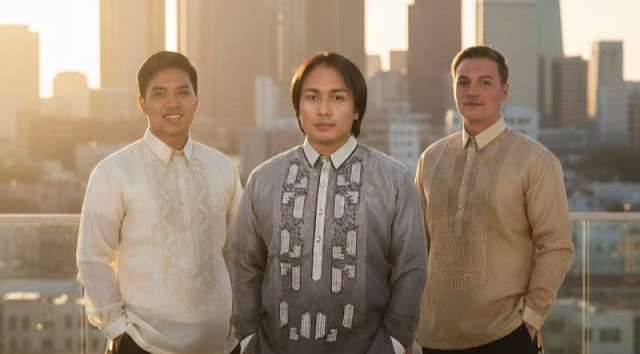
Three men wearing modern Barong Tagalogs on a city rooftop at sunset.

Where to Buy a Barong in the USA: Authentic Guide

You have the invitation in your hand. Maybe it’s your cousin’s wedding in California, a gala for a Filipino-American non-profit, or perhaps you are the groom preparing for the biggest day of your life. The dress code is clear: “Filipiniana” or “Barong Tagalog.”

Immediately, the panic sets in. You know exactly what you need, but you have no idea where to buy a barong in the US that doesn’t feel like a gamble. You are left with two stressful options: beg a Tita to bring one back from her next Manila trip (and pray it fits), or risk ordering from a sketchy website that takes six weeks to ship and might arrive looking like a costume.

We know the struggle because we have lived it. At Handmade Kapamilya, we believe wearing your heritage shouldn’t be a logistical nightmare. Whether you are a groom looking for a barong tagalog for men wedding attire or a guest wanting to represent with pride, this guide will walk you through everything you need to know to find the perfect piece stateside—without the stress, the wait, or the sizing mishaps.

Barong Tagalog in US Wedding

The Cultural Weight: Why the Barong Matters

Before we dive into where to buy, it is essential to understand what you are buying. The Barong Tagalog is not just a Filipino shirt; it is a garment of honor, identity, and resilience.

A Symbol of Resilience

The history of the Barong is deeply woven into the fabric of the Philippines. While early Filipinos wore loose, breathable tunics suited for the tropical climate long before colonization, the Barong as we know it evolved during the Spanish era. A popular (though debated) historical narrative suggests that the Spanish colonizers required “Indios” (native Filipinos) to wear their shirts untucked and made of translucent material. The alleged reasons were twofold: to distinguish them from the ruling class who tucked their shirts in, and to prevent the concealment of weapons.

However, what was meant to be a badge of inferiority was subverted by the Filipino people. They turned the barong into a canvas of intricate embroidery and exquisite craftsmanship, transforming a tool of subjugation into a symbol of pride. Today, wearing a Barong untucked is not just a style choice; it is a nod to centuries of cultural endurance.

The National Attire

In 1975, the Barong Tagalog was officially designated as the national attire of the Philippines. It bridges social gaps—worn by everyone from farmers to presidents. When you wear one in the US, you aren’t just dressing up; you are carrying a piece of that history. You are signaling to the room that you honor your roots.

The 3 Biggest Risks of Buying a Barong Online (And How to Solve Them)

If you have ever typed “where to buy a barong in the us” into a search engine, you know the results can be overwhelming. Before you click “Add to Cart,” you need to be aware of the three “Silent Killers” of online Barong shopping.

1. The Sizing Trap: Asian vs. US Sizing

This is the number one complaint we hear. A “Large” in the Philippines is rarely a “Large” in the US.

  • The Reality: Filipino sizing is typically one to two sizes smaller than Western sizing. If you usually wear a US Large, ordering a PH Large often results in a garment that is tight in the shoulders and short in the sleeves.

  • The Fix: When shopping, look for vendors who specifically explicitly state they use US Sizing. At Handmade Kapamilya, we curate our collections for the Western frame, eliminating the guesswork. If you are buying elsewhere, the general rule is to size up at least one full size.

Barong US Size Tag

2. The Material Mirage: Authentic vs. Synthetic

In photos, a cheap polyester philippines shirt can look alarmingly similar to a high-end piña barong. However, the difference is obvious the moment you touch it.

  • Synthetic (Polyester/Organza): Often shiny, stiff, and less breathable. These are fine for school plays or one-time use, but they lack the elegance required for a wedding.

  • Authentic (Piña/Jusi): These natural fibers have a soft sheen, a refined texture, and breathable qualities that synthetic fabrics cannot mimic.

3. The Shipping Black Hole

Many “US-facing” websites actually drop-ship directly from Manila. While this isn’t inherently bad, it introduces customs delays. We have seen grooms panic because their barong tagalog for men is stuck in a sorting facility in Honolulu three days before the wedding. Always verify that the vendor has US-based inventory for reliable domestic shipping speeds.


The Ultimate Fabric Guide: Choosing the Right Barong for You

The price and formality of a Barong are dictated almost entirely by its fabric. Knowing the difference between Jusi and Piña is the key to not getting ripped off.

Piña: The Gold Standard

If you are the groom, a father of the bride, or a guest of honor, this is what you want.

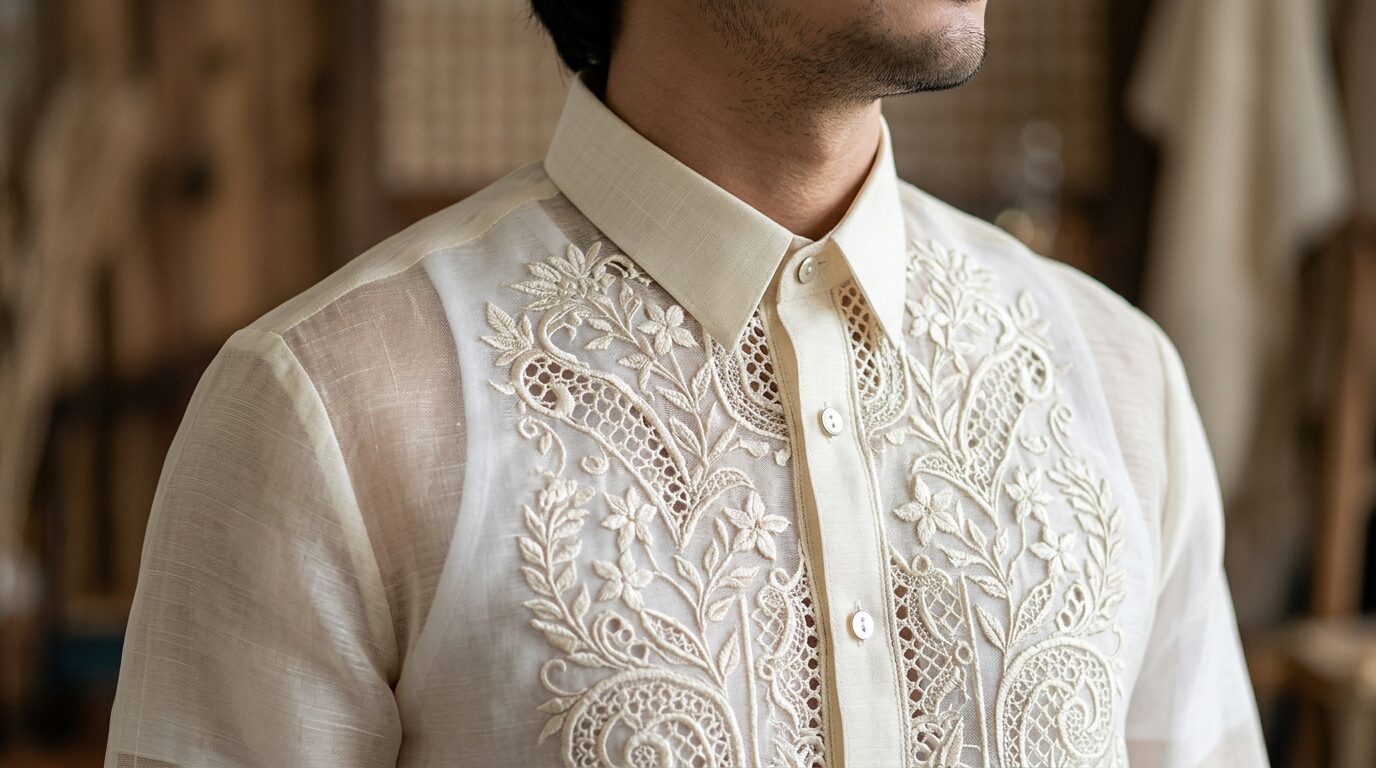
  • What it is: A fiber extracted from the leaves of the Red Spanish pineapple plant. It is the finest of all Philippine hand-woven fabrics.

  • The Look: It has a natural, ivory champagne-gold hue and a delicate, airy texture. It is translucent, lightweight, and exudes quiet luxury.

  • Best For: Barong tagalog for men wedding attire, black-tie Filipiniana galas, and state functions.

  • Pro-Tip: Because it is handmade, true Piña is expensive and delicate. It is an heirloom piece meant to be passed down.

Pina Barong Embroidery Close Up

Jusi: The Best All-Rounder

For guests, groomsmen, or corporate events, Jusi is the most popular choice.

  • What it is: Originally made from banana fibers or silk, modern Jusi is often a blend of silk and organza.

  • The Look: It is more opaque than Piña but still retains a beautiful sheen. It is softer to the touch than synthetic organza and drapes elegantly on the body.

  • Best For: Filipino formal wear for men, corporate events, and wedding guests.

  • Why we love it: It offers the premium look of a traditional barong without the heirloom price tag of Piña.
    Embroidered White Jusilyn Shirt

Organza & Polyester: The Budget Friendly Option

  • What it is: Synthetic sheer fabric.

  • The Look: It tends to have a higher, sometimes “glassy” shine and a stiffer structure.

  • Best For: Cultural performances, school events, or if you need a durable, cost-effective option for a one-time event.

  • Warning: It does not breathe as well as natural fibers, so be wary if you are attending an outdoor summer wedding.

Cocoon Silk: The Modern Favorite

  • What it is: A high-quality woven silk that resembles the look of Piña but is more durable.

  • The Look: It has a rich texture and a creamy, off-white color. It is less transparent than Piña, making it a great option for those who want coverage.

  • Best For: Modern grooms and fashion-forward guests.


Styling Your Barong: The Do’s and Don’ts

Wearing a barong comes with its own set of etiquette rules. To look your best (and respect the culture), keep these tips in mind.

1. The Undershirt is Critical

Because the fabric is sheer, your undershirt is visible.

  • DO: Wear a Camisa de Chino (a collarless cotton shirt) or a plain white crew-neck t-shirt.

  • DON’T: Wear a tank top (the straps show through), a colored shirt, or anything with a printed logo. The undershirt acts as the canvas; keep it clean.

2. Trousers and Shoes

  • DO: Pair your Barong with dark, flat-front trousers (black or charcoal gray) for formal events.

  • DO: Wear polished black dress shoes or loafers.

  • DON’T: Wear denim jeans unless you are specifically going for a modern, streetwear fusion look (and even then, tread carefully!).

3. To Tuck or Not to Tuck?

  • NEVER: Tuck in a Barong Tagalog. It is designed to be worn untucked. Tucking it in is considered culturally incorrect and disrespects the garment’s history.


Beyond the Grooms: Barongs for Everyone

While the barong tagalog for men is the standard, Filipino formal wear has evolved beautifully to include everyone in the family.

Barong Tagalog for Women

The Filipiniana style for women has seen a massive resurgence. The barong tagalog for women (often referred to as a Lady Barong or Kimona) adapts the intricate embroidery of the male garment into feminine silhouettes.

  • The Look: Tailored cuts that nip in at the waist, often featuring 3/4 sleeves or butterfly sleeves.

  • How to Wear: Pair a structured Lady Barong with a long skirt for a formal “Terno” look, or wear it with dress pants for a powerful, modern corporate outfit.

The Little Ones

There is nothing cuter than a ring bearer in a miniature Barong. When buying for kids, comfort is king. Look for Jusi or soft Linen blends (often called Gusot Mayaman) that won’t itch or irritate their skin during the ceremony.

Kids Modern Barong


Caring for Your Barong: A Survival Guide

You have invested in a piece of art; here is how to make sure it lasts for the next generation.

  • Washing: Never machine wash a Piña or Jusi Barong. The agitation can destroy the delicate fibers and embroidery.

    • Hand Wash: Soak gently in mild detergent and water. Do not wring or twist.

    • Drip Dry: Let it air dry on a plastic hanger.

  • Ironing: Use a low heat setting. Ideally, place a thin cotton cloth between the iron and the Barong to prevent scorching the delicate embroidery.

  • Storage: Store it hanging in a breathable garment bag. Avoid plastic bags, which can trap moisture and cause the fabric to yellow over time.


The Verdict: Where to Buy a Barong in the US

So, back to the original question: Where to buy a barong in the US?

You could take your chances on a generic marketplace, hoping the “XL” fits and the fabric isn’t scratchy polyester. Or, you can trust a specialist who understands the unique intersection of Filipino heritage and American standards.

At Handmade Kapamilya, we bridge that gap. We are not just selling clothes; we are curating culture.

  • We Solve Sizing: We offer US sizing so you get the fit you expect.

  • We Verify Quality: We source authentic Jusi and Piña fabrics directly from artisans in Lumban and Aklan.

  • We Ship Fast: Our inventory is here in the US, meaning no customs delays and no sleepless nights wondering if your outfit will arrive in time.

Whether you need a barong tagalog for men wedding attire, a stunning barong tagalog for women, or simply a high-quality filipino shirt to wear with pride, we are here to help you look your best.

Ready to Find Your Perfect Fit?

Don’t let sizing anxiety or shipping delays ruin your big event. Browse our curated collection of authentic, US-sized Filipino formal wear today.


Read More from the Handmade Kapamilya Blog:

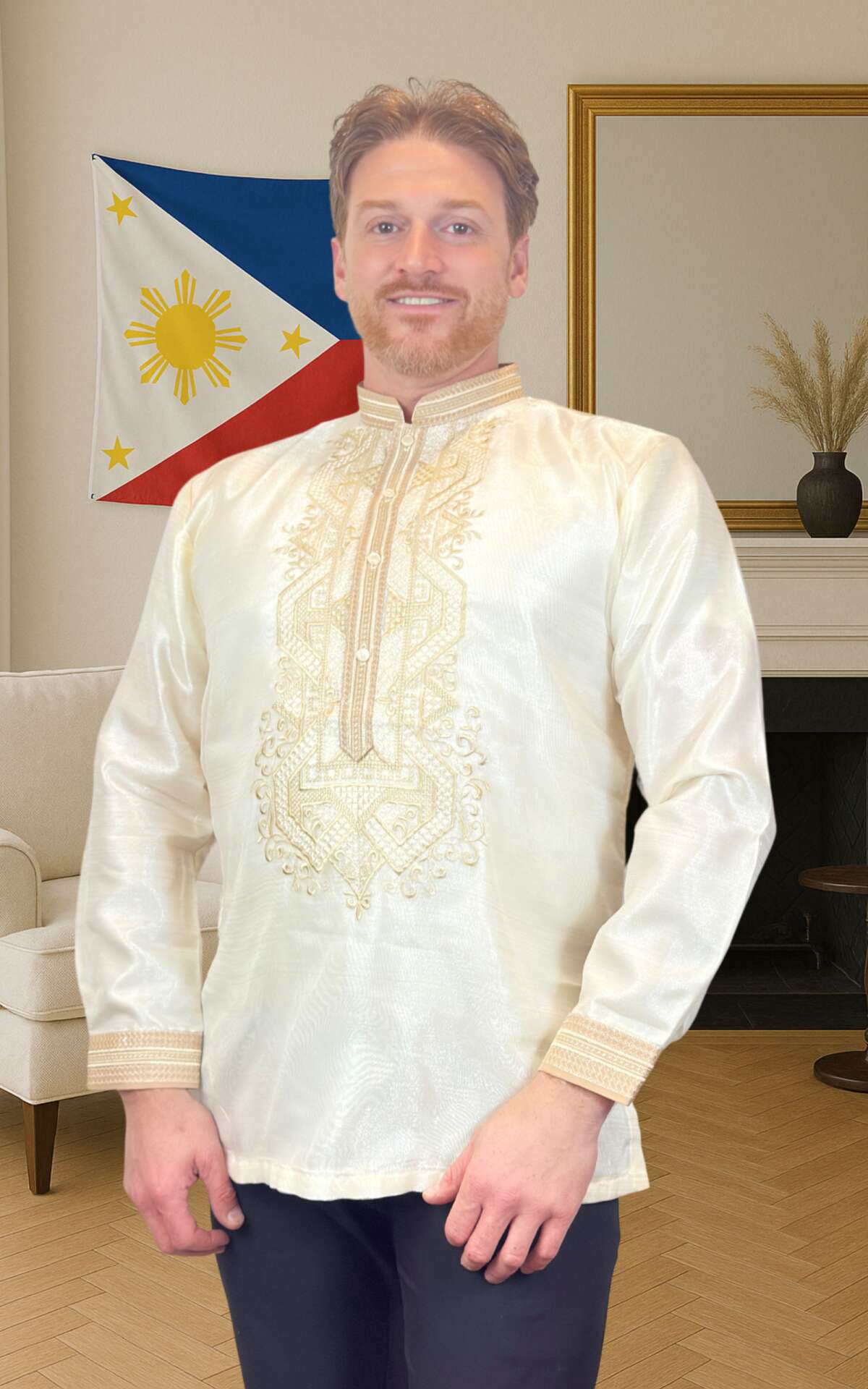
Man Wearing Barong Tagalog in the USA

Where to Buy Barong Tagalog in the US: Authentic Guide

You have the invitation in your hand. Maybe it’s your cousin’s wedding in California, a gala for a Filipino-American non-profit, or perhaps you are the groom preparing for the biggest day of your life. The dress code is clear: “Filipiniana” or “Barong Tagalog.”

Immediately, the panic sets in. You know exactly what you need, but you have no idea where to buy a barong in the US that doesn’t feel like a gamble. You are left with two stressful options: beg a Tita to bring one back from her next Manila trip (and pray it fits), or risk ordering from a sketchy website that takes six weeks to ship and might arrive looking like a costume.

We know the struggle because we have lived it. At Handmade Kapamilya, we believe wearing your heritage shouldn’t be a logistical nightmare. Whether you are a groom looking for a barong tagalog for men wedding attire or a guest wanting to represent with pride, this guide will walk you through everything you need to know to find the perfect piece stateside—without the stress, the wait, or the sizing mishaps.

Barong Tagalog in US Wedding

The Cultural Weight: Why the Barong Matters

Before we dive into where to buy, it is essential to understand what you are buying. The Barong Tagalog is not just a Filipino shirt; it is a garment of honor, identity, and resilience.

A Symbol of Resilience

The history of the Barong is deeply woven into the fabric of the Philippines. While early Filipinos wore loose, breathable tunics suited for the tropical climate long before colonization, the Barong as we know it evolved during the Spanish era. A popular (though debated) historical narrative suggests that the Spanish colonizers required “Indios” (native Filipinos) to wear their shirts untucked and made of translucent material. The alleged reasons were twofold: to distinguish them from the ruling class who tucked their shirts in, and to prevent the concealment of weapons.

However, what was meant to be a badge of inferiority was subverted by the Filipino people. They turned the barong into a canvas of intricate embroidery and exquisite craftsmanship, transforming a tool of subjugation into a symbol of pride. Today, wearing a Barong untucked is not just a style choice; it is a nod to centuries of cultural endurance.

The National Attire

In 1975, the Barong Tagalog was officially designated as the national attire of the Philippines. It bridges social gaps—worn by everyone from farmers to presidents. When you wear one in the US, you aren’t just dressing up; you are carrying a piece of that history. You are signaling to the room that you honor your roots.

The 3 Biggest Risks of Buying a Barong Online (And How to Solve Them)

If you have ever typed “where to buy a barong in the us” into a search engine, you know the results can be overwhelming. Before you click “Add to Cart,” you need to be aware of the three “Silent Killers” of online Barong shopping.

1. The Sizing Trap: Asian vs. US Sizing

This is the number one complaint we hear. A “Large” in the Philippines is rarely a “Large” in the US.

  • The Reality: Filipino sizing is typically one to two sizes smaller than Western sizing. If you usually wear a US Large, ordering a PH Large often results in a garment that is tight in the shoulders and short in the sleeves.

  • The Fix: When shopping, look for vendors who specifically explicitly state they use US Sizing. At Handmade Kapamilya, we curate our collections for the Western frame, eliminating the guesswork. If you are buying elsewhere, the general rule is to size up at least one full size.

Barong US Size Tag

2. The Material Mirage: Authentic vs. Synthetic

In photos, a cheap polyester philippines shirt can look alarmingly similar to a high-end piña barong. However, the difference is obvious the moment you touch it.

  • Synthetic (Polyester/Organza): Often shiny, stiff, and less breathable. These are fine for school plays or one-time use, but they lack the elegance required for a wedding.

  • Authentic (Piña/Jusi): These natural fibers have a soft sheen, a refined texture, and breathable qualities that synthetic fabrics cannot mimic.

3. The Shipping Black Hole

Many “US-facing” websites actually drop-ship directly from Manila. While this isn’t inherently bad, it introduces customs delays. We have seen grooms panic because their barong tagalog for men is stuck in a sorting facility in Honolulu three days before the wedding. Always verify that the vendor has US-based inventory for reliable domestic shipping speeds.


The Ultimate Fabric Guide: Choosing the Right Barong for You

The price and formality of a Barong are dictated almost entirely by its fabric. Knowing the difference between Jusi and Piña is the key to not getting ripped off.

Piña: The Gold Standard

If you are the groom, a father of the bride, or a guest of honor, this is what you want.

  • What it is: A fiber extracted from the leaves of the Red Spanish pineapple plant. It is the finest of all Philippine hand-woven fabrics.

  • The Look: It has a natural, ivory champagne-gold hue and a delicate, airy texture. It is translucent, lightweight, and exudes quiet luxury.

  • Best For: Barong tagalog for men wedding attire, black-tie Filipiniana galas, and state functions.

  • Pro-Tip: Because it is handmade, true Piña is expensive and delicate. It is an heirloom piece meant to be passed down.

Pina Barong Embroidery Close Up

Jusi: The Best All-Rounder

For guests, groomsmen, or corporate events, Jusi is the most popular choice.

  • What it is: Originally made from banana fibers or silk, modern Jusi is often a blend of silk and organza.

  • The Look: It is more opaque than Piña but still retains a beautiful sheen. It is softer to the touch than synthetic organza and drapes elegantly on the body.

  • Best For: Filipino formal wear for men, corporate events, and wedding guests.

  • Why we love it: It offers the premium look of a traditional barong without the heirloom price tag of Piña.
    Embroidered White Jusilyn Shirt

Organza & Polyester: The Budget Friendly Option

  • What it is: Synthetic sheer fabric.

  • The Look: It tends to have a higher, sometimes “glassy” shine and a stiffer structure.

  • Best For: Cultural performances, school events, or if you need a durable, cost-effective option for a one-time event.

  • Warning: It does not breathe as well as natural fibers, so be wary if you are attending an outdoor summer wedding.

Cocoon Silk: The Modern Favorite

  • What it is: A high-quality woven silk that resembles the look of Piña but is more durable.

  • The Look: It has a rich texture and a creamy, off-white color. It is less transparent than Piña, making it a great option for those who want coverage.

  • Best For: Modern grooms and fashion-forward guests.


Styling Your Barong: The Do’s and Don’ts

Wearing a barong comes with its own set of etiquette rules. To look your best (and respect the culture), keep these tips in mind.

1. The Undershirt is Critical

Because the fabric is sheer, your undershirt is visible.

  • DO: Wear a Camisa de Chino (a collarless cotton shirt) or a plain white crew-neck t-shirt.

  • DON’T: Wear a tank top (the straps show through), a colored shirt, or anything with a printed logo. The undershirt acts as the canvas; keep it clean.

2. Trousers and Shoes

  • DO: Pair your Barong with dark, flat-front trousers (black or charcoal gray) for formal events.

  • DO: Wear polished black dress shoes or loafers.

  • DON’T: Wear denim jeans unless you are specifically going for a modern, streetwear fusion look (and even then, tread carefully!).

3. To Tuck or Not to Tuck?

  • NEVER: Tuck in a Barong Tagalog. It is designed to be worn untucked. Tucking it in is considered culturally incorrect and disrespects the garment’s history.


Beyond the Grooms: Barongs for Everyone

While the barong tagalog for men is the standard, Filipino formal wear has evolved beautifully to include everyone in the family.

Barong Tagalog for Women

The Filipiniana style for women has seen a massive resurgence. The barong tagalog for women (often referred to as a Lady Barong or Kimona) adapts the intricate embroidery of the male garment into feminine silhouettes.

  • The Look: Tailored cuts that nip in at the waist, often featuring 3/4 sleeves or butterfly sleeves.

  • How to Wear: Pair a structured Lady Barong with a long skirt for a formal “Terno” look, or wear it with dress pants for a powerful, modern corporate outfit.

The Little Ones

There is nothing cuter than a ring bearer in a miniature Barong. When buying for kids, comfort is king. Look for Jusi or soft Linen blends (often called Gusot Mayaman) that won’t itch or irritate their skin during the ceremony.

Kids Modern Barong


Caring for Your Barong: A Survival Guide

You have invested in a piece of art; here is how to make sure it lasts for the next generation.

  • Washing: Never machine wash a Piña or Jusi Barong. The agitation can destroy the delicate fibers and embroidery.

    • Hand Wash: Soak gently in mild detergent and water. Do not wring or twist.

    • Drip Dry: Let it air dry on a plastic hanger.

  • Ironing: Use a low heat setting. Ideally, place a thin cotton cloth between the iron and the Barong to prevent scorching the delicate embroidery.

  • Storage: Store it hanging in a breathable garment bag. Avoid plastic bags, which can trap moisture and cause the fabric to yellow over time.


The Verdict: Where to Buy a Barong in the US

So, back to the original question: Where to buy a barong in the US?

You could take your chances on a generic marketplace, hoping the “XL” fits and the fabric isn’t scratchy polyester. Or, you can trust a specialist who understands the unique intersection of Filipino heritage and American standards.

At Handmade Kapamilya, we bridge that gap. We are not just selling clothes; we are curating culture.

  • We Solve Sizing: We offer US sizing so you get the fit you expect.

  • We Verify Quality: We source authentic Jusi and Piña fabrics directly from artisans in Lumban and Aklan.

  • We Ship Fast: Our inventory is here in the US, meaning no customs delays and no sleepless nights wondering if your outfit will arrive in time.

Whether you need a barong tagalog for men wedding attire, a stunning barong tagalog for women, or simply a high-quality filipino shirt to wear with pride, we are here to help you look your best.

Ready to Find Your Perfect Fit?

Don’t let sizing anxiety or shipping delays ruin your big event. Browse our curated collection of authentic, US-sized Filipino formal wear today.


Read More from the Handmade Kapamilya Blog:

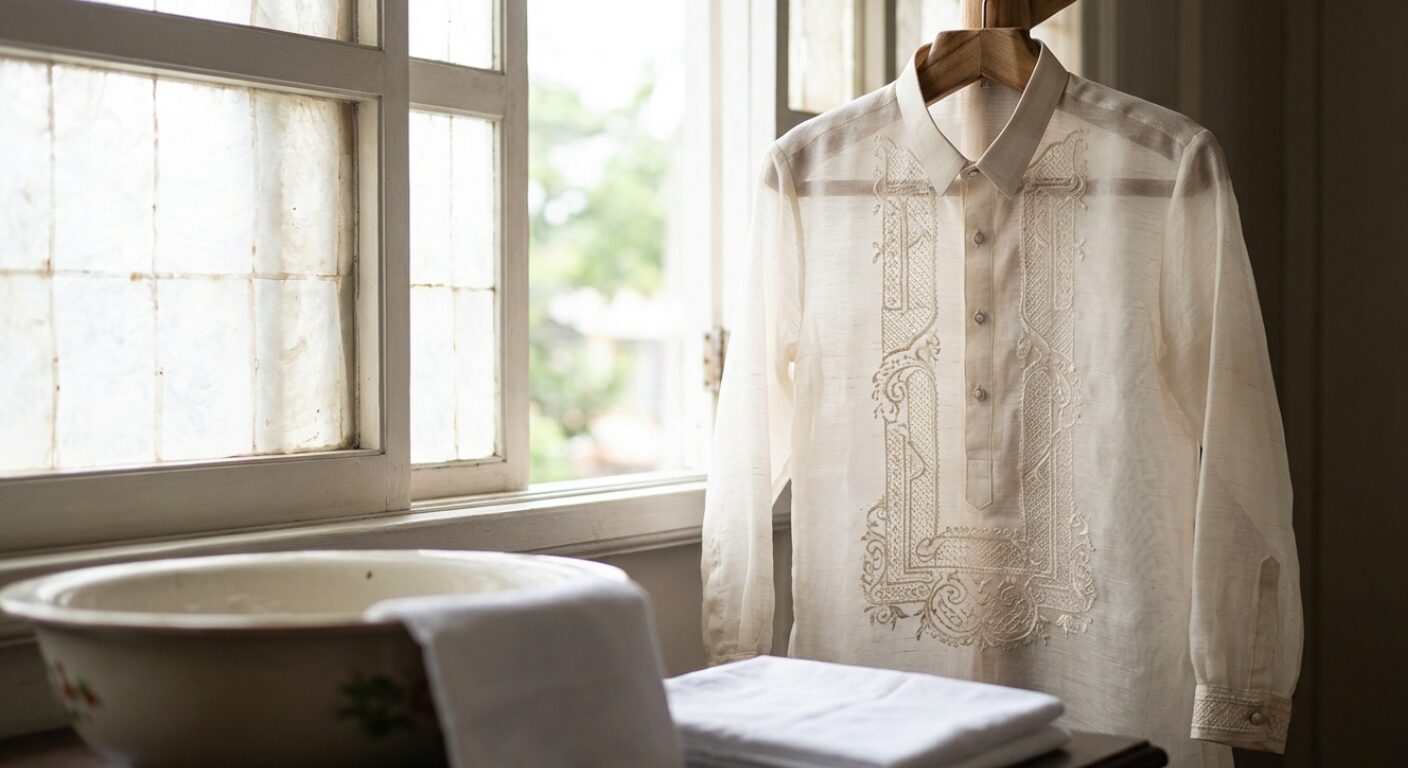
Pristine embroidered Piña Barong Tagalog.

How to Wash a Barong Tagalog: The Expert Care Guide

The Ultimate Masterclass: How to Wash and Care for Your Barong Tagalog

You just returned from a beautiful wedding or a prestigious gala. Your Barong Tagalog—that masterpiece of Filipino craftsmanship—is looking a little less than pristine. Perhaps there’s a faint collar stain or the fabric has lost its crisp, regal silhouette.

Mabuhay! At Handmade Kapamilya, we understand that your Barong is more than just a shirt; it is a piece of our shared history, a symbol of bayanihan, and likely one of the most expensive items in your wardrobe. The fear of ruining a $500 Piña-Seda Barong in the laundry is real.

In this guide, we are sharing the “inner sanctum” secrets of our workshop. We will teach you how to wash a Barong Tagalog with the precision of a master artisan, ensuring your garment remains a heirloom for generations.

Why Meticulous Care Matters: The Cultural Weight of the Barong

The Barong Tagalog is an architectural marvel of textile science. Whether it is woven from Piña (pineapple fiber), Jusi (silk), or Cocoon (silk-like synthetic), the fibers are delicate and often translucent. Unlike a standard cotton dress shirt, the Barong’s embroidery is hand-stitched, meaning a single aggressive cycle in a washing machine can unravel hours of painstaking labor.

Caring for your Barong is an act of respect—to the artisans in Lumban who embroidered it, and to the heritage it represents. Salamat for taking the time to do this correctly.

Macro comparison of Barong fabrics.

Phase 1: Identifying Your Fabric (The Expert’s First Step)

Before you even touch the water, you must know what you are holding. Different fabrics require different “levels of aggression.”

  1. Piña and Piña-Silk: The “Queen of Philippine Fabrics.” Extremely delicate, slightly stiff, and made from pineapple leaf fibers. Requires the most gentle touch.
  2. Jusi (Silk): Traditionally made from abaca or silk. It is smoother than Piña but still very prone to water spots and mechanical damage.
  3. Cocoon and Organza: Often used for modern Barongs. These are slightly more durable but can become “brittle” if exposed to harsh chemicals.

Gently hand washing a Barong.

Phase 2: How to Wash a Barong Tagalog (Step-by-Step)

If you have the time and the patience, hand washing is the gold standard for Barong Tagalog maintenance.

1. Prepare the Artisan’s Solution

Never use standard grocery-store detergents with harsh bleaching agents. We recommend a “neutral” or mild detergent. In our workshop, we have found that Soak or Woolite works best.

  • Fill a clean basin with lukewarm (never hot) water.
  • Add a capful of detergent and stir with your hand until fully dissolved. Pro Tip: If the water is too sudsy, you’ve used too much.

2. The Submerge and Agitate Technique

Do not “scrub” the Barong against itself. This causes “pilling” and damages the embroidery.

  • Immerse the Barong completely.
  • Use a gentle lifting and lowering motion. Imagine the water flowing through the fibers rather than the fabric being rubbed.
  • Let it soak for no more than 15–20 minutes. Prolonged soaking can weaken the organic fibers of Piña.

3. Targeted Stain Removal (The “Soft Touch” Method)

This is where most people fail. Stains usually congregate at the collar, cuffs, and underarms.

  • For Jusi Barongs: You may use an ultra-soft toothbrush (infant size is best) to very lightly brush the collar and cuffs.
  • For Piña, Cocoon, or Abaca: Avoid the brush. Instead, apply a drop of concentrated mild detergent directly to the stain and use your fingertip to massage it in a circular motion.
  • Continue the “lift and lower” agitation until the dirt vanishes.

4. The “No-Wring” Rinse

Kumusta po—are you tempted to twist the Barong to get the water out? Stop. Wringing snaps the delicate fibers and creates permanent “fracture” lines in the fabric that no iron can fix.

  • Rinse with fresh, cool water until all soap is gone.
  • To remove excess water, lay the Barong flat on a clean, white towel. Roll the towel up like a sleeping bag and press down firmly. The towel will absorb the moisture without stressing the garment.

Phase 3: The Drying and Starching Process

Air Drying: The Only Way

  • Use a thick, rounded plastic hanger. Never use wire hangers, as they create “nipples” in the shoulders and can rust, leaving permanent orange stains.
  • Hang the Barong in a well-ventilated area, away from direct sunlight. Sunlight is a natural bleach and will yellow your pristine white or ivory Barong over time.

To Starch or Not to Starch?

An authentic Barong should have a certain “crispness.” In the Philippines, we traditionally used rice water (lugaw style), but today, a high-quality spray starch like Faultless Premium works wonders. Spray lightly while the garment is still slightly damp to help the fabric hold its shape.

Ironing Barong using pressing cloth.

Phase 4: Mastering the Iron (The Ultimate Test)

Ironing a Barong is an art form. If you are uncomfortable with this, please take it to a specialist. If you are doing it at home, follow these rules:

  1. Use a Pressing Cloth: Never let the hot iron face touch the embroidery directly. Use a thin cotton cloth (a clean handkerchief works well) as a barrier.
  2. Inside Out: Iron the Barong inside out first. This protects the delicate surface fibers.
  3. The “Silk” Setting: Use a low-to-medium heat setting. High heat will “scorch” Piña and Jusi, turning it a permanent golden-brown.
  4. Steam is Your Friend: Use plenty of steam to relax the wrinkles rather than relying on the weight and heat of the iron.

Professional Dry Cleaning: When to Outsource

While we advocate for hand washing, we recognize that your time is valuable. However, not all dry cleaners are created equal. If you choose this route:

  • Ensure they have experience with “Filipino Formal Wear” or “Delicate Silks.”
  • Specify “No Perc” (Perchloroethylene) if possible, as it can be too harsh for organic Piña.
  • Ask them to “Hand Finish” the garment rather than putting it through a high-pressure steam press.

Essential “Don’ts” for Barong Care

  • Don’t ever use bleach (Clorox). It will disintegrate the fibers.
  • Don’t use a dryer. The heat will shrink the Barong by 1-2 sizes instantly.
  • Don’t store in plastic dry-cleaner bags. These trap moisture and cause yellowing. Use a breathable cotton garment bag.

Conclusion: Honor the Craft

Your Barong Tagalog is a testament to the elegance of our culture. By following this guide, you aren’t just cleaning a shirt—you are preserving a legacy. When you stand at the altar or walk into a gala, you do so with the confidence that your attire is as flawless as the traditions it represents.

Mabuhay ang dugong Pilipino!

Ready for Your Next Event?

Is your current Barong looking a bit dated, or are you looking for a modern silhouette for an upcoming wedding? Explore our latest collection of hand-embroidered masterpieces.

Browse the Handmade Kapamilya Authentic Barong Collection

The Heritage Hub: Complete Your Formal Wear Knowledge