

Selecting Filipino funeral gifts is an act of communal support, cultural care, and quiet respect. Whether you are attending a wake (lamay) in a Filipino American community, sending sympathy offerings from a distance, or helping a family prepare their loved one for final rites, the right gift honors both the deceased and those who mourn them. This guide focuses on traditional condolence gifts, practical ways to support the bereaved, and the proper etiquette for delivering each.
Traditional Sympathy Offerings: Abuloy, Flowers, and Mass Cards
In Philippine culture, funeral gifts center on practical relief and spiritual comfort rather than elaborate physical items.
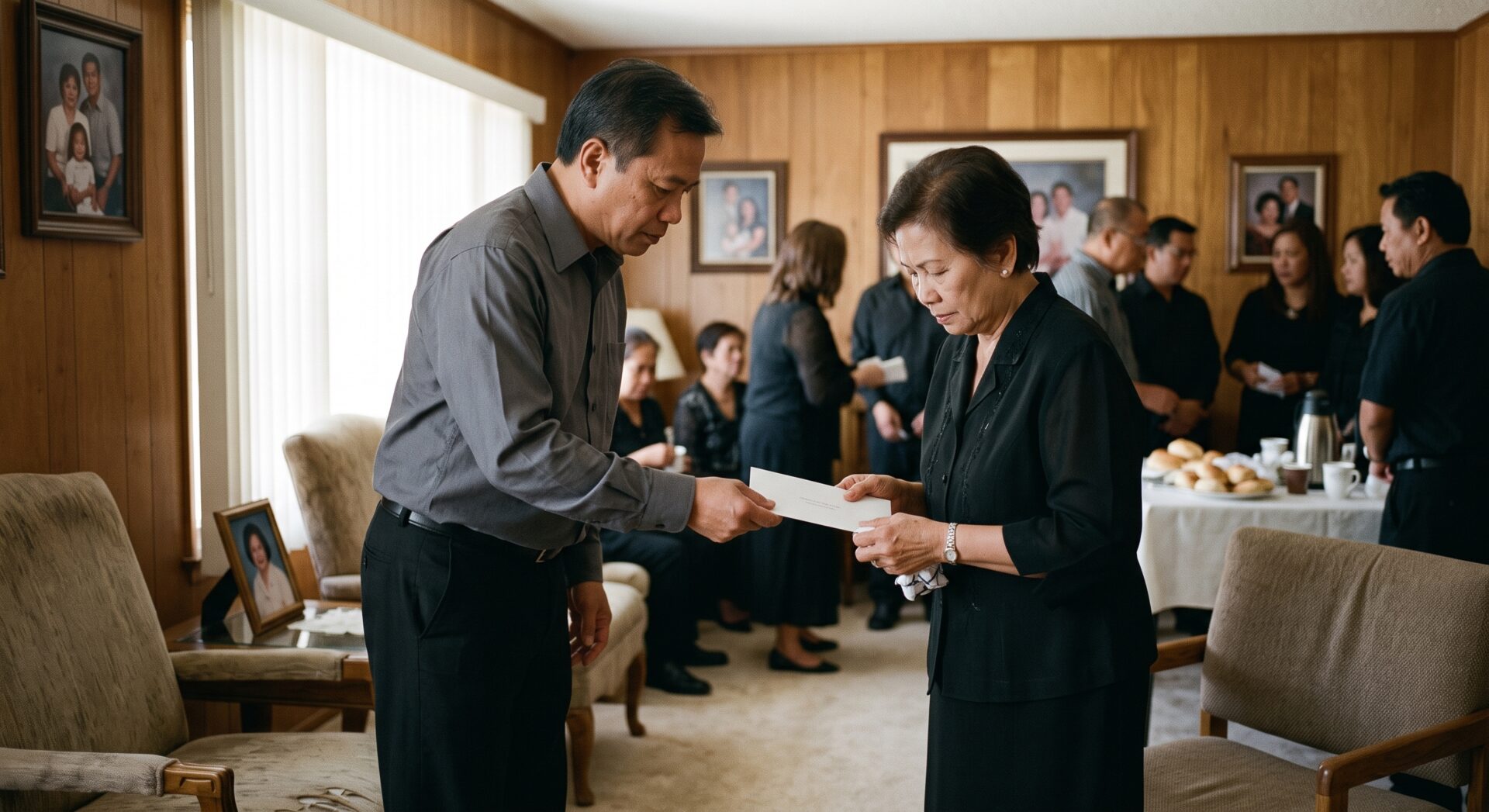
- Monetary Sympathy (Abuloy): The most customary and meaningful gift at a Filipino wake is abuloy—a financial contribution given directly to the immediate family to help cover wake, burial, and novena expenses.
- Etiquette: Place cash or a check inside a plain white envelope or sympathy card. Write a brief note of condolence along with your name. Hand it quietly to a family member or place it in the designated collection box near the guest book or casket.
- Amount: There is no fixed amount. Extended family and close friends typically contribute more, while colleagues or acquaintances give what is comfortable. The gesture and discreet delivery are what matter.
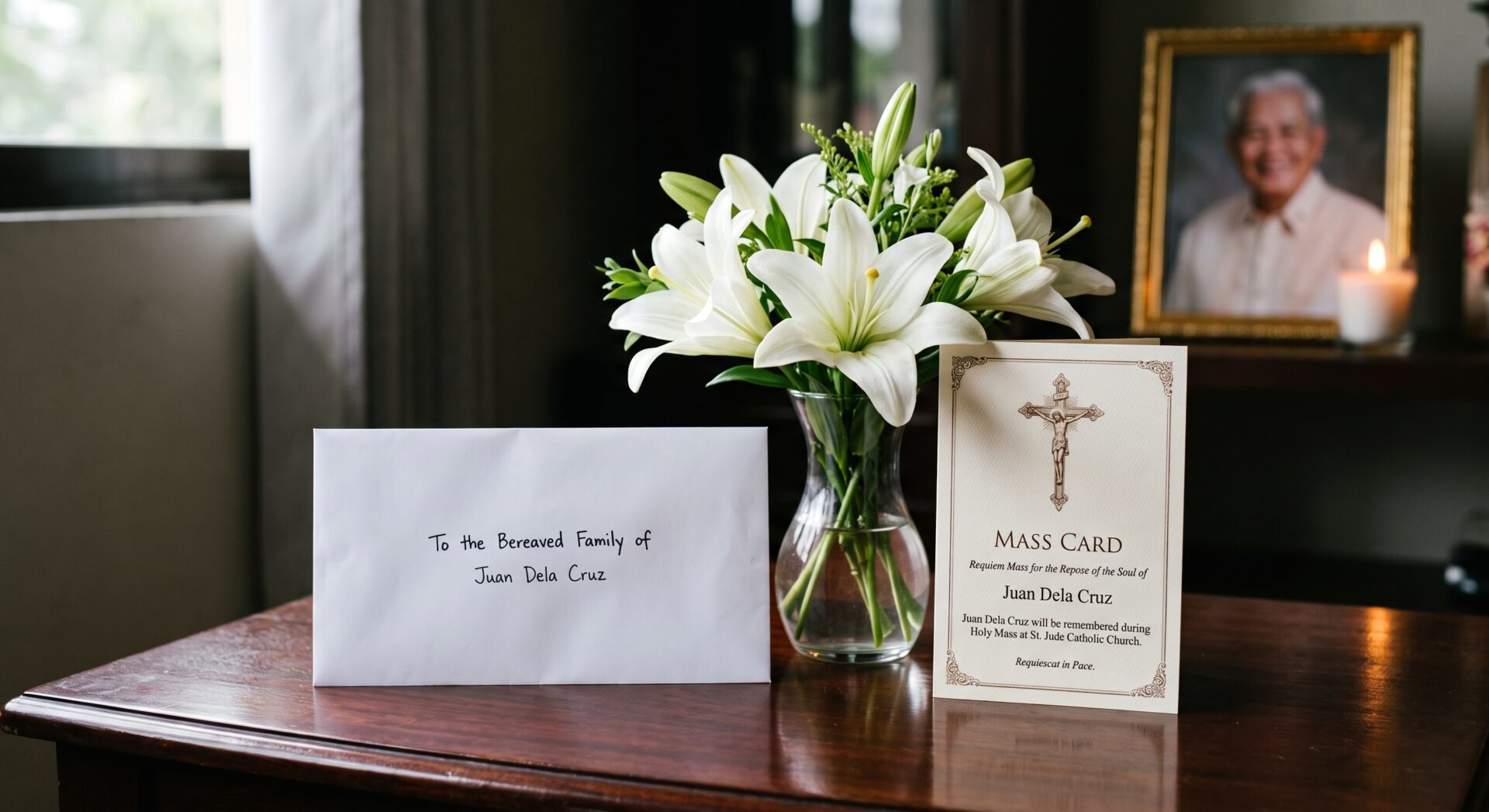
- Funeral Flowers: Standing wreaths, sprays, and white floral arrangements are the second most common offering. White is traditional, symbolizing peace, purity, and spiritual transition. Chrysanthemums, lilies, and white roses are standard choices. Ensure the ribbon clearly displays your name or your family’s name.
- Mass Cards: For Catholic families, enrolling the deceased in Holy Mass intentions through a parish is a deeply appreciated spiritual gift. Mass cards communicate that prayers will continue to be offered for the repose of their loved one’s soul.
Comfort Through Nourishment: Bringing and Sending Food
Filipino wakes traditionally span five to seven nights—and sometimes longer—with the family receiving visitors around the clock. Providing food helps sustain both the grieving family and the guests who gather to support them.
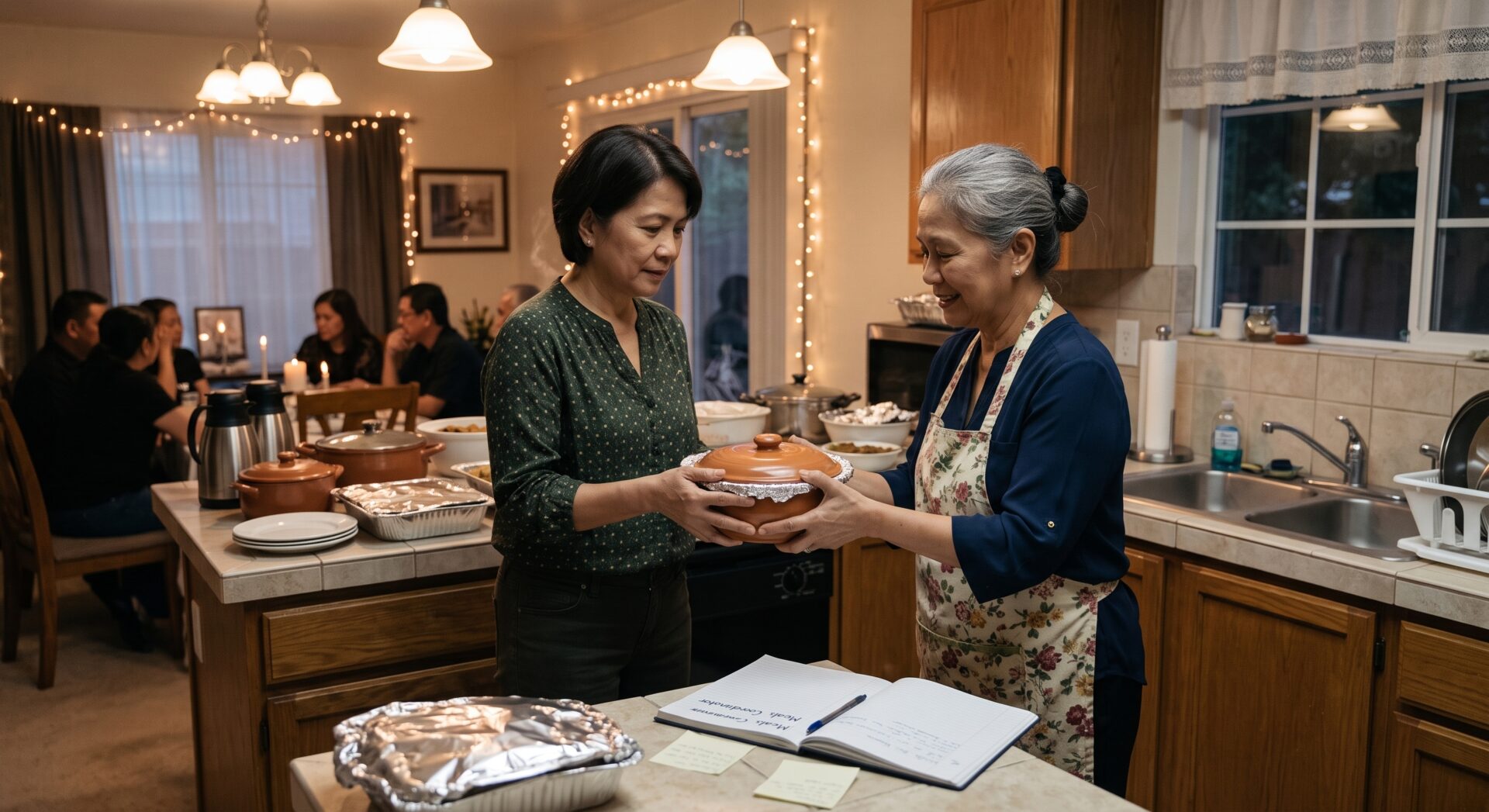
- What to Bring in Person: Nourishing, easy-to-serve dishes such as arroz caldo, pancit, pan de sal, coffee, or trays of simple pastries (merienda) are always welcome. Hand food directly to a relative assisting in the kitchen rather than presenting it formally to the primary mourners.
- Long-Distance Food Support: If you cannot attend in person, arranging a meal delivery from a local Filipino restaurant or sending grocery gift cards during the wake or the nine-day novena provides practical relief.
- Gifts to Avoid: Do not send celebratory or festive items. Gourmet chocolate boxes with bright holiday packaging, festive fruit baskets, or bottles of wine read as tone-deaf in a solemn setting.
Personal & Memorial Gifts When a Parent Passes
When a close friend, colleague, or relative loses a parent, combining a monetary offering with a personalized gesture provides lasting comfort:
- Attending the Novena (Pasiyam): Showing up during the nine nights of prayer following the burial means more than a large one-time physical gift. Reaching out on the 9th night or the 40th-day memorial prayer is equally remembered.
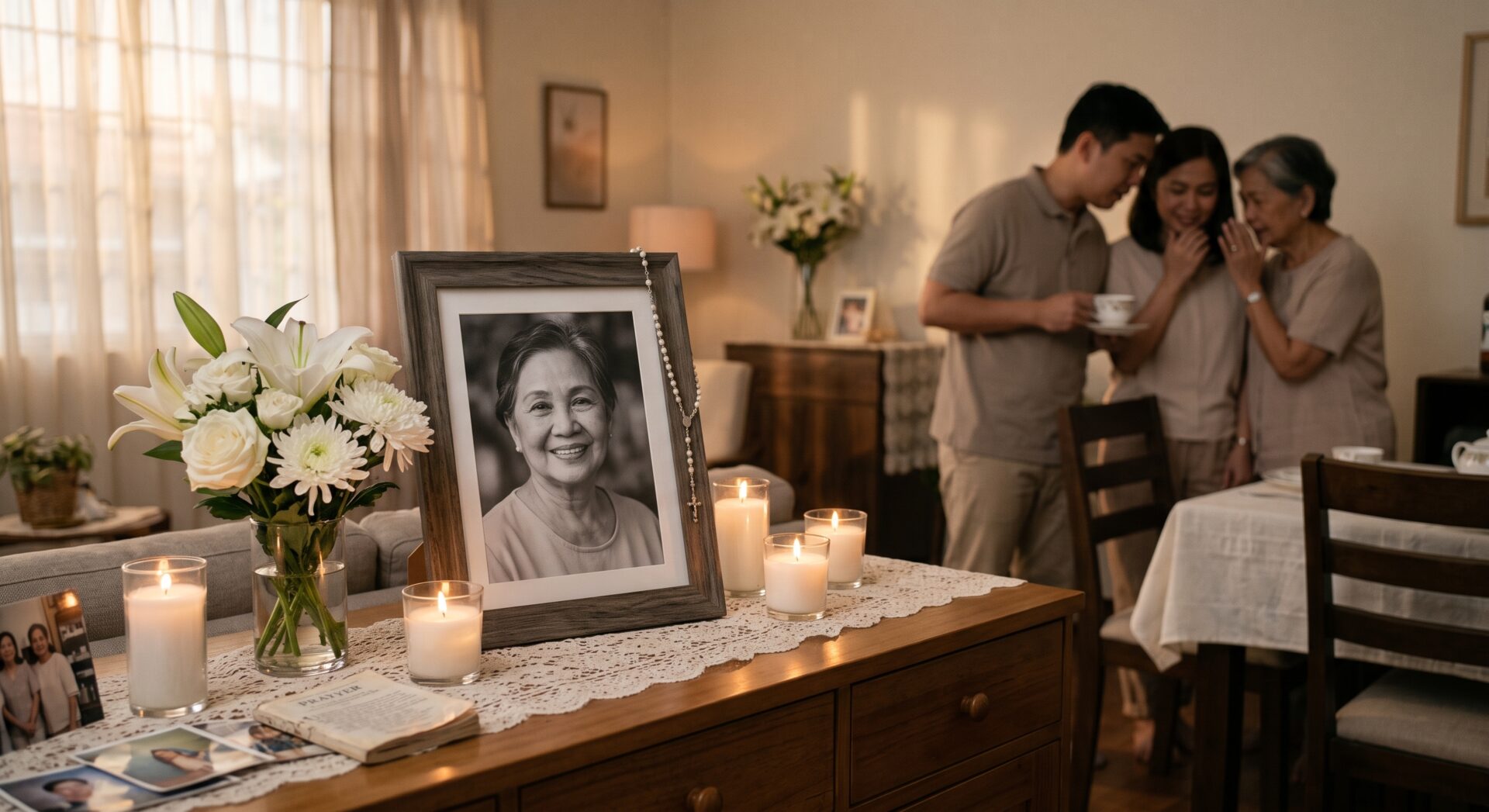
- Memory Gifts: A framed, high-resolution photograph of the deceased or a handwritten letter sharing a specific, comforting memory of the parent offers deep solace.
- Charitable Donations: Making a memorial contribution to a charity, church, or cause that was meaningful to the parent honors their memory in a lasting way.
Gifting Formalwear: Contributions for Final Rites & Family Attire
Gifting clothing at a funeral is reserved for two specific situations where it serves as a meaningful financial and cultural contribution:
- Burial Attire for the Deceased: Many families choose to bury a matriarch or patriarch in traditional formalwear, such as an ivory or black Barong Tagalog or an elegant Filipiniana dress. If you were exceptionally close to the family, offering to purchase or contribute toward this final garment is a profound gesture of respect. Always consult the immediate family before making arrangements.
- Coordinated Family Attire: Families often coordinate matching black or dark formalwear for pallbearers, children, or immediate mourners. Offering a gift toward a family member’s black Barong Tagalog helps ease their logistical and financial burden.
If you purchase a Barong Tagalog or Filipiniana piece as a sympathy gift, keep sizing in mind—Philippine sizing typically runs one size smaller than standard US sizing. Consult our detailed Barong Tagalog buyer’s guide and instructions on how to care for your Barong Tagalog to choose the right fit and fabric. If you are attending a service yourself, review our complete guide on why Filipinos wear white to funerals and dress code rules.
Expressing Sympathy with Quiet Respect
Filipino grief is communal. Families remember your presence, your willingness to sit with them, and the care behind your gesture far more than the monetary value of a gift. Whether expressed through an envelope of abuloy, a warm meal, a Mass card, or help securing a formal Barong Tagalog in the USA for burial rites, genuine respect is always felt.
Explore More Guides on Filipino Culture & Heritage
- Buyer’s Guide: Barong Tagalog: The Ultimate Formalwear Buyer’s Guide
- Women’s Heritage:Traditional Filipino Dress: Ultimate Formalwear Guide