

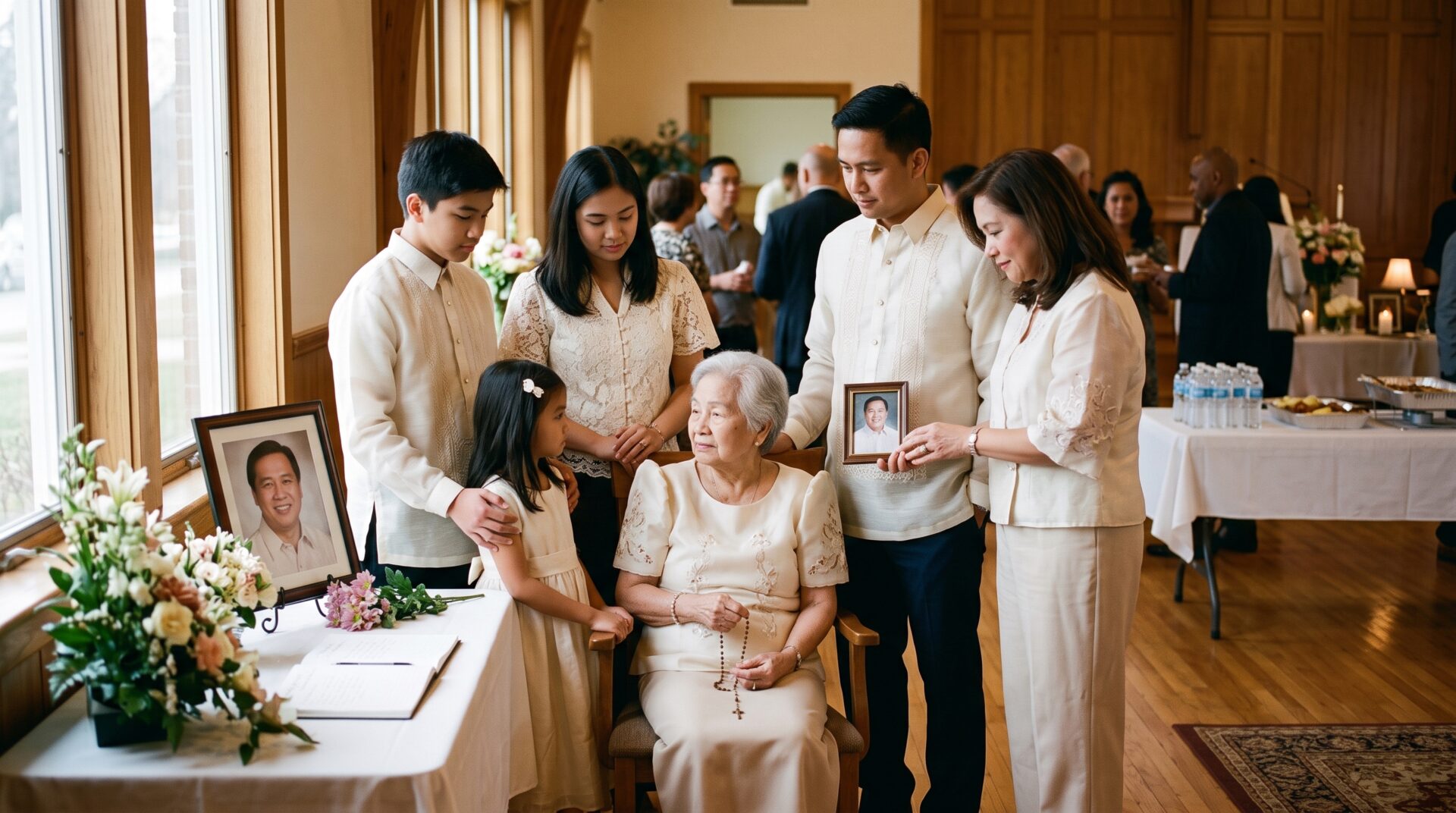
Why do Filipinos wear white to funerals? In Filipino culture, white is the color of mourning, respect, and the peaceful passage of a loved one, which is why families often ask guests to wear white or light neutrals to a wake, funeral Mass, or burial. If you are shopping for a Barong Tagalog to wear to a Filipino funeral in the United States, this guide will walk you through the tradition, the etiquette, and how to dress with the quiet dignity the occasion calls for.
What Does White Mean in Filipino Mourning Tradition?
White in the Philippines carries the weight of purity, peace, and the soul’s return to God. It is not a somber color the way black is in much of the West. It is a gentle, respectful color, one that honors the person who has passed without pulling attention toward the mourner.
This tradition draws from both indigenous Filipino belief and centuries of Catholic influence. In many provinces, the immediate family wears white or ivory during the novena, the nine days of prayer that follow a death. Extended family and close friends often follow the same color code out of solidarity.
You will also see families ask guests to wear specific colors on specific days. White is almost always safe. Black is accepted, especially in urban settings and among younger Filipinos who have grown up with Western funeral customs. But when a family asks for white, they are asking you to step into a much older ritual—one that says the dead are not gone, only ahead of us. For guidance on sympathy offerings beyond attire, view our guide on Filipino funeral gifts and condolence etiquette.
Is It Black or White for a Filipino Funeral?
Both are worn, and the answer usually depends on the family, the region, and the day of the service. Many Filipino American funerals blend the two traditions. You may see the widow in black, the adult children in a white Barong Tagalog and traditional Filipiniana attire, and the grandchildren in whatever formal clothing they own.
If the family has not specified a dress code, wear white, ivory, cream, or a very muted neutral. Avoid bright colors, loud prints, and anything that reads as festive. A Barong Tagalog in ivory or soft cream is one of the most respectful choices a man can make, because it speaks the language of the ritual without any explanation.
If you are attending the burial itself, err on the side of the most subdued option in your closet. The graveside is not the place to stand out.
Why Do Filipinos Wear White to Funerals Instead of Black?
The short answer is that white predates black in Filipino mourning. Before Spanish colonization introduced European conventions, Filipinos already associated white cloth with death rites, ancestral respect, and spiritual transition. Black entered the picture later and has coexisted ever since.
There is also a practical and theological layer. In Catholic Filipino homes, white is the color of the resurrection. Wearing it to a funeral is a quiet act of faith, a way of saying that the loved one has entered eternal peace. It is why babies are baptized in white, brides marry in white during Filipino wedding ceremonies, and the dead are often dressed in white for the wake.
For many families, wearing white together is also a form of unity. When everyone in the room is dressed in the same soft color, the focus falls where it should—on the person being remembered and on the family being held up.
What Should Men Wear to a Filipino Funeral in the United States?
A long-sleeved Barong Tagalog in white, ivory, or cream is the standard. Pair it with black slacks, black leather shoes, and a plain black belt. Keep jewelry minimal—a wedding band and a watch are enough.
If the funeral is being held in a Catholic church, the Barong Tagalog is considered formal enough for the Mass, the eulogy, and the burial. You do not need a suit jacket over it. In fact, wearing a jacket over a barong misses the point of the garment, which is designed to be the outer layer.
For a wake at a funeral home, the same outfit works. If the wake stretches over several evenings, you can rotate between two barongs of similar tone rather than repeating the same one. Older relatives will notice, and they will appreciate the effort. If you are shopping from abroad, review our advice on where to buy an authentic Barong Tagalog in the USA.
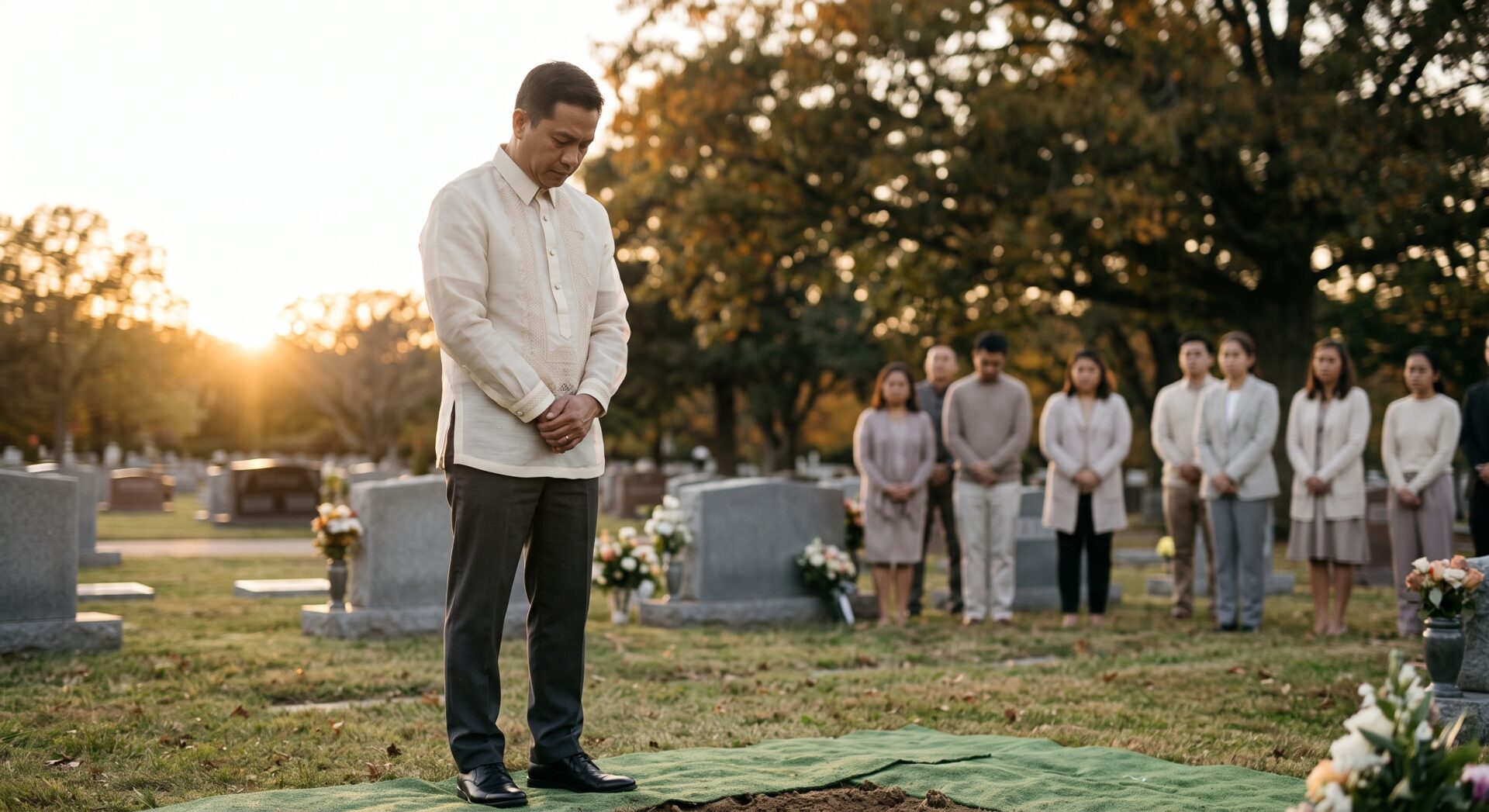
If you are a pallbearer, the family will usually coordinate the barong style in advance so the group looks unified in the procession.
Our M012 Ivory White Organza Barong for Funeral Occasions
Our flagship M012 is cut for exactly this kind of moment. The fabric is an ivory polyester organza with fine horizontal slub striations and a soft, luminous surface sheen. It is fully opaque, so there is no transparency to worry about at the church, at the graveside, or under photography lights.
The color is a soft ivory, never a bright optical white, which reads warmer and gentler in person than a stark white shirt. The collar is a straight point, the placket is half-open in a taupe pinstriped fabric edged with solid tan piping, and it closes with three round mother-of-pearl buttons.
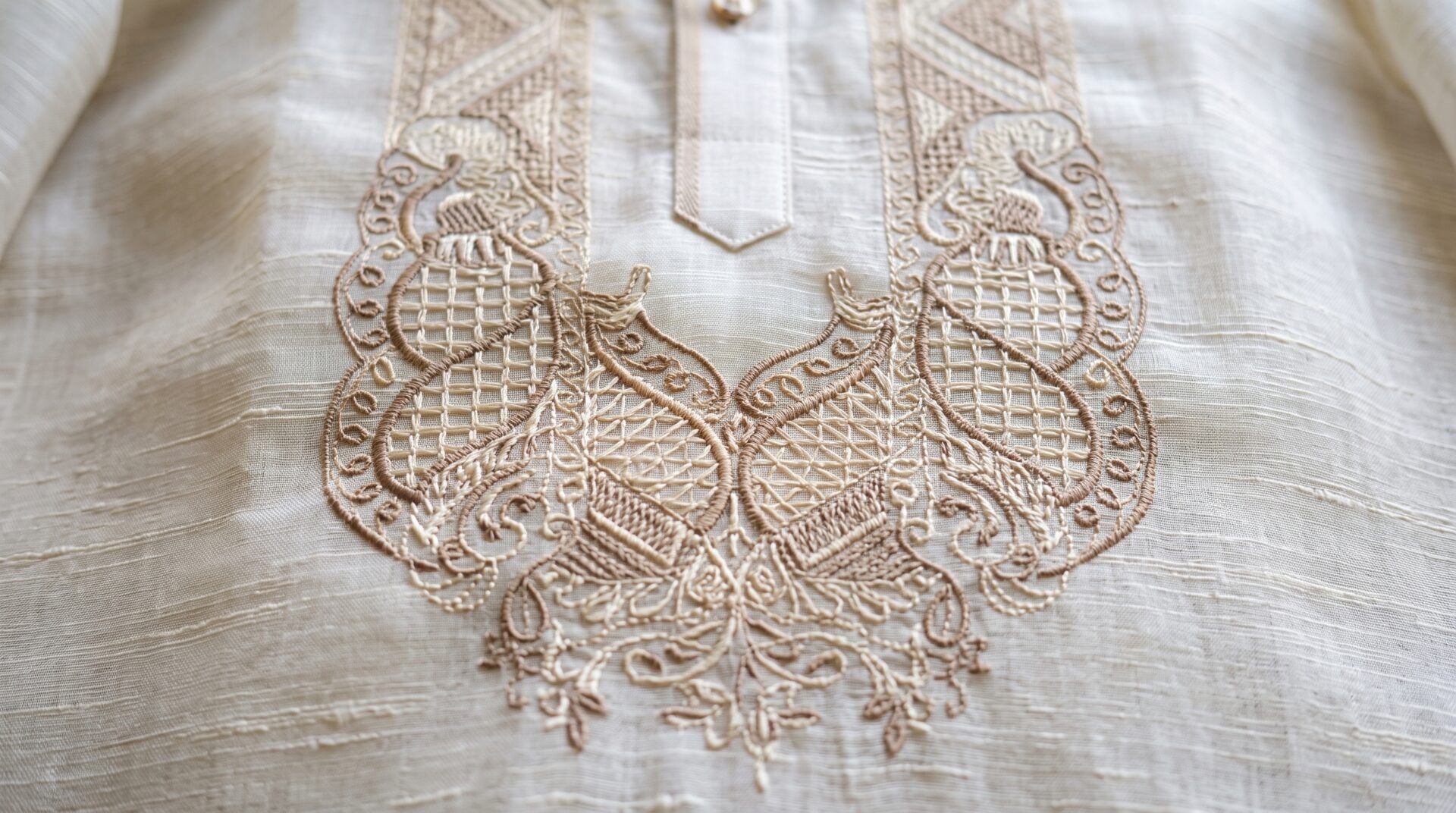
The embroidery is warm tan and taupe thread on the ivory ground. Two tall columns of teardrop-shaped panels with a fine lattice fill flank the placket, framed by small scrolling curlicues and leaf-and-vine sprigs. Below the placket, the columns join into a single wide U-shaped medallion with a lattice-filled cartouche at its center, ending in a small scroll flourish at the upper abdomen. The collar, sleeves, and entire back carry no embroidery, which keeps the piece calm and appropriate for a solemn event.
The long sleeves close with a single mother-of-pearl button at each cuff, set on a taupe pinstriped band edged with solid tan piping. The hem is straight with small side slits and is worn untucked over slacks.
Fit, Fabric, and Occasion Notes
On fit, the Barong Tagalog is meant to skim the body, not hug it. There should be enough room to sit, kneel for prayer, and raise your arms without pulling at the shoulders. Sleeves should end at the wrist bone, and the hem should fall between the top of the thigh and mid-hip.
Remember that Filipino sizing runs one step small compared with US sizing. If you normally wear a US medium, order the size we label as large. When in doubt, size up rather than down—a funeral is not the day to fight your collar.
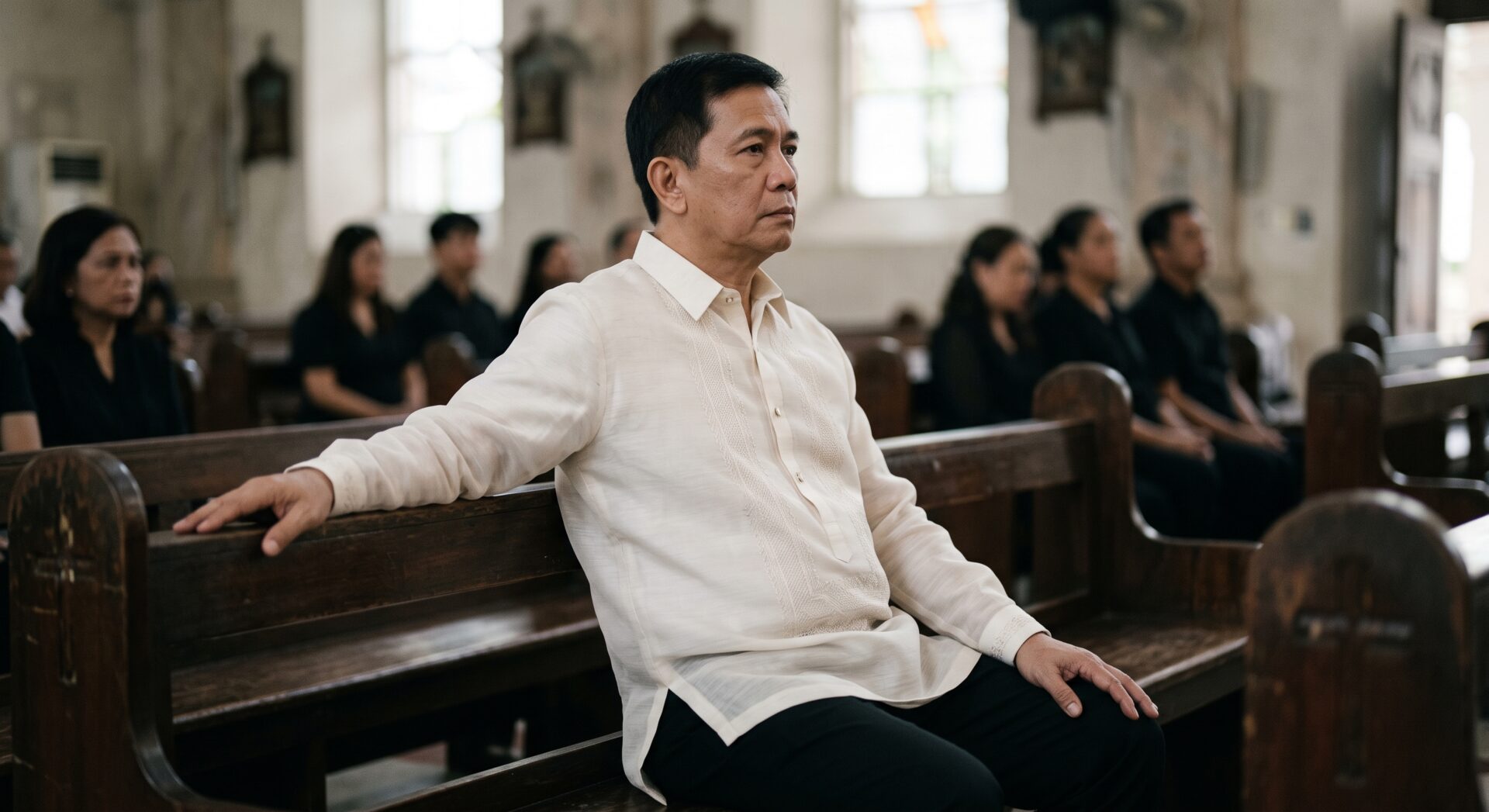
On fabric, our M012 organza has more structure than a soft jusi and more sheen than a matte cotton, which gives it a quiet formality that suits both church and graveside. (Compare fabric characteristics in our guide to Piña Jusi vs. Piña Cocoon). It also handles well under warm indoor lighting, so you will look composed in photographs the family may keep for years.
On occasion, the M012 is appropriate for funerals, memorial Masses, 40-day prayers, and death anniversaries. It also carries beautifully into baptisms and daytime weddings, so it is not a garment you will wear only once. Make sure to review our instructions on how to wash and care for your Barong Tagalog to keep it in pristine condition.
When the Moment Calls for Quiet Respect
If you are preparing to attend a Filipino funeral and want a Barong Tagalog that honors the tradition without any noise, take a closer look at the M012 Ivory White Organza Barong in our flagship collection at Handmade Kapamilya.
Explore More Guides on Filipino Culture & Heritage
- Buyer’s Guide:The Ultimate Barong Tagalog Guide: Shop with Confidence
- Condolence Etiquette: Filipino Funeral Gifts: Sacred Condolence Etiquette
- Women’s Attire:Filipiniana Dress Guide: A Simple Look at Heritage, Style & Elegance
- Wedding Etiquette:Filipino Wedding Traditions: A Beautiful Guide to Rituals & Meaning