

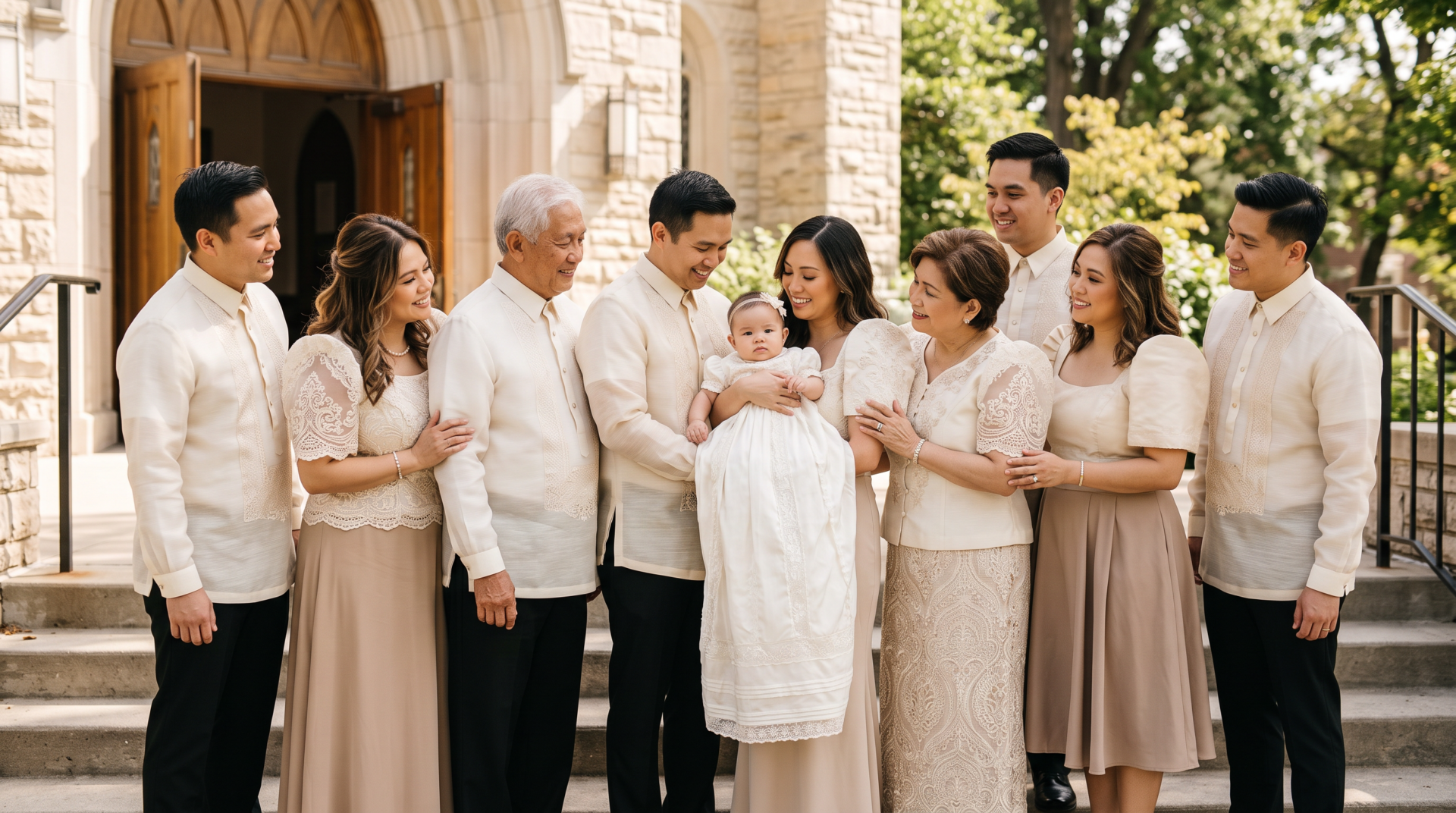
A binyag is the Filipino Catholic baptism, and the dress code sits closer to Sunday Mass than to a wedding. If you are the parent, godparent, or guest, you want to look respectful, polished, and recognizably Filipino without overshadowing the child. This guide walks through what to wear, what each role usually chooses, and how to shop for it when your family is spread between the Philippines and the United States.
What is a binyag and why does the dress code matter?
Binyag is the Tagalog word for baptism, the sacrament that welcomes a child into the Catholic faith. For many Filipino families, it is the first major family gathering after a baby is born, and relatives often fly in from across the country or from Manila for the day.
The ceremony itself happens in a church, usually during or just after Mass, and the reception that follows can range from a quiet lunch at home to a full catered party. Because the setting is sacred and the photos last a lifetime, families treat the dress code with care. You are not expected to wear black tie, but shorts, graphic tees, and beachwear are out of place.
Dressing in Filipino formalwear, whether that is a barong tagalog for the men or a Filipiniana style blouse or terno for the women, signals that you understand the weight of the day. It also gives the child a set of photographs that connect them to their heritage from the very beginning.
How is a binyag in the Philippines different from one in the US?
A binyag in the Philippines tends to be larger, warmer, and longer. Extended family shows up in numbers, the godparent list can run past twenty, and the reception usually flows straight from the church into a restaurant or home. Men almost always wear a barong, and women lean into Filipiniana or a modest Sunday dress.
In the United States, binyag celebrations are often smaller and more mixed. You may have American friends and in-laws at the church who are unfamiliar with the custom, and the reception might be at a function hall or a backyard rather than a full restaurant buyout. Timing is tighter, and parking logistics shape the day more than they do back home.
The dress code travels well, though. Even in the US, Filipino parents and ninongs and ninangs usually choose a barong or Filipiniana, both to honor the tradition and to make the family photos feel cohesive. Non-Filipino guests who want to join in are welcome to wear one too, and most families take it as a kind gesture.
What should the parents wear to their child’s binyag?
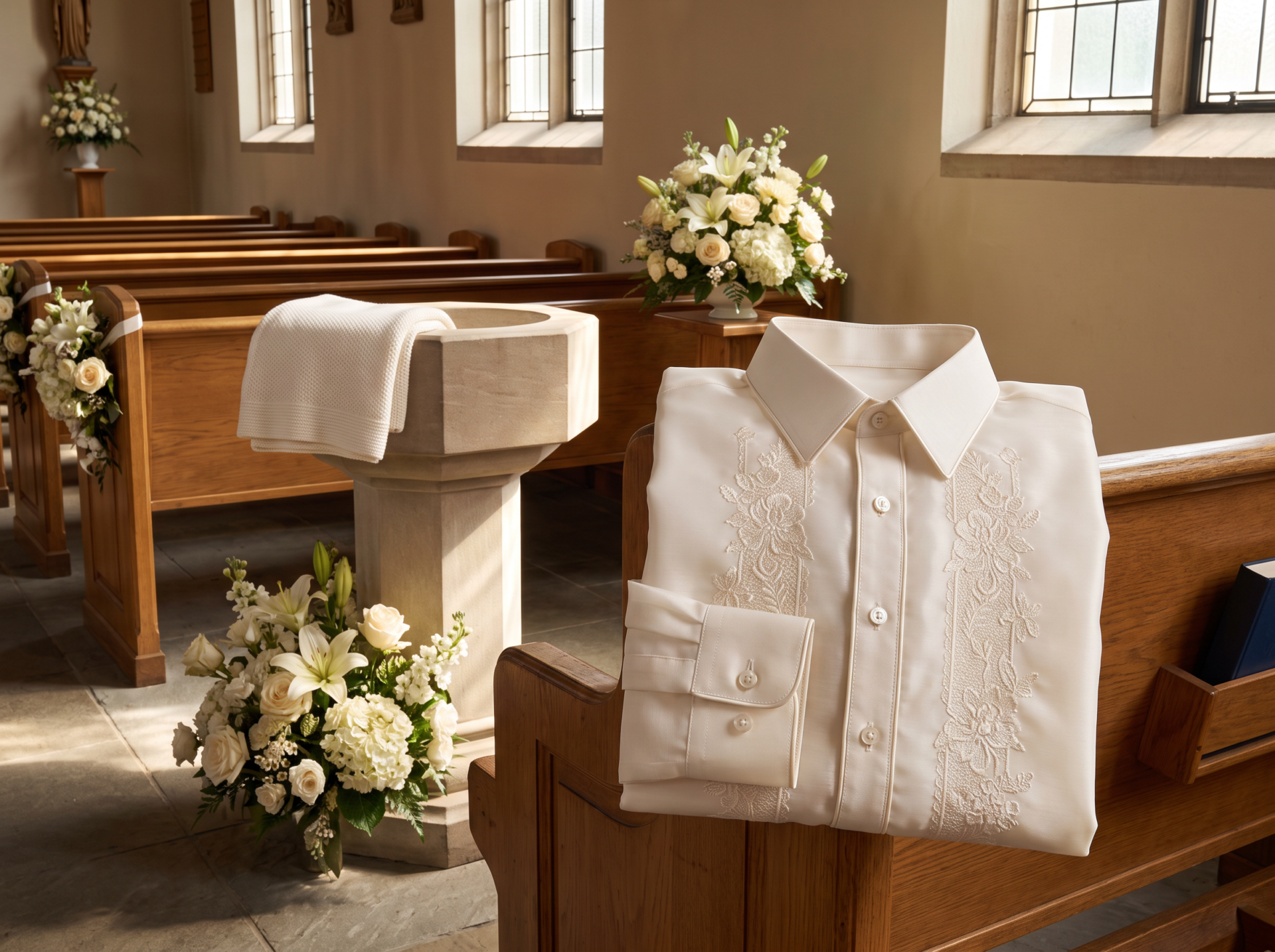
The parents set the tone, so most couples coordinate their outfits in advance. The father almost always wears a long sleeve barong tagalog, paired with dark dress trousers and leather shoes. White, cream, and soft neutrals are the usual choices because they photograph cleanly next to the baby’s baptismal gown.
The mother typically wears a Filipiniana blouse with butterfly sleeves, a modern terno, or a long dress with Filipino detailing. Length matters here. Since you will be standing at the font, holding the baby, and kneeling at points during the Mass, a hem that sits at or below the knee is more comfortable than a mini.
If this is your first child’s binyag and you are not sure how formal to go, match the formality of the venue. A cathedral calls for a dressier barong and a floor length or tea length dress. A small chapel and a home lunch can handle something lighter, as long as it still reads as formalwear.
What do the ninong and ninang wear?
Godparents, called ninong and ninang, are part of the ceremony and stand near the family at the font. You will be in nearly every photo, so dress accordingly.
For a ninong, a barong tagalog is the standard choice. If the parents have asked the godparents to coordinate in a specific color or style, follow their lead. If not, a classic long sleeve barong in a neutral shade is always correct.
For a ninang, a Filipiniana blouse paired with a long skirt or tailored pants, or a modest formal dress, works well. Many ninangs choose a top with butterfly sleeves because it reads instantly as Filipiniana in photos without requiring a full gown. Avoid anything strapless or very low cut, since the church setting calls for covered shoulders.
If there are many godparents, the parents sometimes send a group chat with a color palette. Honor it. The photos look much better when the sponsors are not clashing with each other or with the family.
What should guests and children wear?
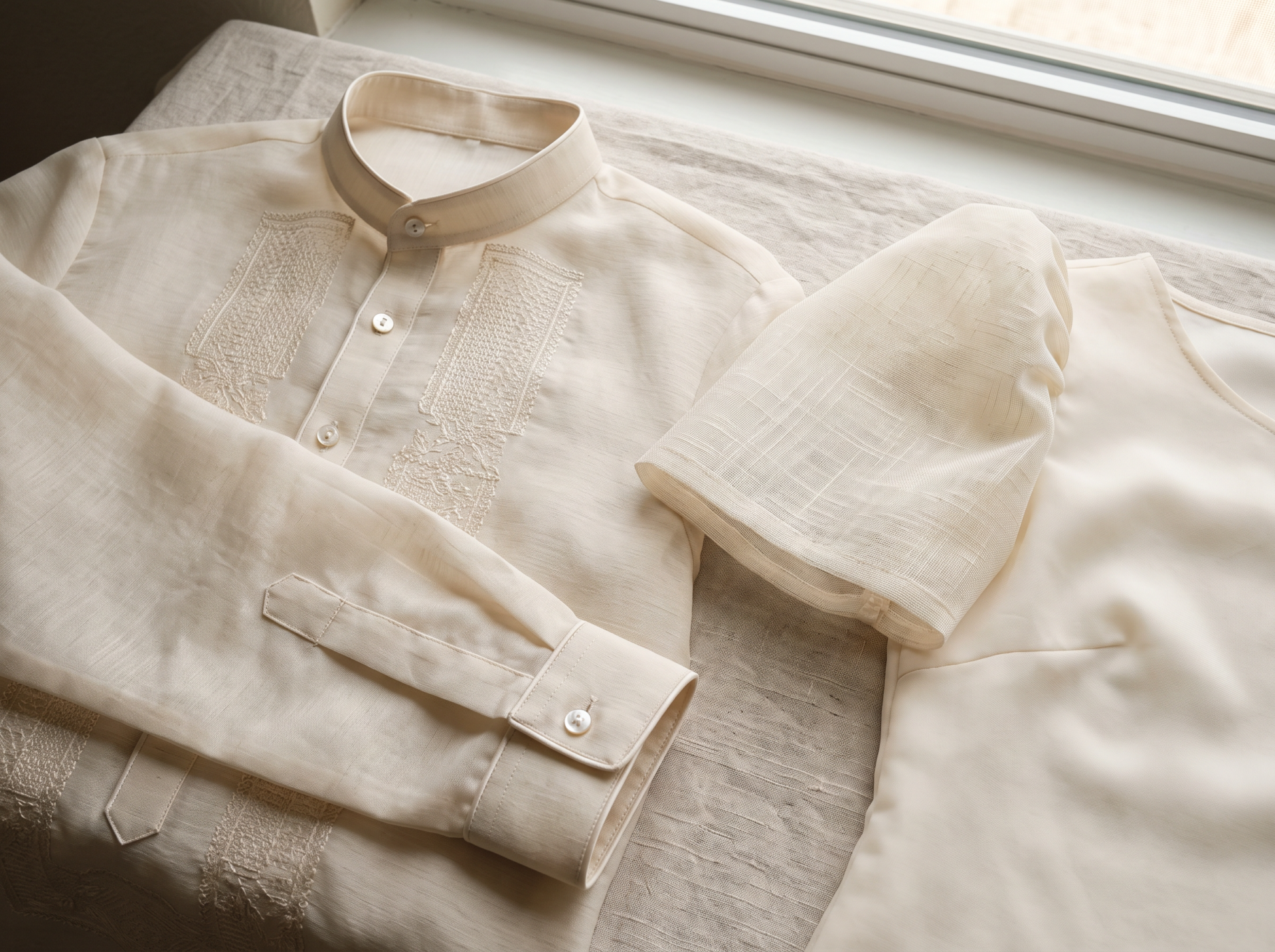
Regular guests have more latitude. Sunday Mass attire is the floor: collared shirt and slacks for men, a modest dress or blouse and skirt for women. If you want to go further and wear a barong or Filipiniana, you are always welcome to.
For children, a small barong tagalog on boys and a simple Filipiniana dress on girls is a sweet touch, especially for siblings of the baby being baptized. Kids grow fast, so most parents buy one size up and let the tailor take it in slightly, or save it for the next cousin.
Avoid white for women if you are not the mother or a sponsor, since you do not want to compete with the baby’s gown. Avoid all black for everyone, since a binyag is a celebration, not a funeral.
A quick note on fit, fabric, and occasion
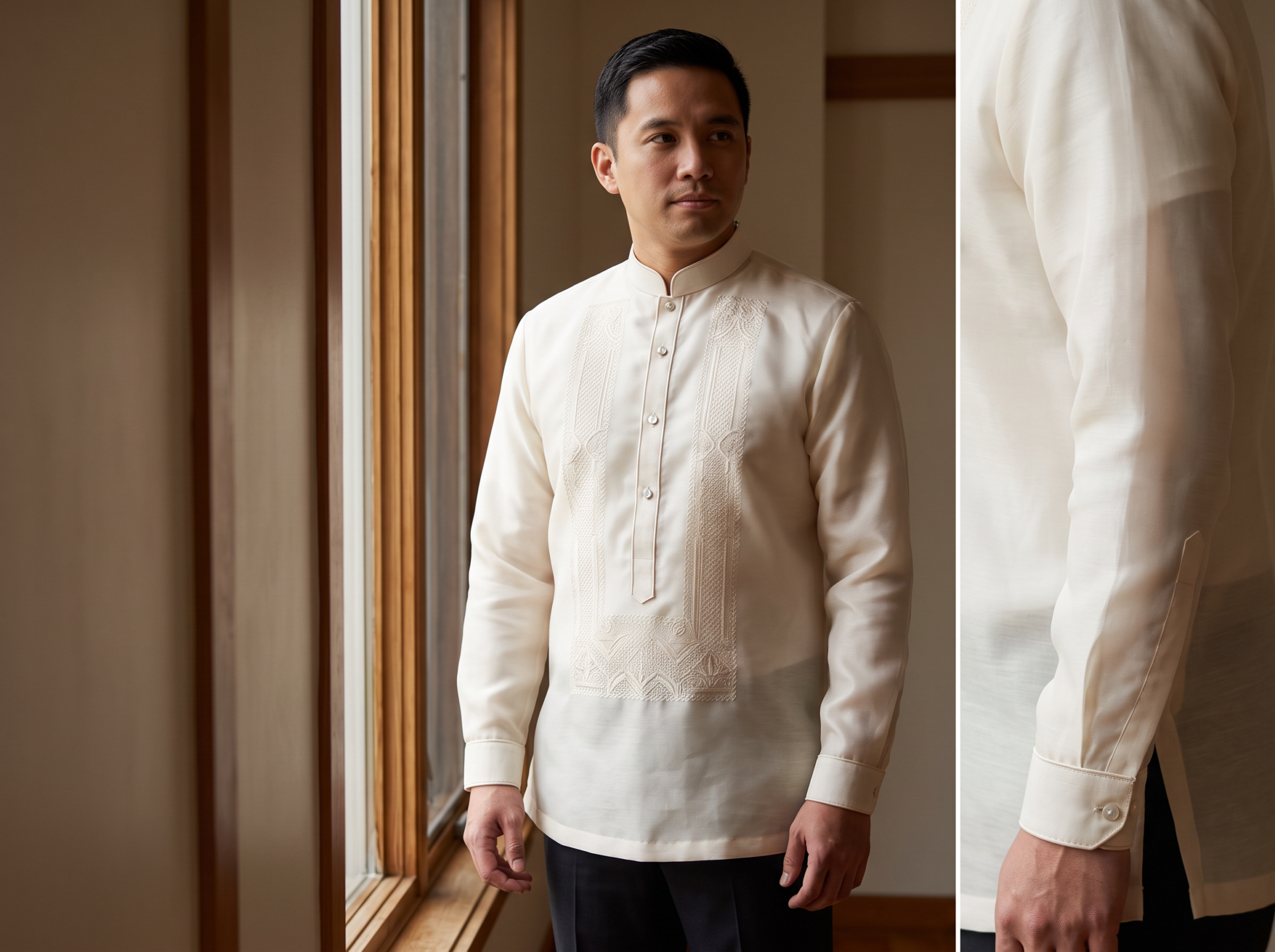
Barong tagalog fit should skim the body, not hug it. The hem sits at mid hip to upper thigh, the cuffs reach the base of the thumb, and the shoulder seam sits right at the edge of your shoulder. If you are between sizes, size up. A barong that pulls across the chest reads worse in photos than one that drapes a little loose.
Filipino sizing runs one step small compared to US sizing, so if you normally wear a US medium, you will often need a Filipino large. Always check the brand’s size chart in US measurements before ordering, and give yourself time for a local tailor to adjust the sleeves and sides if needed.
Fabric choice matters for comfort. Binyag ceremonies happen year round, and a US church in July feels very different from one in February. Lighter, more open weave barongs breathe better for summer and outdoor receptions, while a smoother, more opaque barong feels appropriate for winter or evening celebrations. Ask about the weight of the piece before you buy if the weather is a concern.
For the reception, you can keep the same outfit on the whole day. Barongs and Filipiniana blouses are built for long wear, and part of the point is being photographed in them from church to cake cutting.
Finding your binyag outfit
If you are starting from scratch, give yourself at least four to six weeks before the baptism. That leaves room for shipping, trying it on, and a tailor appointment if the fit needs small adjustments.
Our barong tagalog and Filipiniana collections include pieces suited to christenings, with options for the father, the ninongs, and the mother and ninangs. Browse the barong collection when you are ready, and reach out if you want help coordinating a group order for the sponsors.
Discover More
[How to Wash a Barong Tagalog Without Ruining It] — Learn how to wash a Barong Tagalog safely. This guide covers hand washing, drying, ironing, and storing organza, Jusilyn, cocoon and cotton Barongs.
[The Ultimate Barong Tagalog Guide: Shop with Confidence] — Shopping for a Barong Tagalog? Learn the key styles, the organza, Jusilyn, cocoon and cotton fabrics we carry, sizing tips and simple care steps.
[Barong Tagalog Guide: A Powerful Journey to Modern Elegance] — Discover the history of Barong Tagalog and its evolution into modern formalwear, blending Filipino heritage with timeless elegance and style.
[Filipino Wedding Traditions: A Beautiful Guide to Rituals & Meaning] — Explore Filipino wedding traditions, from Pamamanhikan to Arras, Yugal, and Barong Tagalog. Learn meanings, rituals, and cultural symbolism.