

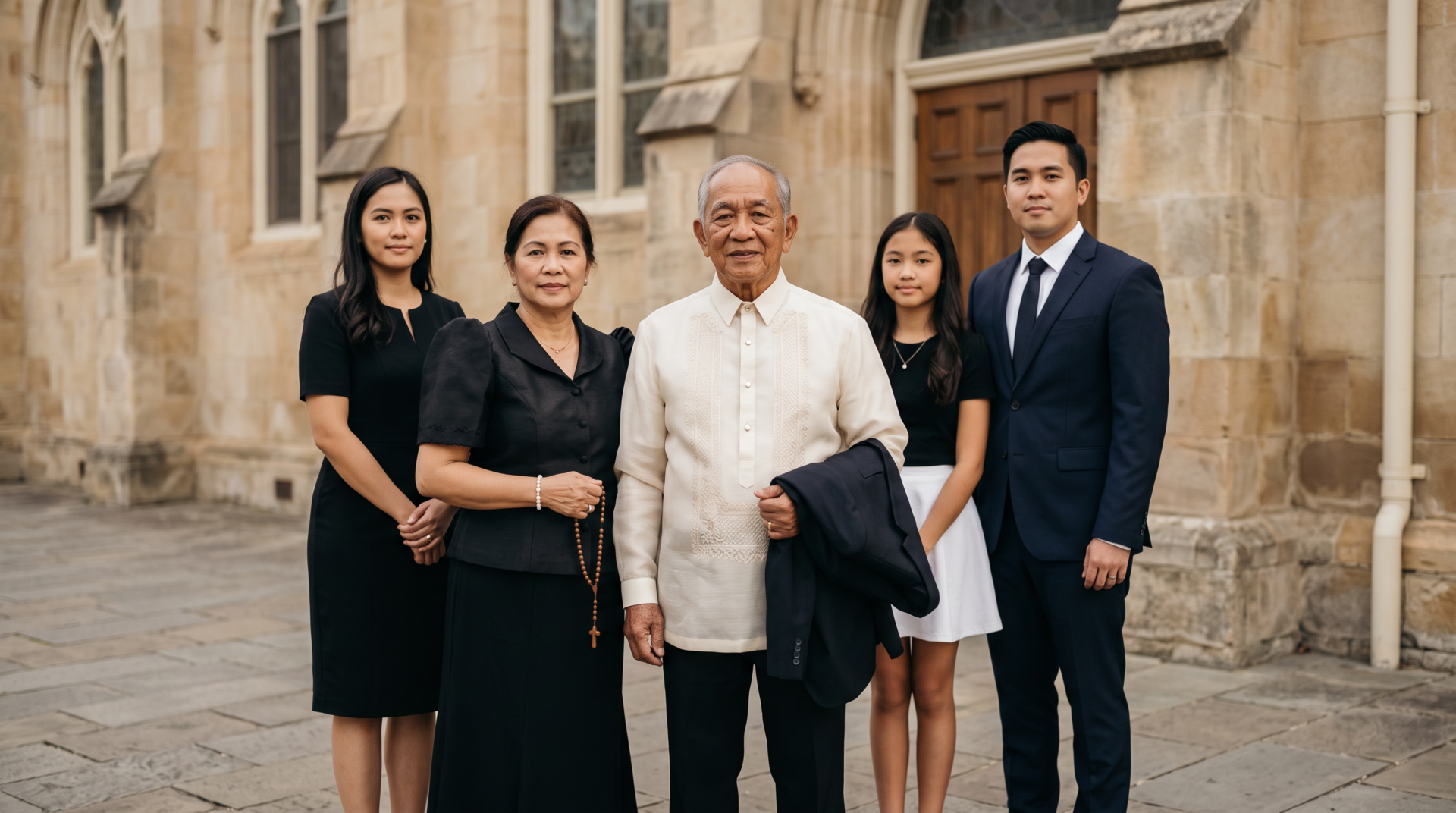
What color do Filipinos wear to funerals? The short answer is black, with white as the second most common choice, and both are considered respectful for the wake, the funeral mass, and the burial. If you are attending a Filipino funeral in the United States or back home, dressing in black or white formalwear will almost always be correct.
This guide walks through the custom in more detail, so you can show up quietly, respectfully, and dressed the way the family expects.
Why black and white are both acceptable
Filipino mourning tradition sits at the meeting point of Catholic practice, Spanish colonial influence, and older local customs. Black became the standard color of grief under Spanish Catholic influence, which is why most immediate family members at a Filipino funeral will be in black from head to toe.
White has a longer history in the islands as a color of mourning and spiritual passage, and it is still worn today, particularly by older relatives, by children, and sometimes by the widow in rural provinces. In many Filipino families you will see a mix of both colors at the same wake, and neither is considered more correct than the other.
If you are a guest rather than immediate family, black is the safer default. White is appropriate too, but it carries slightly more weight and is more often worn by close kin.
What immediate family typically wears
Spouses, children, parents, and siblings of the deceased almost always wear black. For men, this usually means a black barong tagalog or a dark suit. For women, a black Filipiniana, a black dress, or a modest black blouse and skirt.
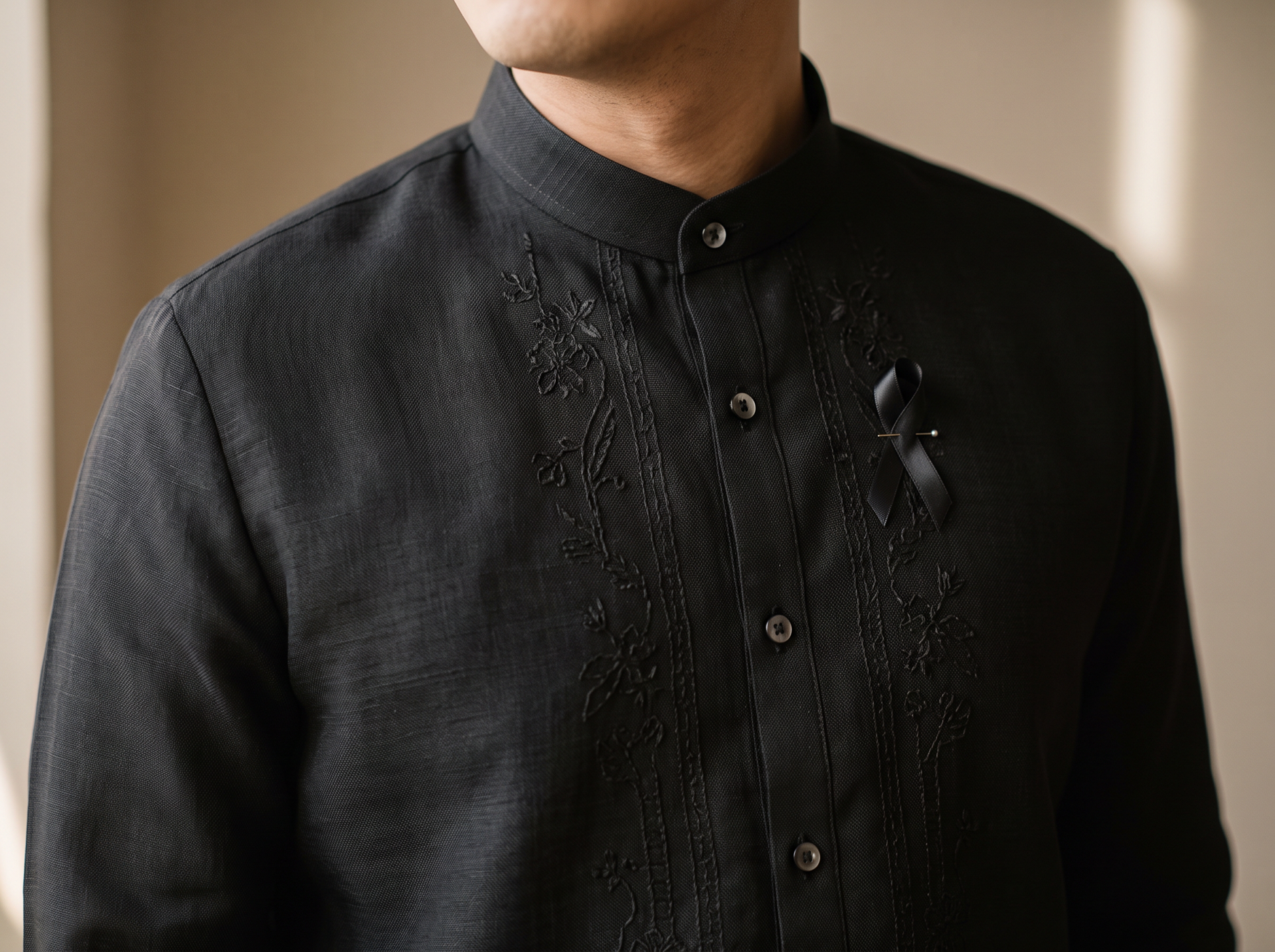
A black barong tagalog is a quiet, dignified choice for a Filipino American man burying a parent or spouse. It respects the formality of the mass while remaining culturally grounded, which matters to many families who want the funeral to feel Filipino, not generic.
For women in the immediate family, a black terno or a modest black Filipiniana blouse paired with a long skirt is traditional. Many women also pin a small black ribbon to the shoulder or chest, a custom called luksa, which marks the wearer as being in formal mourning.
What guests and extended family should wear
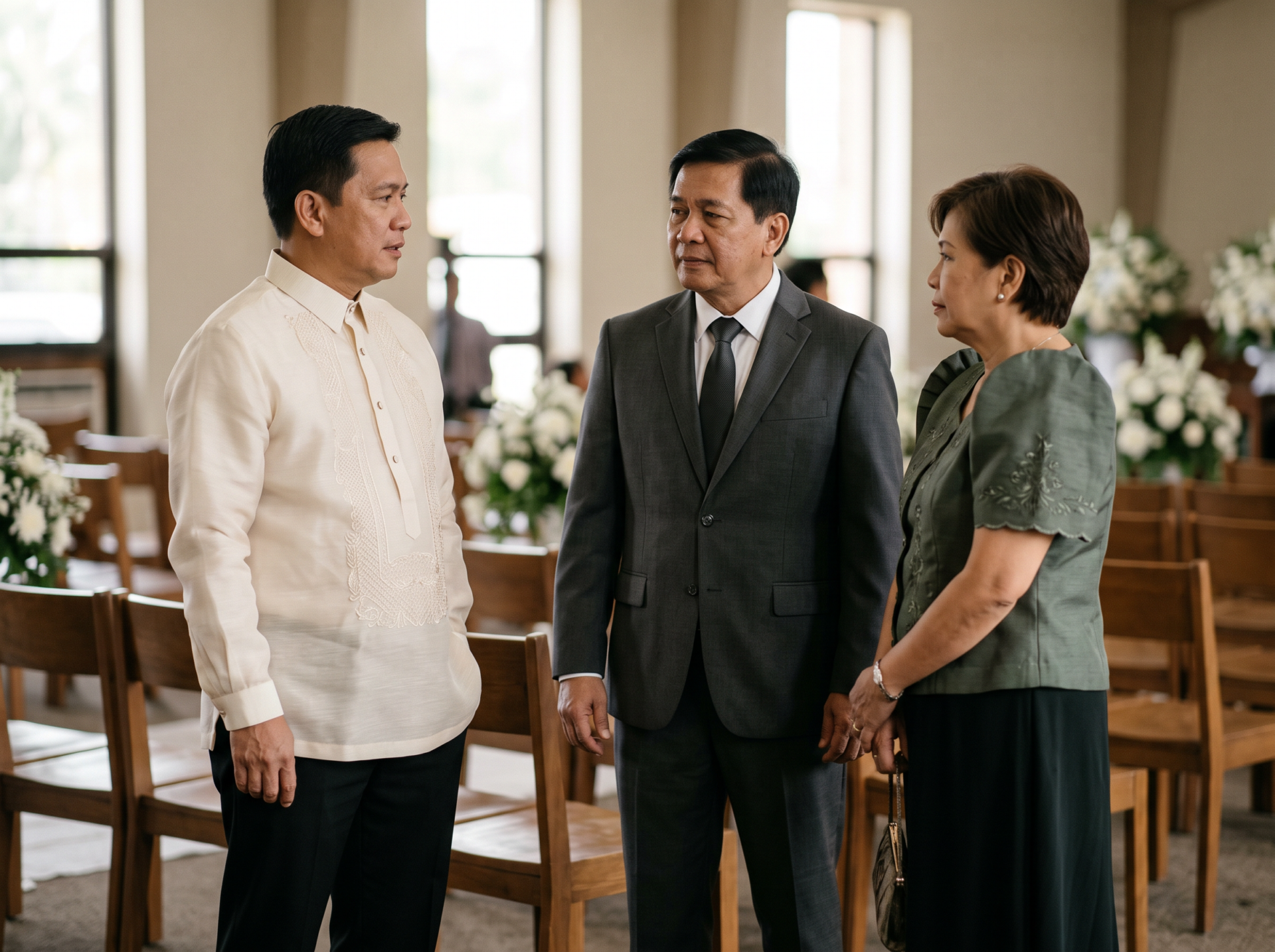
If you are a cousin, a coworker, a godparent, or a family friend, you have more flexibility. Black is still the most common choice, but dark gray, dark navy, and deep charcoal are all accepted, especially for men wearing a suit.
A white or cream barong tagalog is also acceptable for male guests, since the barong is the formal national dress and is understood to be appropriate for solemn occasions. If you choose a barong, keep it in a plain or lightly embroidered style rather than something bold or celebratory.
For women guests, a dark dress, a Filipiniana in a muted tone, or a modest blouse and skirt in black, white, or deep neutrals will all read as respectful. Avoid red, bright pink, orange, and anything patterned or shiny. Save those for the baptism or the wedding.
What to wear to the wake versus the burial
Filipino wakes often run for several nights, sometimes a full week, before the burial. The dress code gets a little more flexible across those days.
On the first night and on the night before the burial, most people dress in full formal mourning: black or white, closed shoes, nothing casual. On the middle nights, close family will still be in black, but visiting relatives and friends often wear dark everyday clothes, such as a dark polo, dark jeans or slacks, and quiet shoes.
The funeral mass and the burial itself are the most formal moments. This is where you want to be in a proper barong tagalog, a dark suit, or a Filipiniana. If you are flying in from the States for a funeral in the Philippines, pack for the mass and the burial first, and treat the wake nights as secondary.
Are there colors you should never wear?
Yes. Red is the main one to avoid. In Filipino and broader Southeast Asian tradition, red is associated with celebration, luck, and life, and wearing it to a funeral is read as deeply disrespectful. Some older relatives also believe that wearing red to a wake invites another death in the family soon after.
Bright, saturated colors in general are considered inappropriate. Hot pink, bright yellow, royal blue, and bold prints all fall outside the dress code. If you are unsure about a color, ask yourself whether you would wear it to a Catholic funeral in the United States. If the answer is no, do not wear it to a Filipino one either.
Shiny fabrics, sequins, and anything that reads as party clothing should also be set aside. The point of funeral attire is to disappear into the gathering, not stand out from it.
What about the 40 days and the anniversary?
Filipino Catholic families often observe a 40 day mourning period after the death, closing with a special mass called the babang luksa, which means the lowering of mourning. During these 40 days, immediate family will often continue to wear black or dark colors to mass and to family gatherings.
The babang luksa itself is usually marked by family wearing white, signaling the end of the formal mourning period. One year death anniversaries, called the first death anniversary mass, also tend to be dressed in black or white, with the same quiet formality as the original funeral.
If you are invited to any of these follow up masses, treat the dress code the same way you would treat the funeral itself.
Fit, fabric, and occasion notes
A funeral is not the day to try on a new silhouette. If you are buying a barong tagalog or a Filipiniana for a funeral, order a size that fits cleanly through the shoulders and chest without pulling, and leave enough room to sit, kneel, and stand through a long mass.
Keep in mind that Filipino sizing typically runs one step smaller than American sizing. If you normally wear a US medium, you will likely want a Filipino large. When in doubt, go up a size rather than down. A slightly roomy barong looks dignified. A tight one does not.
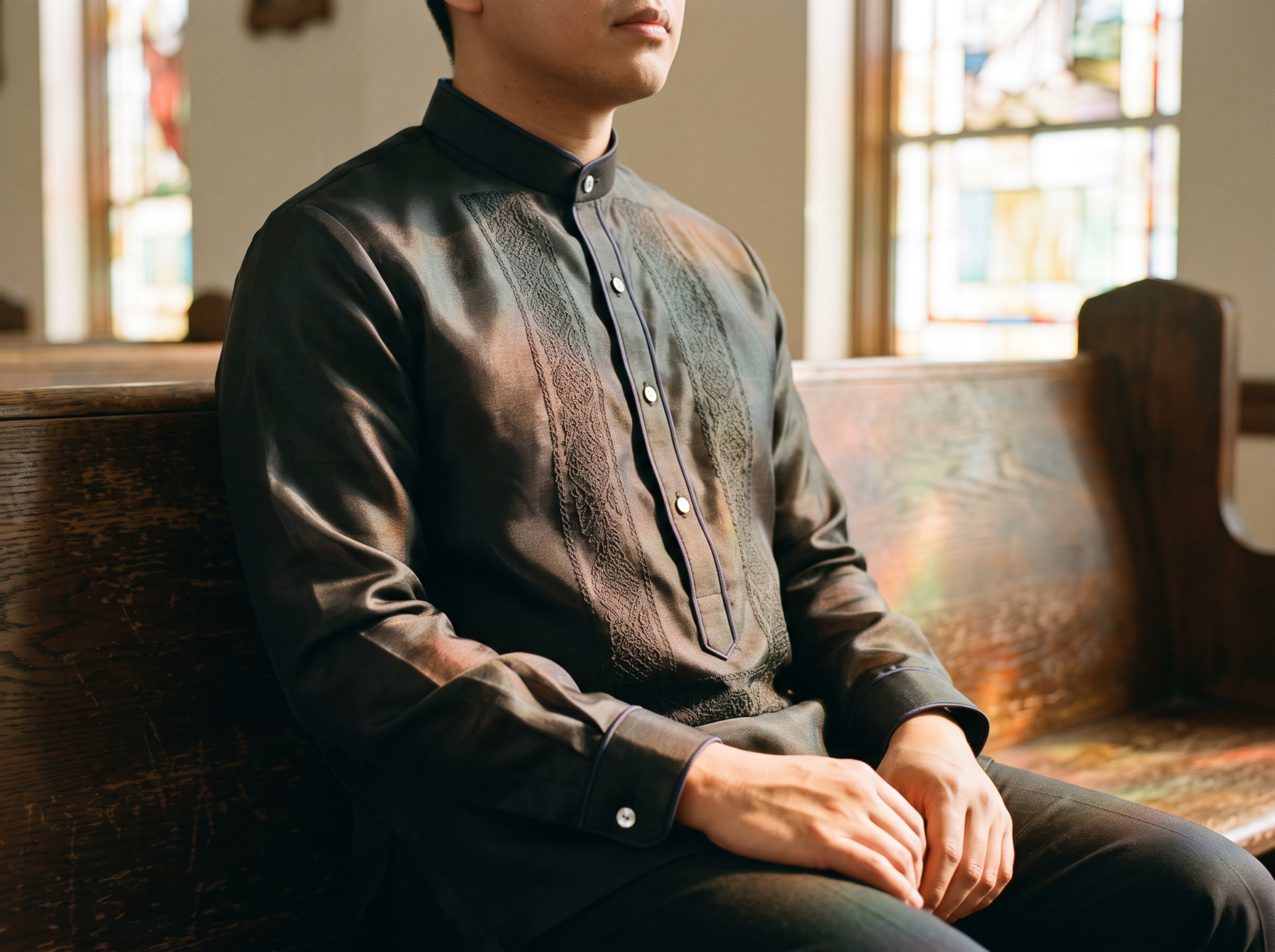
For fabric, choose something matte and breathable. Wakes and funerals in the Philippines are often warm and long, and even in the United States you will spend hours standing, greeting relatives, and sitting through the mass. Avoid anything stiff, glossy, or heavy.
For embroidery, keep it understated. Simple, tonal embroidery reads as formal. Bold or celebratory patterns belong at weddings, not wakes.
Dressing with care
A Filipino funeral is one of the most important gatherings a family will hold, and what you wear is part of how you honor the person who has passed and the family left behind. Black or white, cleanly fitted, quietly made. That is the whole brief.
If you are preparing for a wake or a funeral mass and need formalwear that fits the occasion, you can browse our barong tagalog and Filipiniana collections for pieces appropriate to the day.
Further Reading & Resources
Preparing for a funeral mass or wake? Explore our related guides and solemn collections for complete etiquette and attire support:
- Filipino Funeral Gifts & Condolence Etiquette Guide — Learn traditional sympathy offerings (abuloy), mass card customs, and appropriate comfort gifts for grieving families.
- Men’s Funeral Barong Tagalog Collection — Browse dignified black, natural, and understated Barong Tagalogs suited for funeral masses and burials.
- Women’s Funeral Filipiniana Collection — Shop modest black ternos, Filipiniana blouses, and mourning attire designed for formal wakes.
- Filipino Formalwear Sizing & Fit Guide — Find exact measurement guidance to ensure a clean, comfortable fit through long services.