

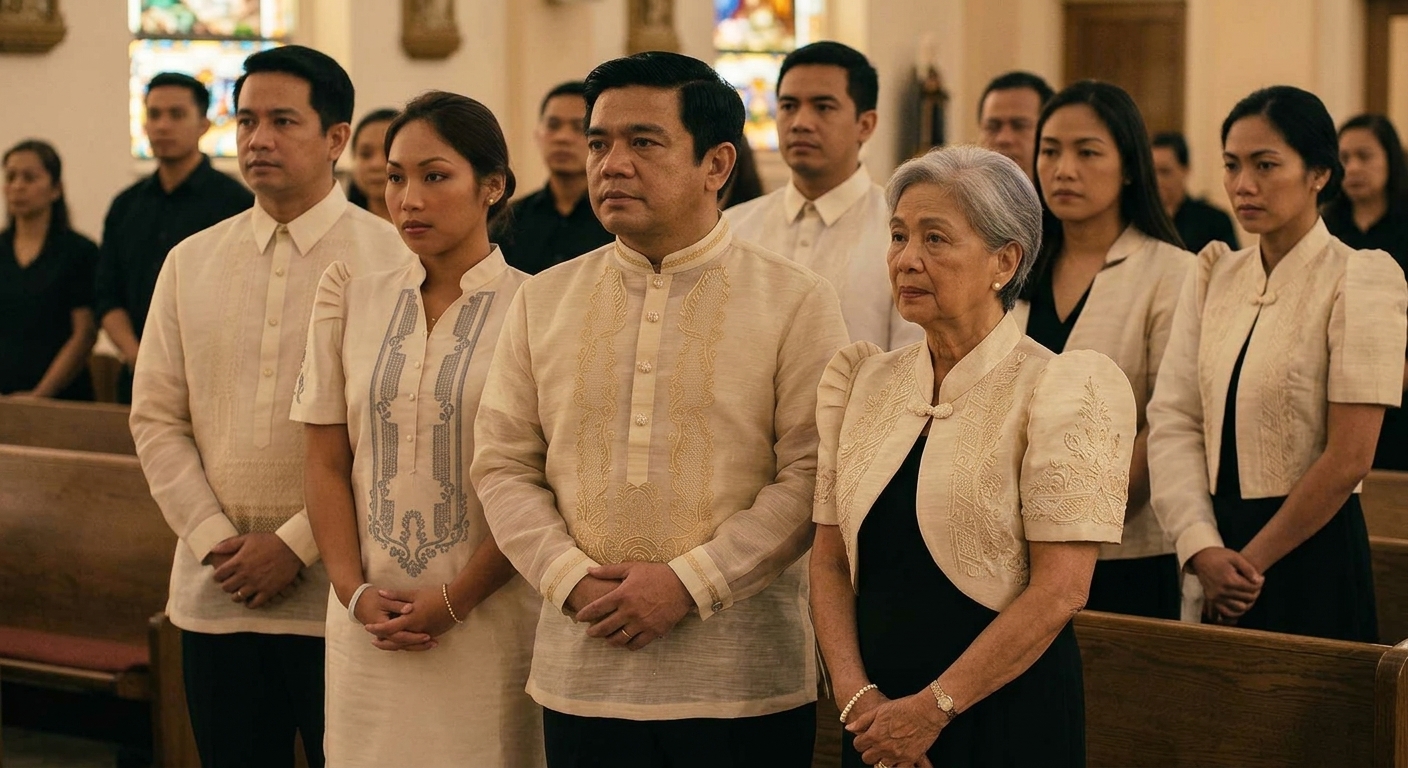
Attending a Filipino funeral for the first time can feel deeply intimidating, especially when navigating unspoken cultural expectations far from home. Getting the dress code right is a quiet, powerful way to show your respect and solidarity with the grieving family.
At Handmade Kapamilya, we often speak with clients, especially Fil-Americans, who want to ensure they honor their loved ones properly. Salamat for caring enough to look into this. Here is everything you need to know about navigating the traditions, colors, and attire for a Filipino wake, funeral Mass, and burial.
Why Attire Matters in Filipino Mourning Culture
Filipino funerals are deeply communal events. Spanning multiple nights of a wake (the lamay), a traditional funeral Mass, and a final burial, these gatherings require a high level of respect. How you present yourself reflects your regard for both the deceased and their loved ones.
Because Filipino culture blends Catholic traditions with indigenous values, the dress code is formal, modest, and rich in historical significance. It is generally more conservative than Western standards, particularly for the actual religious services and burial day.
The Core Color Rules: Beyond Standard Black
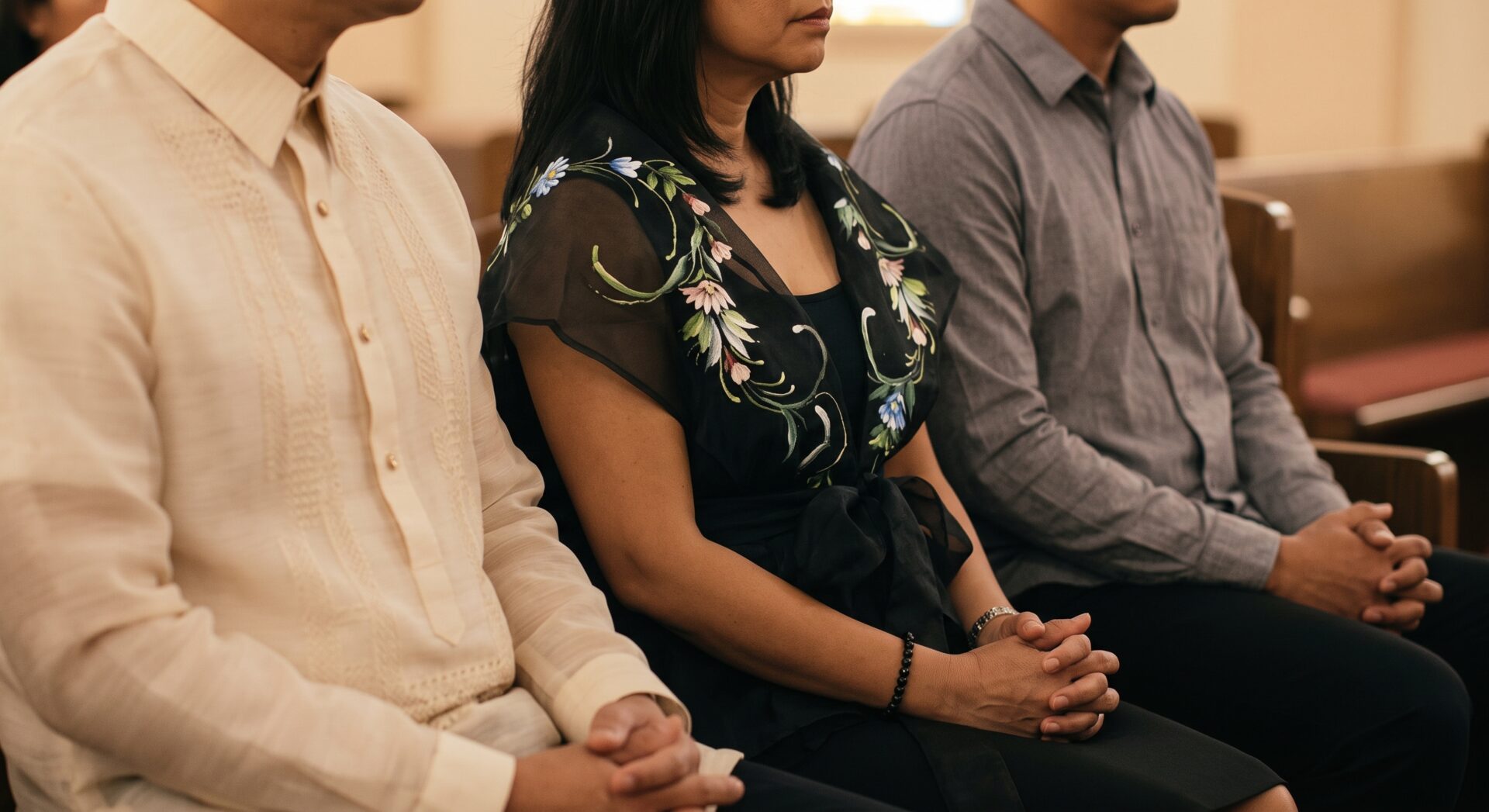
While Western traditions rely almost exclusively on black, the Filipino funeral dress code embraces a more nuanced palette designed to reflect peace, purity, and reverence.
- White: Deeply respectful and symbolic in Filipino mourning culture. Immediate family members frequently wear white to represent purity and the soul’s peaceful transition.
- Black & Muted Tones: Classic choices like deep navy, charcoal gray, and soft beige are universally accepted and project a somber tone.
- What to Avoid: Bright, vivid colors (like red, orange, or hot yellow), loud prints, party-style embellishments, and overly casual clothes like shorts, sleeveless tops without a cover, or flip-flops.
Traditional Attire for Men: The Barong Tagalog
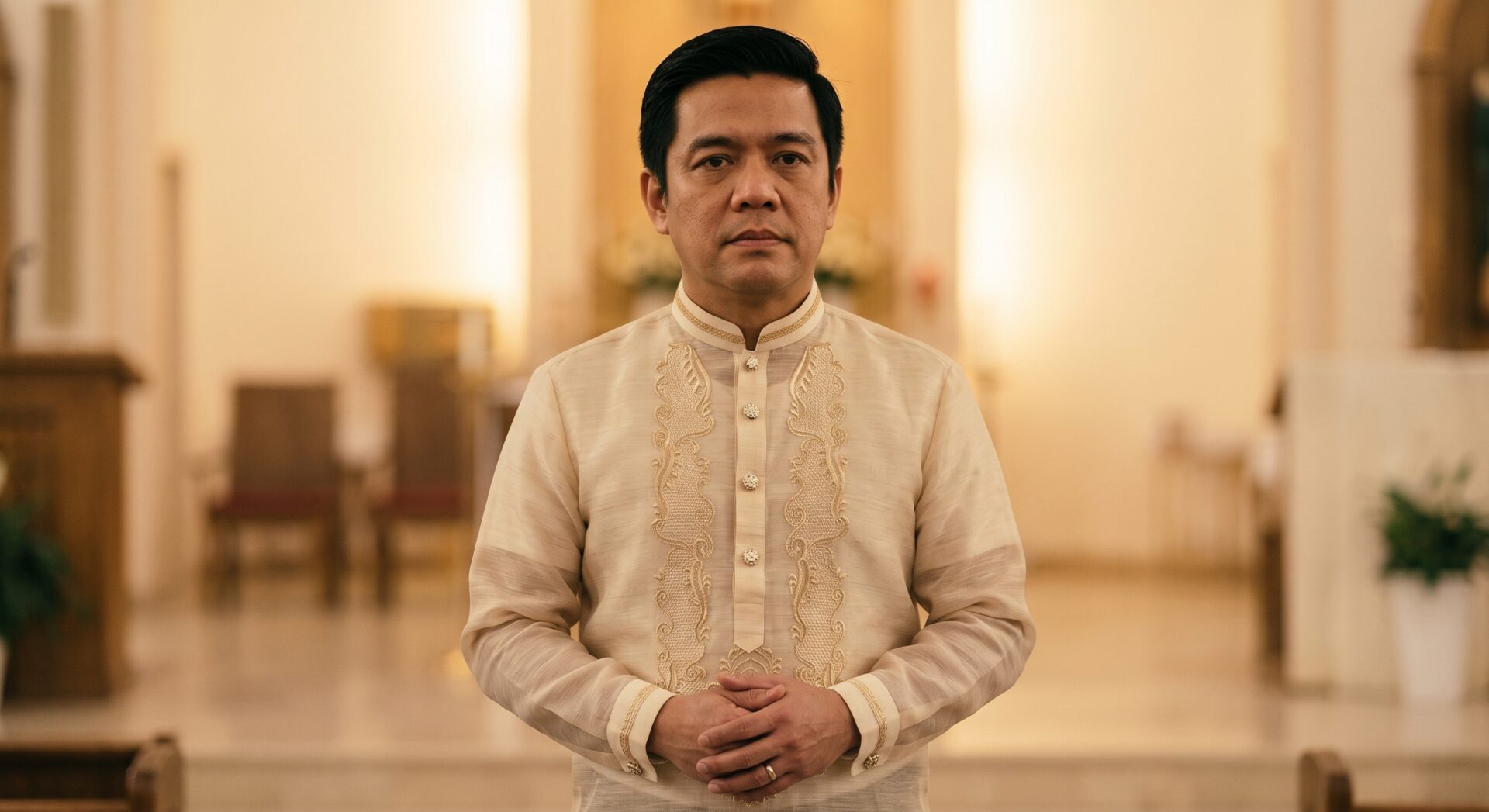
For men, choosing the right outfit is straightforward yet culturally profound.
- The Barong Tagalog: Wearing a traditional white or off-white barong tagalog is the ultimate sign of respect. Most of ours are light, easy-care polyester organza, and it is worn untucked over a white undershirt. It bridges comfort in warm weather with unmatched formal elegance.
- Black Barongs: A sleek, black barong tagalog is also a fully appropriate and somber choice, frequently worn by close male relatives.
- Alternative: If a barong is unavailable, a crisp white or light-colored long-sleeve dress shirt paired with dark trousers works well. (Save short-sleeve shirts strictly for the casual nights of the lamay).
Traditional Attire for Women: Elegance and Modesty
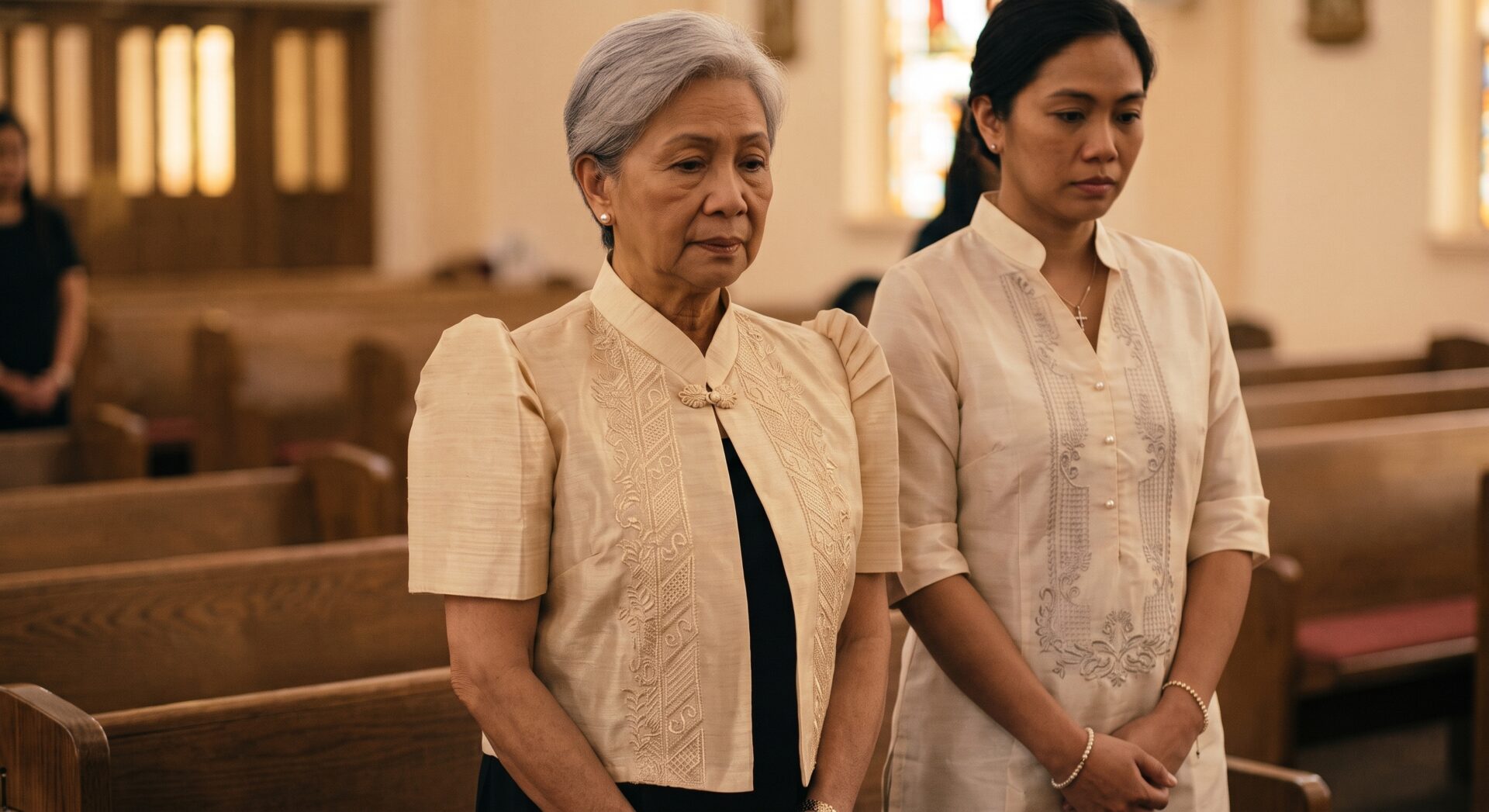
Women have broader styling options, but modesty and subdued tones remain non-negotiable for religious services and burials.
- Filipiniana and Mestiza Gowns: A classic, simple Filipiniana dress or mestiza gown in white, cream, or black is a breathtaking way to honor the occasion in full cultural fashion.
- Modest Dresses and Separates: Knee-length or midi dresses in navy, gray, or black, paired with a structured blazer or traditional bolero.
- Coverage Rules: Shoulders must be covered inside the church. A lightweight bolero or shawl adds both traditional charm and practical coverage against aggressive air conditioning.
Practical Tips for Comfort During Long Wakes
Filipino wakes can stretch across several days, and individual visits often last for hours. Keep these practical tips in mind:
- Prioritize breathable fabrics like linen, cotton, or traditional lightweight weaves.
- Wear comfortable, polished shoes, as you will likely be standing or walking across various surfaces.
- Layer smartly with a light cardigan or bolero to handle shifting venue temperatures between crowded rooms and cold halls.
- Minimize strong perfumes and keep jewelry understated to maintain a solemn, peaceful presence.
Ready to find an authentic, handcrafted piece for your next cultural milestone? Explore our curated Handmade Kapamilya Barong Tagalog Collection and our exquisite Filipiniana Dress Collection today.
Explore More Cultural Guides & Care Tips from Handmade Kapamilya
- How to Wash a Barong Tagalog: The Expert Care Guide
- Barong Tagalog Groomsmen Guide: Colors, Cuts & Styling
- Filipino Wedding Traditions: A Beautiful Guide to Rituals & MeaningUnderstanding Filipino Wedding and Formal Event Etiquette
What specific cultural event or milestone are you preparing for next?