

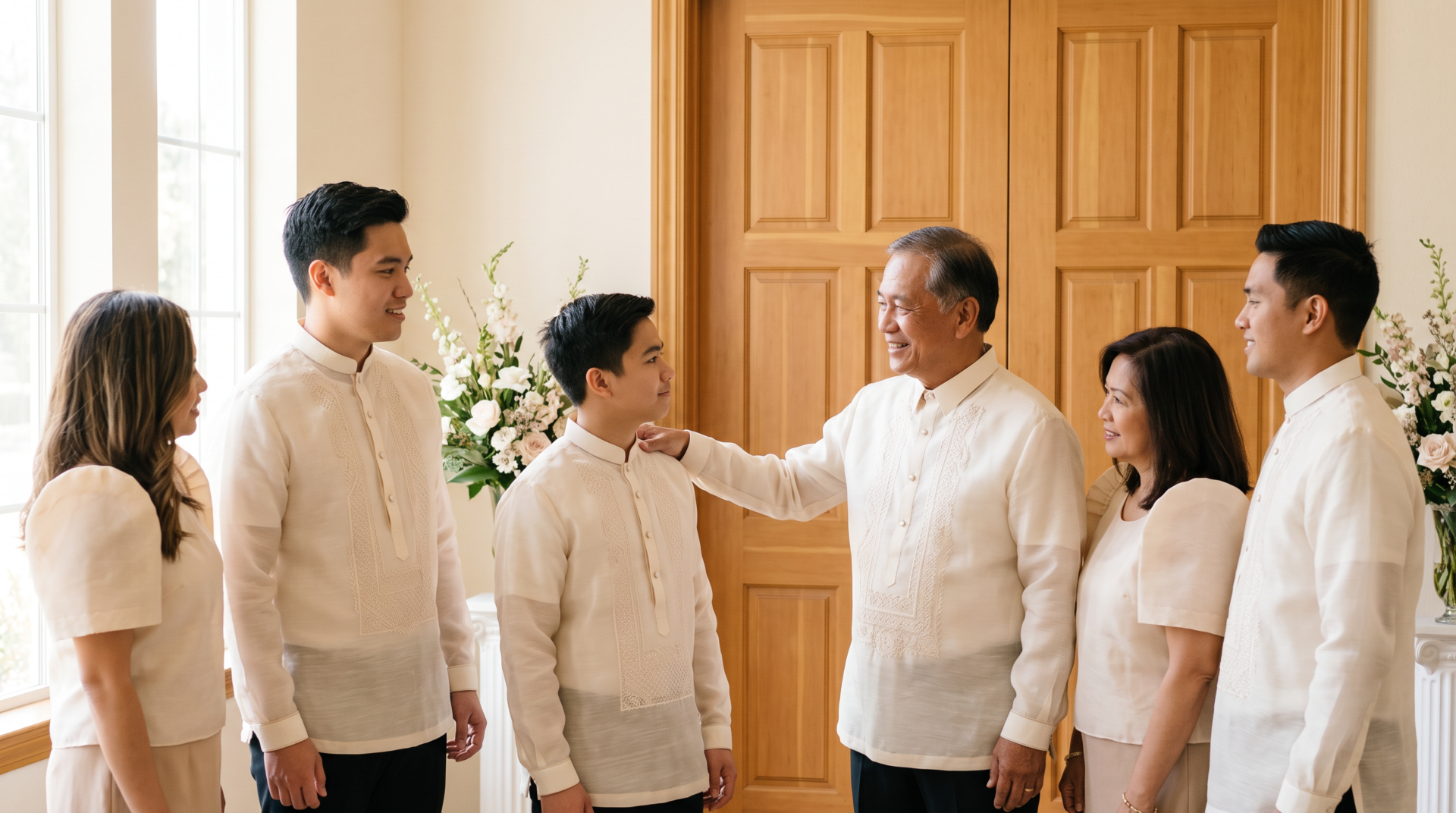
The main types of barong fabric are piña, jusi, piña-jusi blends, organza, and cotton-based weaves, each carrying a different weight, sheen, and level of formality. Choosing the right one comes down to the occasion, the climate you will wear it in, and how much of the fabric’s traditional character you want on your body. This guide walks you through each type the way we would explain it to a kapamilya standing in our shop.
What is piña fabric, and why is it considered the most formal?
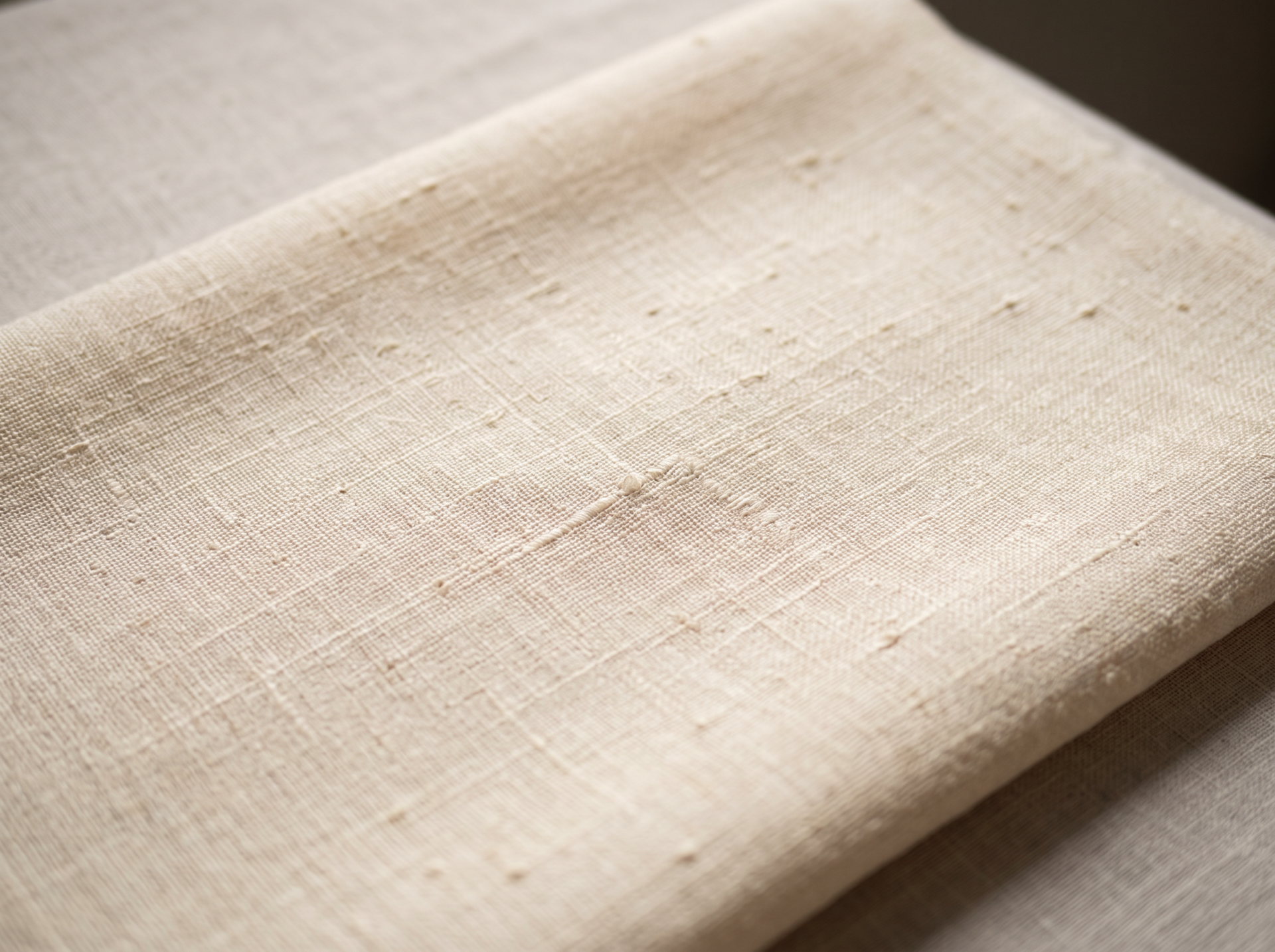
Piña is handwoven from the fibers of the red Spanish pineapple leaf. The fibers are scraped from the leaf by hand, knotted end to end, and woven on a traditional loom. A single meter can take a weaver days to produce, which is why piña sits at the top of the barong hierarchy.
The fabric has a soft golden or ivory tone, a slight stiffness, and a quiet sheen that catches light without shouting. It is sheer, so a camisa de chino or plain undershirt is worn beneath it. Because piña is delicate and made in small quantities, it is the fabric of choice for grooms, principal sponsors, and the most formal state and church occasions.
Piña breathes well in warm weather but wrinkles easily and needs careful storage. If you are investing in a piña barong, treat it the way you would a fine wool suit. Hang it, protect it from moisture, and have it professionally pressed.
What is jusi fabric, and how is it different from piña?
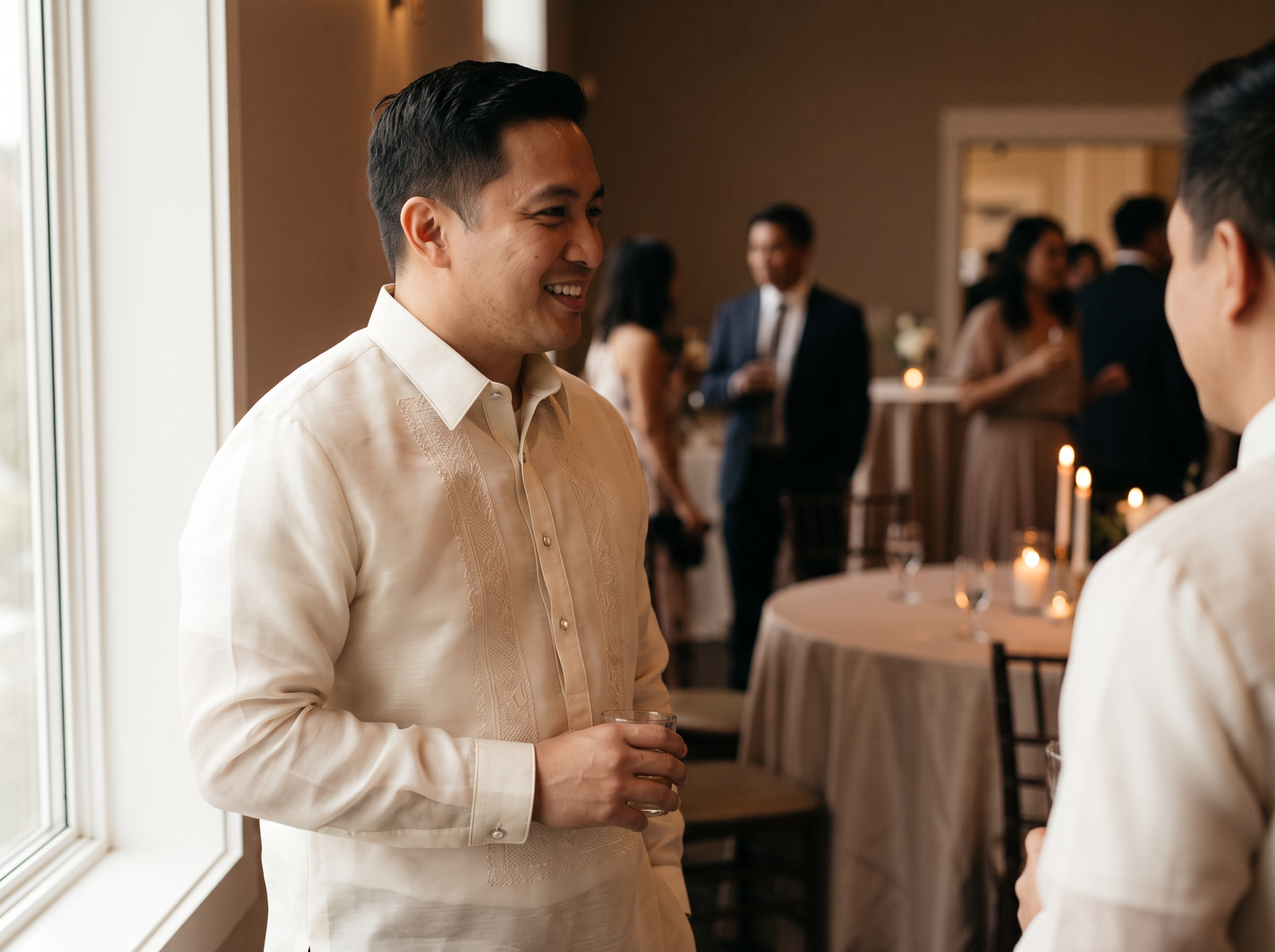
Jusi is a machine-woven fabric, historically made from abaca or silk and today most often woven from polyester or a silk blend. It is smoother than piña, drapes more fluidly, and has a glassy sheen that photographs beautifully under indoor light.
Jusi is more affordable than piña, more forgiving to wear, and easier to maintain. It resists wrinkling better and holds embroidery cleanly. For most weddings, baptisms, and graduations, jusi is the fabric American shoppers reach for first. It gives the look and formality of a traditional barong without the fragility of pure piña.
If you are buying your first barong tagalog and expect to wear it more than once, jusi is a sensible starting point.
What about piña-jusi and piña-seda blends?
Piña-jusi combines a jusi base with piña fibers woven through it. The result keeps the softness and price accessibility of jusi while adding some of the natural texture and warmth of piña. Many grooms choose piña-jusi when they want the visual weight of piña for photographs without committing to the care demands of a pure piña barong.
Piña-seda is a blend of piña and silk. It is soft, luminous, and slightly heavier in the hand. This blend suits evening weddings and formal receptions where the light is lower and a richer drape reads better on camera.
Blends are a middle path, and for many buyers they are the most practical choice.
Is organza barong a real traditional option?
Organza is a lightweight, sheer fabric with a crisp finish. It is not a heritage Philippine fiber the way piña is, but it has become a widely accepted barong fabric because it takes embroidery well and holds its shape through a long day of standing, kneeling, and dancing.
Organza sits at a friendlier price point and works well for entourage members, ninongs at a baptism, and graduates who want a proper barong tagalog without the investment of piña. It is a strong choice for outdoor ceremonies in humid weather because it does not cling.
The tradeoff is sheen. Organza has a modern, glassy look rather than the soft, organic character of piña. Some shoppers prefer that. Others want something quieter.
When is a cotton or linen barong appropriate?
Cotton, cotton blends, and linen barongs are the everyday end of the spectrum. In the Philippines these are worn to work, to Sunday mass, and to less formal gatherings. They are opaque, comfortable, and easy to launder at home.
For American occasions, a cotton or linen barong suits a graduation, an office event honoring Filipino heritage, a casual civil ceremony, or a summer gathering where a piña would feel like too much. They are also a good introduction to wearing a barong tagalog if you are new to Filipino formalwear and want to build comfort with the silhouette before spending on jusi or piña.
Do not wear a cotton barong to a formal church wedding as a principal sponsor or groom. The formality does not match the moment.
How do these fabrics relate to types of Filipiniana for women?
The same fabric logic applies to Filipiniana. A traditional terno, Maria Clara, or modern Filipiniana gown can be made in piña, jusi, organza, or blends, and the formality rises with the fiber. Piña ternos are worn for the most formal weddings and cultural events. Jusi and organza Filipiniana pieces work across a wider range of occasions.
If you are dressing as a couple, it is common for the bride’s Filipiniana and the groom’s barong to be made in matching or complementary fabrics. Coordinating piña with piña, or jusi with jusi, keeps the two pieces visually in the same register.
Fit, fabric, and occasion: how to actually choose
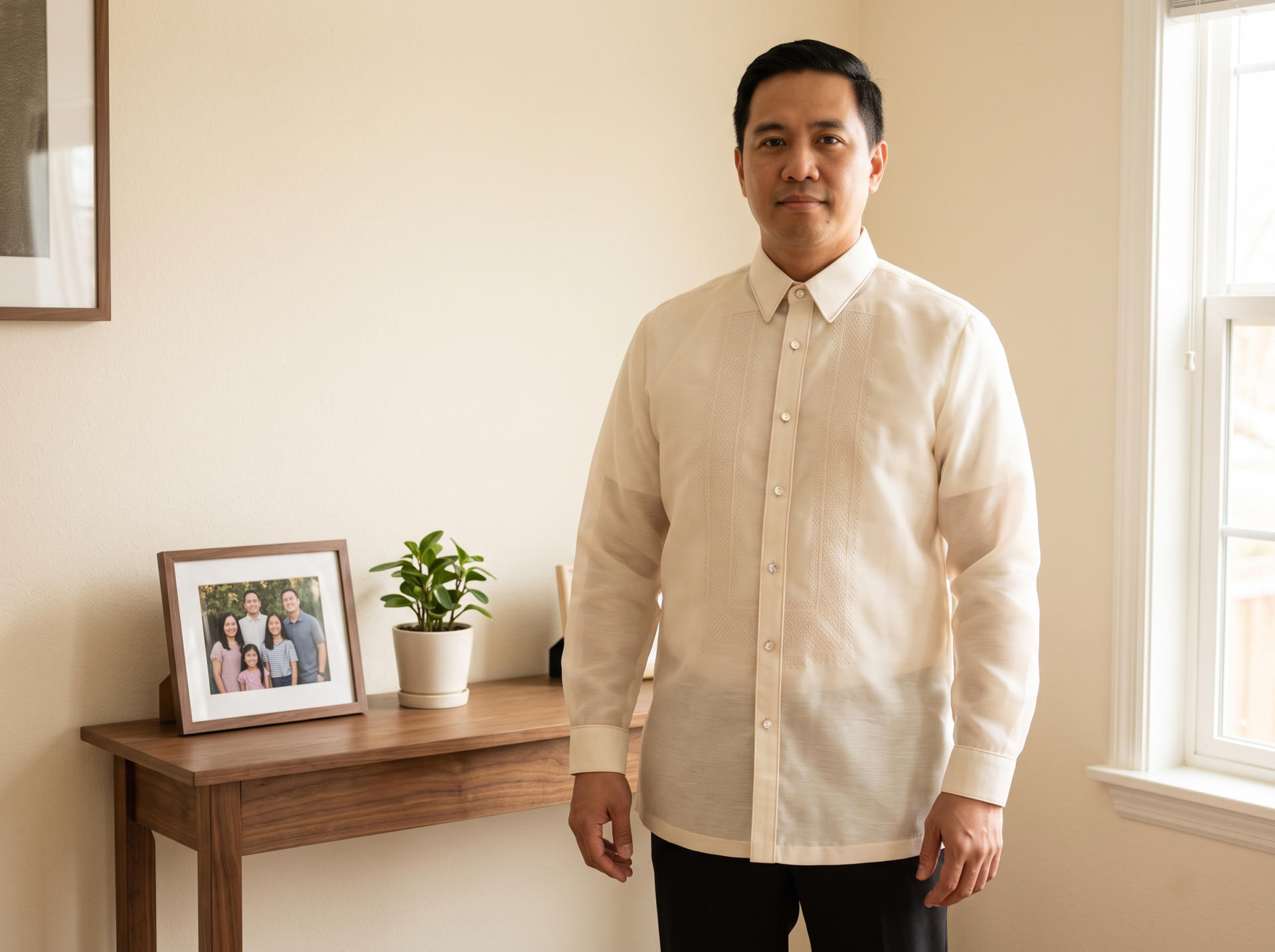
Start with the occasion. A groom, a father of the bride, or a principal sponsor at a church wedding belongs in piña, piña-jusi, or piña-seda. A guest, an entourage member, or a graduate is well served by jusi or organza. A casual gathering allows cotton or linen.
Then think about climate. If your event is outdoors in July in Texas, a lightweight jusi or organza will breathe better than a heavier blend. If you are attending a January wedding in Chicago, a piña-seda blend gives you a warmer drape.
For fit, remember that Filipino sizing runs one step small compared to US sizing. If you wear a US Large in a dress shirt, you will usually need a Filipino XL in a barong. A barong tagalog is meant to fall straight from the shoulders and skim the body, not hug it. The hem should sit at or just below the hip. Sleeves end at the wrist bone. If you are between sizes, size up. A barong that pulls across the chest reads as a mistake in photographs.
Undershirts matter. A plain white crew or V neck under piña, jusi, or organza is standard. Avoid printed shirts, dark shirts, and undershirts with visible seams at the neckline.
Where to go from here
If you are shopping for a specific occasion and want help matching the fabric to the moment, our full barong tagalog collection is organized by formality, so you can see piña, jusi, organza, and blended pieces side by side. Take your time. A barong is worn on the days that matter, and the fabric should match the weight of the day.
Browse the barong tagalog collection when you are ready.