

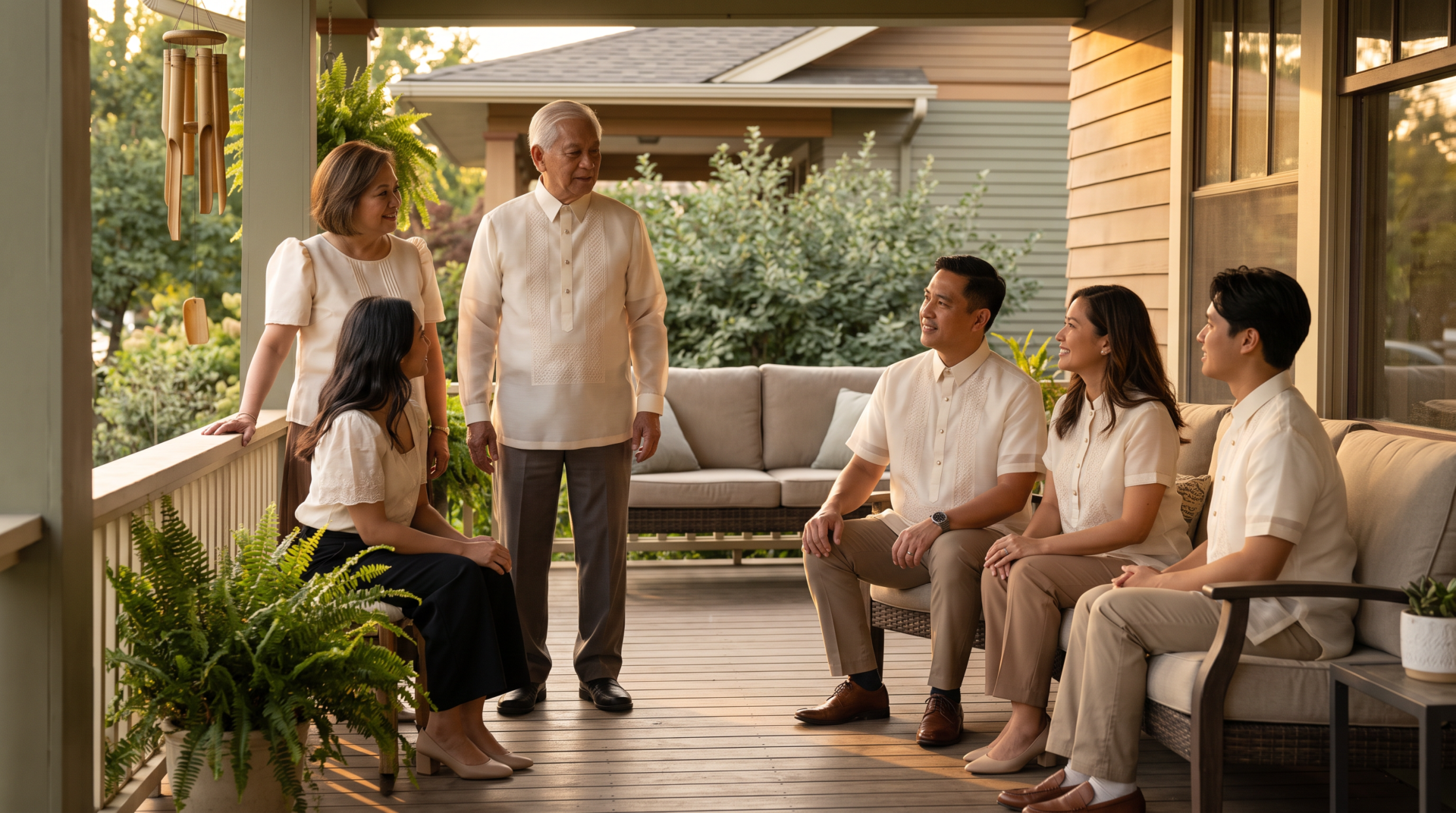
Modern Filipino casual wear for drama sits in a specific place: it needs to read as contemporary Filipino on camera or on stage without pulling focus from the story. Whether you are dressing a cast, styling a school production, or attending a dramatic occasion where the tone is somewhere between everyday and ceremonial, the goal is the same. You want clothing that honors the culture, moves well, and feels like clothing a real person would wear.
What counts as modern Filipino casual wear?
Modern Filipino casual wear is the middle ground between full ceremonial dress and streetwear. Think of a lightweight barong worn untucked with tailored pants, a soft Filipiniana blouse paired with a straight skirt, or a polo barong worn with denim for an afternoon scene. It carries the visual language of the traditional pieces, the standing collar, the sheer paneling, the butterfly sleeve silhouette, but in a form you can sit down in, walk in, and act in.
For drama specifically, this matters more than most people realize. A stiff, formal barong tagalog reads as an event. A softer, more relaxed cut reads as a character. When your production calls for a wedding scene, that formality is right. When the scene is a family dinner, a Sunday mass, or a quiet conversation on a porch in the province, casual is the honest choice.
Why does this matter for stage and screen productions?
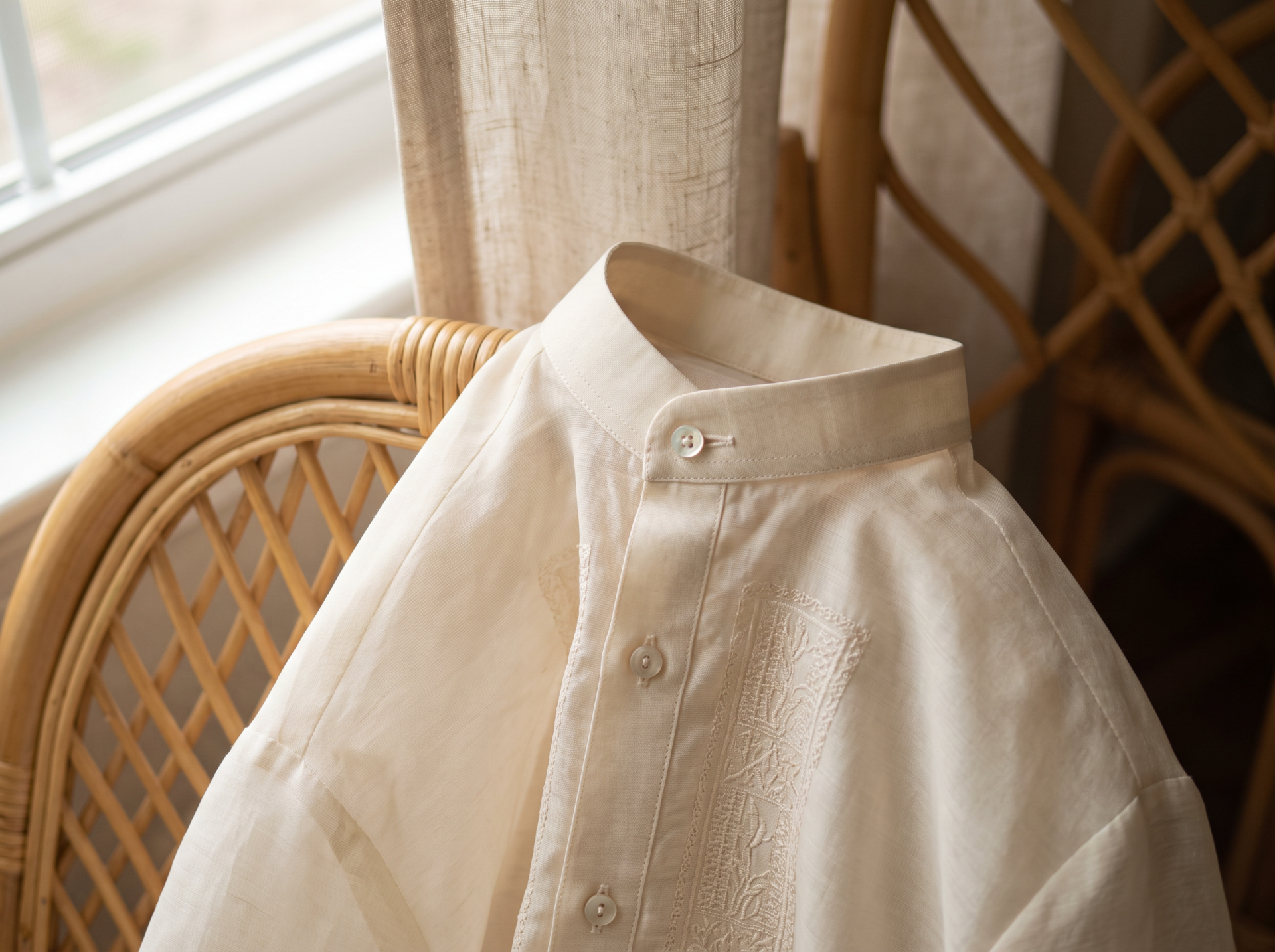
Filipino heritage dress carries meaning, and audiences, especially Filipino American audiences, notice when it is handled with care. Costume choices tell the audience where a character comes from, how much money they have, what generation they belong to, and how connected they feel to their culture. A tita in a soft Filipiniana blouse and slacks is a different character than a tita in a fully embroidered terno.
For directors and costume designers working on Filipino American stories, casual pieces let you signal Filipino identity in scenes that are not tied to ceremony. A student film about a family in Daly City, a stage play set in a Jersey City living room, a short about first generation kids in Houston: none of these need gala wear. They need believable, respectful, everyday clothing with Filipino roots.
How is casual different from formal barong and Filipiniana?
The differences come down to structure, transparency and finish.
Formal barong tagalog is usually made from the most delicate fibers, worn over an undershirt, and treated with real reverence. The embroidery is dense, the fit is precise, and the piece is meant to be seen at a wedding, a debut, or a state occasion.
Casual versions loosen every one of those choices. The fabric is less sheer or fully opaque. The embroidery is minimal or absent. The cut is easier through the chest and shoulders. Sleeves may be short. Hems may be straight for tucking or curved for wearing out. The same is true of Filipiniana. A casual take might keep the butterfly sleeve shape but pair it with a soft cotton body and a relaxed neckline, so it works for a rehearsal or a family gathering rather than a ceremony.
The point is not to water down the tradition. The point is to give you a wearable version of it.
What should you wear for a dramatic but non-ceremonial occasion?
Not every meaningful occasion is a wedding or a funeral. There are dramatic occasions that sit in between, and they deserve their own dress code.
A few examples worth thinking through:
- A first meeting with a partner’s Filipino family. You want to show respect without overdressing.
- A cultural night performance at a university. You want to look intentionally Filipino without wearing a costume piece meant for the stage.
- A milestone birthday at home. You want to feel dressed, but not overdressed for a house full of relatives in slippers.
- A funeral wake at a family home, as opposed to the church service itself. Softer, quieter, still respectful.
- A christening reception, once the church portion is done and everyone moves to the venue.
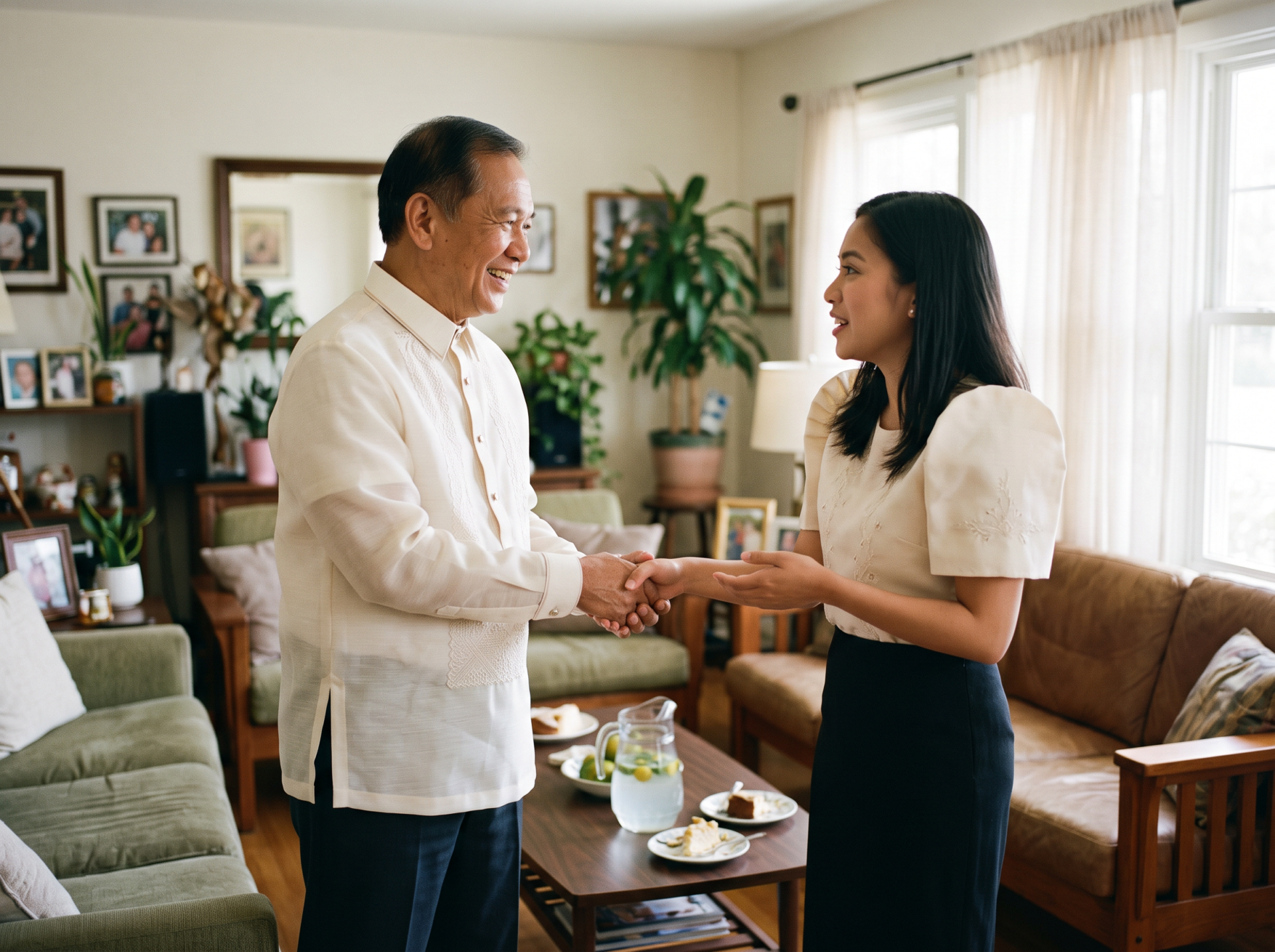
For men, a short sleeve polo barong or a lightweight long sleeve barong worn untucked with dark trousers reads correctly for almost all of these. For women, a Filipiniana blouse with a plain skirt or well cut pants does the same work. You are dressed. You are Filipino. You are not upstaging anyone.
How do you style modern Filipino casual wear on camera?
On camera, three things matter more than they do in real life: contrast, movement and texture.
Contrast is about how the piece reads against skin tone and background. Traditional barong colors sit in a warm neutral range, which photographs beautifully in natural light but can wash out under cool studio lighting. Test on camera before you commit to a full costume plot.
Movement is about how the garment behaves when the actor walks, turns or sits. Casual cuts have more give than formal ones, which is exactly what you want for blocking. A stiff formal piece will fight the actor. A softer casual piece will follow them.
Texture is what sells the shot. The soft sheen of an organza barong or the crispness of a cotton polo barong catches light in a way that reads as real clothing rather than a rental. This is where using genuine pieces, rather than costume approximations, pays off.
Fit, fabric and occasion
A quick practical note, because these are the questions we get most.
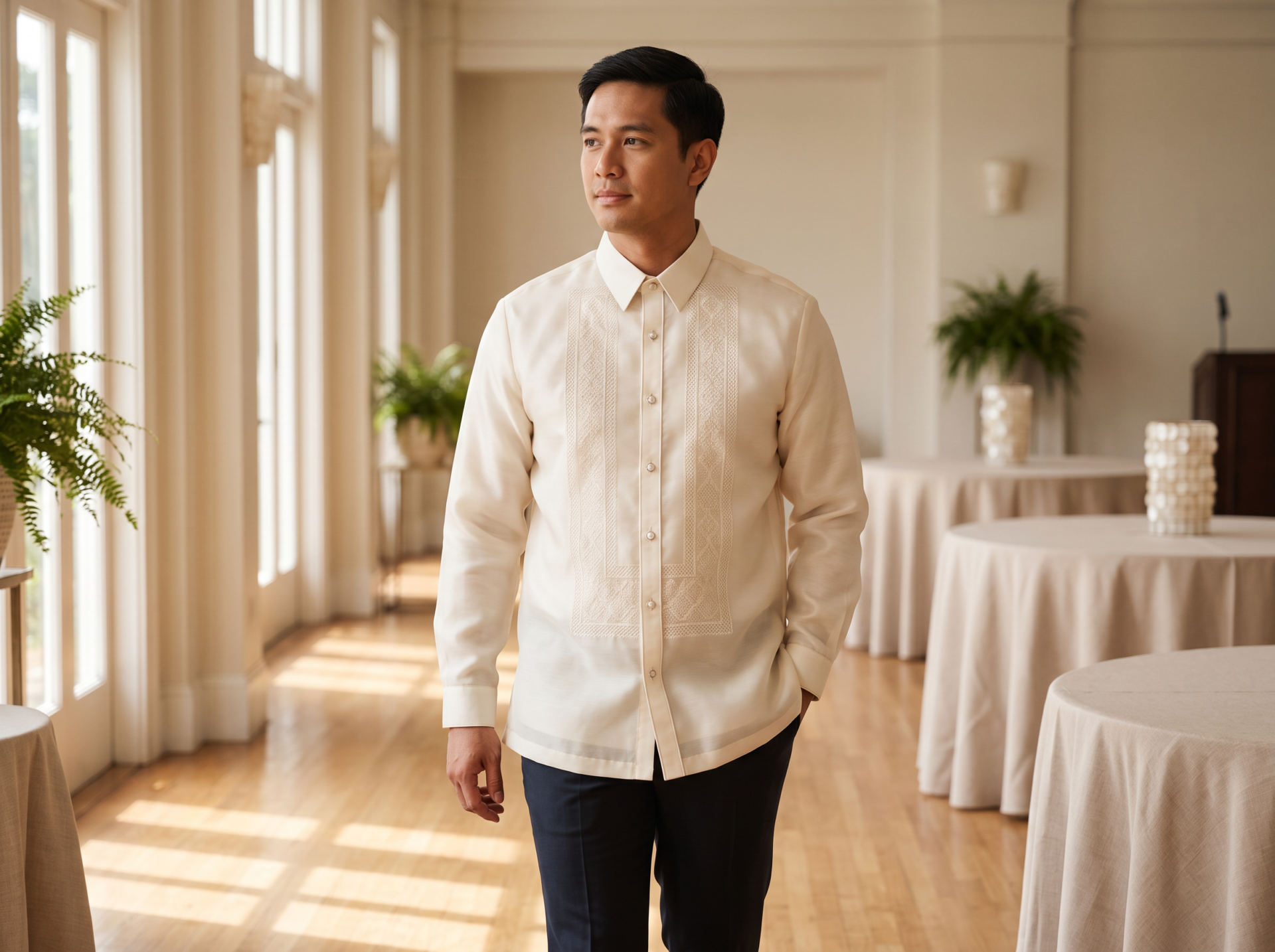
Fit. Filipino sizing generally runs one step small compared to US sizing. If you normally wear a US medium, you will likely need a large in a Filipino cut. For a casual piece worn untucked, you want enough room through the chest and shoulders to move naturally, without the shirt hanging like a smock. Sleeves should end at the wrist bone for long sleeve, and mid-bicep for short sleeve.
Fabric. Casual pieces are usually made from cotton, cotton blends, or lighter woven fibers that behave more like everyday shirting than ceremonial cloth. They handle heat well, which matters in outdoor scenes or in venues without strong air conditioning. They also take a light press well, so wardrobe can keep them looking clean across a shoot day.
Occasion. Casual Filipino wear is right for anything short of a formal ceremony. For weddings, debuts, formal baptisms and formal funerals, step up to a full barong tagalog or a traditional Filipiniana. For everything else, casual is not just acceptable, it is often the more thoughtful choice.
Bringing it into your production or your closet
If you are dressing a cast, order early and order in the actual US sizes your actors need after accounting for the Filipino size difference. If you are shopping for yourself, think about the three or four occasions per year where you want to look Filipino without looking formal, and build from there.
You can browse our casual barong and Filipiniana pieces in the everyday collection when you are ready. Take your time with it. The right piece is the one that feels like yours, not a costume.