
The Ultimate Masterclass: How to Wash and Care for Your Barong Tagalog
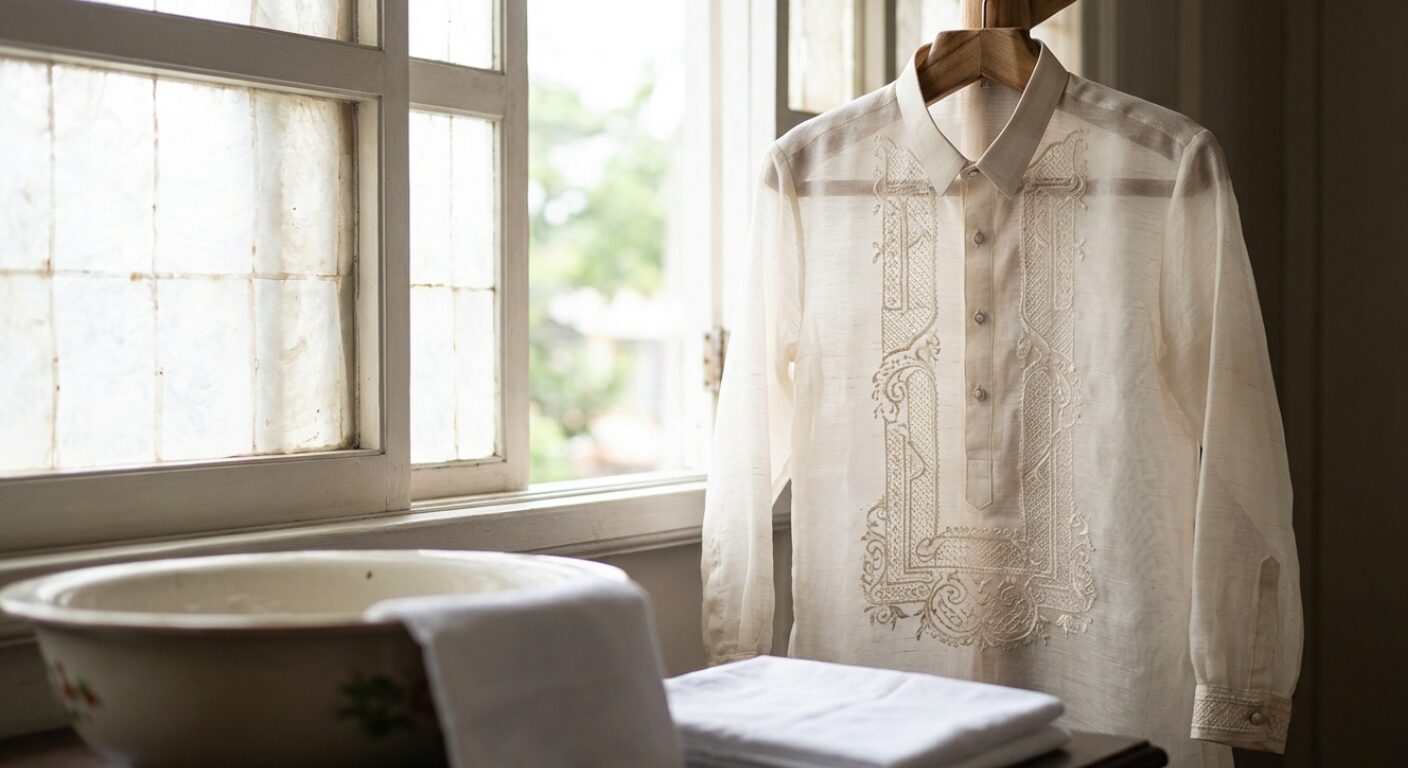
You just returned from a beautiful wedding or a prestigious gala. Your Barong Tagalog—that masterpiece of Filipino craftsmanship—is looking a little less than pristine. Perhaps there’s a faint collar stain or the fabric has lost its crisp, regal silhouette.
Mabuhay! At Handmade Kapamilya, we understand that your Barong is more than just a shirt; it is a piece of our shared history, a symbol of bayanihan, and likely one of the most meaningful items in your wardrobe. The fear of ruining it in the laundry is real.
In this guide, we share the simple care routine we recommend for every barong we sell. We will teach you how to wash a Barong Tagalog the right way for its fabric, so it looks sharp event after event.
Why Meticulous Care Matters: The Cultural Weight of the Barong
The Barong Tagalog is a light, detailed garment. Whether yours is Organza (polyester), Jusilyn (a light single-layer synthetic), Cocoon (a slubby single-layer weave), or cotton, it deserves a gentle hand. Unlike a standard dress shirt, the Barong’s embroidery is hand-stitched, meaning a single rough, hot wash can undo hours of painstaking labor.
Caring for your Barong is an act of respect for the artisans in the Philippines who embroidered it, and for the heritage it represents. Salamat for taking the time to do this correctly.

Phase 1: Identifying Your Fabric (The Expert’s First Step)
Before you even touch the water, you must know what you are holding. Different fabrics require different “levels of aggression.” This guide covers the fabrics we sell. We don’t sell piña or jusi, so if you own an heirloom piña or jusi barong, take it to a specialist cleaner.
- Polyester Organza: Most of our barongs, kids’ barongs and Filipiniana. Light, with a soft sheen, and the easiest to care for. Hand wash cold, or use the delicate cycle in a mesh bag.
- Jusilyn and Cocoon: Single-layer barong fabrics. Jusilyn is light with a fine crosshatch; cocoon has a slubby texture. Hand wash cold only, and steam instead of ironing.
- Cotton: Our navy short-sleeve polo barongs. The easiest of all: machine wash cold on gentle, then hang dry.

Phase 2: How to Wash a Barong Tagalog (Step-by-Step)
If you have the time and the patience, hand washing is the gold standard for Barong Tagalog maintenance. (Short on time? Organza can go on the delicate cycle in a mesh bag, and cotton polo barongs can be machine washed cold on gentle. Then skip ahead to drying.)
1. Prepare the Artisan’s Solution
Never use standard grocery-store detergents with harsh bleaching agents. We recommend a “neutral” or mild detergent. Gentle detergents like Soak or Woolite work well.
- Fill a clean basin with cold water (never hot).
- Add a capful of detergent and stir with your hand until fully dissolved. Pro Tip: If the water is too sudsy, you’ve used too much.
2. The Submerge and Agitate Technique
Do not “scrub” the Barong against itself. This causes “pilling” and damages the embroidery.
- Immerse the Barong completely.
- Use a gentle lifting and lowering motion. Imagine the water flowing through the fibers rather than the fabric being rubbed.
- Let it soak for no more than 15 to 20 minutes. A longer soak doesn’t get it any cleaner.
3. Targeted Stain Removal (The “Soft Touch” Method)
This is where most people fail. Stains usually congregate at the collar, cuffs, and underarms.
- For Organza and Cotton Barongs: You may use an ultra-soft toothbrush (infant size is best) to very lightly brush the collar and cuffs.
- For Jusilyn and Cocoon: Avoid the brush. Instead, apply a drop of concentrated mild detergent directly to the stain and use your fingertip to massage it in a circular motion.
- Continue the “lift and lower” agitation until the dirt vanishes.
4. The “No-Wring” Rinse
Kumusta po—are you tempted to twist the Barong to get the water out? Stop. Wringing stretches the fabric, distorts the embroidery, and sets deep creases that are hard to press out.
- Rinse with fresh, cool water until all soap is gone.
- To remove excess water, lay the Barong flat on a clean, white towel. Roll the towel up like a sleeping bag and press down firmly. The towel will absorb the moisture without stressing the garment.
Phase 3: The Drying and Starching Process
Air Drying: The Only Way
- Use a thick, rounded plastic hanger. Never use wire hangers, as they create “nipples” in the shoulders and can rust, leaving permanent orange stains.
- Hang the Barong in a well-ventilated area, away from direct sunlight. Sunlight is a natural bleach and will yellow your pristine white or ivory Barong over time.
To Starch or Not to Starch?
An authentic Barong should have a certain “crispness.” In the Philippines, we traditionally used rice water (lugaw style). Good news: organza holds its crisp shape on its own, so most of our barongs don’t need starch at all. If you want a little more body on a Jusilyn, cocoon or cotton barong, a light spray starch like Faultless Premium works. Spray lightly while the garment is still slightly damp, and test an inside seam first.

Phase 4: Mastering the Iron (The Ultimate Test)
Ironing a Barong is an art form. For Jusilyn and cocoon, skip the iron and use a steamer. For organza, steam or a low iron both work. If you are ironing at home, follow these rules:
- Use a Pressing Cloth: Never let the hot iron face touch the embroidery directly. Use a thin cotton cloth (a clean handkerchief works well) as a barrier.
- Inside Out: Iron the Barong inside out first. This protects the delicate surface fibers.
- The Low Setting: Use the lowest heat setting (synthetic). High heat can melt or glaze polyester organza, leaving a shiny mark that won’t come out.
- Steam is Your Friend: Use plenty of steam to relax the wrinkles rather than relying on the weight and heat of the iron. For Jusilyn and cocoon, steam is all you need.
Professional Dry Cleaning: When to Outsource
While we advocate for hand washing, we recognize that your time is valuable. However, not all dry cleaners are created equal. If you choose this route:
- Ensure they have experience with “Filipino Formal Wear” or delicate, embroidered garments.
- Ask for low heat throughout, since polyester organza can glaze under a hot press.
- Ask them to “Hand Finish” the garment rather than putting it through a high-pressure steam press.
Essential “Don’ts” for Barong Care
- Don’t ever use bleach (Clorox). It can yellow the fabric and weaken the embroidery thread.
- Don’t use a dryer. The heat can shrink cotton, set wrinkles in organza, and damage the embroidery. Always hang to dry.
- Don’t store in plastic dry-cleaner bags. These trap moisture and cause yellowing. Use a breathable cotton garment bag.
Conclusion: Honor the Craft
Your Barong Tagalog is a testament to the elegance of our culture. By following this guide, you aren’t just cleaning a shirt—you are preserving a legacy. When you stand at the altar or walk into a gala, you do so with the confidence that your attire is as flawless as the traditions it represents.
Mabuhay ang dugong Pilipino!
Ready for Your Next Event?
Is your current Barong looking a bit dated, or are you looking for a modern silhouette for an upcoming wedding? Explore our latest collection of hand-embroidered masterpieces.
Browse the Handmade Kapamilya Authentic Barong Collection
The Heritage Hub: Complete Your Formal Wear Knowledge
- Planning a wedding? Read our guide: Filipino Wedding Traditions: A Beautiful Guide to Rituals & Meaning.
- Confused about fabrics? Check out:Barong Tagalog Style Guide (USA): How to Choose & Wear .
- For the Ladies: See our masterclass on Filipiniana Dress Guide: A Simple Look at Heritage, Style & Elegance.