From Piña to Jusi: How to Select the Perfect Material for Your Milestone Moment
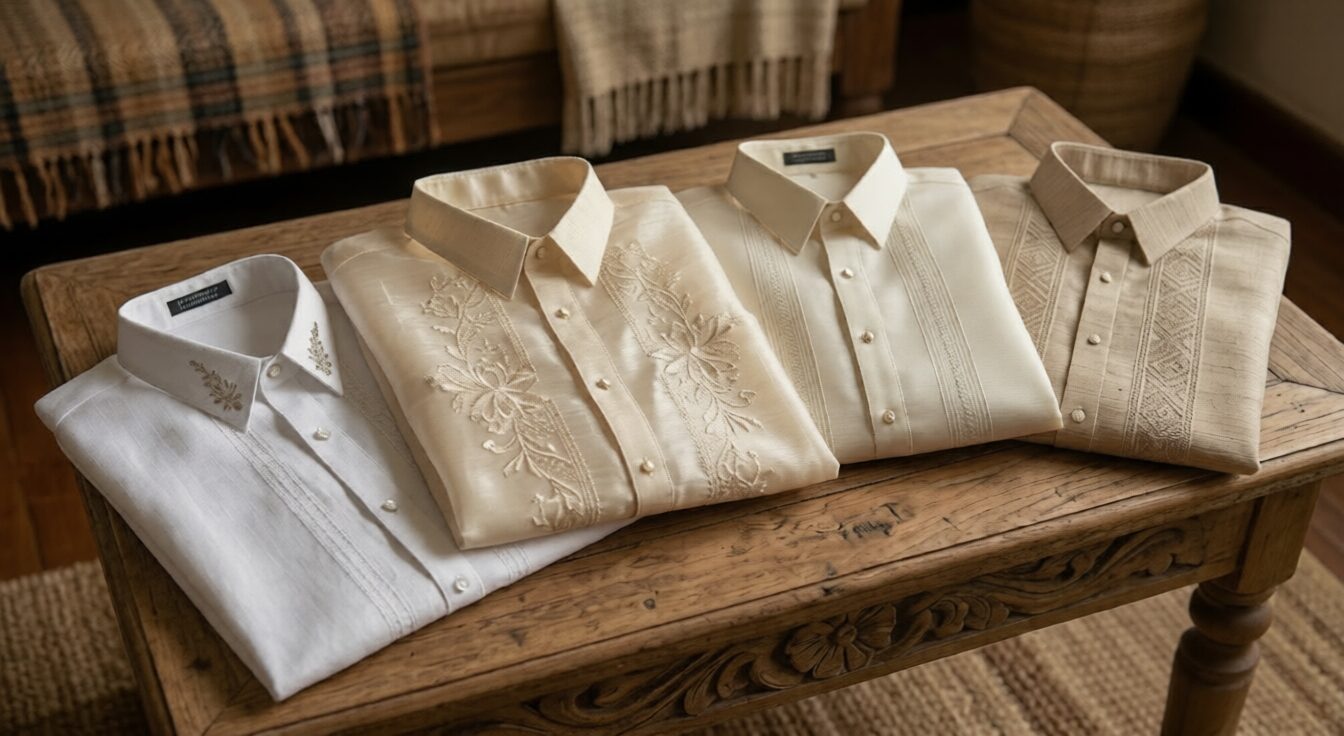
Mabuhay! If you are reading this, you are likely preparing for one of life’s milestone moments—perhaps your own wedding, a baptism, or a high-profile gala. You know you want to wear the national dress of the Philippines, but as you start browsing, you are met with a dizzying array of terms: Piña, Jusi, Organza, Jusilyn.
Choosing the right Barong Tagalog types is about more than just aesthetics; it is about how you feel when you walk into a room and how you honor the artisans who spent weeks hand-embroidering your garment. In our workshop, we believe that every thread tells a story. If the fabric is the canvas, the embroidery is the soul.
In this comprehensive guide, we are going to dive deep into the technical and cultural nuances of every major Barong fabric to ensure you make an investment you’ll be proud to pass down to the next generation.
Why the Fabric Type Defines Your Barong Experience
In the Philippines, the Barong Tagalog is a symbol of “pagkatao” (identity) and “dangal” (honor). However, for many Fil-Americans or those living abroad, the tactile differences between fabrics can be hard to discern through a computer screen.
The fabric you choose dictates three things:
- The Silhouette: Does it stand crisp and stiff, or does it drape softly over the shoulders?
- The Breathability: Will you stay cool during an outdoor summer wedding, or will you be sweating before the “I dos”?
- The Prestige: Certain fabrics are considered “heirloom quality,” while others are designed for one-time theatrical use.
1. Piña Barong: The “Queen” of Philippine Fabrics
When discussing Barong Tagalog types, the Piña Barong sits at the undisputed top of the hierarchy. If you are looking to buy Barong Tagalog for your wedding day, this is the gold standard.
The Craftsmanship
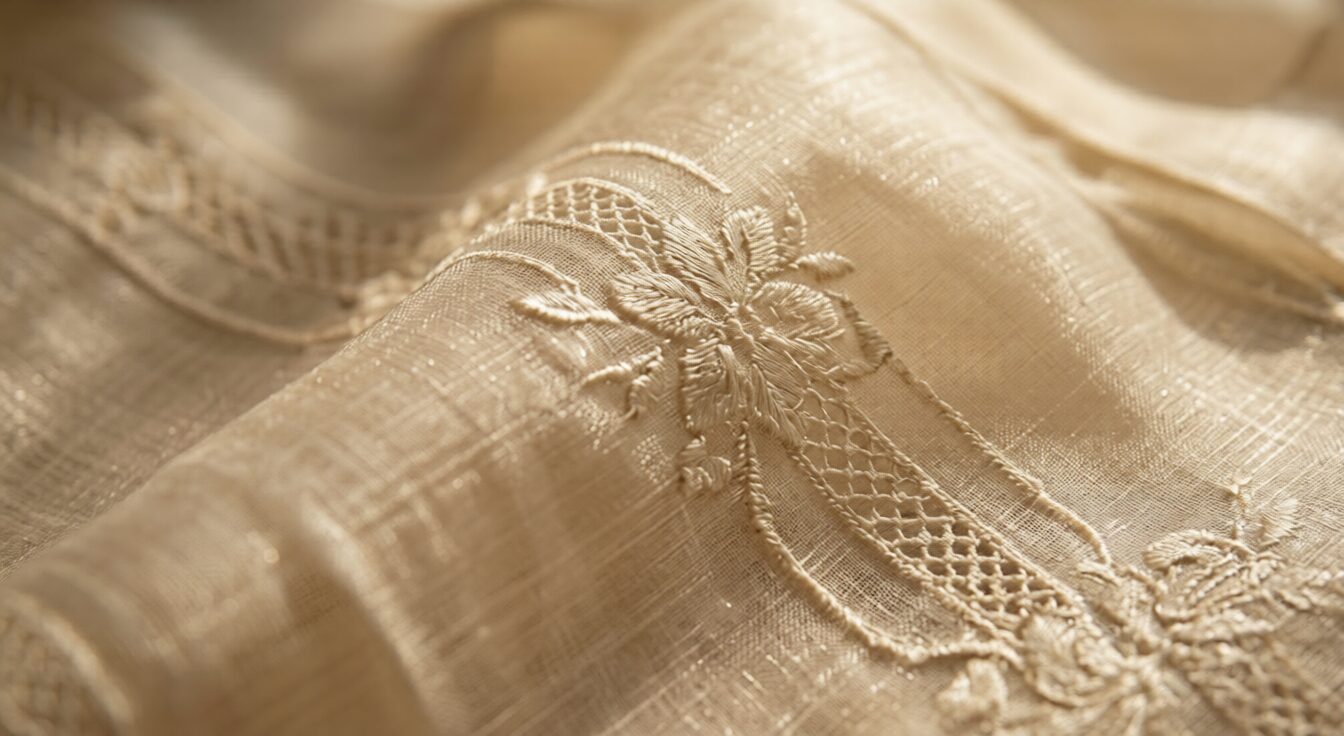
Piña is made from the delicate fibers of the Red Spanish Pineapple leaves. These fibers are scraped by hand, washed, and woven on traditional backstrap looms, primarily in Aklan. We often tell our clients that wearing Piña is like wearing a piece of history.
Why Choose Piña?
- Texture: It has a soft, shimmering, and slightly golden hue.
- Durability: Despite its delicate appearance, Piña is incredibly strong and can last for decades if stored correctly.
- E-E-A-T Insight: At Handmade Kapamilya, we source our Piña from weavers who use the Piña-Seda (Pineapple-Silk) blend, which adds a subtle luster and makes the garment slightly more affordable than 100% Piña-Liniwan.
Expert Tip: Look for the “callado” style of embroidery on Piña. This is a labor-intensive “pulled thread” technique that creates a lace-like effect, signifying a truly premium Barong.
2. Jusi Barong: The Versatile Modern Classic
If Piña is the Queen, Jusi (pronounced hoo-see) is the dependable Noble. Traditionally made from raw silk, modern Jusi is often a high-quality mechanically woven silk that offers a more uniform look.
The Aesthetic
Jusi is more opaque than Piña but retains a refined, professional sheen. It is the most popular choice for wedding guests and groomsmen because it holds intricate embroidery beautifully without the high price tag of pineapple fiber.
Variants of Jusi:
- Jusi-Pina: This is Jusi woven with subtle horizontal streaks to mimic the look of expensive Piña.
- Monochromatic Jusi: Perfect for the modern man, these often feature “ombre” or gradient dyes that transition from dark to light.
If you are looking for a custom Barong Tagalog that balances tradition with a budget, Jusi is your best friend. It is easy to tailor and looks fantastic in photographs.
3. Gusot-Mayaman (Linen): The “Wrinkle of the Rich”
For the Filipino professional, the Gusot-Mayaman is the daily driver. Translated literally to “Wrinkle of the Rich,” this name comes from the fact that high-quality linen wrinkles easily—a sign that the wearer is wearing expensive, natural fibers rather than cheap synthetics.
Why We Love It for Events
- Comfort: It is the most breathable of all Barong Tagalog types. If your event is outdoors in a tropical climate (or a humid summer in the States), linen is a lifesaver.
- Style: It features simpler, geometric embroidery and a “half-open” button down style, making it slightly more casual but still incredibly sharp.
4. Organza and Jusilyn: Affordable Elegance
We understand that not everyone needs an heirloom piece. Perhaps you are attending a cultural night or need a uniform for a large group.
Organza Barong
Organza is a synthetic, sheer material made from polyester and silk. It is very shiny and very stiff. While it is the most budget-friendly option, we usually recommend it for stage performances or one-off events. It does not breathe well, so be prepared for a bit of heat!
Jusilyn Barong
Jusilyn is a step up from Organza. It is a silk-polyester blend that is chemically treated to have a “painted” or “printed” look. It is more opaque than Jusi, meaning you don’t have to worry as much about your undershirt showing through. It’s a great “starter” Barong for those new to Filipino formal wear.
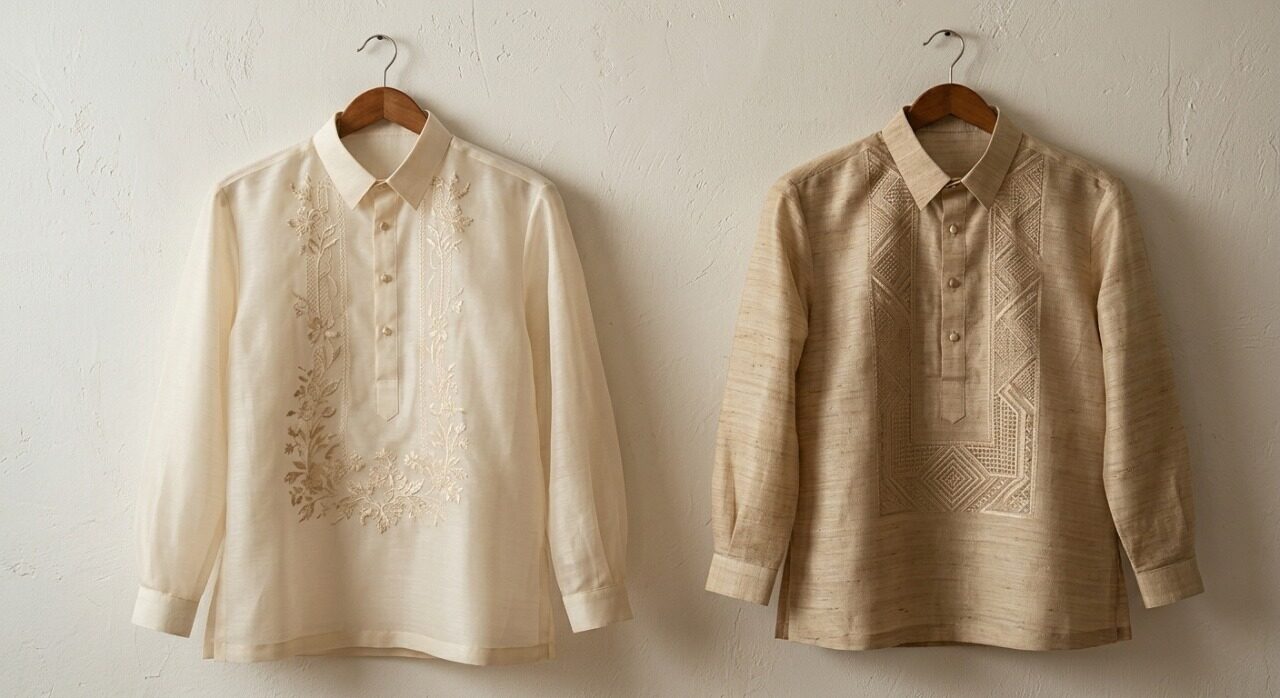
5. Cocoon and Silk Barongs: The Modern Luxury Alternative
In recent years, Cocoon Silk has emerged as a favorite in our workshop. It is made from silk but processed to look like Piña. It has a distinct, textured “slub” that gives it an organic, high-end feel.
- Pros: It is much more durable than Piña and less prone to tearing.
- Cons: It is heavier and less breathable than Jusi.
Comparison Table: Barong Tagalog Types at a Glance
|
Fabric Type |
Material Source |
Best For |
Price Point |
Breathability |
|
Piña |
Pineapple Leaf |
Weddings / Gala |
Premium ($$$) |
Excellent |
|
Jusi |
Silk |
Groomsmen / Guests |
Mid-Range ($$) |
Good |
|
Linen |
Flax / Linen |
Office / Semi-Formal |
Mid-Range ($$) |
Best |
|
Jusilyn |
Silk Blend |
Large Events / Budget |
Affordable ($) |
Moderate |
|
Organza |
Polyester |
Costumes / Stage |
Budget ($) |
Low |

How to Choose: The “Handmade Kapamilya” Selection Guide
When a client asks us which of the Barong Tagalog types they should buy, we ask three questions:
1. What is your role in the event?
If you are the Groom or the father of the bride, go for Piña or Cocoon Silk. You want to stand out. If you are a guest, a high-quality Jusi Barong is respectful and stylish without overshadowing the hosts.
2. Where is the venue?
- Outdoor/Beach: Go with Linen (Gusot-Mayaman).
- Air-conditioned Ballroom: Jusi or Piña will hold their shape perfectly.
3. What is your “Camisa de Chino” strategy?
The Camisa de Chino is the T-shirt worn underneath. With sheer fabrics like Piña and Jusi, the undershirt will be visible. If you prefer a cleaner, more opaque look, choose Jusilyn or a heavy Silk.
Caring for Your Heritage: Maintenance Tips
Salamat for investing in a quality Barong! To ensure it lasts, never put your Barong in a washing machine.
- Hand Wash Only: Use a very mild detergent (or even baby shampoo).
- Do Not Wring: Lay it flat on a towel to dry.
- Ironing: Use the silk setting and always iron it inside out to protect the embroidery.
Conclusion: Ready to Find Your Match?
The Barong Tagalog is more than just a shirt—it is a connection to our ancestors and a celebration of Filipino craftsmanship. Whether you choose the regal Piña or the crisp Linen, you are carrying a piece of the Philippines with you.
At Handmade Kapamilya, we take pride in ensuring every stitch is perfect. Our artisans in the Philippines work tirelessly to bring you the highest quality wedding Barongs and formal wear.
Ready to find your perfect fit?
Browse our Collection of Premium Barong Tagalog Types here.
Further Reading & Related Guides