Filipiniana Traditions: Ultimate Guide to Cultural Attire
Kumusta po, Kapamilya! Have you ever stood before a mirror, adjusting the sharp collar of a Barong Tagalog or the iconic butterfly sleeves of a Terno, and felt a sudden, profound connection to ancestors you’ve never met? This desire to bridge the gap between our modern lives in the diaspora and our vibrant roots in the Philippines is what drives us every day in our “Handmade Kapamilya” workshop.
Filipiniana traditions are not merely “costumes” to be worn once and forgotten; they are an exquisite tapestry of customs and practices that reflect the rich and diverse cultural heritage of the Philippines. Through generations, these cherished traditions have become an integral part of Filipino life, celebrating the nation’s history, values, and identity. In this comprehensive guide, we will unravel the vibrant fabric of Filipiniana traditions and discover the beauty and significance they hold for Filipinos everywhere.
The Heart of Filipiniana: A Living History
To understand Filipiniana traditions, one must first look at the evolution of the garments themselves. Our national attire is a primary artifact of Philippine resistance and adaptation.
- Pre-Colonial Origins: Before Spanish arrival, the native population wore collarless jackets crafted from local linens, suited for the tropical climate.
- Spanish Influence: During the colonial era, the Barong Tagalog underwent a forced evolution, with some folklore suggesting a decree required native men to wear transparent shirts to prevent the concealment of weapons.
- The Rise of the Maria Clara: Inspired by the 19th-century heroine of Jose Rizal’s Noli Me Tangere, this four-piece ensemble—consisting of a baro (blouse), saya (skirt), pañuelo (fichu), and tapis (overskirt)—symbolized the fusion of indigenous and Spanish aesthetics.
- Modern Interpretations: Today, modern Filipiniana represents a flexible, ever-changing idea that combines cultural mores with elegant silhouettes, integrating traditional techniques into daily wear like work attire and graduations.
Flores de Mayo: A Floral Filipiniana Extravaganza
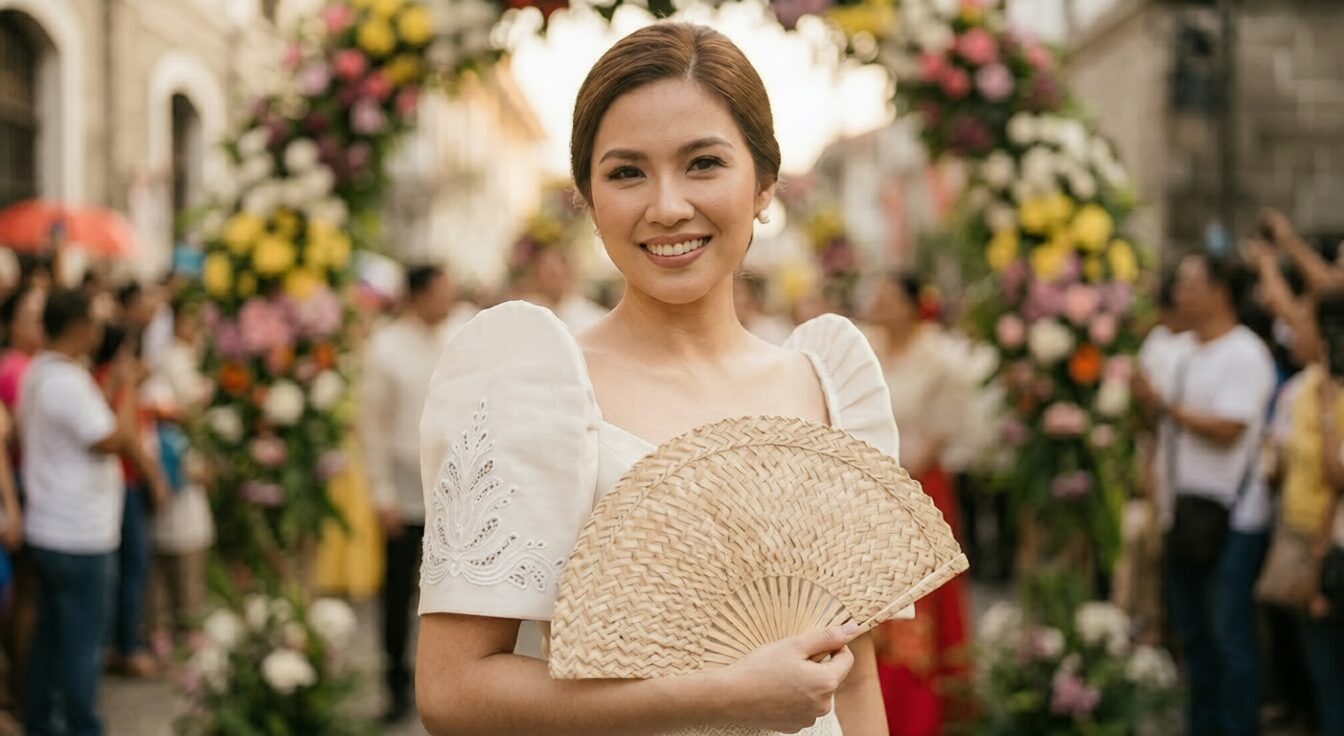
Flores de Mayo, or the “Flowers of May,” is a cherished Filipino tradition celebrated throughout the entire month of May. This religious and cultural event pays homage to the Virgin Mary and honors her with colorful and elaborate floral offerings.
In our experience, this is the season where the “Modern Filipiniana” truly shines. Young women and girls participate in processions and parades, carrying ornate bouquets and delicately woven garlands. They often wear lightweight fabrics like Organza or Jusi, which allow for breathability during the humid May afternoons. Flores de Mayo showcases the Filipinos’ deep devotion and appreciation for the beauty of nature, artistry, and spirituality.
Santacruzan: A Graceful Filipiniana Pageant
Santacruzan is a grand pageant held in May, typically towards the end of the Flores de Mayo celebrations. This tradition commemorates the discovery of the Holy Cross by Empress Helena, the mother of Constantine the Great.
The Queen of the Pageant: The Terno
The highlight of any Santacruzan is the Elena or Queen of Queens. She typically wears a Terno, characterized by its iconic, stiffened butterfly sleeves.
- Fabric Choice: High-end Ternos are often made from Piña, a fabric hand-loomed from pineapple leaf fibers, representing the pinnacle of Filipino craftsmanship.
- Symbolism: The Santacruzan features a procession of young ladies representing biblical characters, each elegantly dressed in Filipiniana gowns that embody grace, beauty, and faith.

The Barong Tagalog: The Men’s National Formal Attire
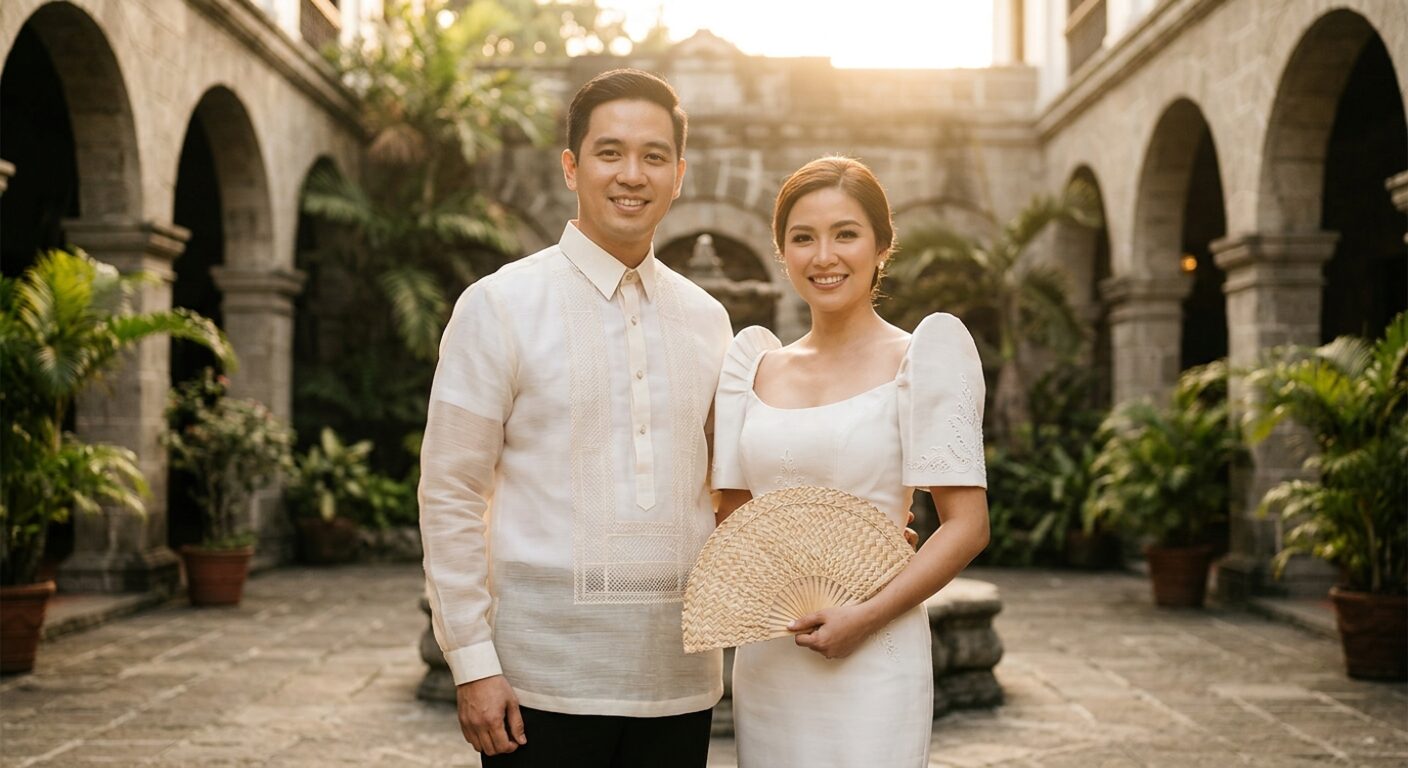
For the men, the Barong Tagalog stands as the ultimate symbol of Filipino identity. It is cultural identity, practical elegance, and a statement of pride. Whether you are a groom, a guest at a gala, or attending a business function, knowing your Barong is essential.
Choosing Your Fabric: The Artisan’s Perspective
In our workshop, we always emphasize that the fabric is more than just textile; it tells a story of heritage.
- Piña: The “Queen of Philippine Fabrics.” It is sheer, delicate, and often used for the most formal occasions like weddings.
- Cocoon: Often called “Cocoon Silk,” it mimics the look of Piña but is more durable and less prone to wrinkling, making it ideal for international travel.
- Jusi: A mechanically woven fabric made from silk or synthetic fibers. It is more opaque than Piña and offers a more affordable entry point for high-quality formal wear.
- Organza: A sheer, lightweight material often used for more budget-friendly Barongs. While beautiful, it lacks the natural luster and “breathability” of silk-based fabrics.
Styling Your Barong
- The Undershirt: Always wear a long-sleeved Camisa de Chino underneath your Barong to absorb perspiration and keep the outer garment looking crisp.
- The Fit: Modern styles favor a “Contemporary Fit” which is slimmer and more tapered, while “Traditional Fit” offers more room for movement.
- Occasion Matching: While a white or off-white Barong is classic for weddings, colored Barongs—such as blue, black, or brown—are modern takes perfect for christenings or business events.
Barrio Fiesta and Pahiyas Festival: Celebrating Community
The Barrio Fiesta is a beloved Filipino tradition that brings communities together to celebrate local culture. This is where you see the Barong Tagalog and Balintawak (a less formal Terno with a kerchief) in their natural habitat.
Pahiyas Festival: A Feast for the Senses
Celebrated in Lucban, Quezon, the Pahiyas Festival is a splendid display of gratitude for a bountiful harvest.
- The Attire: Locals proudly wear Filipiniana costumes as they participate in lively street dances.
- The Decorations: Homes are adorned with colorful rice wafers called kiping, creating a visual feast that captures the essence of Filipino creativity.
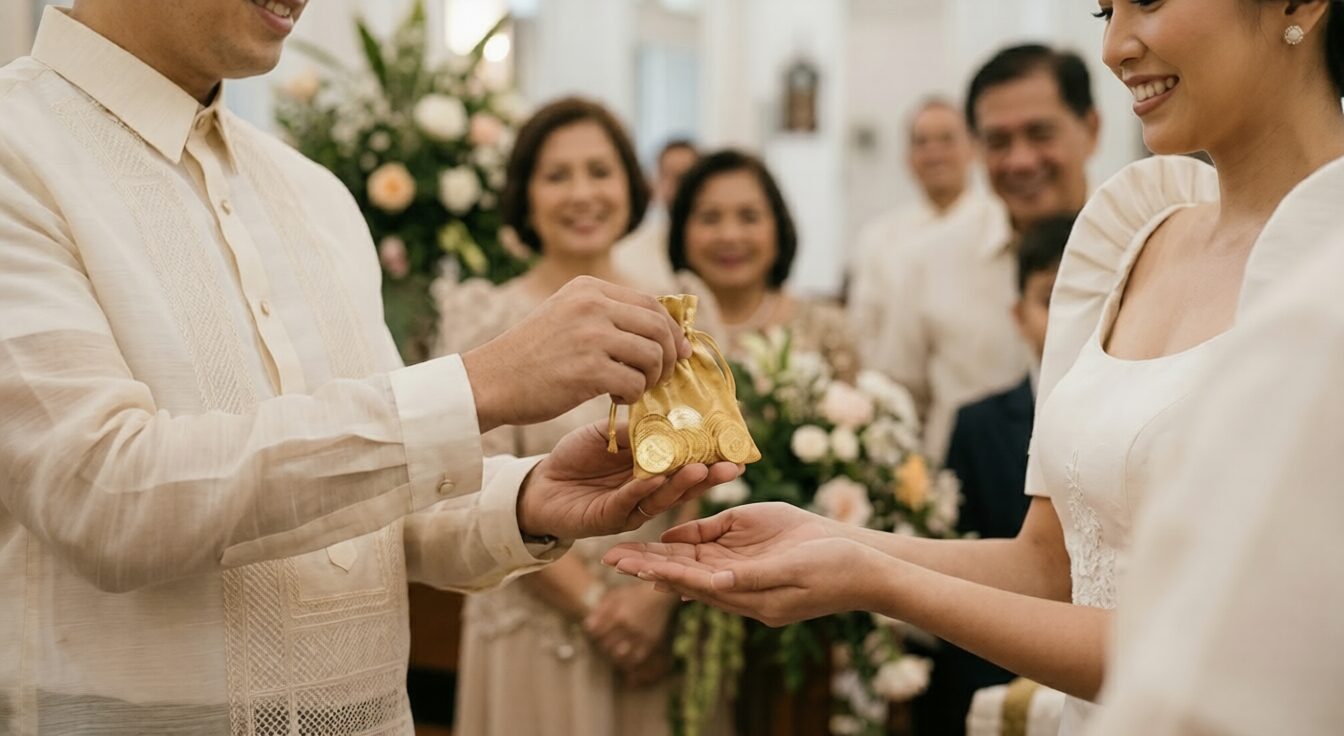
Filipino Weddings: Embracing Tradition and Love
Filipino weddings are steeped in tradition and cultural customs that highlight the unity of two families. They are a masterclass in how Filipiniana traditions adapt to modern love stories.
The Bride and Groom
The bride often chooses a Filipiniana-inspired gown, embracing the elegance of traditional styles like the Terno or a modern Filipiniana Bolero over a white dress. The groom’s Barong Tagalog exudes sophistication and respect for heritage.
Symbols of Unity
During the ceremony, specific symbols are used to represent the couple’s bond:
- Arras (Coins): Symbolize prosperity and the groom’s commitment to the welfare of his family.
- Candles: Represent the light of Christ and the couple’s role as the “light” of their new home.
- Veil and Cord: The veil symbolizes the couple being “clothed as one,” while the cord (yugal) represents an everlasting bond.
Caring for Your Heritage: Maintenance Tips
Because these garments are often handmade and delicate, proper care is vital to ensure they remain heirlooms.
- Hand Washing: Most Barongs and Filipiniana dresses should be hand-washed using mild detergent and lukewarm water.
- Stain Removal: Never scrub the fabric. Dab stains gently to avoid damaging the embroidery.
- Drying: Lay the garment flat on a clean towel or hang it on a padded hanger. Avoid direct sunlight to prevent yellowing.
- Ironing: Use a low-to-medium heat setting. For Piña or Jusi, use a pressing cloth between the iron and the garment to protect the fibers.
Conclusion: Embracing the Colors of Filipino Heritage
Mabuhay! Filipiniana traditions are a kaleidoscope of colors, each representing a unique facet of Filipino identity and culture. These cherished customs serve as a tapestry that weaves the threads of history, artistry, and spirituality into the fabric of Filipino life.
As we partake in the joyous festivities of Flores de Mayo, Santacruzan, and weddings, we celebrate the beauty of our homeland and the shared bonds of our communities. These traditions are not only a reflection of the past but also a promise to preserve and pass on the vibrant heritage to future generations.
Ready to represent your culture with pride? Whether you’re preparing for your “Big Day” or looking for a modern touch for your office wear, we are here to help you find the perfect piece.
Explore our collections today:
- Shop our Premium Barong Tagalog Collection
- Browse Modern Filipiniana Dresses & Ternos
- Find the Perfect Accessories for Your Next Event
Salamat for choosing to keep our traditions alive.
Internal Links to Consider: