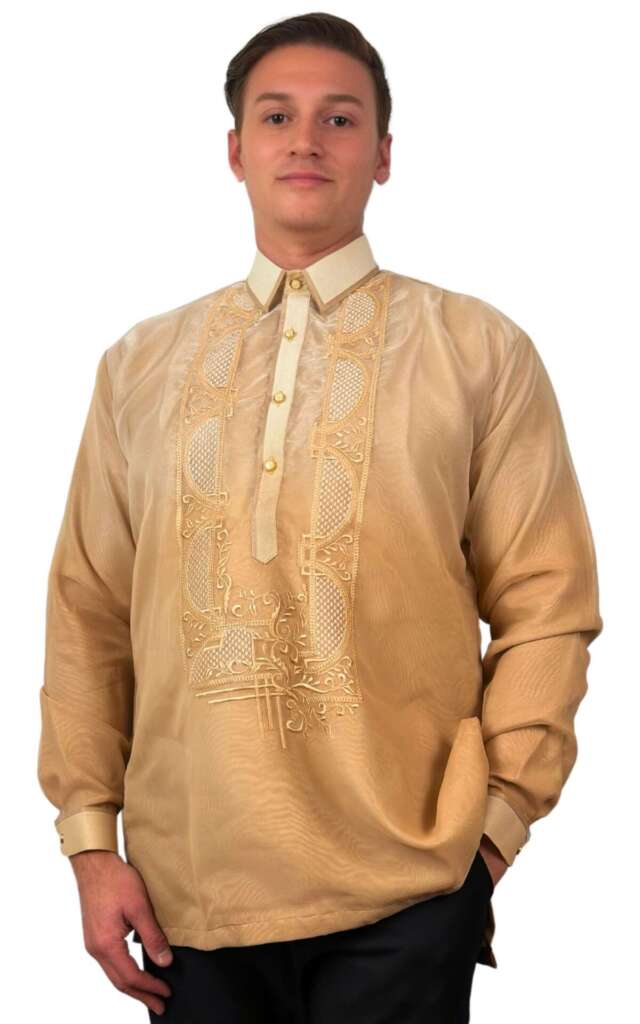
What a barong tagalog is
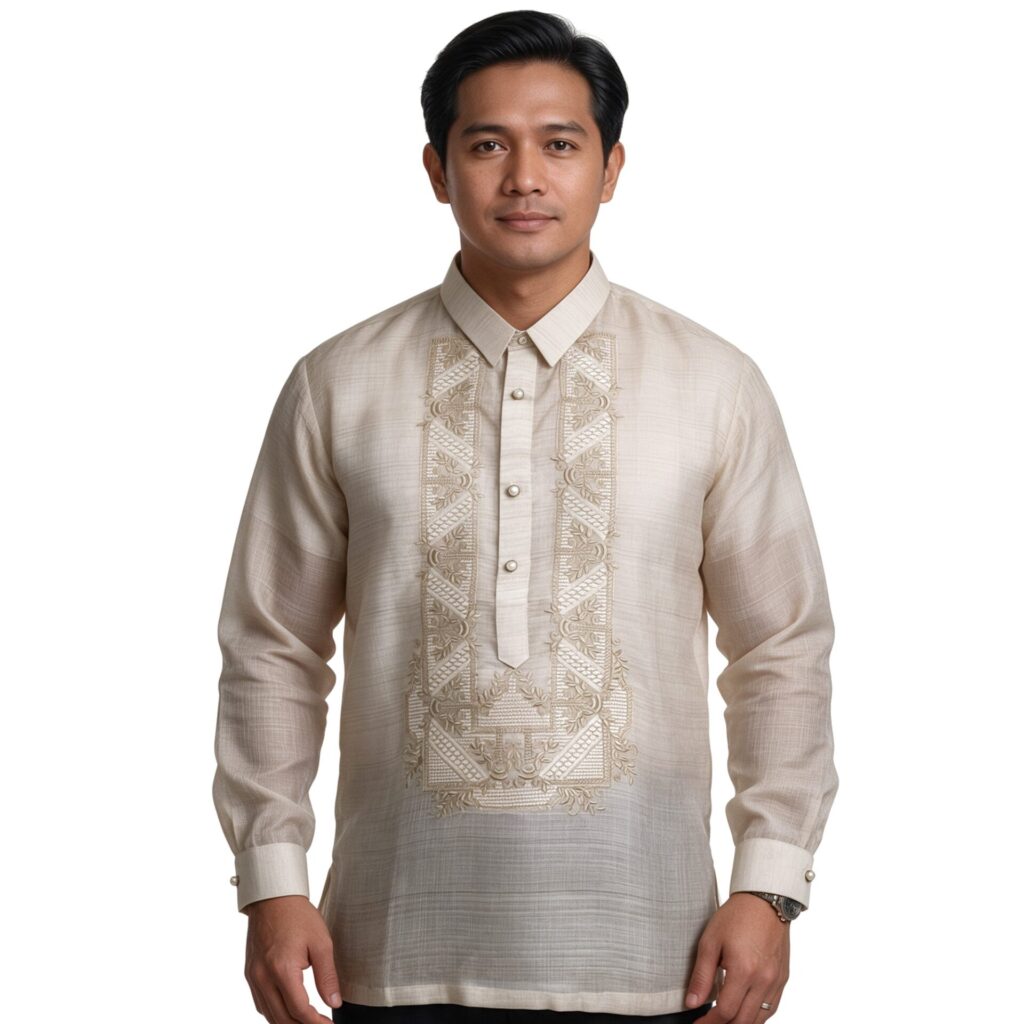
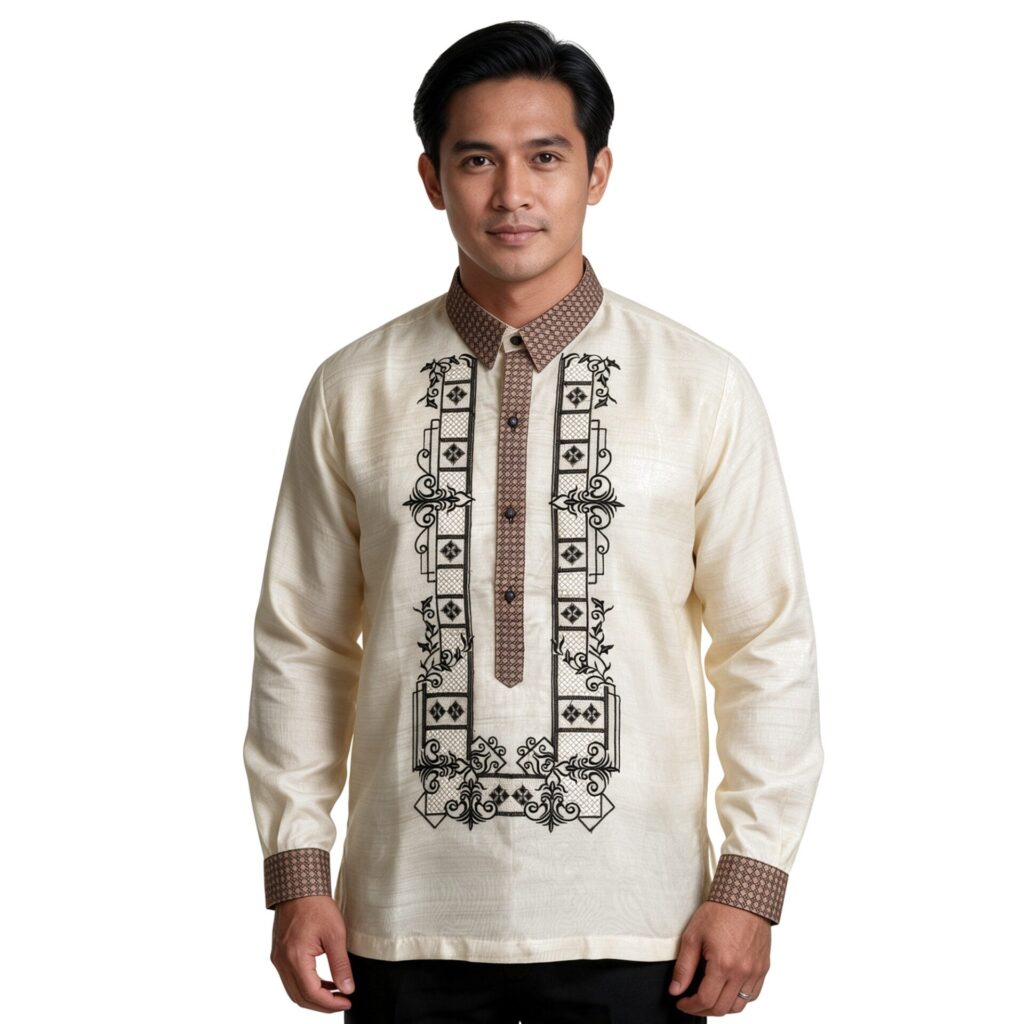
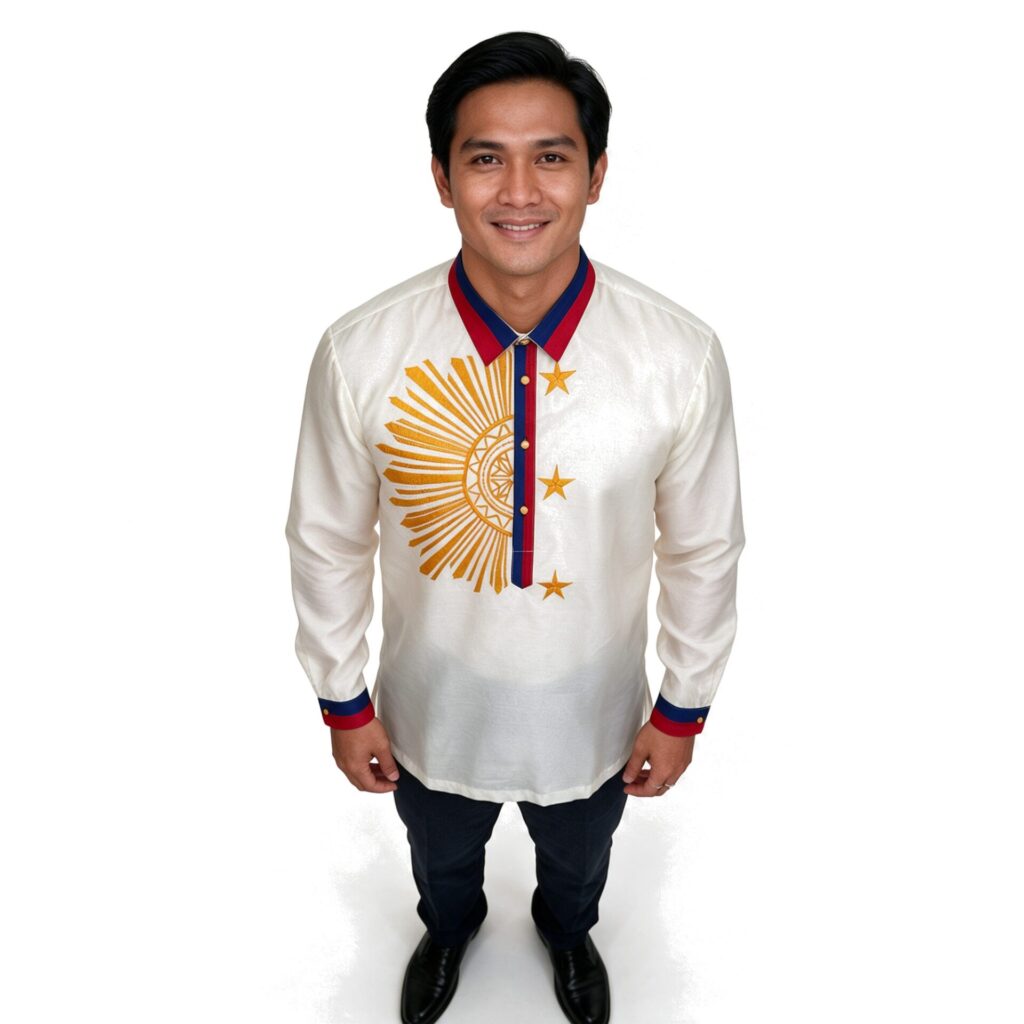
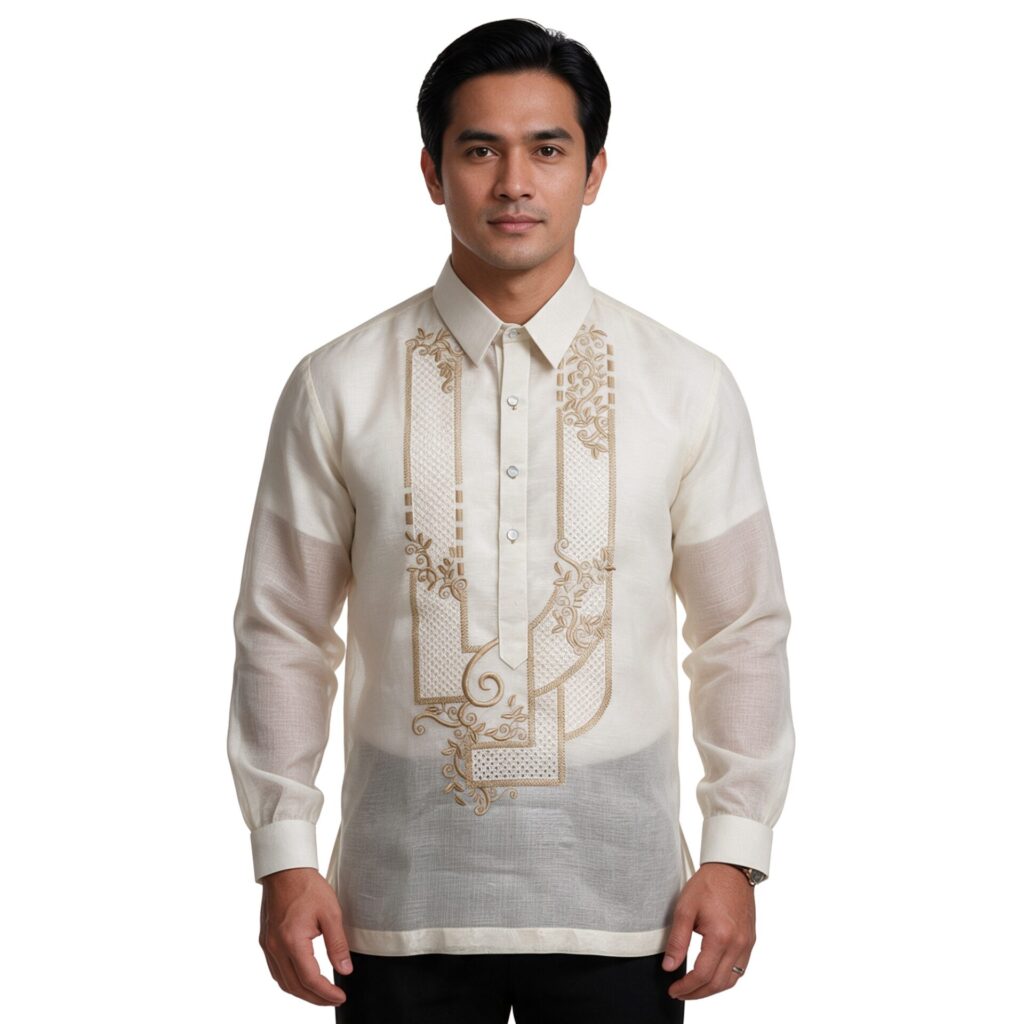
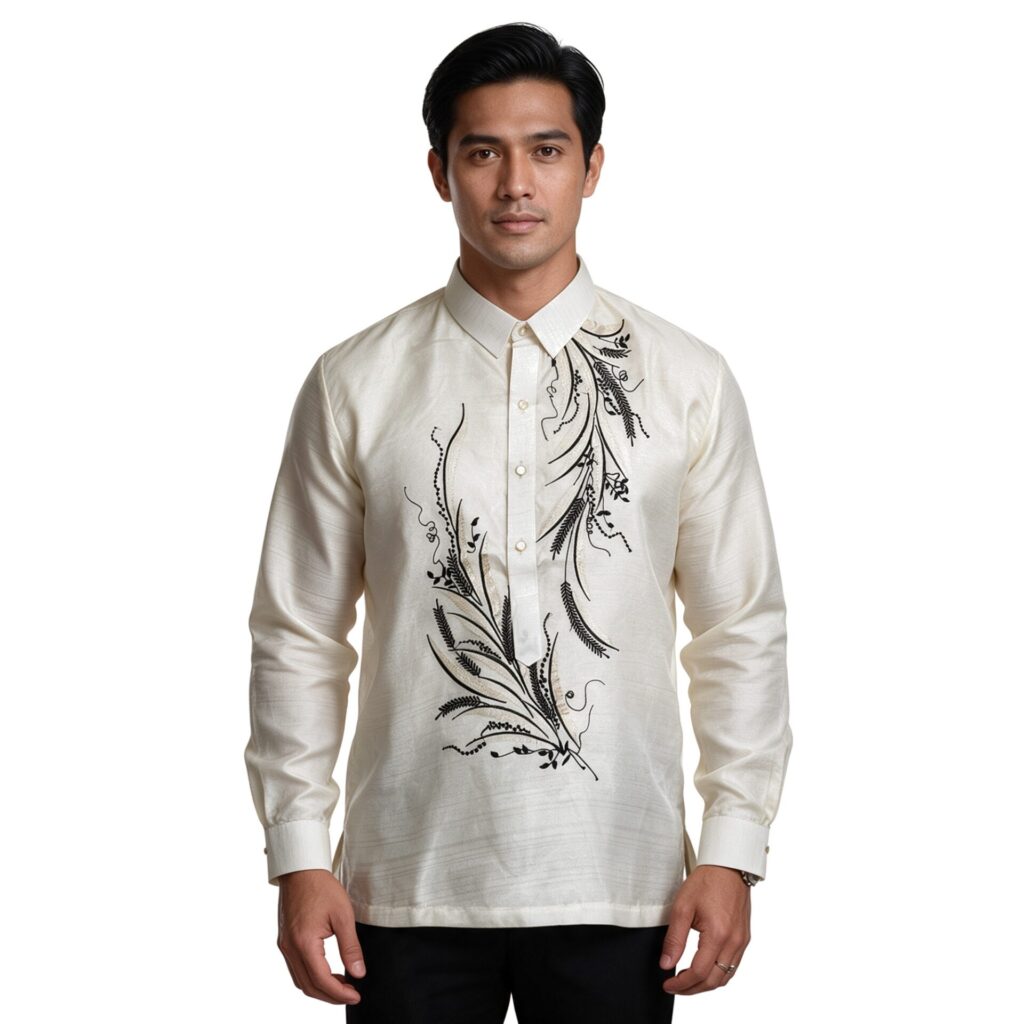
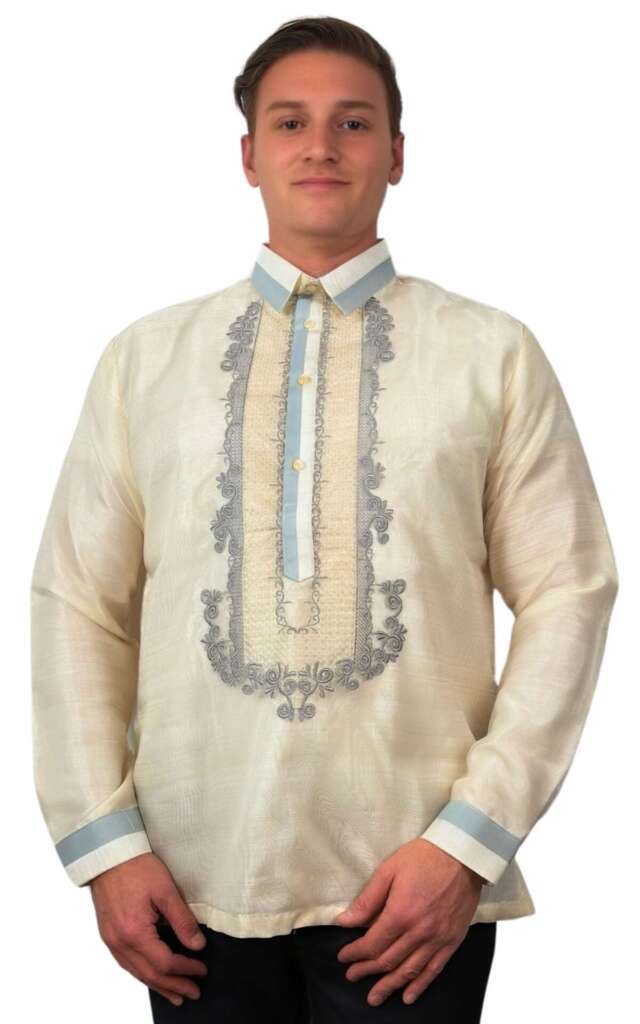
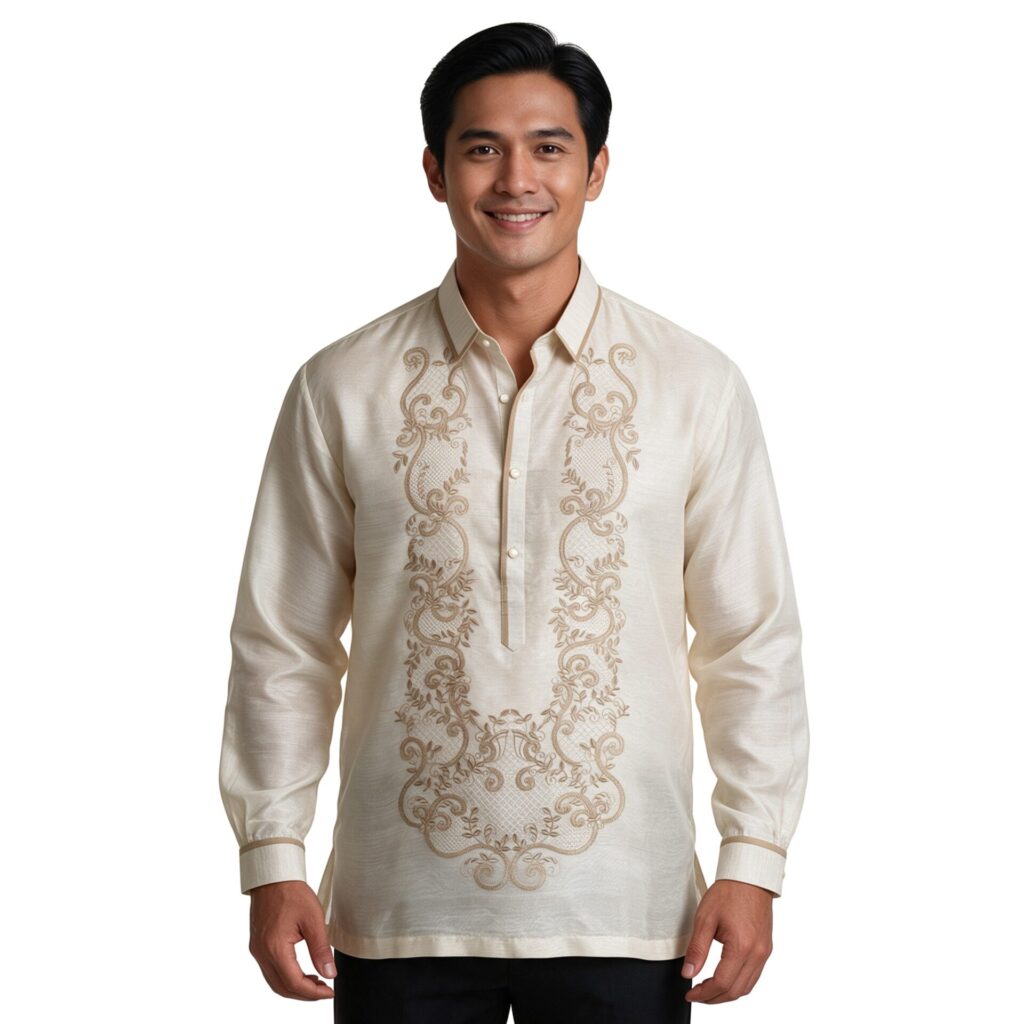
The barong tagalog is the national formal shirt of the Philippines: a long, lightweight, embroidered shirt worn untucked over a plain white undershirt called a camisa de chino. It is worn the way a suit jacket is worn elsewhere. At a Filipino wedding the groom, his father, and the entire entourage will be in barongs. It is correct at church, at a debut, at a baptism, at a funeral, and at any black-tie event where you would otherwise be reaching for a tuxedo.
What makes it distinct is that it is formal without being heavy. The fabric is sheer or near-sheer by design, the embroidery sits on the chest panel (the pechera), and nothing about it is tucked in or cinched. In a Minnesota July or a Manila December, it does the same job as a dinner jacket and is far more comfortable in both.
Choosing the fabric, which is the only decision that really matters
Almost every other choice follows from this one. Here is what we actually stock, in plain terms.
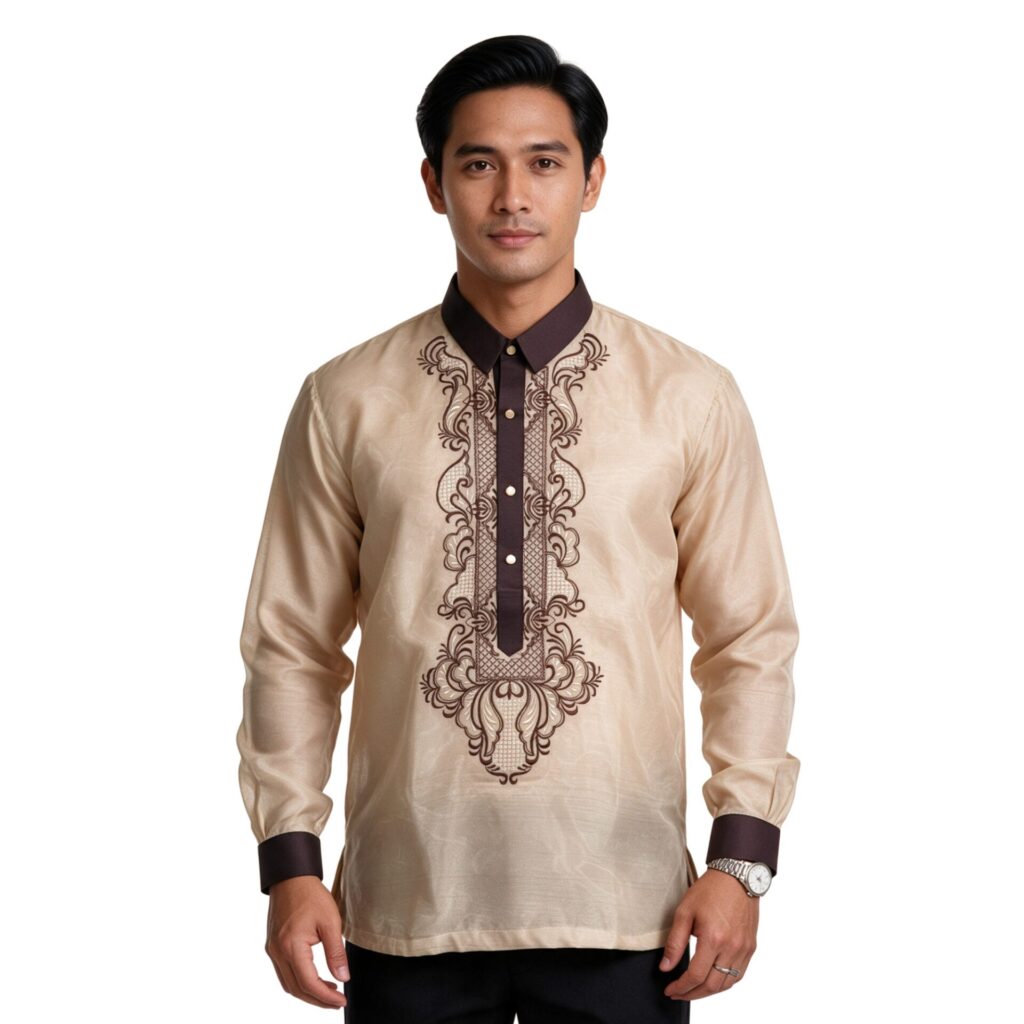
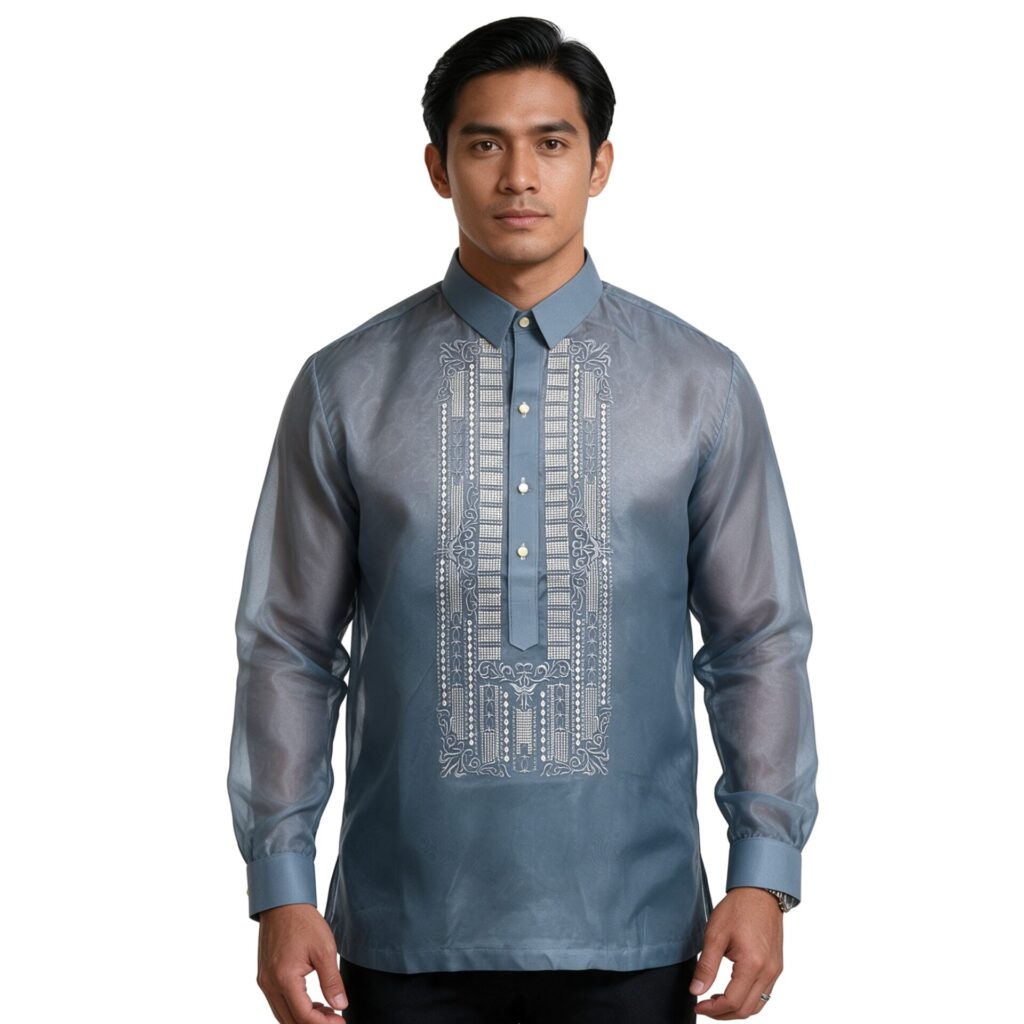
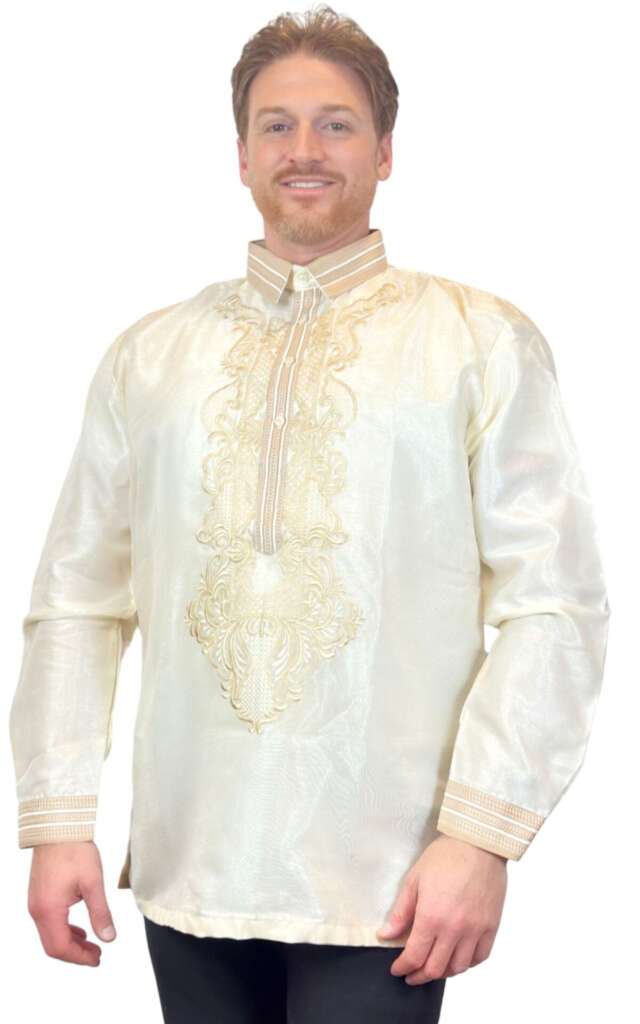
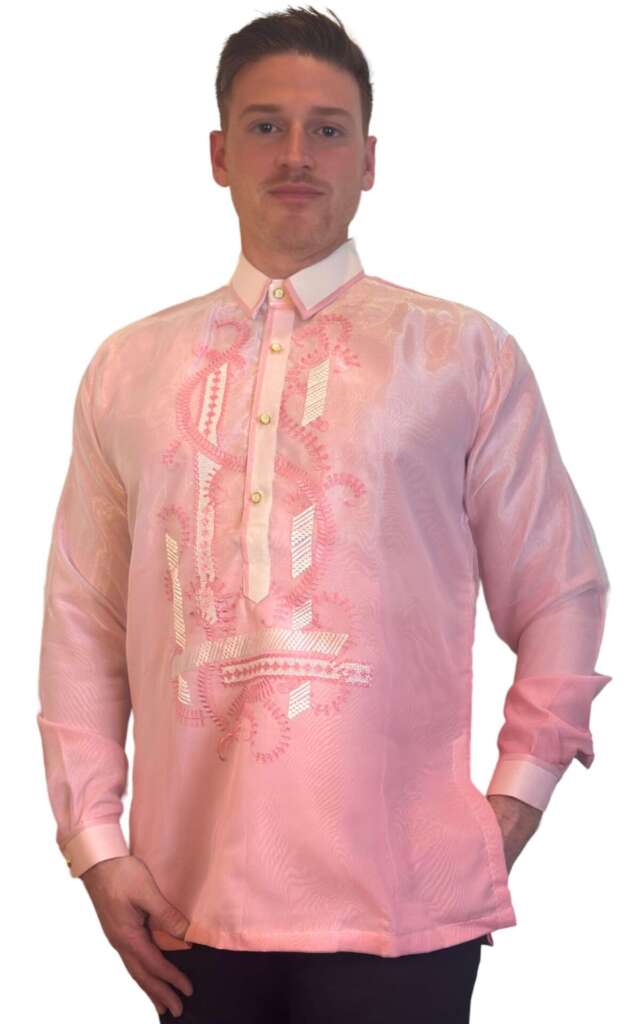
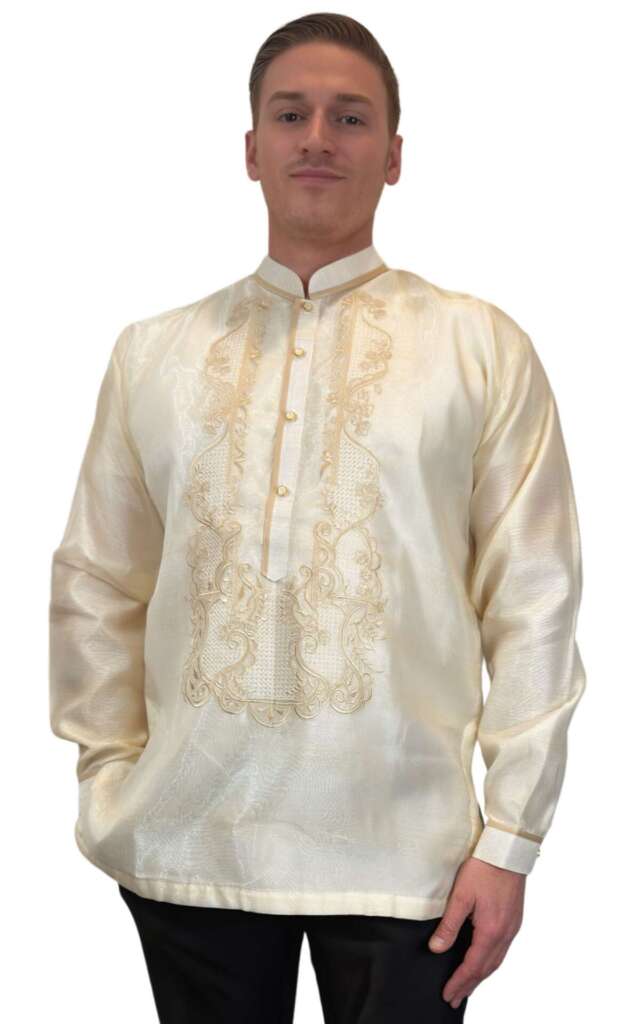
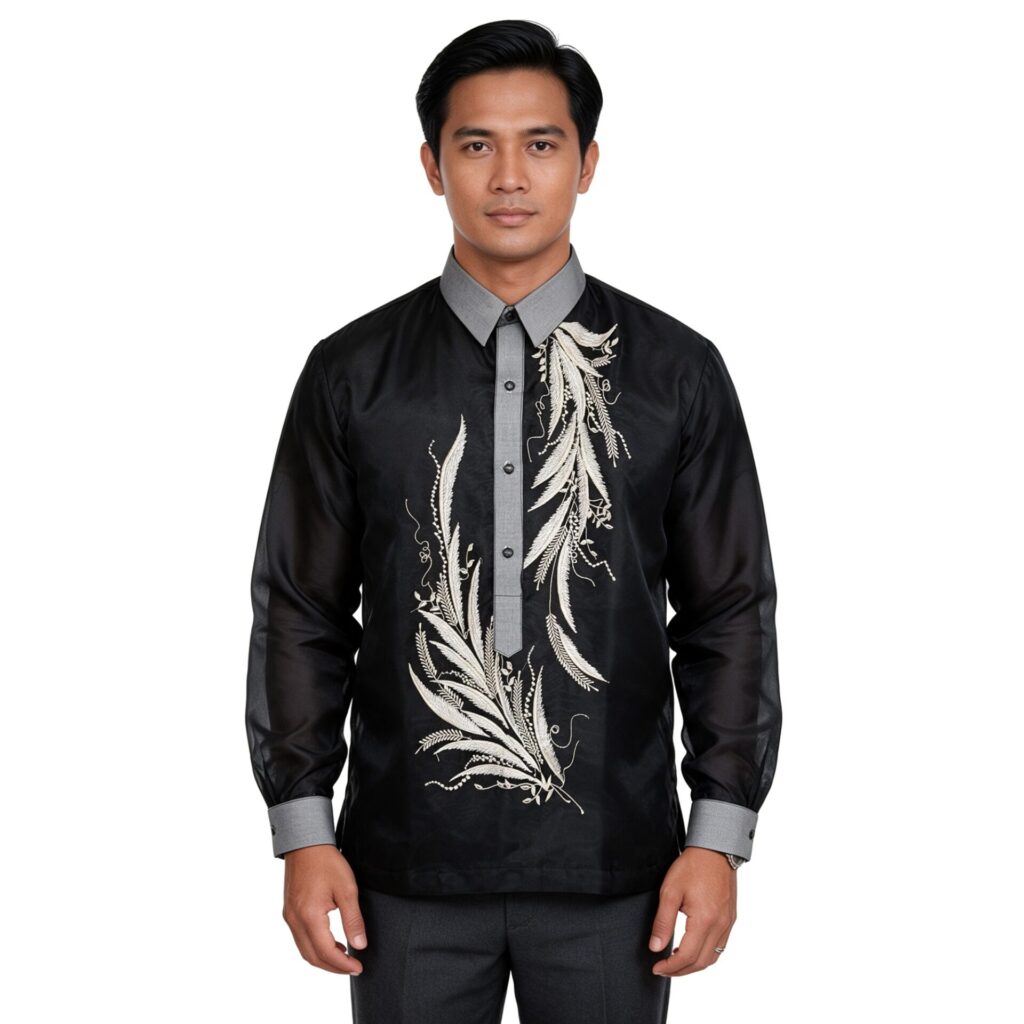
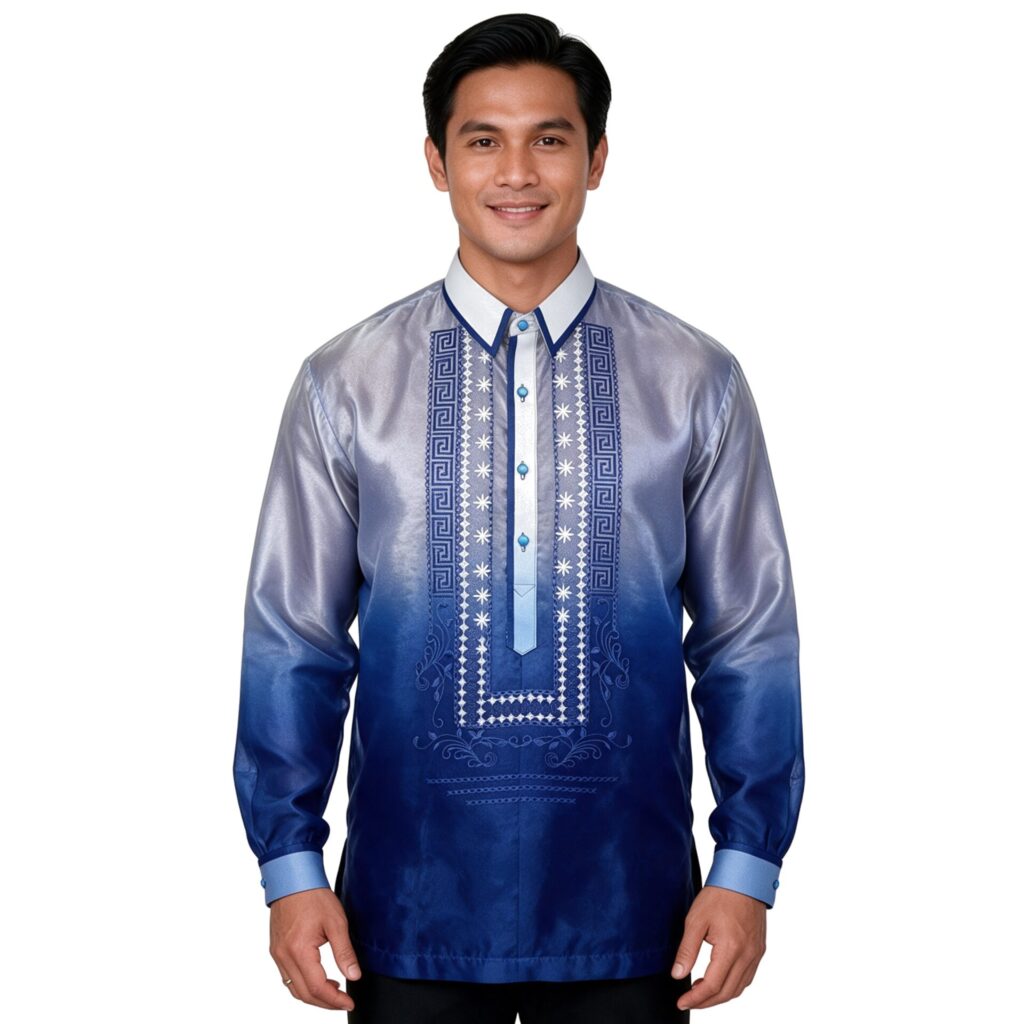
Polyester organza, $76 to $85. This is the bulk of the collection and the safest first barong. It is double-layered, which means it is fully opaque: your undershirt does not show through it, and neither does anything else. It has a soft luminous sheen that photographs beautifully under church lighting. It holds a press, it survives a flight in a garment bag, and it comes in the widest range of colours we carry, from ivory and sand through navy, black, pink, red and an ombre blue that fades from pale periwinkle at the shoulder to cobalt at the hem.
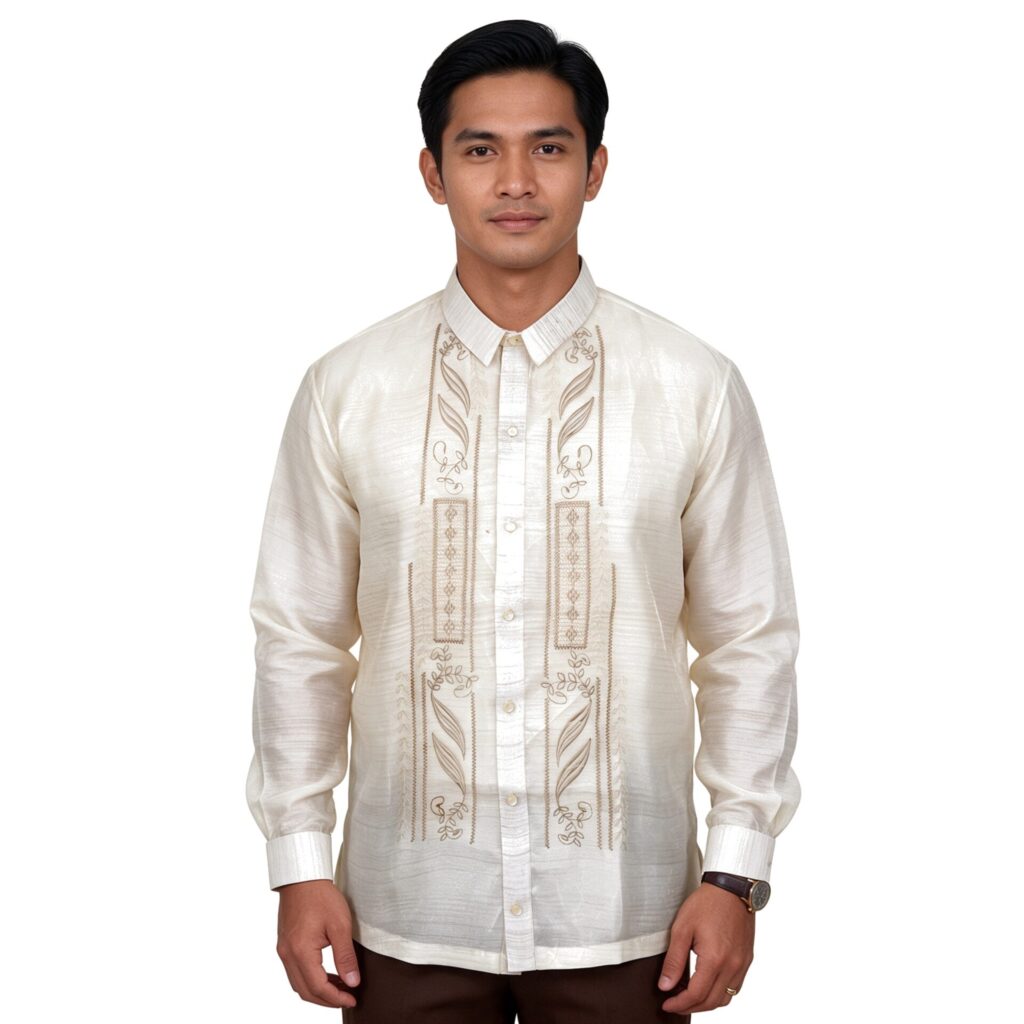
Textured organza, $73 to $79. Opaque like the smooth organza, but with pronounced horizontal slub striations running across the weave and a natural lustre rather than a sheen. It reads as more textured and slightly more traditional in photographs. If you want visible texture rather than a smooth finish, this is the one.
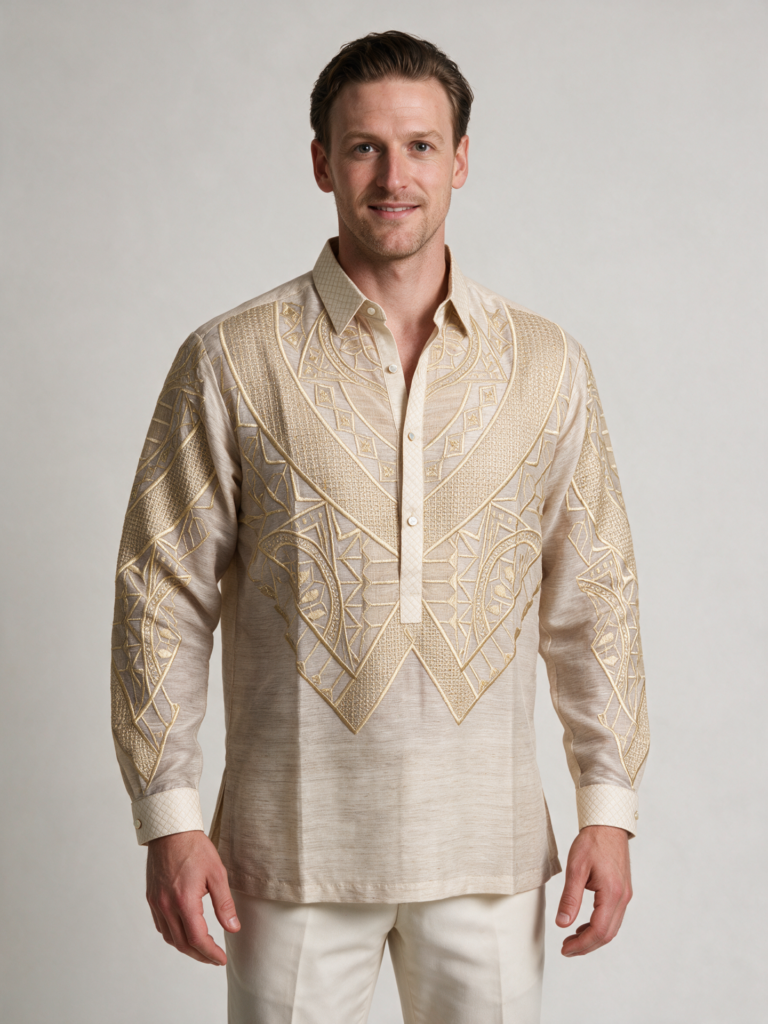
Jusilyn, $57, or $150 for the deluxe. A lightweight, single-layer synthetic weave with a fine crosshatch texture. This is the one genuinely semi-sheer fabric in the men’s line: the white camisa de chino beneath shows through faintly and softly, which is the traditional look. It is never so sheer that skin reads through it. At $57 it is the most affordable way into a real barong, and the $150 deluxe version carries bold geometric embroidery that sweeps diagonally across the front and sleeves instead of sitting only on the chest panel.
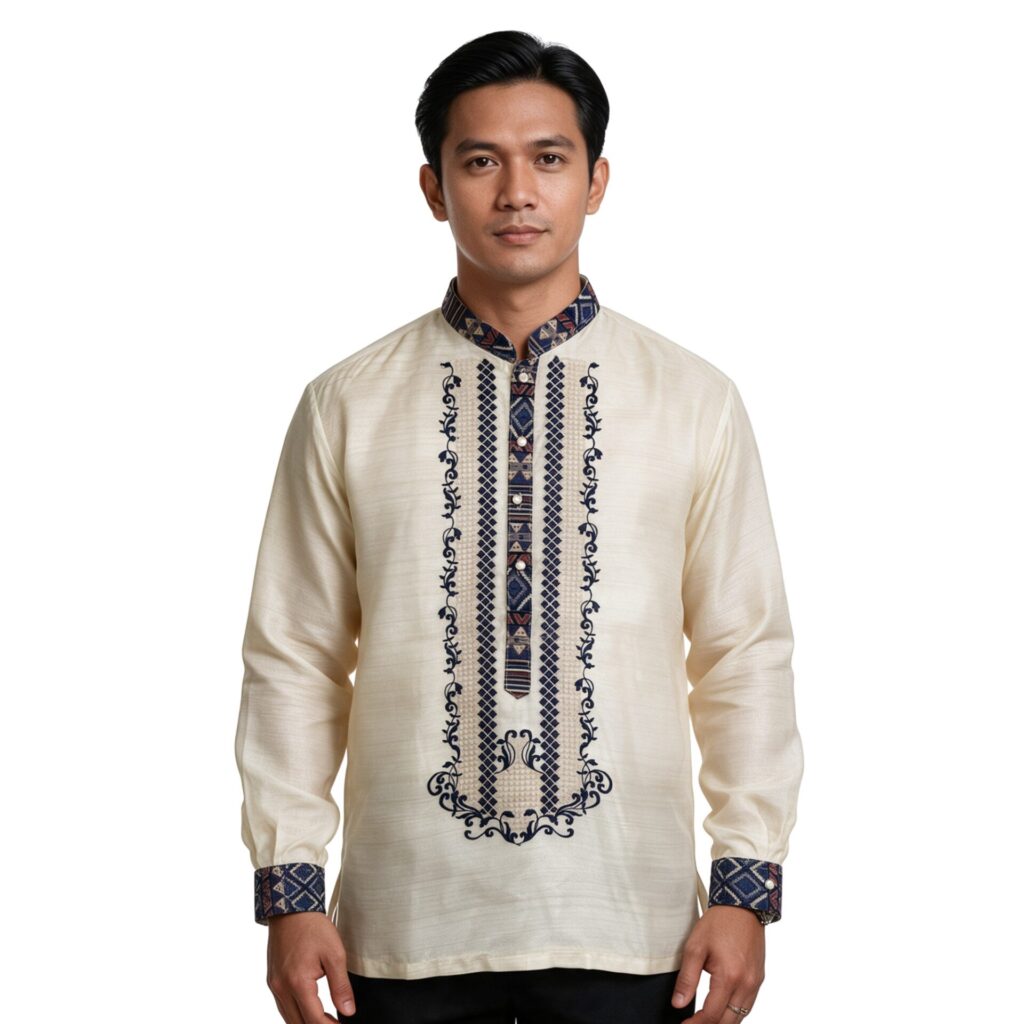
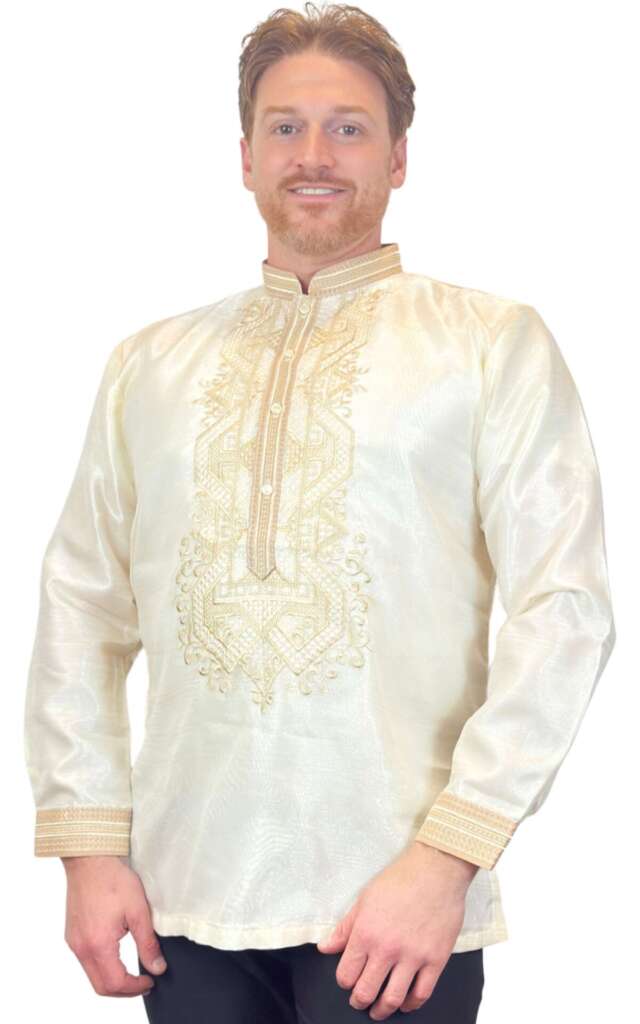
Cocoon, $150. Single layer, with a slubby crosshatch weave you can see clearly at close range and a soft dry lustre. Lightly translucent like the Jusilyn. This is our groom’s piece. The embroidery is tone-on-tone cream on oatmeal, so it reads as texture rather than contrast, and the buttons are pearl set in a slim metal rim. If you are the one getting married, this is the one.
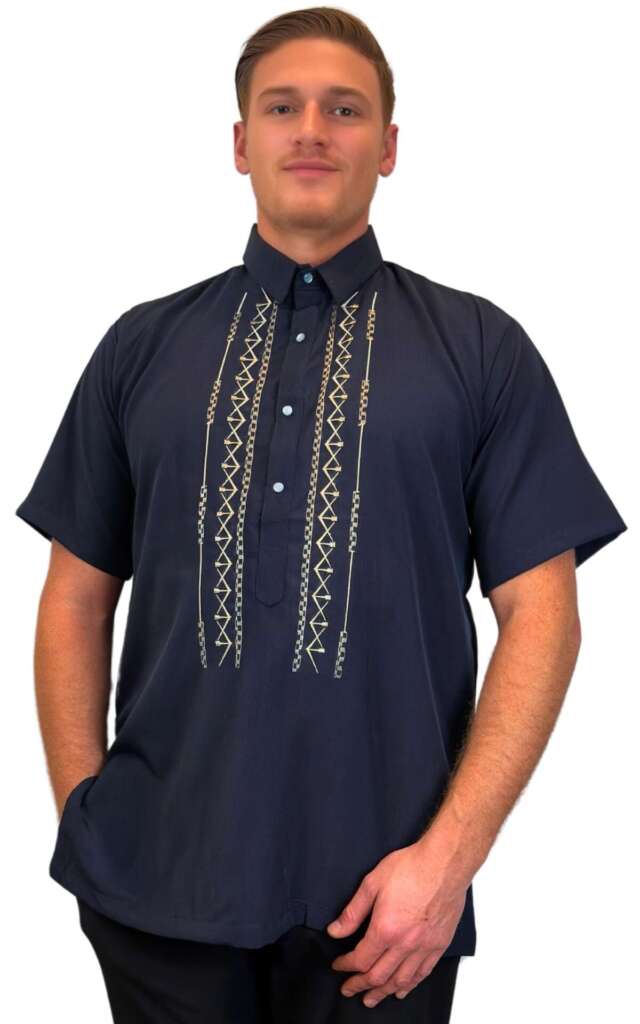
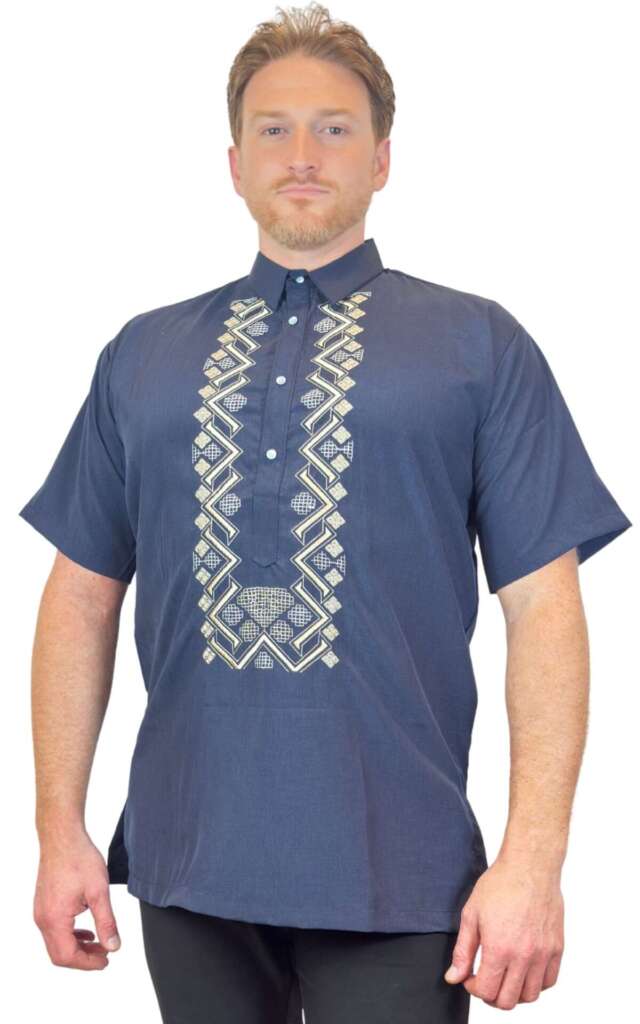
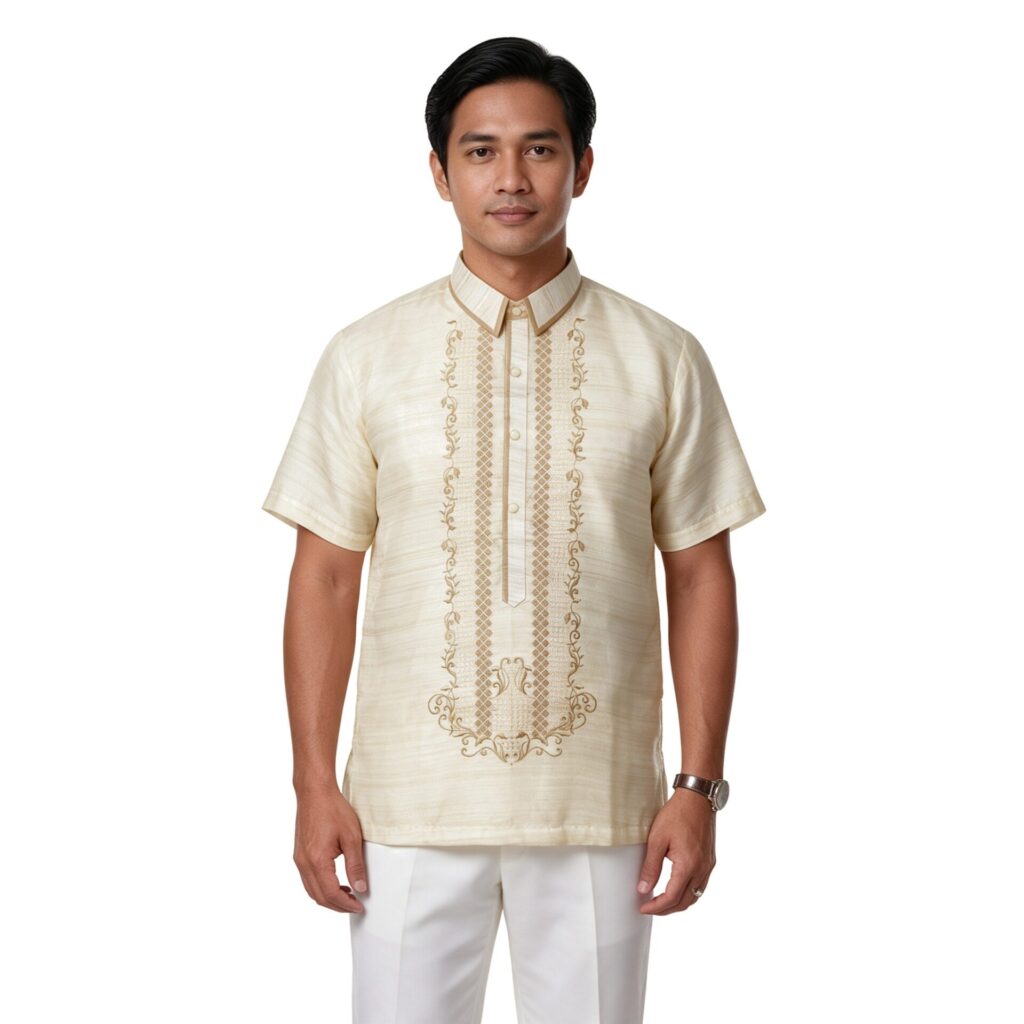
Cotton, $60 to $61. Opaque woven cotton, cut as a short-sleeve polo barong. Not a formal barong and not pretending to be one. This is for the office, for a summer party, for the second day of a wedding weekend.
Collars, sleeves and buttons
Straight point collar is the standard barong collar, two pointed ends, closing at the throat. Most of the collection.
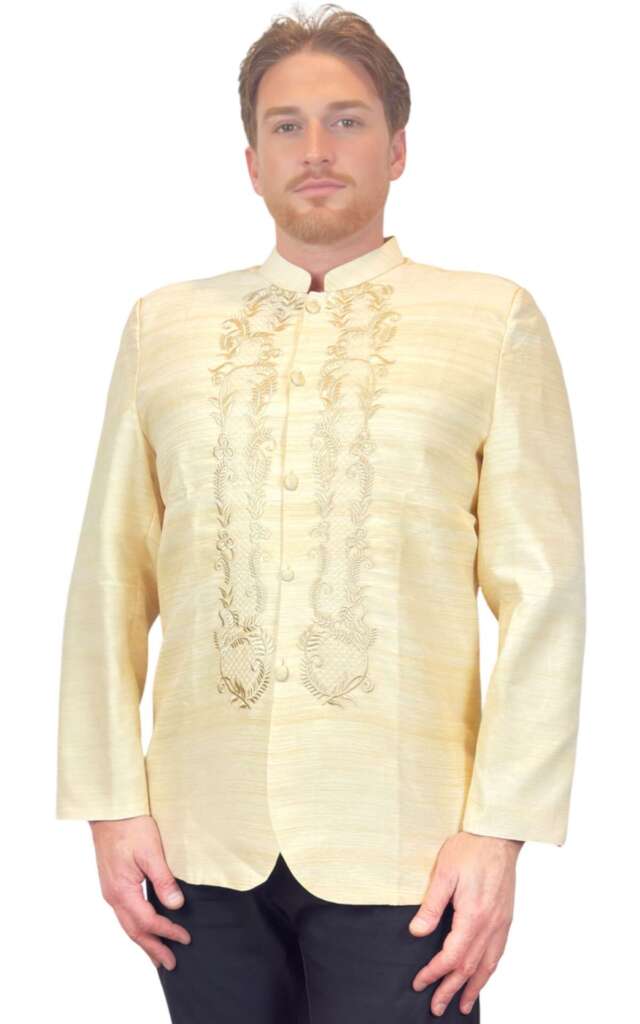
Chinese collar, also called a mandarin collar, is an upright band with no points. It reads more modern and photographs cleanly against a suit-free silhouette. We carry it in sand and in white with taupe trim.
Long sleeve is the formal default, finishing in a buttoned cuff. Short sleeve finishes just above the elbow in a plain hem and is the right call for a hot outdoor ceremony or a less formal occasion.
Most of our barongs use a half-open placket: buttons run from the collar to roughly mid-chest or mid-torso and then stop in a point, and the shirt goes on over your head. A few, like the Sand Two-Tone, use a full-length placket that buttons all the way down like an ordinary shirt. If you have any doubt about getting a barong over your head comfortably, choose a full-button style.
Sizing, and the one thing everybody gets wrong
Every size on our site is listed in true US sizing. You order the size you normally wear in a US dress shirt.
The reason this needs saying is that barongs sourced directly from the Philippines are cut to Philippine sizing, which runs roughly two sizes smaller than the US equivalent. A Philippine large is closer to a US medium. Plenty of people have ordered a barong elsewhere, received something two sizes too small, and concluded that barongs simply run small. They do, but only when nobody has done the conversion for you. We do it before the product ever reaches the page.
The fit itself is deliberately relaxed. A barong is not tailored close to the body, it hangs. If you are between sizes and want a traditional silhouette, size up. If you want something closer to modern, stay at your usual size.
Sizes run from XXS up to 3XL. Availability varies by style, so check the size selector on each barong. Still unsure? Our Fit Center walks through it.
What to wear it for
Weddings. The most common reason people arrive here. The groom typically wears the most detailed barong in the room, often in ivory or cocoon, and the entourage wears a simpler version in a coordinated colour.
Funerals. A barong is correct and traditional at a Filipino funeral. Black or navy organza, minimal embroidery.
Baptisms and debuts. Ivory and sand, long sleeve, with the family usually coordinating.
Formal events generally. Anywhere the invitation says black tie or formal, a barong is a complete answer on its own. No jacket over it, no tie, ever.
What we are
Handmade Kapamilya is a Filipino-American family business. Kapamilya means “family” in Tagalog, and that is the intended feeling: we are dressing families for the moments that matter, here and back home.
Every barong is hand-embroidered in the Philippines, and we ship it from our US warehouse, not from the Philippines. Order before 10am CT and it ships the same day, so it reaches you in days, not the months some competitors take. Your barong is not coming from overseas the week of the wedding.