The Living Legacy: A Deep Dive into the History of Filipiniana Dress and Its Modern Renaissance
You’ve received the invitation: “Filipiniana Formal.” Your heart swells with pride, but your mind immediately races with questions. Is a modern terno top too casual for a New York gala? Does the traditional Maria Clara silhouette still resonate in a 2025 ballroom?
At Handmade Kapamilya, we understand that wearing a Filipiniana is more than a fashion choice—it is a reclamation of identity. Whether you are a bride-to-be honoring your roots or a professional wanting to represent our heritage in the diaspora, understanding the history of Filipiniana dress is the first step in wearing it with the dignity it deserves. Mabuhay—welcome to the definitive guide to our shared sartorial history.
Why the History of Filipiniana Matters Today
The Filipiniana is not a static costume; it is a living, breathing archive of Philippine resistance, adaptation, and artistry. In our workshop, we often tell our clients that every stitch of a callado embroidery carries the weight of centuries. To wear a Modern Filipiniana dress is to participate in a story that survived colonial decrees and global shifts, ultimately emerging as a global symbol of Filipino elegance.
1. Pre-Colonial Genesis: The Roots of Indigenous Craftsmanship
Long before Spanish galleons touched our shores, the inhabitants of the Philippine archipelago were already masters of textile science. This era laid the foundation for what we now recognize as the history of Filipiniana dress.
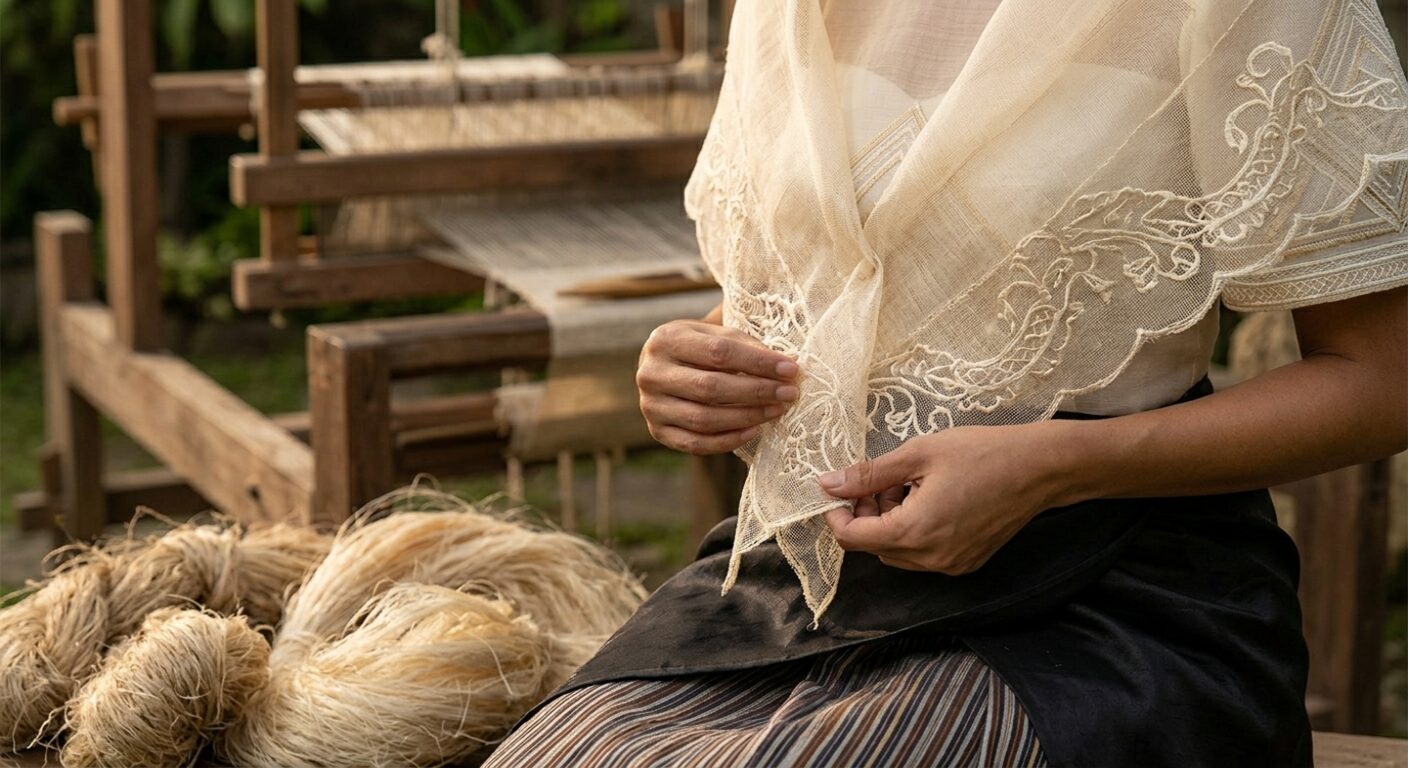
- The Power of Indigenous Fibers: Early Filipinos utilized what the land provided—Piña (pineapple fiber), Abaca (Manila hemp), and Jusi (banana silk). These fabrics were not just functional; they were breathable masterpieces suited for the tropical humidity.
- The Baro and the Saya: The earliest form of the Filipiniana was the baro’t saya (blouse and skirt). Men and women alike wore wrap-around garments and collarless jackets, often color-coded to signify social rank or warrior status.
- The Art of the Weave: From the Inabel of the North to the T’nalak of the South, weaving was a spiritual practice. At Handmade Kapamilya, we still look to these ancestral patterns when designing our Traditional Filipino Wedding Attire.
2. The Spanish Era: The Birth of the Maria Clara
The 16th to 19th centuries saw a seismic shift in the Philippine silhouette. Spanish colonization introduced European notions of “modesty,” which merged with local craftsmanship to create the iconic Maria Clara dress.
The Anatomy of the Maria Clara Ensemble:
- The Baro: A sheer, bell-sleeved blouse made of delicate piña or jusi.
- The Saya: A floor-length skirt, often in a checkered or striped pattern (known as patadyong).
- The Pañuelo: A starched, triangular scarf worn over the shoulders, serving both as a modesty veil and a canvas for intricate embroidery.
- The Tapis: A dark overskirt wrapped around the hips, a defiant nod to indigenous roots that persisted despite European influence.
This era proved that Filipino style is inherently “fusion.” We took foreign silhouettes and made them distinctly ours through the use of local textiles and the incomparable skill of our embrodidery artisans.
3. The American Influence and the Birth of the Terno
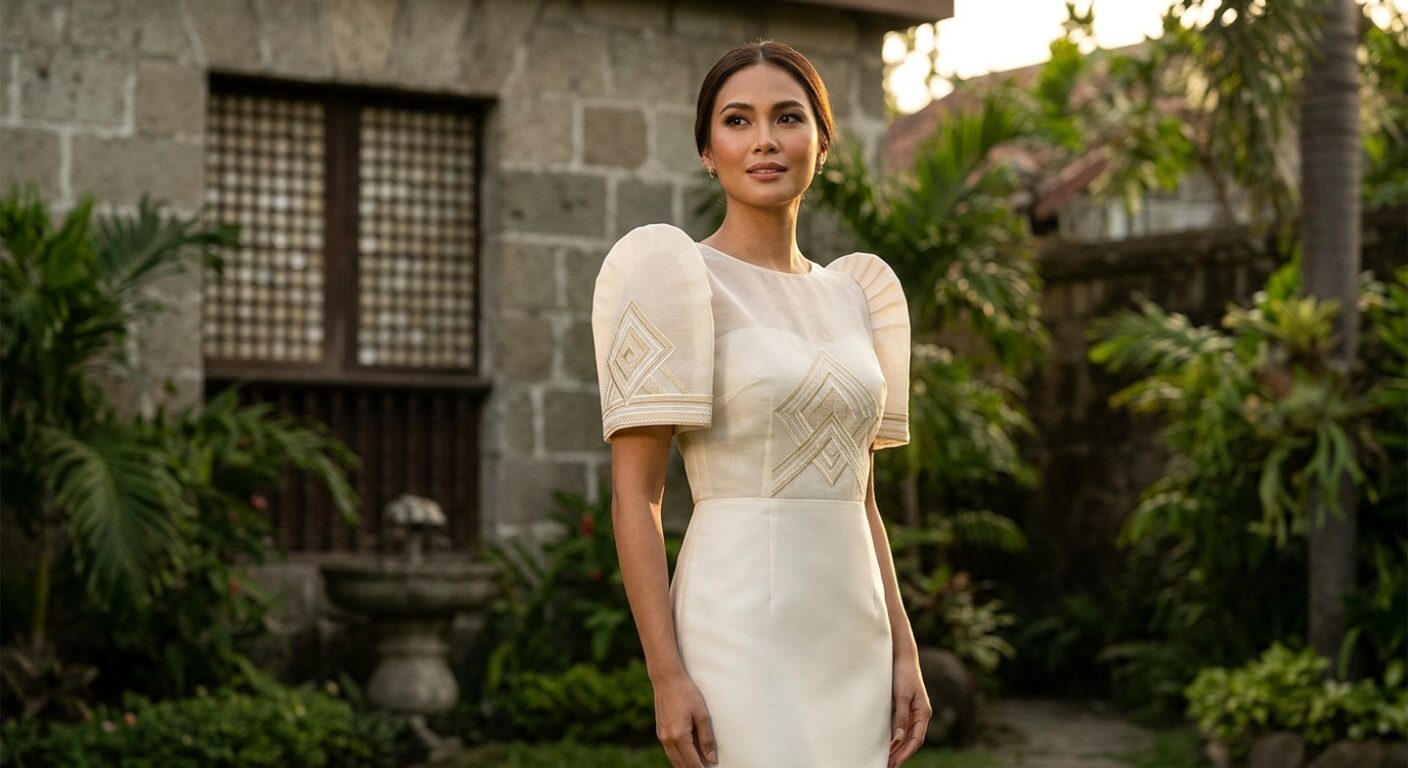
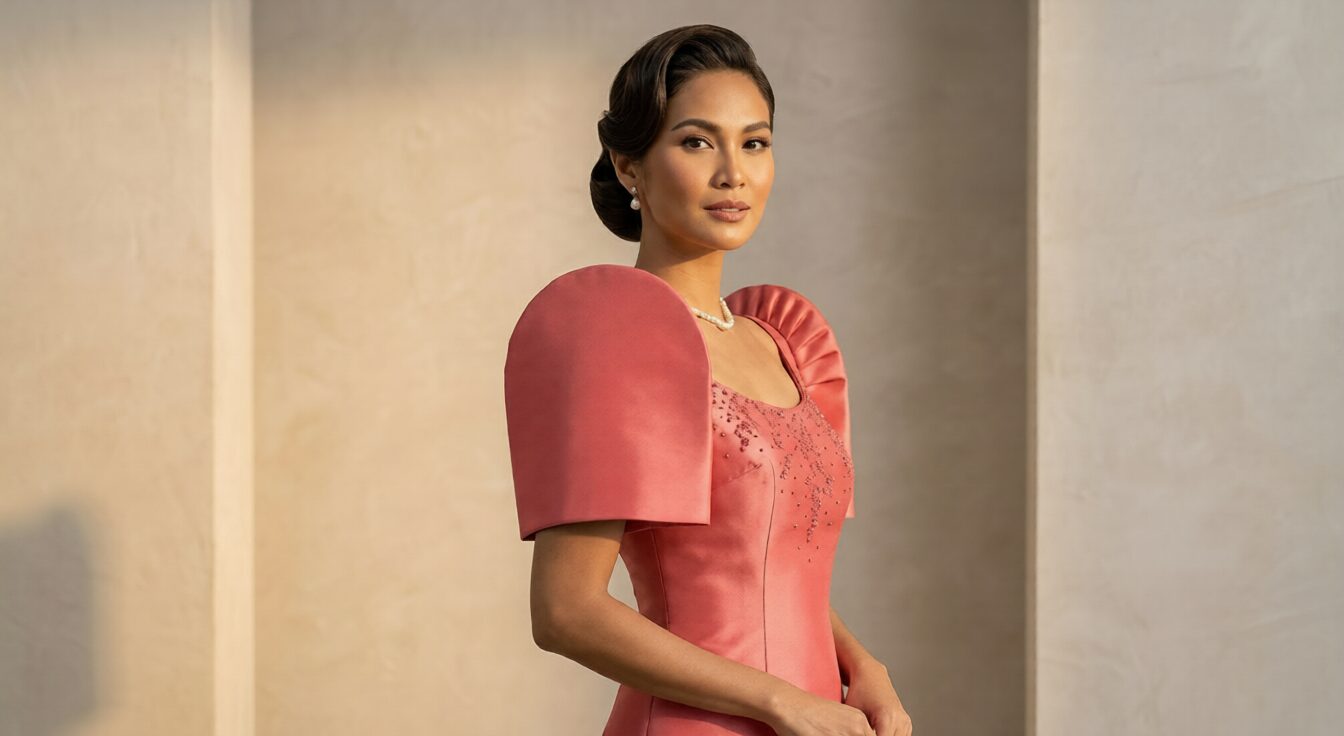
As we moved into the early 20th century, the heavy layers of the Maria Clara began to lighten. The “Terno” (meaning “matched”) emerged as a unified ensemble where the blouse and skirt were made of the same fabric.
It was during this period that the butterfly sleeves—the most recognizable feature of the History of Filipiniana dress—began to take their structural shape. Influenced by the “Gibson Girl” aesthetic of the West but grounded in the stiffened aesthetic of the pañuelo, the sleeves became a symbol of a rising, educated Filipino middle class.
4. The Golden Age: Imelda Marcos and the Terno on the World Stage
One cannot discuss Filipiniana history without mentioning the mid-20th century. During the 1960s and 70s, the Terno was elevated from national dress to high-fashion couture.
While the political history of this era is complex, its impact on fashion was undeniable. The Terno became a staple at international state dinners and global summits. Designers like Ramon Valera (the Father of the Modern Terno) removed the pañuelo and tapis, focusing on the architectural integrity of the sleeves. This era solidified the Terno as a Custom Filipiniana Dress choice for the world’s elite.
5. The Modern Renaissance: Filipiniana for the Global Diaspora
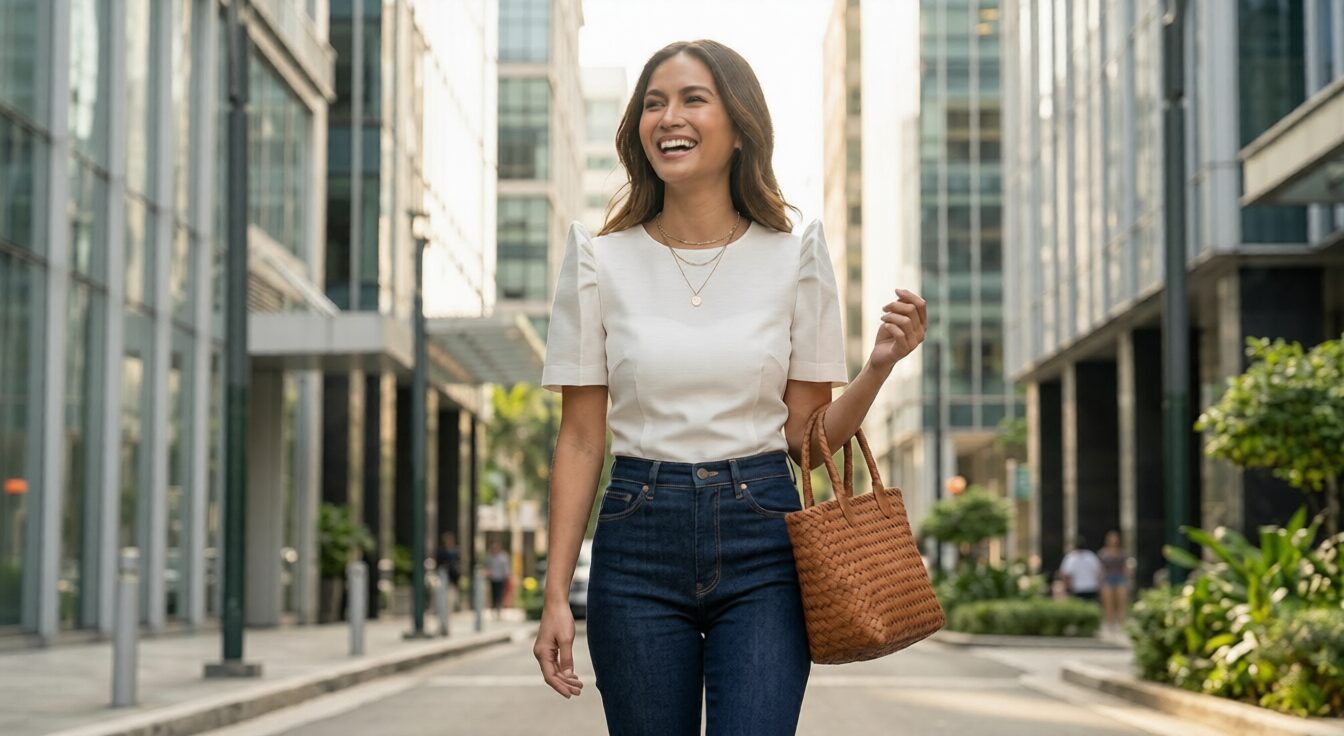
Today, we are witnessing a “Modern Renaissance.” For the Fil-Am community and the global diaspora, the Filipiniana has moved out of the “costume” box and into the “everyday” wardrobe.
Current Trends We See in Our Workshop:
- The Terno Top: A versatile piece with butterfly sleeves that can be paired with denim or tailored trousers for a business-casual look.
- Sustainable Fabrics: A return to hand-loomed Inabel and eco-friendly piña-silk blends.
- The Mestiza Bolero: A modern “pop-on” sleeve that allows any woman to transform a simple gown into a cultural statement in seconds.
- Gender-Fluid Designs: Modern interpretations that allow everyone to celebrate Filipino heritage through structured silhouettes and traditional embroidery.
At Handmade Kapamilya, we don’t just sell clothes; we provide a bridge to your ancestors. When you buy Filipiniana online from us, you are supporting local artisans in Laguna and Bulacan who have kept these traditions alive through generations of pagpupursige (perseverance).
How to Style and Care for Your Filipiniana
Whether you own a vintage heirloom or a Modern Filipiniana Dress, proper care is essential to preserve its history.
- Storage: Never hang a piña or jusi garment by the shoulders for long periods; it can distort the delicate fibers. Store them flat in acid-free tissue paper.
- Cleaning: Traditional fabrics are often “unwashable” in the modern sense. We recommend professional dry cleaning or very gentle spot-cleaning with mild soap.
- The “Sleeve” Trick: If your butterfly sleeves lose their shape, use a steamer from the inside of the sleeve to reactivate the stiffening agents.
The Handmade Kapamilya Difference
Why choose us for your Traditional Filipino Wedding Attire?
- Experience: Our lead designers have over 20 years of experience in bespoke tailoring.
- Expertise: We specialize in the “Lumban” style of hand-embroidery, a technique that takes weeks to master.
- Authoritativeness: We are a Filipino-owned brand that works directly with weaving communities, ensuring that our “Modern” designs never lose their “Traditional” soul.
- Trustworthiness: We provide transparent sizing guides and worldwide shipping, making it easy for you to celebrate your culture no matter where you live. Maraming salamat for trusting us with your most important moments.
Conclusion: Wear Your Story
The history of Filipiniana dress is a journey of metamorphosis. From the raw, indigenous beauty of the pre-colonial era to the sharp, structural elegance of the modern terno, our clothing tells the world who we are: resilient, artistic, and deeply connected to our roots.
Ready to start your own chapter in this history? [Explore our New & Now Modern Filipiniana Collection] — From elegant boleros to custom wedding ternos, find the piece that speaks to your soul.
Internal Linking & Further Reading
- Learn more about the men’s counterpart: [The Ultimate Guide to the Barong: Modern Styles, Stunning Elegance]
- Planning a wedding? [Barong Tagalog Style Guide (USA): How to Choose & Wear]