Author: mplsoul
Filipino Wedding Traditions: A Beautiful Guide to Rituals & Meaning
Explore the Meaning, Rituals, and Timeless Elegance Behind Traditional Filipino Weddings
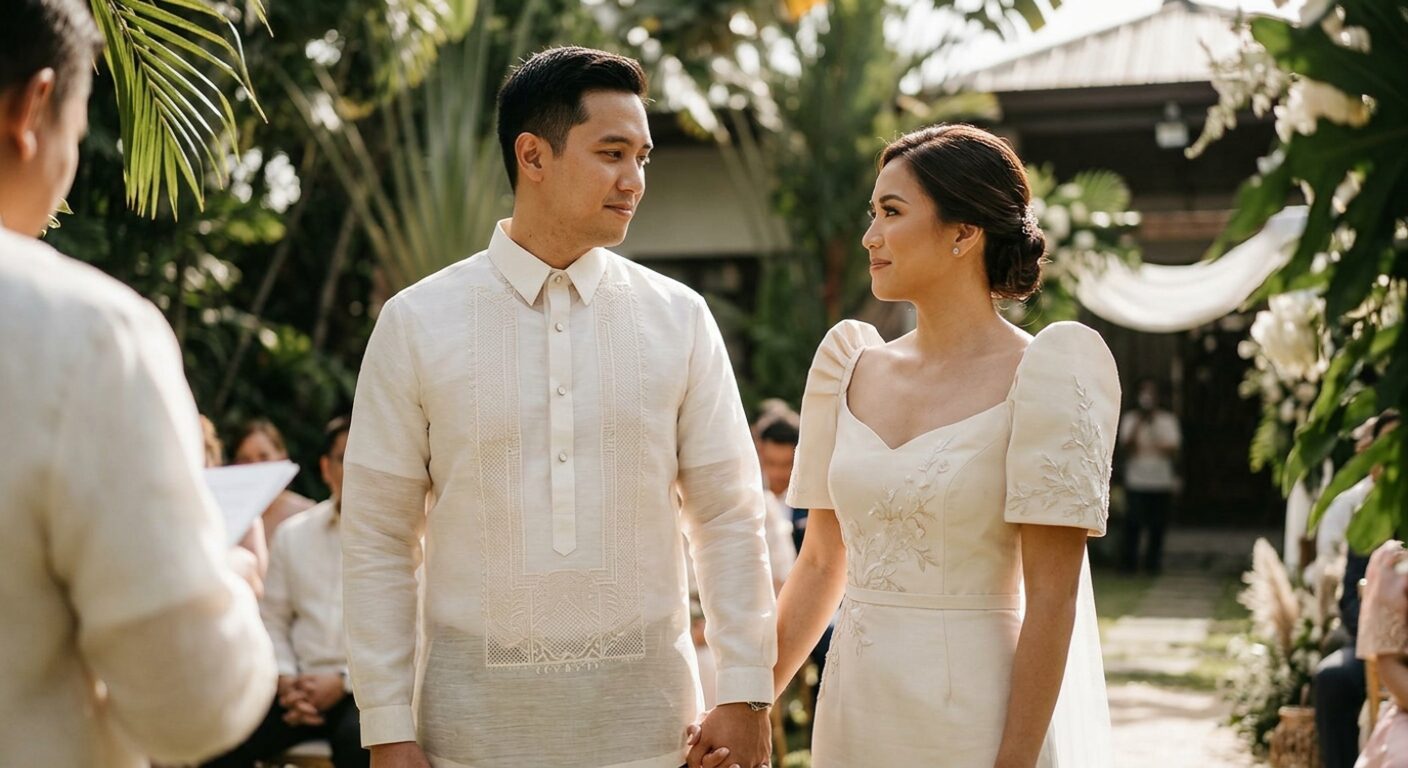
Planning your kasalan (wedding) should be one of the happiest seasons of your life. However, honoring deep cultural roots while meeting modern expectations can feel overwhelming. Still, understanding the meaning behind each tradition makes the journey more meaningful.
Whether you are a Fil-Am couple reconnecting with your heritage or a guest learning proper etiquette, this guide will help you understand Filipino wedding traditions with clarity and heart.
At Handmade Kapamilya, we believe a wedding is more than a union of two people. Instead, it is a living story of history, family, and bayanihan (community spirit). In fact, every hand-embroidered Barong Tagalog we create carries ancestral meaning within every stitch.
Let’s walk through these traditions step by step.
Why Filipino Wedding Traditions Still Matter
In today’s fast-changing world, traditions act as a strong anchor. They are not just rituals. Rather, they are symbols of unity, protection, and lasting love.
Moreover, for the Filipino diaspora, these customs build a bridge back to home. Even if miles away, families stay connected through prayer, fabric, and shared meaning.
The Pre-Wedding Ritual: Pamamanhikan
Before the wedding day, couples often go through Pamamanhikan. Traditionally, the groom’s family visits the bride’s home to formally ask for her hand in marriage.
- Symbolism: It represents the joining of two families.
- Modern practice: Today, it is often a formal dinner where both families meet. Additionally, they discuss wedding plans and shared traditions.
As a result, this moment builds unity before the ceremony even begins.
The Big Four Symbols of a Filipino Catholic Wedding
If you’ve ever attended a Filipino Catholic wedding, you’ve seen the beautiful ritual involving secondary sponsors (Ninongs and Ninangs). Here is the “meat” of the ceremony:
- The Lighting of the Unity Candles
Two candles are lit by the sponsors, and then the bride and groom use those flames to light a single center candle.
- The Meaning: It signifies the presence of God in the union and the light that will guide the couple through their new life together.
- The Arras (The 13 Unity Coins)
The groom gives the bride 13 gold or silver coins, known as Arras.
- The Meaning: Historically, this represented the groom’s pledge to provide for the family’s welfare. Today, it symbolizes mutual stewardship of their future prosperity. Why 13? One for each month of the year, plus one extra for the “unexpected” or as a symbol of Christ and the 12 apostles.
- Pro-Tip: If you are looking for authentic Unity Coins for your ceremony, ensure they are kept in a decorative cage or pouch that matches your motif.
- The Putting on of the Veil
Sponsors drape a white veil over the groom’s shoulder and the bride’s head.
- The Meaning: It symbolizes being “clothed as one.” It represents the couple’s commitment to protecting each other and the world seeing them as a single unit.
- The Yugal (The Unity Cord)
A silken cord or a strand of flowers/pearls is placed over the couple in a figure-eight shape (infinity).
- The Meaning: This signifies an unbreakable bond. No matter what challenges life throws, the couple is bound together forever.
Cracking the Dress Code: What to Wear
This is where Handmade Kapamilya’s expertise truly shines. In our years of dressing grooms and entourages, we’ve found that the attire is the most visible way to honor the culture.
The Barong Tagalog: The National Formal Wear
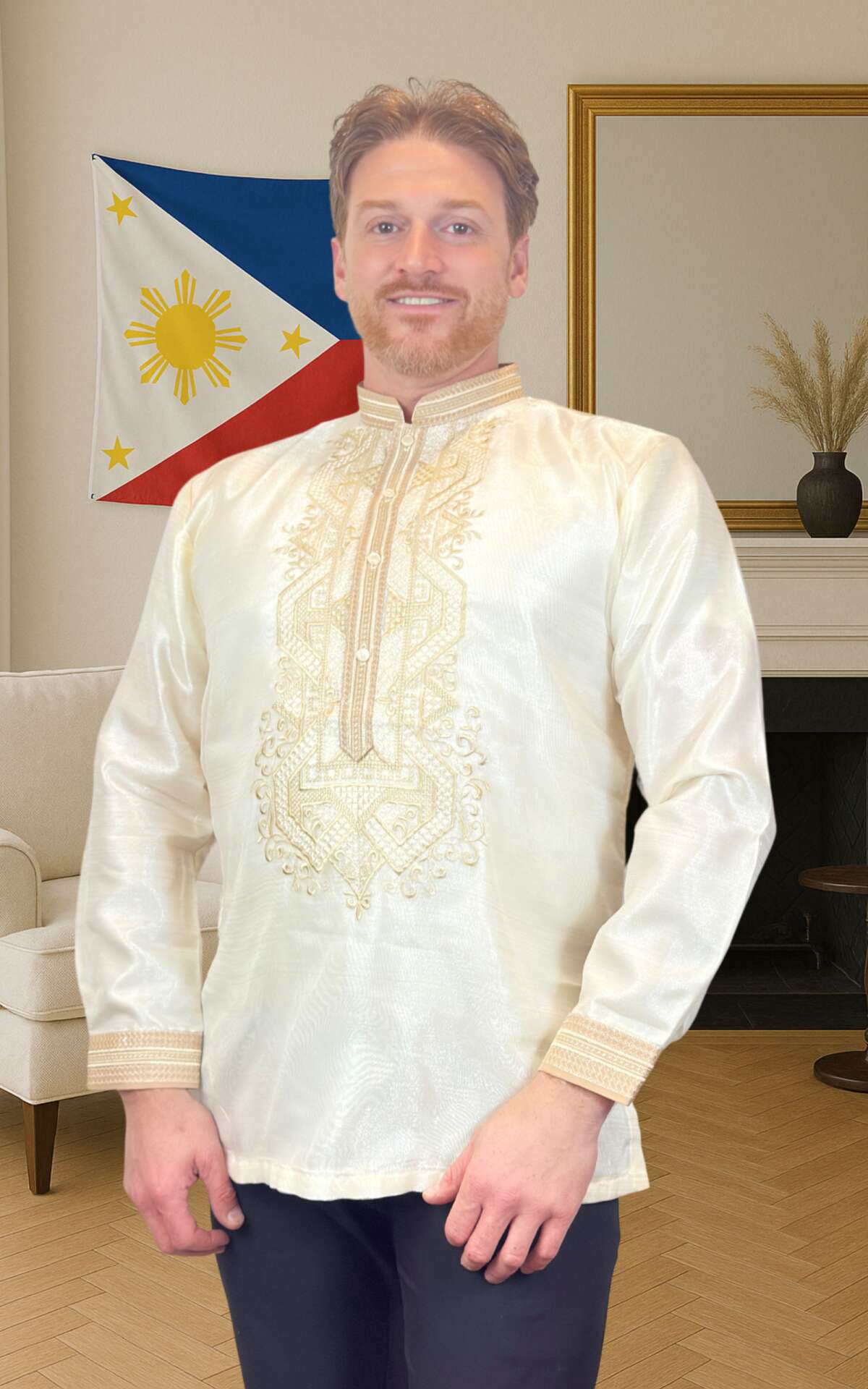
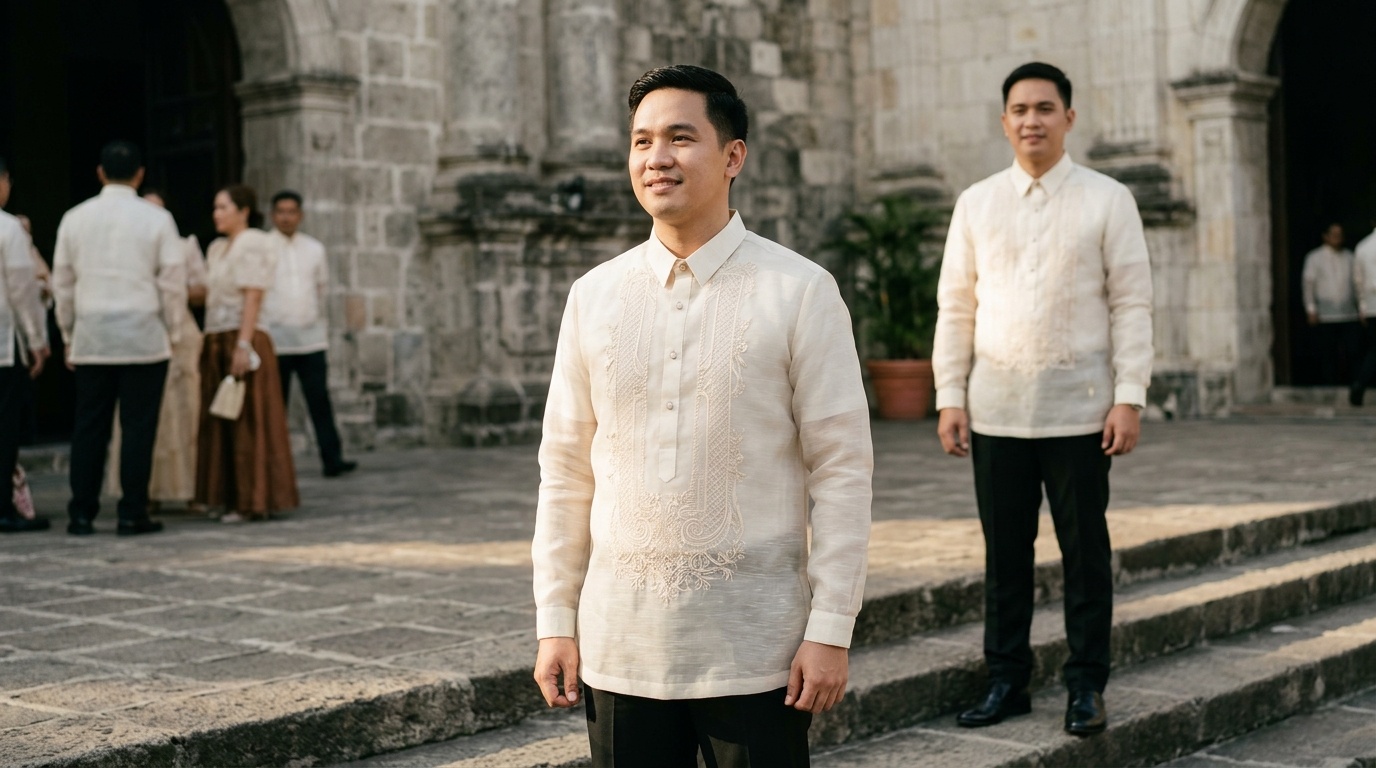
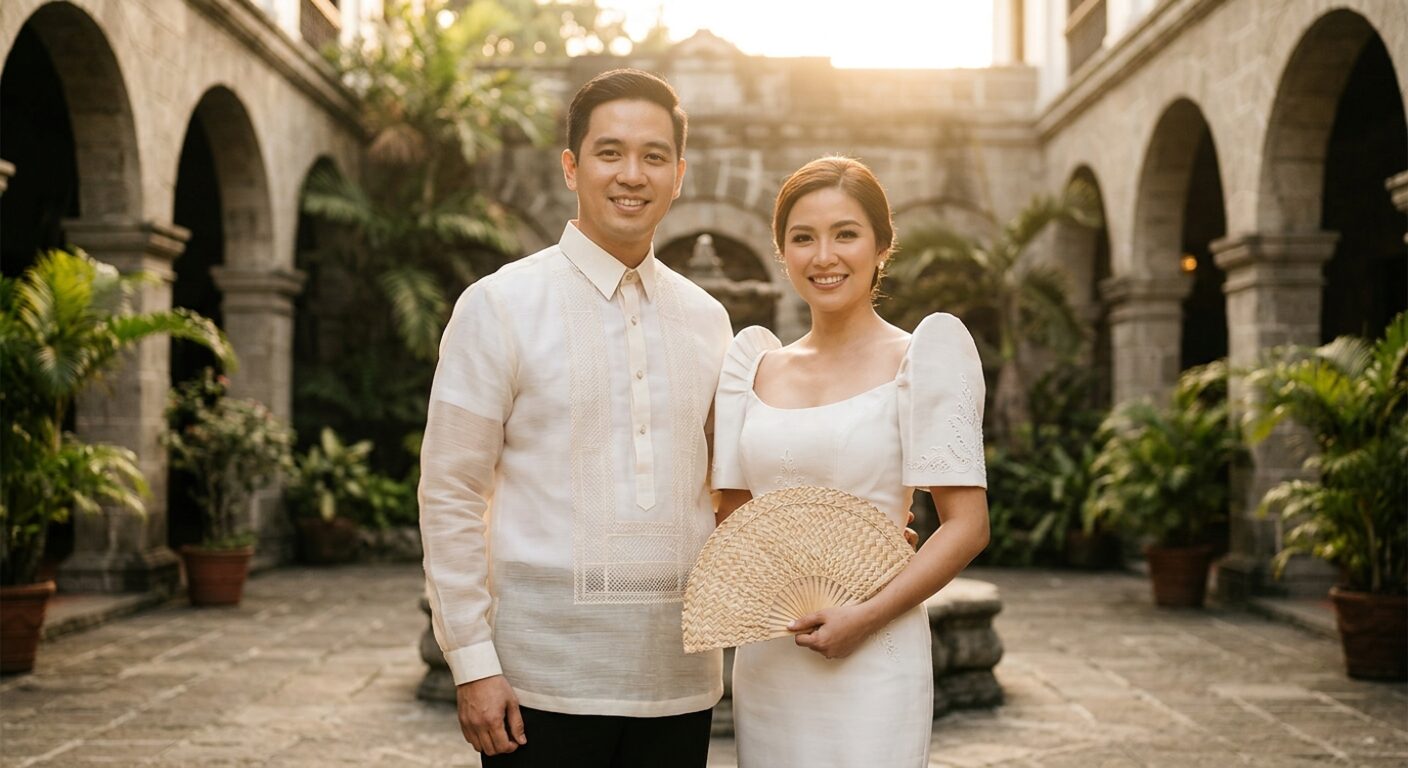
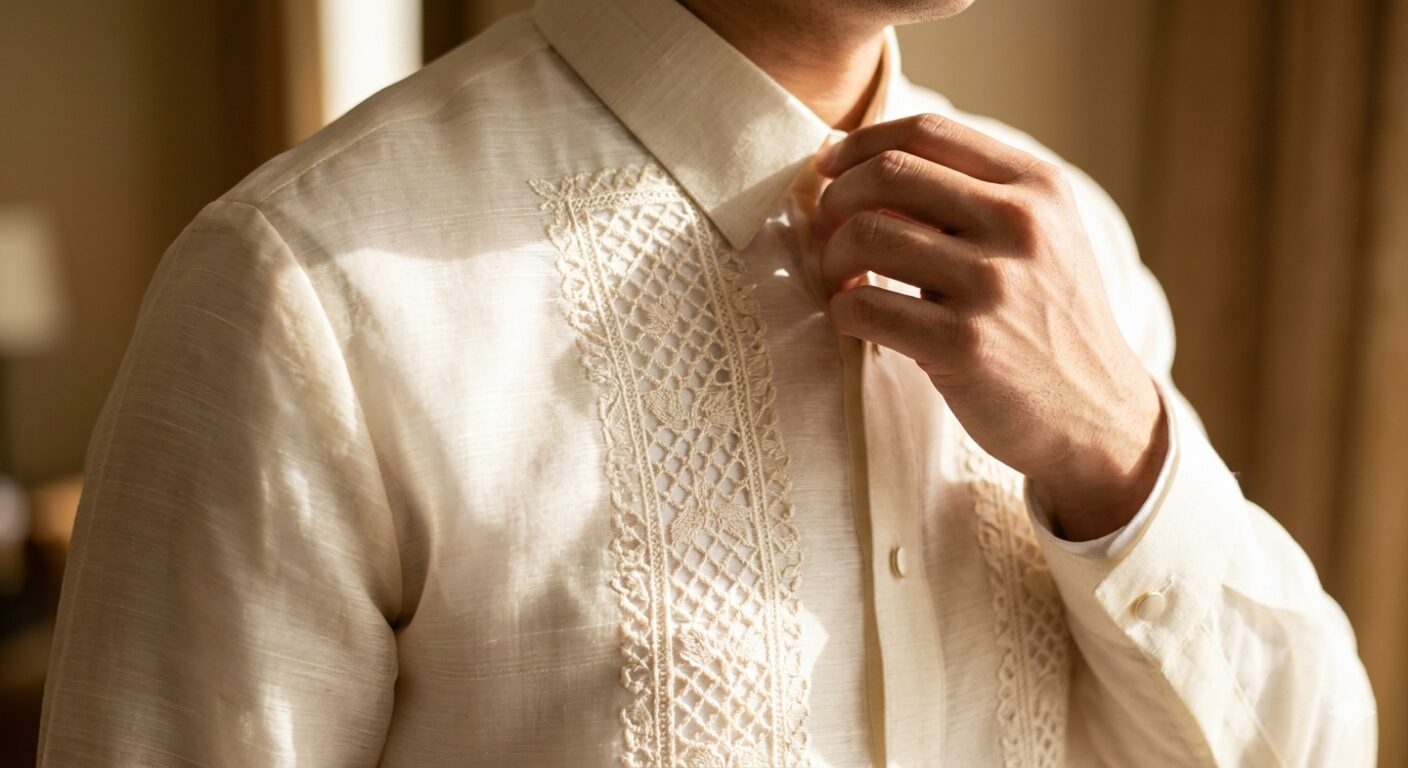
The Barong Tagalog is the traditional formal wear for men. It is light, elegant, and worn untucked.
-
Fabric Types
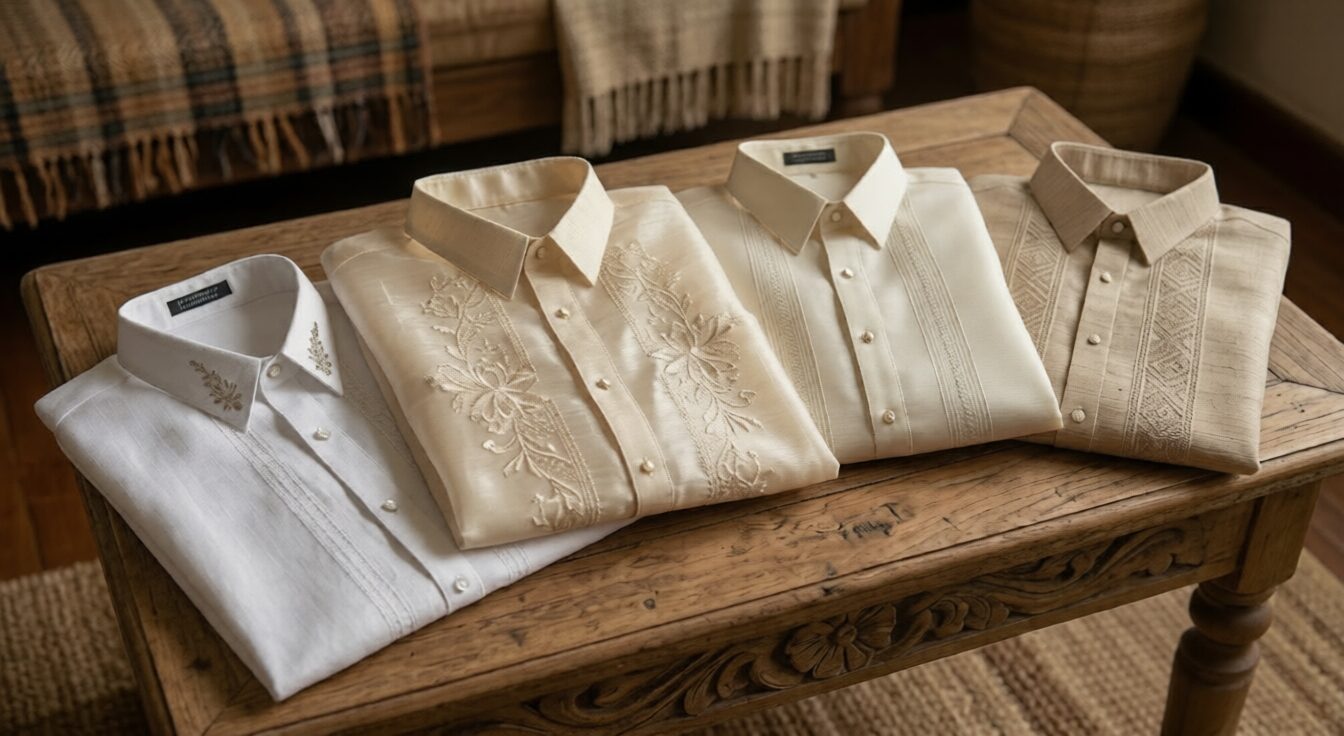
- Piña: The finest and most traditional fabric
- Jusi: A more affordable silk-like option
- Cocoon: A modern structured fabric with a clean finish
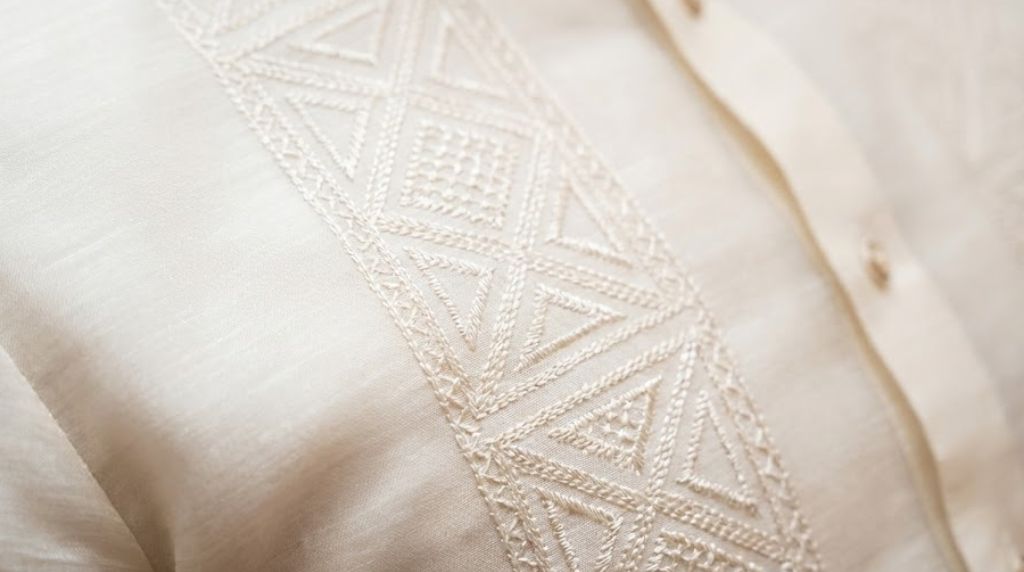
In addition, quality matters. Hand embroidery shows true craftsmanship and cultural value.
Important: Never tuck in a Barong. It is designed to flow freely.
The Filipiniana: Elegance and Power
Women’s formal wear has evolved while keeping tradition alive.
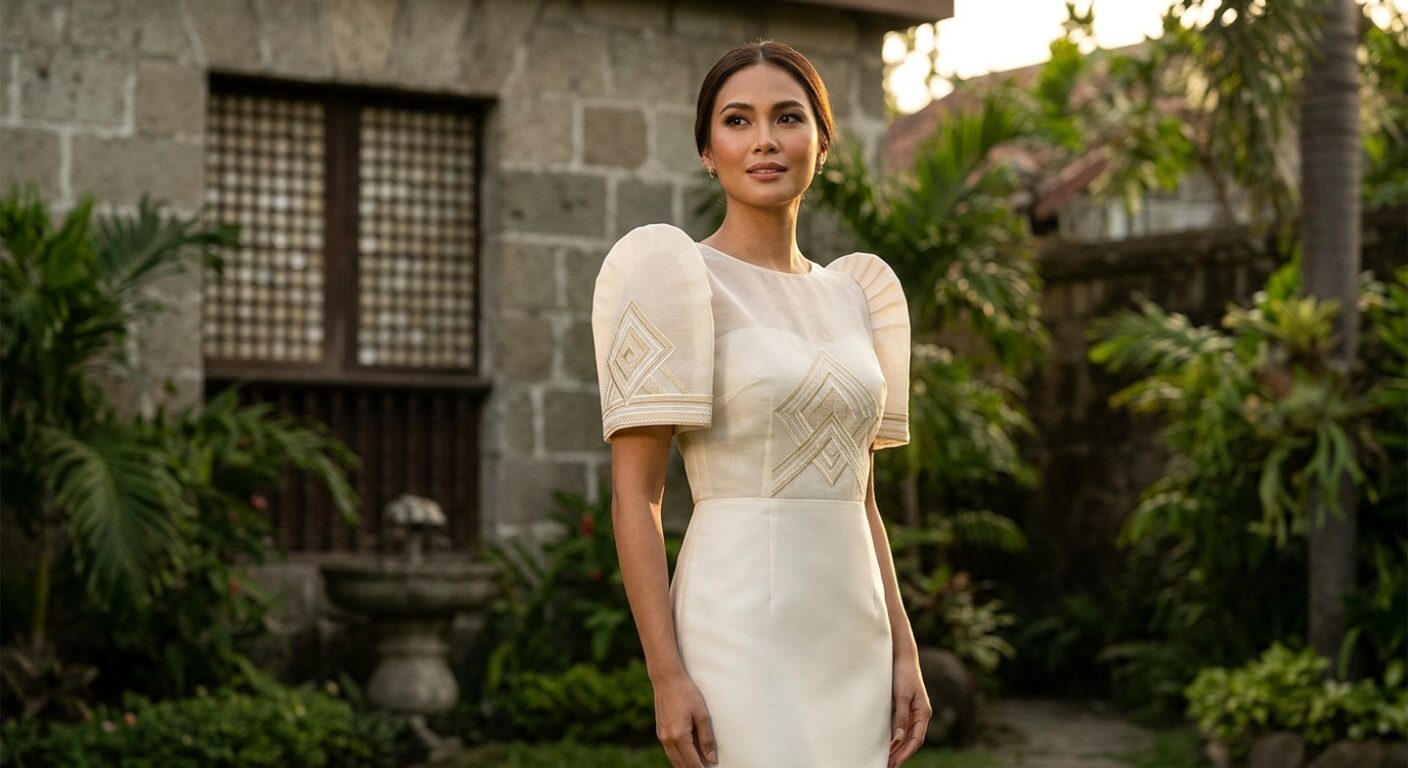
- Terno: Known for its butterfly sleeves
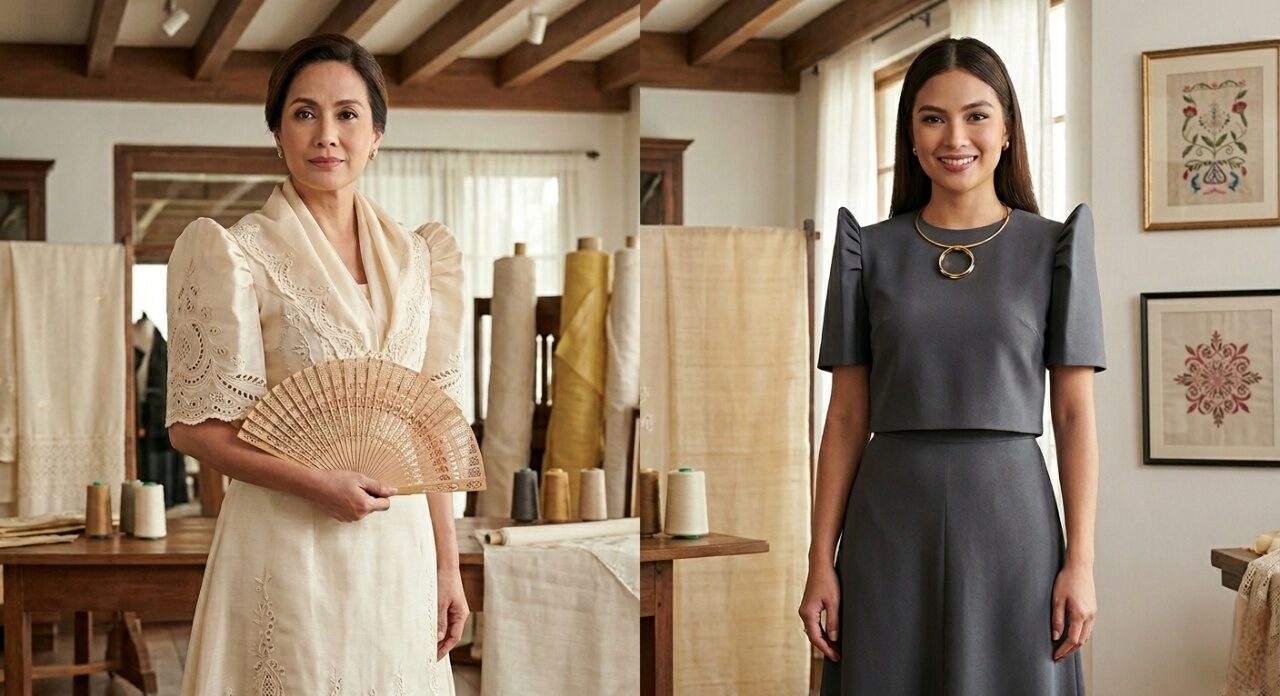
- Mestiza Dress: Elegant and fitted with lace details
- Barong Dress: A modern style inspired by Barong embroidery
Today, these styles blend tradition with modern fashion beautifully.
The Reception: Food, Dance, and “Money”
The reception is where joy and community come alive. It is also where tradition becomes celebration.
The Money Dance (Pangalay)
During the first dance, guests pin money onto the couple’s clothes.
- The Expert View: Some Western observers might find this “tacky,” but in Filipino culture, it is a gesture of love and a “seed” for the couple’s new home. It’s a way for the community to say, “We’ve got your back.”
The Feast (Handaan)
No Filipino wedding is complete without a Lechon (roasted pig) at the center of the table. It is a symbol of abundance. Along with Pancit (for long life) and Lumpia, the food is the ultimate love language of the Kapamilya.
Expert Advice for the Modern Fil-Am Couple
We often see grooms who are nervous about wearing a Barong for the first time. Salamat for trusting us with your big day! Here are three tips for success:
- The Undershirt is Key: Always wear a long-sleeved white Camisa de Chino or a high-quality white crew-neck t-shirt under your Barong. Seeing skin through the sheer fabric is a major “don’t.”
- Custom vs. Ready-to-Wear: If you have a unique build, buy Filipino wedding attire that is custom-tailored. A Barong that is too tight loses its elegant drape; one that is too big looks like a bag.
- Respect the Embroidery: Each pattern often has regional significance. Some represent the vine of a pumpkin (symbolizing growth), while others are purely geometric. Ask about the story behind your garment!
Your Heritage, Your Day
Filipino wedding traditions are more than just items on a checklist—they are a way to bring your family’s history into your future. From the clink of the Arras to the majestic sleeves of a Mestiza dress, these elements tell the world who you are and where you come from.
Are you ready to find the perfect attire for your special day? Whether you’re looking for a Barong Tagalog for sale or a stunning Modern Filipiniana, we are here to help you dress with pride and elegance.
Maraming salamat po for letting us be a part of your journey.
More to Explore in Handmade Kapamilya:
Filipiniana Dress Guide: A Simple Look at Heritage, Style & Elegance
The Ultimate Guide to the Filipiniana Dress: From Traditional Roots to Modern Masterpieces
Kumusta po! Whether you are a Fil-Am bride preparing for your big day or a guest invited to a prestigious Filipino gala, you’ve likely faced the “heritage dilemma.” You want a look that screams cultural pride, but you also want to feel contemporary, comfortable, and chic.
At Handmade Kapamilya, we believe that wearing a Filipiniana dress—from modern to traditional styles—is more than a fashion choice; it is an act of reclaiming identity. In our workshop, we see daily how a single garment can bridge the gap between the archipelago and the diaspora. In this guide, we will walk you through the rich history, the essential fabrics, and the modern styling rules that every Pinay (and Pinay-at-heart) should know.
The Cultural Significance: Why the Filipiniana Matters
The Filipiniana is not just “a dress.” It is a visual history of the Philippines. From the pre-colonial Baro’t Saya to the iconic Terno popularized in the 20th century, these garments represent the resilience and adaptability of Filipino women.
When you wear an authentic piece, you aren’t just following a dress code; you are honoring the “Handmade” tradition of artisans from places like Lumban and Kalibo. Mabuhay ang sining ng Pilipinas! (Long live Philippine art!)

Traditional Filipiniana: The Pillars of Heritage
To understand the modern Filipiniana, we must first pay respects to the classics. If you are attending a “Filipiniana Formal” event, these are the silhouettes you need to know.
1. The Maria Clara (Traje de Mestiza)
Named after the heroine in Dr. Jose Rizal’s Noli Me Tangere, this is the quintessential colonial-era dress. It consists of four parts:
- Baro: A fine, bell-sleeved blouse.
- Saya: A floor-length skirt.
- Pañuelo: A starched, triangular scarf worn over the shoulders (essential for that “Maria Clara” modesty).
- Tapis: A dark overskirt wrapped around the waist.
2. The Classic Terno (The Butterfly Sleeve)
The word Terno literally means “matched.” In our workshop, we define the Terno by its most striking feature: the Butterfly Sleeves. Unlike Western puff sleeves, these are stiff, arched, and perfectly symmetrical. They represent the strength of the modern Filipina.
3. The Balintawak
Think of the Balintawak as the “country version” of the Terno. Traditionally worn for fiestas and rural outings, it usually features shorter butterfly sleeves and a tapis made of colorful, woven fabrics.

The Modern Shift: Filipiniana for the 21st Century
The most frequent question we get at Handmade Kapamilya is: “How can I wear Filipiniana without looking like I’m in a costume?” The answer lies in Modern Filipiniana. Today’s designers are deconstructing the classic silhouettes to fit a global lifestyle.
1. The Filipiniana Bolero & Alampay
For the woman who wants versatility, the Filipiniana bolero is a game-changer. These are detachable butterfly-sleeve jackets that can be worn over a simple cocktail dress or even a tailored jumpsuit. It’s the perfect “entry-point” into Filipino formal wear.
- Pro Tip: Pair a white Organza bolero with black trousers for a “Power Barong” look.
2. The Modern Terno Gown
Modern versions often simplify the skirt, moving away from the heavy Saya and toward sleek A-lines or mermaid silhouettes. At our workshop, we focus on the “Clean Terno”—where the butterfly sleeves remain the focal point, but the fabric is a modern stretch crepe or silk.
3. The Barong Tagalog for Women (Female Barong)
Traditional “men’s” fashion has crossed over. The Women’s Barong (or Barong Dress) utilizes the same sheer fabrics like Jusi or Piña but is tailored to a woman’s silhouette. It’s the ultimate choice for business functions or semi-formal weddings.
Fabric Science: The Texture of the Philippines
When you buy a modern Filipiniana, you aren’t just paying for the design; you are paying for the textile science. Understanding these fabrics is the key to E-E-A-T (Experience and Expertise) in Filipino fashion.
|
Fabric Type |
Origin |
Characteristics |
Best For |
|
Piña |
Pineapple Fiber |
The “Queen” of fabrics. Soft, translucent, and incredibly expensive. |
Weddings & Heirloom pieces. |
|
Jusi |
Silk/Synthetic Blend |
More durable than Piña, with a distinct mechanical weave. |
Professional events & Guest attire. |
|
Cocoon Silk |
Silkworm Silk |
Offers a luxurious sheen and structured feel. |
Modern Terno sleeves. |
|
Organza |
Synthetic |
Lightweight and budget-friendly while maintaining “stiffness.” |
Boleros & Debutante dresses. |
|
Inabel / Ethnic |
Handwoven (Ilocos) |
Thick, cotton-based, and features indigenous patterns. |
Casual Filipiniana & Outerwear. |
How to Style Your Filipiniana: The “Kapamilya” Rules
1. The Jewelry Rule
Traditionally, Filipiniana is paired with Philippine South Sea Pearls. However, if you are wearing a modern Filipiniana dress, don’t be afraid to experiment. Gold “Tambourine” necklaces (traditional filigree) add an air of authenticity to a modern cut.
2. The Footwear
Avoid chunky sneakers. For traditional gowns, a classic pump or an elegant “Bakya” (wooden clog) inspired heel works best. For modern sets, a sleek stiletto maintains the long lines of the Terno.
3. The “Abaniko” (Fan)
Never underestimate the power of a hand-painted fan. It isn’t just a prop; in the humidity of a summer wedding (or a crowded gala), it is a survival tool. Salamat us later!
Care and Maintenance: Preserving Your Heritage
A high-quality Filipiniana is an investment. Because these fabrics (especially Jusi and Piña) are delicate, you must treat them with respect.
- Never Machine Wash: The agitation will destroy the embroidery and the “stiff” butterfly sleeves.
- Hand Wash Only: Use a very mild detergent and cool water.
- The “Hanger” Rule: Never fold a Terno. The butterfly sleeves have a specialized insert or starching method. Store them on a padded hanger inside a breathable garment bag.
Why Choose Handmade Kapamilya?
In our workshop, we don’t mass-produce. Every stitch tells a story of a family—a “Kapamilya”—dedicated to their craft. When you choose a piece from our Modern Filipiniana Collection, you are supporting:
- Direct-to-Artisan Fair Trade: No middleman, just fair wages for our weavers.
- Custom Sizing: We understand the diaspora body. We offer bespoke tailoring to ensure your butterfly sleeves sit perfectly on your shoulders.
- Cultural Accuracy: We consult with historians to ensure our “modern” takes never disrespect the “traditional” roots.
Wear Your Story
The journey of the Filipiniana dress from modern to traditional mirrors the journey of the Filipino people: we evolve, we adapt, but we never forget our roots. Whether you choose the full drama of a Maria Clara or the understated elegance of a Jusi bolero, you are carrying the spirit of the Philippines with you.
Ready to find your perfect fit?
Shop the Handmade Kapamilya Modern Filipiniana Collection Here.
Salamat po for reading! We can’t wait to see how you style your heritage.
Explore More Filipino Wedding & Handmade Kapamilya Content:
Filipiniana Traditions: A Powerful Story of Heritage
Filipiniana Traditions: Ultimate Guide to Cultural Attire
Kumusta po, Kapamilya! Have you ever stood before a mirror, adjusting the sharp collar of a Barong Tagalog or the iconic butterfly sleeves of a Terno, and felt a sudden, profound connection to ancestors you’ve never met? This desire to bridge the gap between our modern lives in the diaspora and our vibrant roots in the Philippines is what drives us every day in our “Handmade Kapamilya” workshop.
Filipiniana traditions are not merely “costumes” to be worn once and forgotten; they are an exquisite tapestry of customs and practices that reflect the rich and diverse cultural heritage of the Philippines. Through generations, these cherished traditions have become an integral part of Filipino life, celebrating the nation’s history, values, and identity. In this comprehensive guide, we will unravel the vibrant fabric of Filipiniana traditions and discover the beauty and significance they hold for Filipinos everywhere.
The Heart of Filipiniana: A Living History
To understand Filipiniana traditions, one must first look at the evolution of the garments themselves. Our national attire is a primary artifact of Philippine resistance and adaptation.
- Pre-Colonial Origins: Before Spanish arrival, the native population wore collarless jackets crafted from local linens, suited for the tropical climate.
- Spanish Influence: During the colonial era, the Barong Tagalog underwent a forced evolution, with some folklore suggesting a decree required native men to wear transparent shirts to prevent the concealment of weapons.
- The Rise of the Maria Clara: Inspired by the 19th-century heroine of Jose Rizal’s Noli Me Tangere, this four-piece ensemble—consisting of a baro (blouse), saya (skirt), pañuelo (fichu), and tapis (overskirt)—symbolized the fusion of indigenous and Spanish aesthetics.
- Modern Interpretations: Today, modern Filipiniana represents a flexible, ever-changing idea that combines cultural mores with elegant silhouettes, integrating traditional techniques into daily wear like work attire and graduations.
Flores de Mayo: A Floral Filipiniana Extravaganza
Flores de Mayo, or the “Flowers of May,” is a cherished Filipino tradition celebrated throughout the entire month of May. This religious and cultural event pays homage to the Virgin Mary and honors her with colorful and elaborate floral offerings.
In our experience, this is the season where the “Modern Filipiniana” truly shines. Young women and girls participate in processions and parades, carrying ornate bouquets and delicately woven garlands. They often wear lightweight fabrics like Organza or Jusi, which allow for breathability during the humid May afternoons. Flores de Mayo showcases the Filipinos’ deep devotion and appreciation for the beauty of nature, artistry, and spirituality.
Santacruzan: A Graceful Filipiniana Pageant
Santacruzan is a grand pageant held in May, typically towards the end of the Flores de Mayo celebrations. This tradition commemorates the discovery of the Holy Cross by Empress Helena, the mother of Constantine the Great.
The Queen of the Pageant: The Terno
The highlight of any Santacruzan is the Elena or Queen of Queens. She typically wears a Terno, characterized by its iconic, stiffened butterfly sleeves.
- Fabric Choice: High-end Ternos are often made from Piña, a fabric hand-loomed from pineapple leaf fibers, representing the pinnacle of Filipino craftsmanship.
- Symbolism: The Santacruzan features a procession of young ladies representing biblical characters, each elegantly dressed in Filipiniana gowns that embody grace, beauty, and faith.
The Barong Tagalog: The Men’s National Formal Attire
For the men, the Barong Tagalog stands as the ultimate symbol of Filipino identity. It is cultural identity, practical elegance, and a statement of pride. Whether you are a groom, a guest at a gala, or attending a business function, knowing your Barong is essential.
Choosing Your Fabric: The Artisan’s Perspective
In our workshop, we always emphasize that the fabric is more than just textile; it tells a story of heritage.
- Piña: The “Queen of Philippine Fabrics.” It is sheer, delicate, and often used for the most formal occasions like weddings.
- Cocoon: Often called “Cocoon Silk,” it mimics the look of Piña but is more durable and less prone to wrinkling, making it ideal for international travel.
- Jusi: A mechanically woven fabric made from silk or synthetic fibers. It is more opaque than Piña and offers a more affordable entry point for high-quality formal wear.
- Organza: A sheer, lightweight material often used for more budget-friendly Barongs. While beautiful, it lacks the natural luster and “breathability” of silk-based fabrics.
Styling Your Barong
- The Undershirt: Always wear a long-sleeved Camisa de Chino underneath your Barong to absorb perspiration and keep the outer garment looking crisp.
- The Fit: Modern styles favor a “Contemporary Fit” which is slimmer and more tapered, while “Traditional Fit” offers more room for movement.
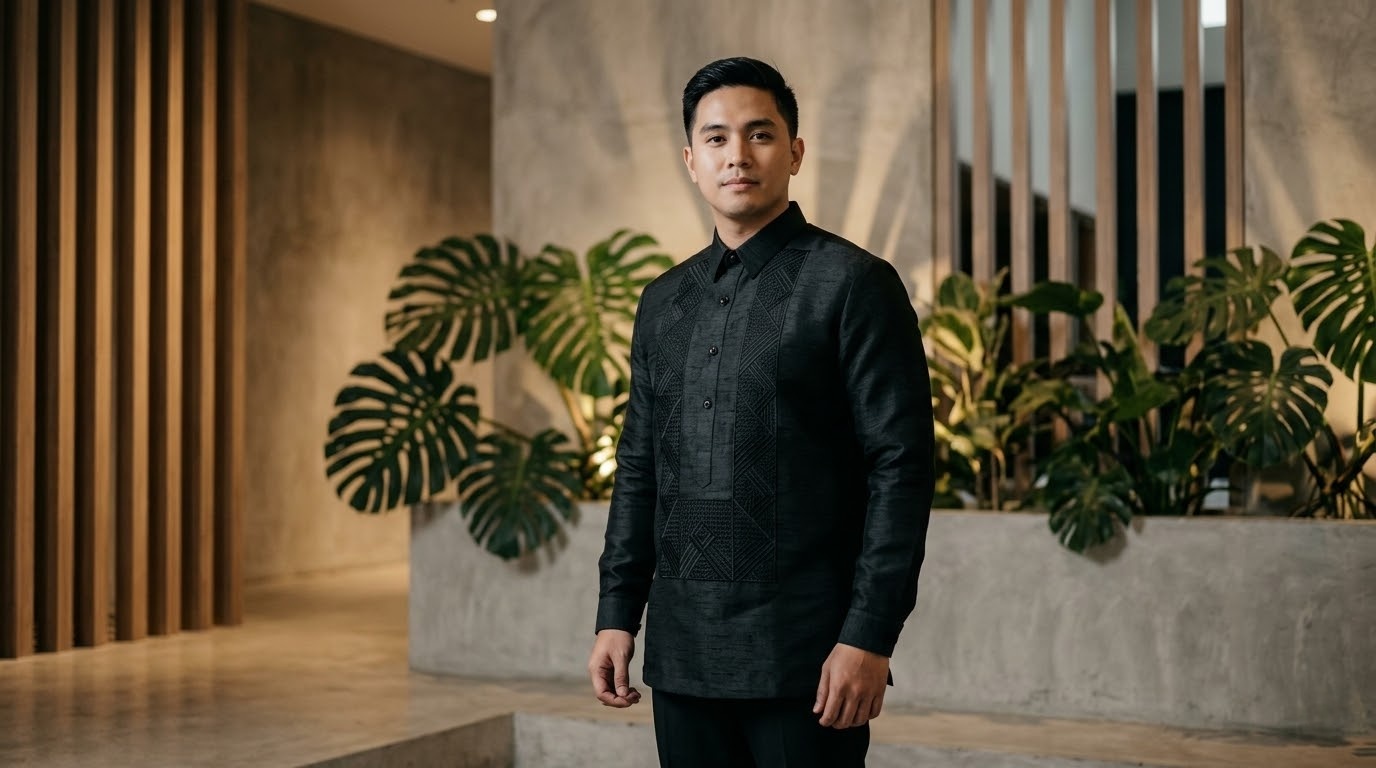
- Occasion Matching: While a white or off-white Barong is classic for weddings, colored Barongs—such as blue, black, or brown—are modern takes perfect for christenings or business events.
Barrio Fiesta and Pahiyas Festival: Celebrating Community
The Barrio Fiesta is a beloved Filipino tradition that brings communities together to celebrate local culture. This is where you see the Barong Tagalog and Balintawak (a less formal Terno with a kerchief) in their natural habitat.
Pahiyas Festival: A Feast for the Senses
Celebrated in Lucban, Quezon, the Pahiyas Festival is a splendid display of gratitude for a bountiful harvest.
- The Attire: Locals proudly wear Filipiniana costumes as they participate in lively street dances.
- The Decorations: Homes are adorned with colorful rice wafers called kiping, creating a visual feast that captures the essence of Filipino creativity.
Filipino Weddings: Embracing Tradition and Love
Filipino weddings are steeped in tradition and cultural customs that highlight the unity of two families. They are a masterclass in how Filipiniana traditions adapt to modern love stories.
The Bride and Groom
The bride often chooses a Filipiniana-inspired gown, embracing the elegance of traditional styles like the Terno or a modern Filipiniana Bolero over a white dress. The groom’s Barong Tagalog exudes sophistication and respect for heritage.
Symbols of Unity
During the ceremony, specific symbols are used to represent the couple’s bond:
- Arras (Coins): Symbolize prosperity and the groom’s commitment to the welfare of his family.
- Candles: Represent the light of Christ and the couple’s role as the “light” of their new home.
- Veil and Cord: The veil symbolizes the couple being “clothed as one,” while the cord (yugal) represents an everlasting bond.
Caring for Your Heritage: Maintenance Tips
Because these garments are often handmade and delicate, proper care is vital to ensure they remain heirlooms.
- Hand Washing: Most Barongs and Filipiniana dresses should be hand-washed using mild detergent and lukewarm water.
- Stain Removal: Never scrub the fabric. Dab stains gently to avoid damaging the embroidery.
- Drying: Lay the garment flat on a clean towel or hang it on a padded hanger. Avoid direct sunlight to prevent yellowing.
- Ironing: Use a low-to-medium heat setting. For Piña or Jusi, use a pressing cloth between the iron and the garment to protect the fibers.
Conclusion: Embracing the Colors of Filipino Heritage
Mabuhay! Filipiniana traditions are a kaleidoscope of colors, each representing a unique facet of Filipino identity and culture. These cherished customs serve as a tapestry that weaves the threads of history, artistry, and spirituality into the fabric of Filipino life.
As we partake in the joyous festivities of Flores de Mayo, Santacruzan, and weddings, we celebrate the beauty of our homeland and the shared bonds of our communities. These traditions are not only a reflection of the past but also a promise to preserve and pass on the vibrant heritage to future generations.
Ready to represent your culture with pride? Whether you’re preparing for your “Big Day” or looking for a modern touch for your office wear, we are here to help you find the perfect piece.
Explore our collections today:
- Shop our Premium Barong Tagalog Collection
- Browse Modern Filipiniana Dresses & Ternos
- Find the Perfect Accessories for Your Next Event
Salamat for choosing to keep our traditions alive.
Internal Links to Consider:
The Ultimate Filipiniana Guide: From Roots to Iconic Terno
The Living Legacy: A Deep Dive into the History of Filipiniana Dress and Its Modern Renaissance
You’ve received the invitation: “Filipiniana Formal.” Your heart swells with pride, but your mind immediately races with questions. Is a modern terno top too casual for a New York gala? Does the traditional Maria Clara silhouette still resonate in a 2025 ballroom?
At Handmade Kapamilya, we understand that wearing a Filipiniana is more than a fashion choice—it is a reclamation of identity. Whether you are a bride-to-be honoring your roots or a professional wanting to represent our heritage in the diaspora, understanding the history of Filipiniana dress is the first step in wearing it with the dignity it deserves. Mabuhay—welcome to the definitive guide to our shared sartorial history.
Why the History of Filipiniana Matters Today
The Filipiniana is not a static costume; it is a living, breathing archive of Philippine resistance, adaptation, and artistry. In our workshop, we often tell our clients that every stitch of a callado embroidery carries the weight of centuries. To wear a Modern Filipiniana dress is to participate in a story that survived colonial decrees and global shifts, ultimately emerging as a global symbol of Filipino elegance.
1. Pre-Colonial Genesis: The Roots of Indigenous Craftsmanship
Long before Spanish galleons touched our shores, the inhabitants of the Philippine archipelago were already masters of textile science. This era laid the foundation for what we now recognize as the history of Filipiniana dress.
- The Power of Indigenous Fibers: Early Filipinos utilized what the land provided—Piña (pineapple fiber), Abaca (Manila hemp), and Jusi (banana silk). These fabrics were not just functional; they were breathable masterpieces suited for the tropical humidity.
- The Baro and the Saya: The earliest form of the Filipiniana was the baro’t saya (blouse and skirt). Men and women alike wore wrap-around garments and collarless jackets, often color-coded to signify social rank or warrior status.
- The Art of the Weave: From the Inabel of the North to the T’nalak of the South, weaving was a spiritual practice. At Handmade Kapamilya, we still look to these ancestral patterns when designing our Traditional Filipino Wedding Attire.
2. The Spanish Era: The Birth of the Maria Clara
The 16th to 19th centuries saw a seismic shift in the Philippine silhouette. Spanish colonization introduced European notions of “modesty,” which merged with local craftsmanship to create the iconic Maria Clara dress.
The Anatomy of the Maria Clara Ensemble:
- The Baro: A sheer, bell-sleeved blouse made of delicate piña or jusi.
- The Saya: A floor-length skirt, often in a checkered or striped pattern (known as patadyong).
- The Pañuelo: A starched, triangular scarf worn over the shoulders, serving both as a modesty veil and a canvas for intricate embroidery.
- The Tapis: A dark overskirt wrapped around the hips, a defiant nod to indigenous roots that persisted despite European influence.
This era proved that Filipino style is inherently “fusion.” We took foreign silhouettes and made them distinctly ours through the use of local textiles and the incomparable skill of our embrodidery artisans.
3. The American Influence and the Birth of the Terno
As we moved into the early 20th century, the heavy layers of the Maria Clara began to lighten. The “Terno” (meaning “matched”) emerged as a unified ensemble where the blouse and skirt were made of the same fabric.
It was during this period that the butterfly sleeves—the most recognizable feature of the History of Filipiniana dress—began to take their structural shape. Influenced by the “Gibson Girl” aesthetic of the West but grounded in the stiffened aesthetic of the pañuelo, the sleeves became a symbol of a rising, educated Filipino middle class.

4. The Golden Age: Imelda Marcos and the Terno on the World Stage
One cannot discuss Filipiniana history without mentioning the mid-20th century. During the 1960s and 70s, the Terno was elevated from national dress to high-fashion couture.
While the political history of this era is complex, its impact on fashion was undeniable. The Terno became a staple at international state dinners and global summits. Designers like Ramon Valera (the Father of the Modern Terno) removed the pañuelo and tapis, focusing on the architectural integrity of the sleeves. This era solidified the Terno as a Custom Filipiniana Dress choice for the world’s elite.

5. The Modern Renaissance: Filipiniana for the Global Diaspora
Today, we are witnessing a “Modern Renaissance.” For the Fil-Am community and the global diaspora, the Filipiniana has moved out of the “costume” box and into the “everyday” wardrobe.
Current Trends We See in Our Workshop:
- The Terno Top: A versatile piece with butterfly sleeves that can be paired with denim or tailored trousers for a business-casual look.
- Sustainable Fabrics: A return to hand-loomed Inabel and eco-friendly piña-silk blends.
- The Mestiza Bolero: A modern “pop-on” sleeve that allows any woman to transform a simple gown into a cultural statement in seconds.
- Gender-Fluid Designs: Modern interpretations that allow everyone to celebrate Filipino heritage through structured silhouettes and traditional embroidery.
At Handmade Kapamilya, we don’t just sell clothes; we provide a bridge to your ancestors. When you buy Filipiniana online from us, you are supporting local artisans in Laguna and Bulacan who have kept these traditions alive through generations of pagpupursige (perseverance).
How to Style and Care for Your Filipiniana
Whether you own a vintage heirloom or a Modern Filipiniana Dress, proper care is essential to preserve its history.
- Storage: Never hang a piña or jusi garment by the shoulders for long periods; it can distort the delicate fibers. Store them flat in acid-free tissue paper.
- Cleaning: Traditional fabrics are often “unwashable” in the modern sense. We recommend professional dry cleaning or very gentle spot-cleaning with mild soap.
- The “Sleeve” Trick: If your butterfly sleeves lose their shape, use a steamer from the inside of the sleeve to reactivate the stiffening agents.
The Handmade Kapamilya Difference
Why choose us for your Traditional Filipino Wedding Attire?
- Experience: Our lead designers have over 20 years of experience in bespoke tailoring.
- Expertise: We specialize in the “Lumban” style of hand-embroidery, a technique that takes weeks to master.
- Authoritativeness: We are a Filipino-owned brand that works directly with weaving communities, ensuring that our “Modern” designs never lose their “Traditional” soul.
- Trustworthiness: We provide transparent sizing guides and worldwide shipping, making it easy for you to celebrate your culture no matter where you live. Maraming salamat for trusting us with your most important moments.
Conclusion: Wear Your Story
The history of Filipiniana dress is a journey of metamorphosis. From the raw, indigenous beauty of the pre-colonial era to the sharp, structural elegance of the modern terno, our clothing tells the world who we are: resilient, artistic, and deeply connected to our roots.
Ready to start your own chapter in this history? [Explore our New & Now Modern Filipiniana Collection] — From elegant boleros to custom wedding ternos, find the piece that speaks to your soul.
Internal Linking & Further Reading
- Learn more about the men’s counterpart: [The Ultimate Guide to the Barong: Modern Styles, Stunning Elegance]
- Planning a wedding? [Barong Tagalog Style Guide (USA): How to Choose & Wear]