Filipino Baptism Traditions: The Ultimate Guide to Binyag, Godparents, and Choosing the Perfect Barong
Planning your child’s first major milestone can feel like a whirlwind of logistics, guest lists, and cultural expectations. You want more than just a ceremony; you want a sacred initiation that honors your heritage and welcomes your little one into the Kapamilya with the elegance they deserve.
At Handmade Kapamilya, we understand that a Filipino baptism—or Binyag—is the cornerstone of a child’s spiritual and social life. It is the moment the community gathers to say, “You belong to us.” Whether you are a first-time parent in Manila or a Fil-Am family keeping traditions alive in California or New Jersey, this guide will walk you through every ritual, responsibility, and the timeless beauty of the Barong Tagalog for baptism.
Why the “Binyag” is the Heart of the Filipino Family
In the Philippines, a baptism is rarely a small, private affair. It is a vibrant, multi-generational celebration of faith and community. Historically, the Binyag represents the child’s formal entry into the Christian faith, but socially, it is the first time the child is presented to their extended network of relatives and friends.
Kumusta po! If you’re feeling the pressure of “getting it right,” take a deep breath. In our workshop, we’ve helped thousands of parents navigate this journey. The significance of this day isn’t just in the water or the prayers—it’s in the “hand-me-down” memories and the cultural pride we weave into every garment.
1. The Role of the “Ninong” and “Ninang”: More Than Just a Title
In Western cultures, godparents might be a symbolic choice. In Filipino culture, being a Ninong (godfather) or Ninang (godmother) is a lifelong commitment of “co-parenthood” (Compadrazgo).
How to Choose Your Godparents
Parents often choose godparents based on their character, their relationship with the family, and their ability to serve as role models. It is common to see a “pila” (line) of godparents—sometimes 10 or more! This ensures the child has a vast support system.
Duties of the Ninong and Ninang:
- Spiritual Guardianship: Providing guidance throughout the child’s life milestones.
- The “Pakimkim”: A traditional gift, often in the form of cash, given to the child during the reception to help jumpstart their future savings.
- Presence: Being a consistent figure at birthdays, graduations, and future weddings.

2. Choosing the Perfect Attire: The Elegance of the Baby Barong Tagalog
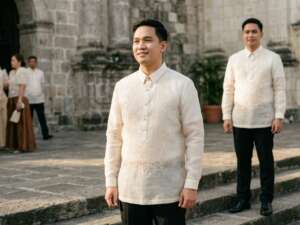
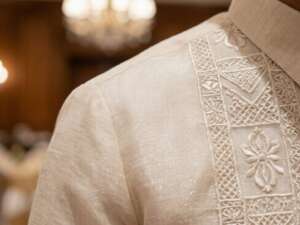
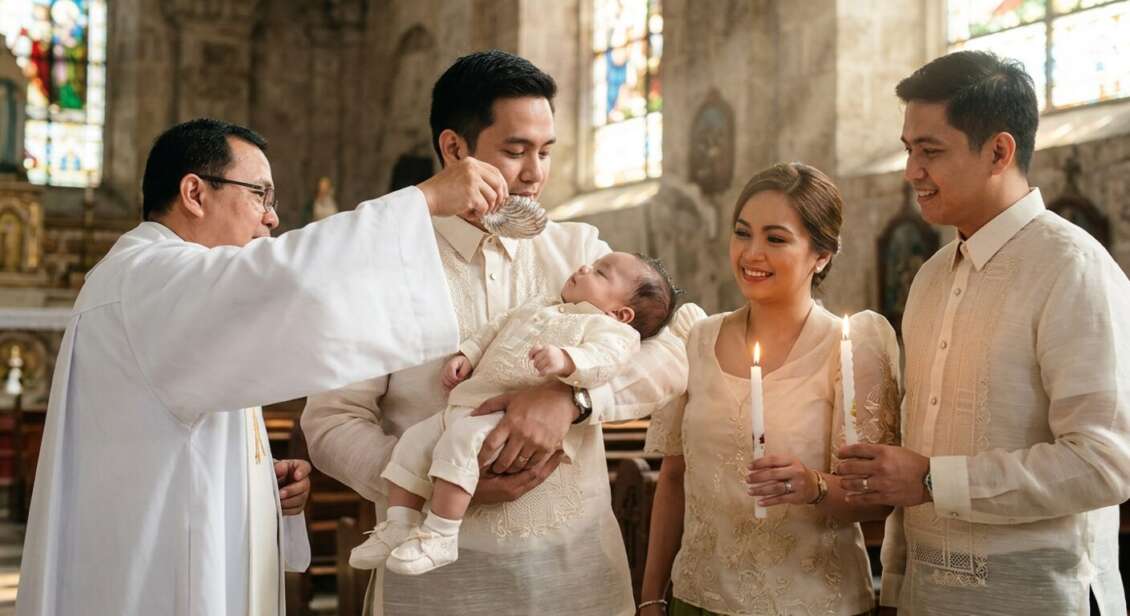
The most visual representation of purity and Filipino identity during the ceremony is the child’s outfit. While some families opt for Western-style gowns, the Barong Tagalog for babies has seen a massive resurgence among families looking to celebrate their “Pinoy Pride.”
Why Choose a Barong Over a Standard Gown?
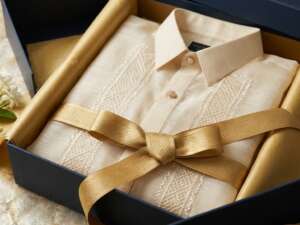
A traditional Filipino baptism outfit tells a story. It connects the infant to centuries of craftsmanship. At Handmade Kapamilya, we specialize in creating scaled-down versions of our heritage pieces that are as comfortable as they are beautiful.
Key Fabrics for Baptismal Barongs:
In our experience, the fabric choice is the most important decision for a restless baby.
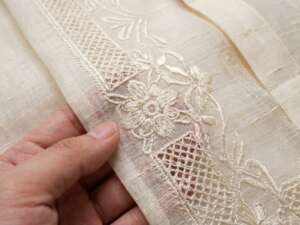
- Pina-Jusi: A blend of pineapple fiber and silk. It offers the classic “sheer” look of a Barong but is softer on a baby’s sensitive skin.
- Cocoon Silk: Highly recommended for its durability and luxurious, opaque finish. It looks stunning in photos and holds its shape through the many hugs of the day.
- Organza: An affordable, lightweight option that provides a high-shine, celebratory look.
Expert Tip: We always suggest a “Camisa de Chino” (a soft cotton undershirt) underneath the Barong. This prevents any itching from the embroidery and absorbs moisture, keeping your little one cool during the Handa (feast).

Traditional Filipino baptism feast.
4. The “Handa”: Celebrating Filipino Style
No Binyag is complete without the reception. This is where the community bonds over food.
Essential Dishes for a Baptismal Feast:
- Lechon: The undisputed king of the table. A whole roasted pig signifies a major celebration and abundance.
- Pancit: Representing long life and health for the child.
- Kakanin: Sweet rice cakes like Biko or Sapin-Sapin to ensure the family’s bonds stay “sticky” and strong.
- Lumpiang Shanghai: A crowd favorite that never fails to disappear within minutes.
5. Modern Challenges: Planning a Filipino Baptism Abroad
For our “Kababayans” in the diaspora, sourcing authentic Filipino formal wear can be a challenge. We often see parents settling for mass-produced, itchy polyester suits because they can’t find quality artisans locally.
That is why we founded Handmade Kapamilya. We bridge the gap between the artisanal weavers in Lumban and Aklan and the modern Filipino family living abroad. Every piece we ship is a “piece of home” that ensures your child’s first heritage garment is one you’ll want to preserve in a shadow box for decades.
Sizing and Customization
Babies grow fast! We recommend ordering your custom baby Barong at least 4-6 weeks before the event. If you are between sizes, always size up—a slightly loose Barong looks more traditional than one that is too tight, and it allows your baby to move freely.
6. Preserving the Legacy: Aftercare for Your Barong
Once the celebration is over, your child’s Barong becomes a family heirloom. To ensure it lasts:
- Hand Wash Only: Never put a Barong in a washing machine. Use a mild detergent and lukewarm water.
- Air Dry: Lay it flat to dry to prevent the delicate fibers from stretching.
- Storage: Store it in a breathable garment bag, away from direct sunlight. Avoid plastic bags, which can cause yellowing over time.
The Handmade Kapamilya Difference
Mabuhay! You are now ready to plan a baptism that is as culturally rich as it is spiritually significant. At Handmade Kapamilya, we don’t just sell clothes; we provide the threads that connect your family to its roots.
Whether you need a modern Filipiniana dress for the mother, a classic Barong Tagalog for the father, or the perfect infant Barong, our artisans are ready to craft something special for you.
Ready to find the perfect outfit for your child’s special day?
[Shop our Premium Baby Barong Collection]
[Browse Modern Filipiniana for Ninangs and Mothers]
Make it a Day to Remember: More Tips from our Workshop:
- Fabric Secrets: [Barong Tagalog US Guide for the Authentic Formal Wear]
- Styling Matters: [Barong Tagalog Style Guide (USA): How to Choose & Wear]
- Beyond the Baptism: [Filipino Wedding Traditions: A Beautiful Guide to Rituals & Meaning]

Ninong lighting the candle.
3. The Rituals: What to Expect During the Ceremony
The Filipino baptismal rite is rich with symbolism. If you are attending your first one, here are the key moments to watch for:
- The Sign of the Cross: The priest traces the cross on the child’s forehead, followed by the parents and godparents.
- The Lighting of the Candle: Each godparent holds a lit candle, symbolizing the “Light of Christ” that they promise to help the child follow.
- The “Sabog”: In some regional traditions, coins or candies are thrown after the ceremony for the children in attendance, symbolizing shared blessings.
Traditional Filipino baptism feast.
4. The “Handa”: Celebrating Filipino Style
No Binyag is complete without the reception. This is where the community bonds over food.
Essential Dishes for a Baptismal Feast:
- Lechon: The undisputed king of the table. A whole roasted pig signifies a major celebration and abundance.
- Pancit: Representing long life and health for the child.
- Kakanin: Sweet rice cakes like Biko or Sapin-Sapin to ensure the family’s bonds stay “sticky” and strong.
- Lumpiang Shanghai: A crowd favorite that never fails to disappear within minutes.
5. Modern Challenges: Planning a Filipino Baptism Abroad
For our “Kababayans” in the diaspora, sourcing authentic Filipino formal wear can be a challenge. We often see parents settling for mass-produced, itchy polyester suits because they can’t find quality artisans locally.
That is why we founded Handmade Kapamilya. We bridge the gap between the artisanal weavers in Lumban and Aklan and the modern Filipino family living abroad. Every piece we ship is a “piece of home” that ensures your child’s first heritage garment is one you’ll want to preserve in a shadow box for decades.
Sizing and Customization
Babies grow fast! We recommend ordering your custom baby Barong at least 4-6 weeks before the event. If you are between sizes, always size up—a slightly loose Barong looks more traditional than one that is too tight, and it allows your baby to move freely.
6. Preserving the Legacy: Aftercare for Your Barong
Once the celebration is over, your child’s Barong becomes a family heirloom. To ensure it lasts:
- Hand Wash Only: Never put a Barong in a washing machine. Use a mild detergent and lukewarm water.
- Air Dry: Lay it flat to dry to prevent the delicate fibers from stretching.
- Storage: Store it in a breathable garment bag, away from direct sunlight. Avoid plastic bags, which can cause yellowing over time.
The Handmade Kapamilya Difference
Mabuhay! You are now ready to plan a baptism that is as culturally rich as it is spiritually significant. At Handmade Kapamilya, we don’t just sell clothes; we provide the threads that connect your family to its roots.
Whether you need a modern Filipiniana dress for the mother, a classic Barong Tagalog for the father, or the perfect infant Barong, our artisans are ready to craft something special for you.
Ready to find the perfect outfit for your child’s special day?
[Shop our Premium Baby Barong Collection]
[Browse Modern Filipiniana for Ninangs and Mothers]
Make it a Day to Remember: More Tips from our Workshop:
- Fabric Secrets: [Barong Tagalog US Guide for the Authentic Formal Wear]
- Styling Matters: [Barong Tagalog Style Guide (USA): How to Choose & Wear]
- Beyond the Baptism: [Filipino Wedding Traditions: A Beautiful Guide to Rituals & Meaning]