If you are reading this, you likely have a significant event on your calendar. Maybe you are a groom planning a heritage wedding, a guest attending a Filipiniana gala, or a proud parent preparing for a graduation. You know you need a Barong Tagalog, but a quick search online has left you more confused than when you started.
You see barong listings ranging from $50 to $500. You read terms like Organza, Jusilyn, and Cocoon with no clear explanation of how they actually feel, wear, or differ in quality. You worry about ordering a Filipino shirt online, fearing it might arrive looking like a shiny, stiff costume rather than the elegant Filipino formal wear you deserve.
At Handmade Kapamilya, we understand this anxiety. The Barong Tagalog is not just a shirt; it is a translucent armor of Filipino identity. It represents centuries of resilience, where indigenous fibers were transformed by artisans into garments of honor.
In this ultimate Barong Tagalog fabric guide, we keep it simple and honest: we walk you through every fabric we actually sell. We will teach you how to think like a fabric expert, so when you search for where to buy a barong in the US, you know exactly what you are paying for, and why.
The Hierarchy of Barong Fabrics: What Are You Actually Paying For?
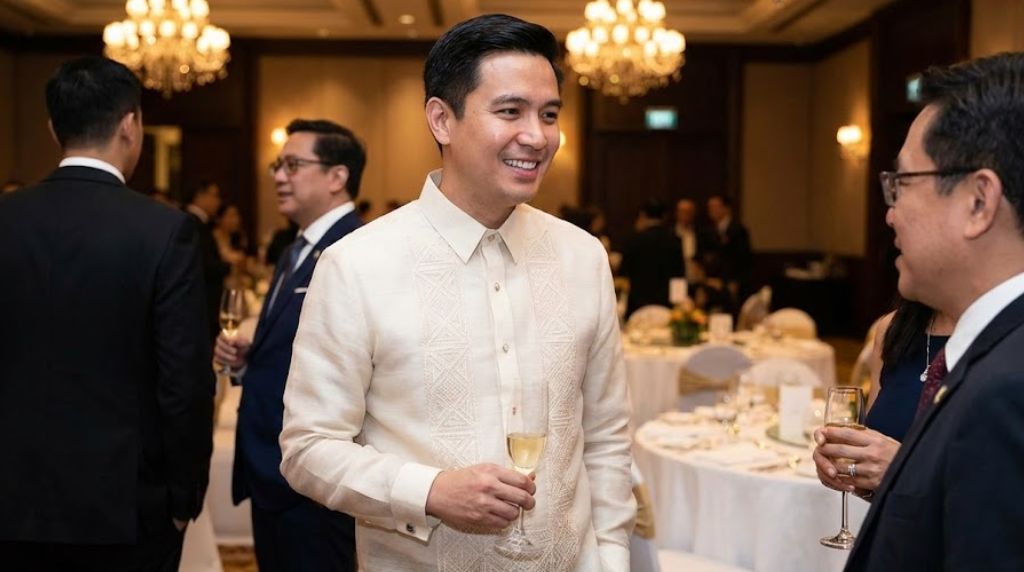
The price, comfort, and formality of a Barong Tagalog for men are dictated almost entirely by the fabric. Historically, the most prized barongs in the Philippines were made from piña (pineapple-leaf fiber) and jusi, slow and costly heritage fabrics. We don’t sell piña or jusi. Our barongs are polyester organza, with a few in Jusilyn, cocoon fabric and cotton.
Below is a plain breakdown of the four Barong Tagalog fabric types we carry, how each one feels, and who it suits.
1. Organza: The Barong Tagalog Fabric for Most Occasions
Whether you are the groom, a groomsman, the father of the bride, or a guest, this is the Barong Tagalog fabric most of our customers choose.
What it is:
Polyester organza is a light, machine-woven fabric with a soft sheen. It is what most of our barongs are made of, including our flagship Ivory White Organza Barong, our colored barongs, and our kids’ and infant barongs. Most of our women’s Filipiniana dresses, boleros and blouses are organza too.
The “Expert” Check:
On our men’s barongs, the organza is double-layered, so the body is opaque and you don’t have to worry about what shows through. Hold it up to the light: you should see an even weave and a soft sheen, not a harsh, glassy shine.
The Feel:
Light and smooth, with a soft sheen. The double layer gives the body a clean, finished look in photos.
Why we carry it:
Organza is easy to care for and shows off hand embroidery beautifully. It is also the simplest way to dress a whole wedding party in matching barongs without a huge budget.
Expert Tip:
Dressing a full entourage? We carry organza barongs in men’s, kids’ and infant sizes, so the groom, groomsmen, fathers and ring bearer can all match.
2. Cocoon Fabric: Texture for the Groom
For the modern groom or fashion-forward guest who wants something different from a classic organza barong, cocoon fabric is the one to look at.
What it is:
A single-layer barong fabric with a slubby crosshatch weave. We carry it in one groom barong, the Ivory Cocoon Barong.
The “Expert” Check:
Look closely and you will see slubs: small, uneven thicker spots in the weave that give the fabric its character. It has a soft, dry lustre rather than a shine.
Why we love it:
Cocoon gives a groom texture and depth while keeping the classic ivory barong look, so he stands out next to an organza entourage. That makes it a natural pick for barong tagalog for men wedding attire. Since it is a single layer, wear a camisa de chino underneath.
3. Jusilyn: A Lighter Single-Layer Look
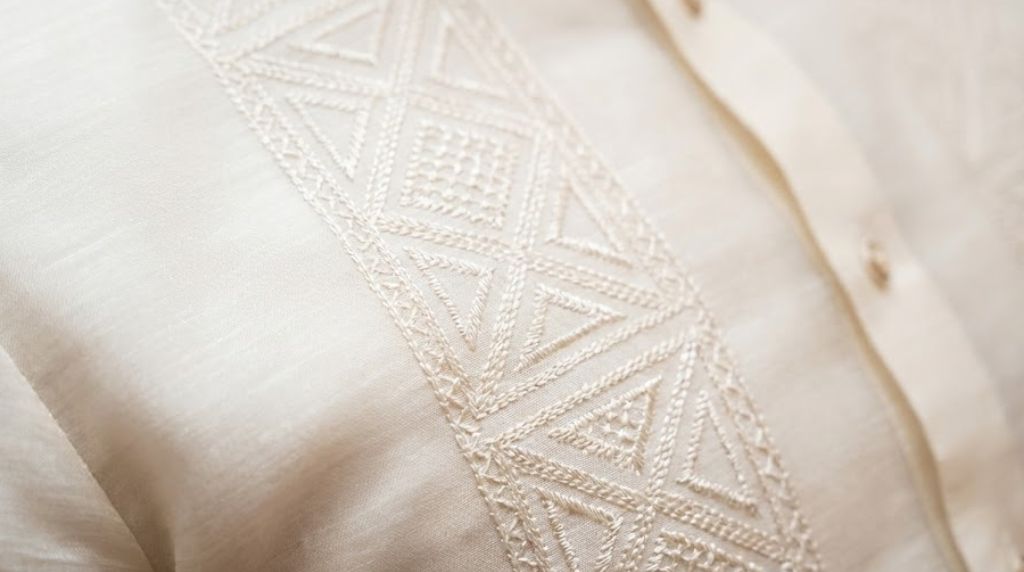
If you want a lighter barong with that classic, lightly see-through look, start here.
What it is:
Jusilyn is a lightweight, single-layer synthetic barong fabric with a fine crosshatch texture. We carry it in two barongs: the White Jusilyn Barong and the Deluxe Intricate Jusilyn Barong. Despite the similar name, Jusilyn is not jusi.
The Feel:
Lighter than our double-layer organza and lightly translucent, with a fine, even texture. A good fit for anyone who wants a barong that feels lighter on the shoulders.
The Limitation:
Because it is a single layer, what you wear underneath shows a little. Pair it with a white undershirt or a camisa de chino.
4. Cotton: The Casual Polo Barong
This is the most relaxed option we carry: our navy short-sleeve polo barongs.
What it is:
Soft cotton in a short-sleeve polo cut, so you get a Filipino look in a shirt you can wear all day.
When to wear it:
Birthdays, summer parties, church, Filipino-American festivals, and anywhere a long-sleeve formal barong feels like too much.
The Verdict:
If you need a casual Filipino shirt, cotton is the easiest of all to own: machine wash cold on gentle and hang dry. For weddings and formal events, go with organza, cocoon or Jusilyn.
Technical Comparison: Which Fabric Is Right for You?
When shopping for Filipino formal wear for men, use this table to quickly match your role and occasion.
| Fabric | Best For | Feel | Care | Look | Organza | Grooms, Entourage, Guests, Kids | Light, Smooth | Hand Wash or Delicate Cycle | Soft Sheen, Opaque Body | Cocoon | Grooms Who Want Texture | Textured | Hand Wash | Slubby, Dry Lustre | Jusilyn | A Lighter Formal Look | Very Light | Hand Wash | Fine Crosshatch, Lightly Sheer | Cotton | Casual, Summer Parties | Soft | Machine Wash Gentle | Solid, Casual |

Anatomy of Authenticity: How to Spot a “Fake” Barong
One of the biggest fears of buying Filipino formal wear in the US is getting ripped off.
1. The “Finger Test” (Texture)
- Well Made: Smooth, even weave with a soft sheen
- Cheap: Scratchy, stiff, or a harsh, glassy shine
2. The Embroidery Quality (The “Likod” Check)
- High Quality: Clean, structured embroidery on the back
- Mass Produced: Flat, sticker-like stitching
3. The “Calado” Detail
True luxury Barongs feature hand-pulled lattice embroidery, not laser-cut imitations.
The “Sizing” Elephant in the Room
Any guide on where to buy a barong in the US must address sizing.
Filipino sizing traditionally runs smaller than US sizing. A Manila “Large” is often a US Medium.
Golden Rules:
- Chest: 4–6 inches of ease
- Length: Bottom of the buttocks
- Sleeves: Size up for athletic builds
At Handmade Kapamilya, we convert traditional cuts into US Standard Sizing, so you don’t have to guess.
Caring for Your Investment: The “No-Wring” Rule
Every fabric we carry is easy to look after. Just skip the wringing and the hot dryer.
- Organza: hand wash cold, or use the delicate cycle in a mesh bag
- Jusilyn and cocoon: hand wash cold
- Cotton polo: machine wash cold on gentle
- Never wring, and always hang to dry
- Steam out wrinkles (organza can also take a low iron with a pressing cloth)
- Store in breathable garment bags
Styling Your Barong: Modern vs Traditional
The Groom:
Cocoon or Ivory Organza Barong + black trousers + Camisa de Chino
The Modern Guest:
Colored Organza Barong + chinos or dress pants
For the Ladies:
Butterfly-sleeve Filipiniana boleros in organza
Why Handmade Kapamilya?
We are not just a store—we are a bridge.
- Hand-embroidered by artisans in the Philippines
- US-standard sizing
- Fast domestic shipping
Whether you need a barong tagalog for men, women’s Filipiniana, or guidance you can trust, we are here to help you wear your heritage with pride.
Ready to Find Your Perfect Fit?
Browse our expert-verified collections: