Slide toggle
Monday - Friday: 09:00 - 5:00 CT 9001 Griggs Avenue Unit 243, Circle Pines, MN 55014 612-239-1469 orders@handmadekapamilya.com

Tag: types

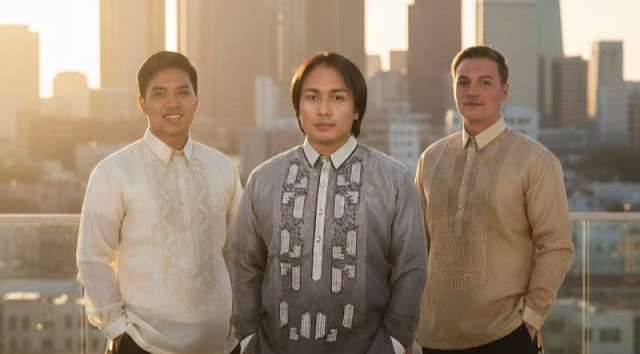
Three men wearing modern Barong Tagalogs on a city rooftop at sunset.

Where to Buy a Barong in the USA: Authentic Guide

You have the invitation in your hand. Maybe it’s your cousin’s wedding in California, a gala for a Filipino-American non-profit, or perhaps you are the groom preparing for the biggest day of your life. The dress code is clear: “Filipiniana” or “Barong Tagalog.”

Immediately, the panic sets in. You know exactly what you need, but you have no idea where to buy a barong in the US that doesn’t feel like a gamble. You are left with two stressful options: beg a Tita to bring one back from her next Manila trip (and pray it fits), or risk ordering from a sketchy website that takes six weeks to ship and might arrive looking like a costume.

We know the struggle because we have lived it. At Handmade Kapamilya, we believe wearing your heritage shouldn’t be a logistical nightmare. Whether you are a groom looking for a barong tagalog for men wedding attire or a guest wanting to represent with pride, this guide will walk you through everything you need to know to find the perfect piece stateside—without the stress, the wait, or the sizing mishaps.
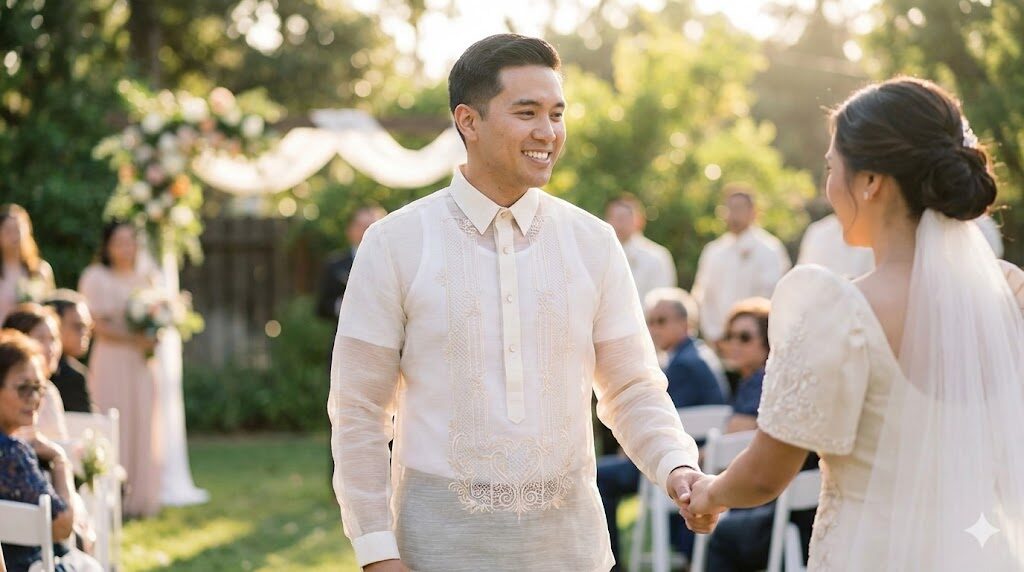
Barong Tagalog in US Wedding

The Cultural Weight: Why the Barong Matters

Before we dive into where to buy, it is essential to understand what you are buying. The Barong Tagalog is not just a Filipino shirt; it is a garment of honor, identity, and resilience.

A Symbol of Resilience

The history of the Barong is deeply woven into the fabric of the Philippines. While early Filipinos wore loose, breathable tunics suited for the tropical climate long before colonization, the Barong as we know it evolved during the Spanish era. A popular (though debated) historical narrative suggests that the Spanish colonizers required “Indios” (native Filipinos) to wear their shirts untucked and made of translucent material. The alleged reasons were twofold: to distinguish them from the ruling class who tucked their shirts in, and to prevent the concealment of weapons.

However, what was meant to be a badge of inferiority was subverted by the Filipino people. They turned the barong into a canvas of intricate embroidery and exquisite craftsmanship, transforming a tool of subjugation into a symbol of pride. Today, wearing a Barong untucked is not just a style choice; it is a nod to centuries of cultural endurance.

The National Attire

In 1975, the Barong Tagalog was officially designated as the national attire of the Philippines. It bridges social gaps—worn by everyone from farmers to presidents. When you wear one in the US, you aren’t just dressing up; you are carrying a piece of that history. You are signaling to the room that you honor your roots.

The 3 Biggest Risks of Buying a Barong Online (And How to Solve Them)

If you have ever typed “where to buy a barong in the us” into a search engine, you know the results can be overwhelming. Before you click “Add to Cart,” you need to be aware of the three “Silent Killers” of online Barong shopping.

1. The Sizing Trap: Asian vs. US Sizing

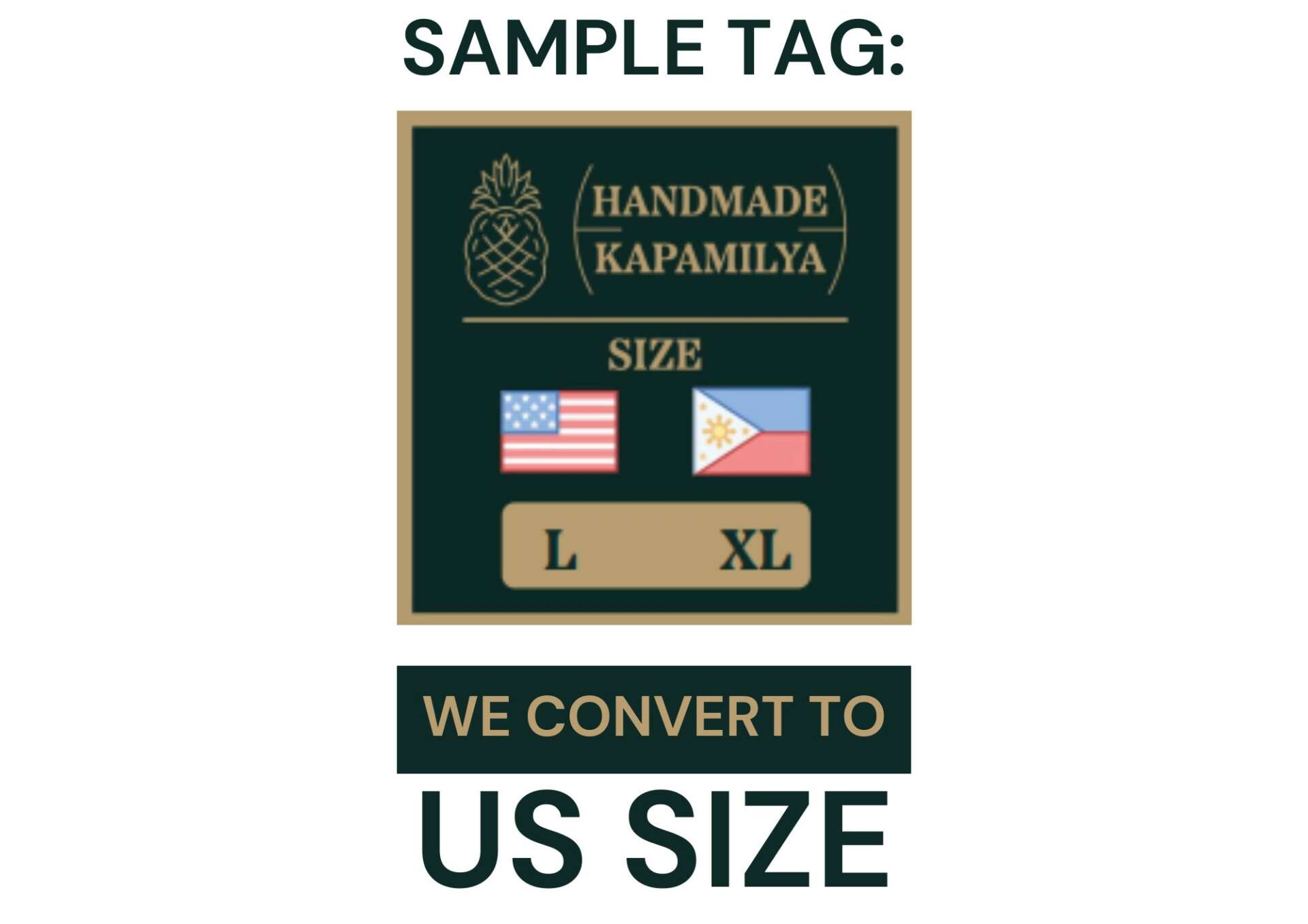
This is the number one complaint we hear. A “Large” in the Philippines is rarely a “Large” in the US.

  • The Reality: Filipino sizing is typically one to two sizes smaller than Western sizing. If you usually wear a US Large, ordering a PH Large often results in a garment that is tight in the shoulders and short in the sleeves.

  • The Fix: When shopping, look for vendors who specifically explicitly state they use US Sizing. At Handmade Kapamilya, we curate our collections for the Western frame, eliminating the guesswork. If you are buying elsewhere, the general rule is to size up at least one full size.
Barong US Size Tag

2. The Material Mirage: Authentic vs. Synthetic

In photos, a cheap polyester philippines shirt can look alarmingly similar to a high-end piña barong. However, the difference is obvious the moment you touch it.

  • Synthetic (Polyester/Organza): Often shiny, stiff, and less breathable. These are fine for school plays or one-time use, but they lack the elegance required for a wedding.

  • Authentic (Piña/Jusi): These natural fibers have a soft sheen, a refined texture, and breathable qualities that synthetic fabrics cannot mimic.

3. The Shipping Black Hole

Many “US-facing” websites actually drop-ship directly from Manila. While this isn’t inherently bad, it introduces customs delays. We have seen grooms panic because their barong tagalog for men is stuck in a sorting facility in Honolulu three days before the wedding. Always verify that the vendor has US-based inventory for reliable domestic shipping speeds.


The Ultimate Fabric Guide: Choosing the Right Barong for You

The price and formality of a Barong are dictated almost entirely by its fabric. Knowing the difference between Jusi and Piña is the key to not getting ripped off.

Piña: The Gold Standard

If you are the groom, a father of the bride, or a guest of honor, this is what you want.

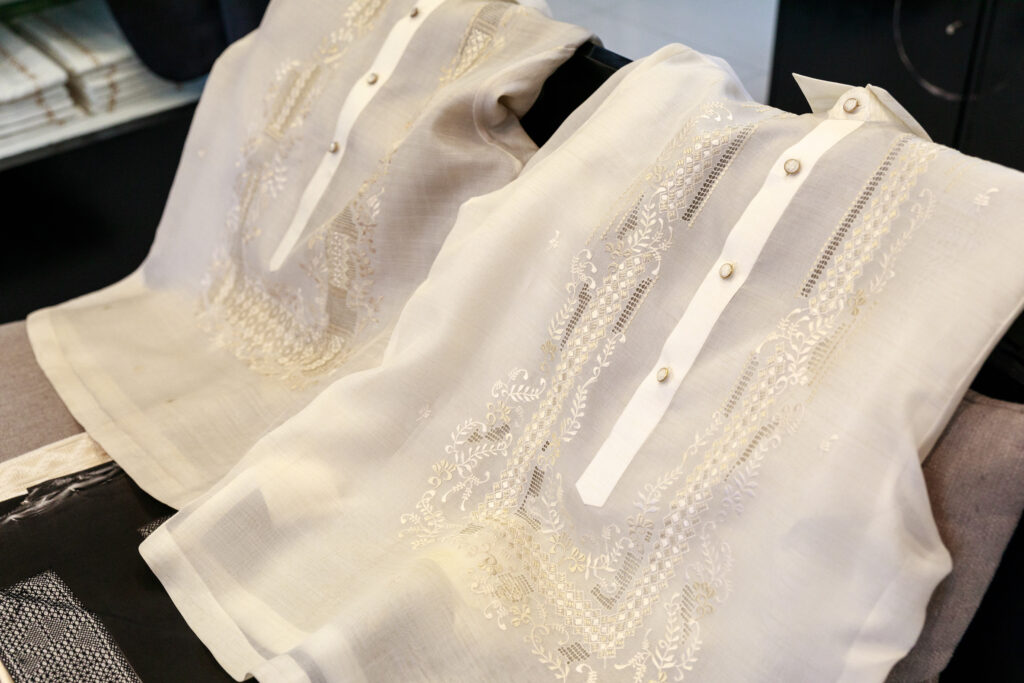
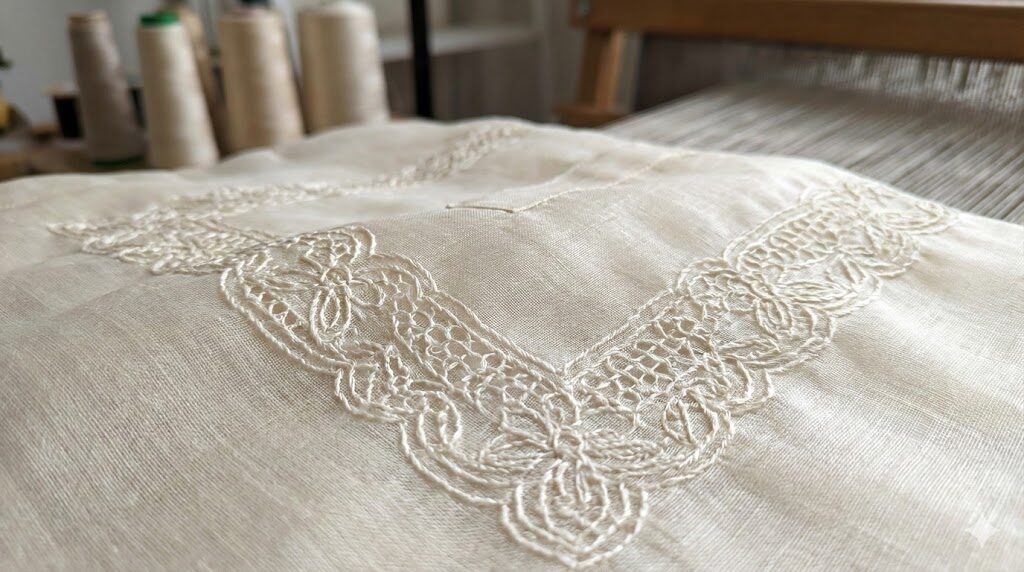
  • What it is: A fiber extracted from the leaves of the Red Spanish pineapple plant. It is the finest of all Philippine hand-woven fabrics.

  • The Look: It has a natural, ivory champagne-gold hue and a delicate, airy texture. It is translucent, lightweight, and exudes quiet luxury.

  • Best For: Barong tagalog for men wedding attire, black-tie Filipiniana galas, and state functions.

  • Pro-Tip: Because it is handmade, true Piña is expensive and delicate. It is an heirloom piece meant to be passed down.
Pina Barong Embroidery Close Up

Jusi: The Best All-Rounder

For guests, groomsmen, or corporate events, Jusi is the most popular choice.

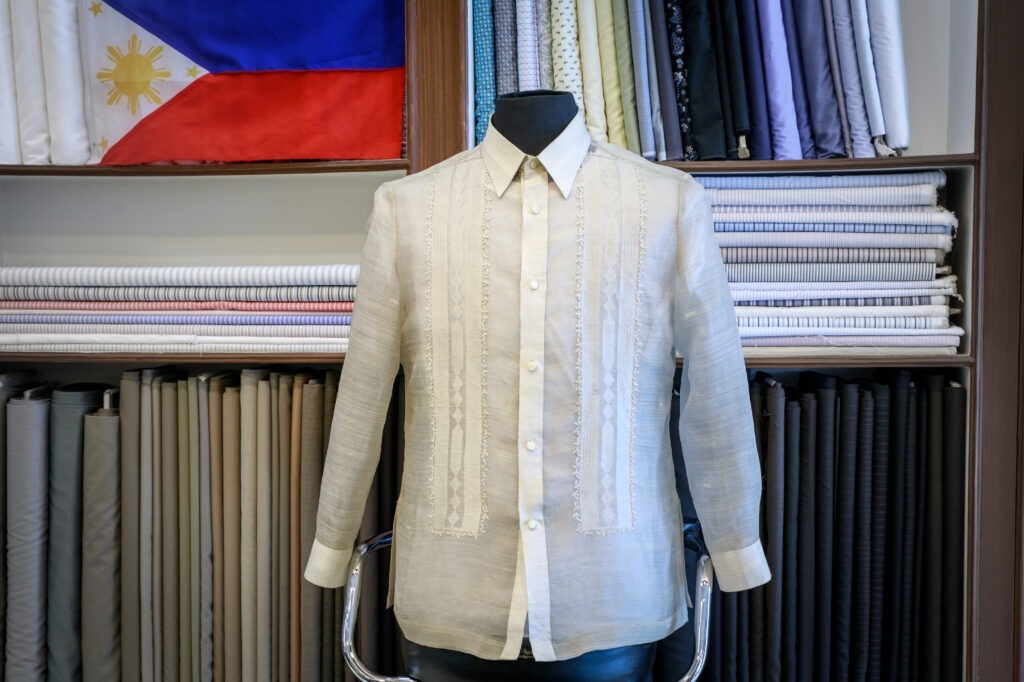
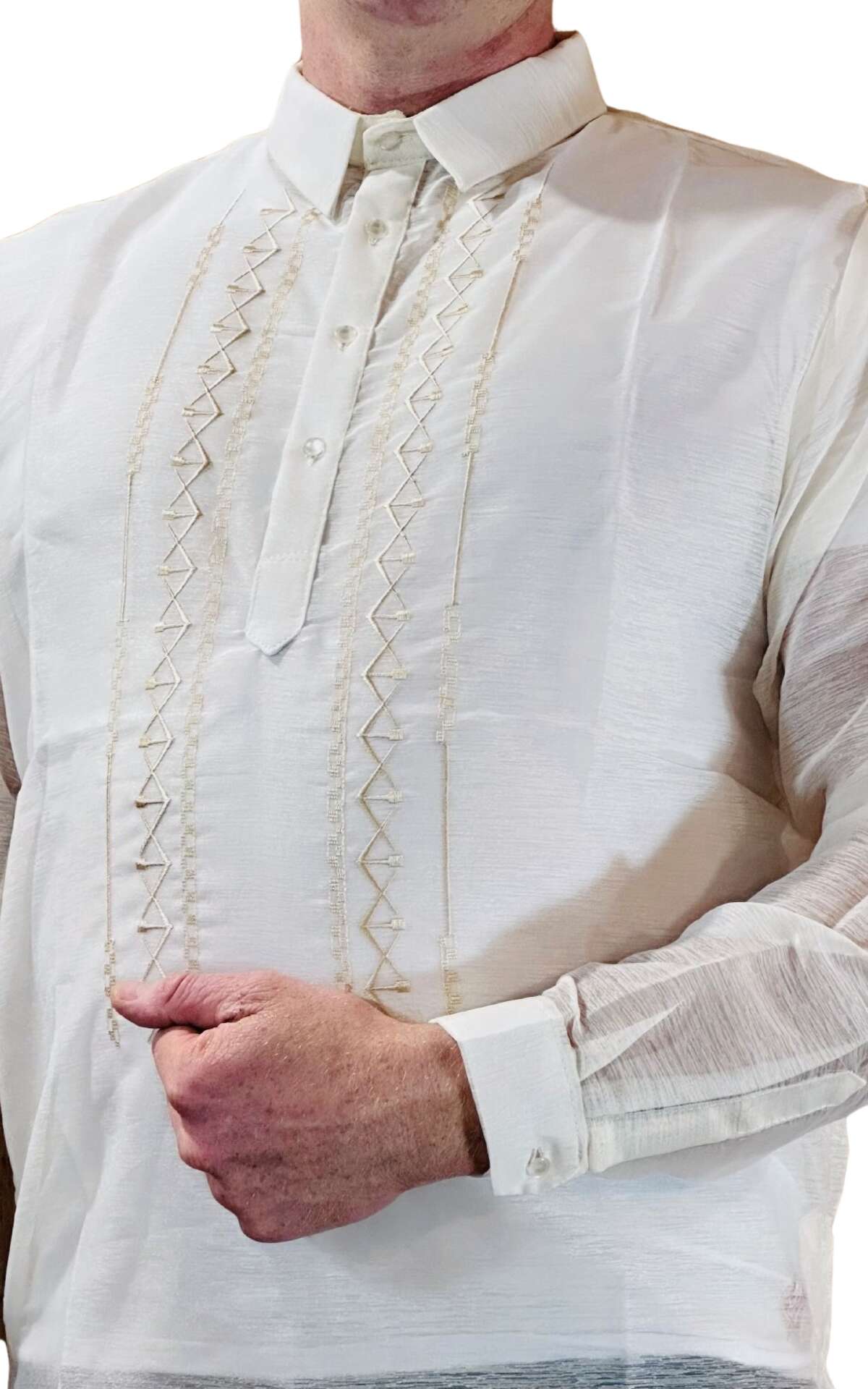
  • What it is: Originally made from banana fibers or silk, modern Jusi is often a blend of silk and organza.

  • The Look: It is more opaque than Piña but still retains a beautiful sheen. It is softer to the touch than synthetic organza and drapes elegantly on the body.

  • Best For: Filipino formal wear for men, corporate events, and wedding guests.

  • Why we love it: It offers the premium look of a traditional barong without the heirloom price tag of Piña.
    Embroidered White Jusilyn Shirt

Organza & Polyester: The Budget Friendly Option

  • What it is: Synthetic sheer fabric.

  • The Look: It tends to have a higher, sometimes “glassy” shine and a stiffer structure.

  • Best For: Cultural performances, school events, or if you need a durable, cost-effective option for a one-time event.

  • Warning: It does not breathe as well as natural fibers, so be wary if you are attending an outdoor summer wedding.

Cocoon Silk: The Modern Favorite

  • What it is: A high-quality woven silk that resembles the look of Piña but is more durable.

  • The Look: It has a rich texture and a creamy, off-white color. It is less transparent than Piña, making it a great option for those who want coverage.

  • Best For: Modern grooms and fashion-forward guests.


Styling Your Barong: The Do’s and Don’ts

Wearing a barong comes with its own set of etiquette rules. To look your best (and respect the culture), keep these tips in mind.

1. The Undershirt is Critical

Because the fabric is sheer, your undershirt is visible.

  • DO: Wear a Camisa de Chino (a collarless cotton shirt) or a plain white crew-neck t-shirt.

  • DON’T: Wear a tank top (the straps show through), a colored shirt, or anything with a printed logo. The undershirt acts as the canvas; keep it clean.

2. Trousers and Shoes

  • DO: Pair your Barong with dark, flat-front trousers (black or charcoal gray) for formal events.

  • DO: Wear polished black dress shoes or loafers.

  • DON’T: Wear denim jeans unless you are specifically going for a modern, streetwear fusion look (and even then, tread carefully!).

3. To Tuck or Not to Tuck?

  • NEVER: Tuck in a Barong Tagalog. It is designed to be worn untucked. Tucking it in is considered culturally incorrect and disrespects the garment’s history.


Beyond the Grooms: Barongs for Everyone

While the barong tagalog for men is the standard, Filipino formal wear has evolved beautifully to include everyone in the family.

Barong Tagalog for Women

The Filipiniana style for women has seen a massive resurgence. The barong tagalog for women (often referred to as a Lady Barong or Kimona) adapts the intricate embroidery of the male garment into feminine silhouettes.

  • The Look: Tailored cuts that nip in at the waist, often featuring 3/4 sleeves or butterfly sleeves.

  • How to Wear: Pair a structured Lady Barong with a long skirt for a formal “Terno” look, or wear it with dress pants for a powerful, modern corporate outfit.

The Little Ones

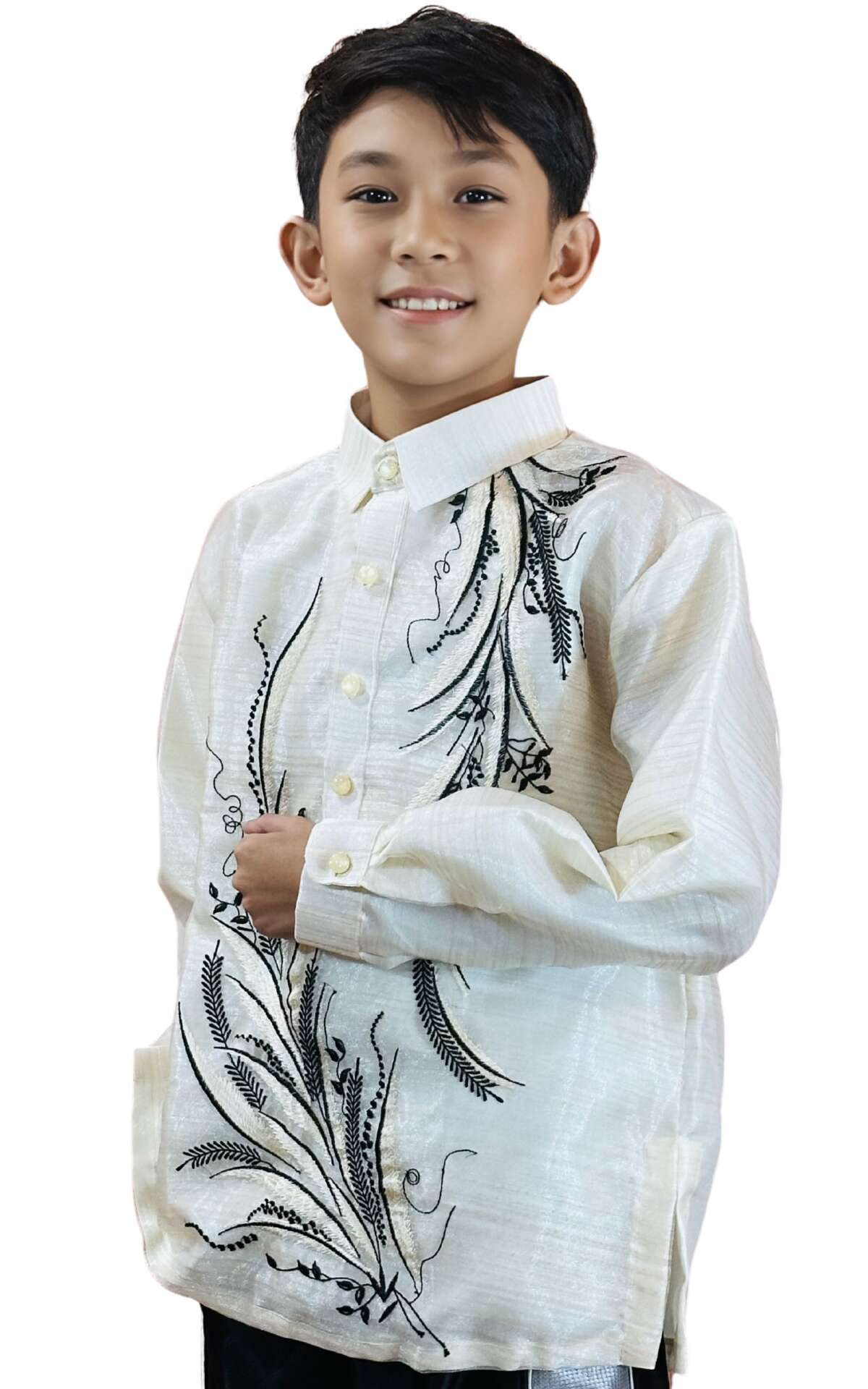
There is nothing cuter than a ring bearer in a miniature Barong. When buying for kids, comfort is king. Look for Jusi or soft Linen blends (often called Gusot Mayaman) that won’t itch or irritate their skin during the ceremony.

Kids Modern Barong


Caring for Your Barong: A Survival Guide

You have invested in a piece of art; here is how to make sure it lasts for the next generation.

  • Washing: Never machine wash a Piña or Jusi Barong. The agitation can destroy the delicate fibers and embroidery.

    • Hand Wash: Soak gently in mild detergent and water. Do not wring or twist.

    • Drip Dry: Let it air dry on a plastic hanger.

  • Ironing: Use a low heat setting. Ideally, place a thin cotton cloth between the iron and the Barong to prevent scorching the delicate embroidery.

  • Storage: Store it hanging in a breathable garment bag. Avoid plastic bags, which can trap moisture and cause the fabric to yellow over time.


The Verdict: Where to Buy a Barong in the US

So, back to the original question: Where to buy a barong in the US?

You could take your chances on a generic marketplace, hoping the “XL” fits and the fabric isn’t scratchy polyester. Or, you can trust a specialist who understands the unique intersection of Filipino heritage and American standards.

At Handmade Kapamilya, we bridge that gap. We are not just selling clothes; we are curating culture.

  • We Solve Sizing: We offer US sizing so you get the fit you expect.

  • We Verify Quality: We source authentic Jusi and Piña fabrics directly from artisans in Lumban and Aklan.

  • We Ship Fast: Our inventory is here in the US, meaning no customs delays and no sleepless nights wondering if your outfit will arrive in time.

Whether you need a barong tagalog for men wedding attire, a stunning barong tagalog for women, or simply a high-quality filipino shirt to wear with pride, we are here to help you look your best.

Ready to Find Your Perfect Fit?

Don’t let sizing anxiety or shipping delays ruin your big event. Browse our curated collection of authentic, US-sized Filipino formal wear today.


Read More from the Handmade Kapamilya Blog:

Man Wearing Barong Tagalog in the USA

Where to Buy Barong Tagalog in the US: Authentic Guide

You have the invitation in your hand. Maybe it’s your cousin’s wedding in California, a gala for a Filipino-American non-profit, or perhaps you are the groom preparing for the biggest day of your life. The dress code is clear: “Filipiniana” or “Barong Tagalog.”

Immediately, the panic sets in. You know exactly what you need, but you have no idea where to buy a barong in the US that doesn’t feel like a gamble. You are left with two stressful options: beg a Tita to bring one back from her next Manila trip (and pray it fits), or risk ordering from a sketchy website that takes six weeks to ship and might arrive looking like a costume.

We know the struggle because we have lived it. At Handmade Kapamilya, we believe wearing your heritage shouldn’t be a logistical nightmare. Whether you are a groom looking for a barong tagalog for men wedding attire or a guest wanting to represent with pride, this guide will walk you through everything you need to know to find the perfect piece stateside—without the stress, the wait, or the sizing mishaps.

Barong Tagalog in US Wedding

The Cultural Weight: Why the Barong Matters

Before we dive into where to buy, it is essential to understand what you are buying. The Barong Tagalog is not just a Filipino shirt; it is a garment of honor, identity, and resilience.

A Symbol of Resilience

The history of the Barong is deeply woven into the fabric of the Philippines. While early Filipinos wore loose, breathable tunics suited for the tropical climate long before colonization, the Barong as we know it evolved during the Spanish era. A popular (though debated) historical narrative suggests that the Spanish colonizers required “Indios” (native Filipinos) to wear their shirts untucked and made of translucent material. The alleged reasons were twofold: to distinguish them from the ruling class who tucked their shirts in, and to prevent the concealment of weapons.

However, what was meant to be a badge of inferiority was subverted by the Filipino people. They turned the barong into a canvas of intricate embroidery and exquisite craftsmanship, transforming a tool of subjugation into a symbol of pride. Today, wearing a Barong untucked is not just a style choice; it is a nod to centuries of cultural endurance.

The National Attire

In 1975, the Barong Tagalog was officially designated as the national attire of the Philippines. It bridges social gaps—worn by everyone from farmers to presidents. When you wear one in the US, you aren’t just dressing up; you are carrying a piece of that history. You are signaling to the room that you honor your roots.

The 3 Biggest Risks of Buying a Barong Online (And How to Solve Them)

If you have ever typed “where to buy a barong in the us” into a search engine, you know the results can be overwhelming. Before you click “Add to Cart,” you need to be aware of the three “Silent Killers” of online Barong shopping.

1. The Sizing Trap: Asian vs. US Sizing

This is the number one complaint we hear. A “Large” in the Philippines is rarely a “Large” in the US.

  • The Reality: Filipino sizing is typically one to two sizes smaller than Western sizing. If you usually wear a US Large, ordering a PH Large often results in a garment that is tight in the shoulders and short in the sleeves.

  • The Fix: When shopping, look for vendors who specifically explicitly state they use US Sizing. At Handmade Kapamilya, we curate our collections for the Western frame, eliminating the guesswork. If you are buying elsewhere, the general rule is to size up at least one full size.

Barong US Size Tag

2. The Material Mirage: Authentic vs. Synthetic

In photos, a cheap polyester philippines shirt can look alarmingly similar to a high-end piña barong. However, the difference is obvious the moment you touch it.

  • Synthetic (Polyester/Organza): Often shiny, stiff, and less breathable. These are fine for school plays or one-time use, but they lack the elegance required for a wedding.

  • Authentic (Piña/Jusi): These natural fibers have a soft sheen, a refined texture, and breathable qualities that synthetic fabrics cannot mimic.

3. The Shipping Black Hole

Many “US-facing” websites actually drop-ship directly from Manila. While this isn’t inherently bad, it introduces customs delays. We have seen grooms panic because their barong tagalog for men is stuck in a sorting facility in Honolulu three days before the wedding. Always verify that the vendor has US-based inventory for reliable domestic shipping speeds.


The Ultimate Fabric Guide: Choosing the Right Barong for You

The price and formality of a Barong are dictated almost entirely by its fabric. Knowing the difference between Jusi and Piña is the key to not getting ripped off.

Piña: The Gold Standard

If you are the groom, a father of the bride, or a guest of honor, this is what you want.

  • What it is: A fiber extracted from the leaves of the Red Spanish pineapple plant. It is the finest of all Philippine hand-woven fabrics.

  • The Look: It has a natural, ivory champagne-gold hue and a delicate, airy texture. It is translucent, lightweight, and exudes quiet luxury.

  • Best For: Barong tagalog for men wedding attire, black-tie Filipiniana galas, and state functions.

  • Pro-Tip: Because it is handmade, true Piña is expensive and delicate. It is an heirloom piece meant to be passed down.

Pina Barong Embroidery Close Up

Jusi: The Best All-Rounder

For guests, groomsmen, or corporate events, Jusi is the most popular choice.

  • What it is: Originally made from banana fibers or silk, modern Jusi is often a blend of silk and organza.

  • The Look: It is more opaque than Piña but still retains a beautiful sheen. It is softer to the touch than synthetic organza and drapes elegantly on the body.

  • Best For: Filipino formal wear for men, corporate events, and wedding guests.

  • Why we love it: It offers the premium look of a traditional barong without the heirloom price tag of Piña.
    Embroidered White Jusilyn Shirt

Organza & Polyester: The Budget Friendly Option

  • What it is: Synthetic sheer fabric.

  • The Look: It tends to have a higher, sometimes “glassy” shine and a stiffer structure.

  • Best For: Cultural performances, school events, or if you need a durable, cost-effective option for a one-time event.

  • Warning: It does not breathe as well as natural fibers, so be wary if you are attending an outdoor summer wedding.

Cocoon Silk: The Modern Favorite

  • What it is: A high-quality woven silk that resembles the look of Piña but is more durable.

  • The Look: It has a rich texture and a creamy, off-white color. It is less transparent than Piña, making it a great option for those who want coverage.

  • Best For: Modern grooms and fashion-forward guests.


Styling Your Barong: The Do’s and Don’ts

Wearing a barong comes with its own set of etiquette rules. To look your best (and respect the culture), keep these tips in mind.

1. The Undershirt is Critical

Because the fabric is sheer, your undershirt is visible.

  • DO: Wear a Camisa de Chino (a collarless cotton shirt) or a plain white crew-neck t-shirt.

  • DON’T: Wear a tank top (the straps show through), a colored shirt, or anything with a printed logo. The undershirt acts as the canvas; keep it clean.

2. Trousers and Shoes

  • DO: Pair your Barong with dark, flat-front trousers (black or charcoal gray) for formal events.

  • DO: Wear polished black dress shoes or loafers.

  • DON’T: Wear denim jeans unless you are specifically going for a modern, streetwear fusion look (and even then, tread carefully!).

3. To Tuck or Not to Tuck?

  • NEVER: Tuck in a Barong Tagalog. It is designed to be worn untucked. Tucking it in is considered culturally incorrect and disrespects the garment’s history.


Beyond the Grooms: Barongs for Everyone

While the barong tagalog for men is the standard, Filipino formal wear has evolved beautifully to include everyone in the family.

Barong Tagalog for Women

The Filipiniana style for women has seen a massive resurgence. The barong tagalog for women (often referred to as a Lady Barong or Kimona) adapts the intricate embroidery of the male garment into feminine silhouettes.

  • The Look: Tailored cuts that nip in at the waist, often featuring 3/4 sleeves or butterfly sleeves.

  • How to Wear: Pair a structured Lady Barong with a long skirt for a formal “Terno” look, or wear it with dress pants for a powerful, modern corporate outfit.

The Little Ones

There is nothing cuter than a ring bearer in a miniature Barong. When buying for kids, comfort is king. Look for Jusi or soft Linen blends (often called Gusot Mayaman) that won’t itch or irritate their skin during the ceremony.
Kids Modern Barong


Caring for Your Barong: A Survival Guide

You have invested in a piece of art; here is how to make sure it lasts for the next generation.

  • Washing: Never machine wash a Piña or Jusi Barong. The agitation can destroy the delicate fibers and embroidery.

    • Hand Wash: Soak gently in mild detergent and water. Do not wring or twist.

    • Drip Dry: Let it air dry on a plastic hanger.

  • Ironing: Use a low heat setting. Ideally, place a thin cotton cloth between the iron and the Barong to prevent scorching the delicate embroidery.

  • Storage: Store it hanging in a breathable garment bag. Avoid plastic bags, which can trap moisture and cause the fabric to yellow over time.


The Verdict: Where to Buy a Barong in the US

So, back to the original question: Where to buy a barong in the US?

You could take your chances on a generic marketplace, hoping the “XL” fits and the fabric isn’t scratchy polyester. Or, you can trust a specialist who understands the unique intersection of Filipino heritage and American standards.

At Handmade Kapamilya, we bridge that gap. We are not just selling clothes; we are curating culture.

  • We Solve Sizing: We offer US sizing so you get the fit you expect.

  • We Verify Quality: We source authentic Jusi and Piña fabrics directly from artisans in Lumban and Aklan.

  • We Ship Fast: Our inventory is here in the US, meaning no customs delays and no sleepless nights wondering if your outfit will arrive in time.

Whether you need a barong tagalog for men wedding attire, a stunning barong tagalog for women, or simply a high-quality filipino shirt to wear with pride, we are here to help you look your best.

Ready to Find Your Perfect Fit?

Don’t let sizing anxiety or shipping delays ruin your big event. Browse our curated collection of authentic, US-sized Filipino formal wear today.


Read More from the Handmade Kapamilya Blog:
Modern black barong

The Ultimate Guide to the Barong: Modern Styles, Stunning Elegance

The Evolution of the Barong: Modern Everyday Styles and Women’s Barong Trends

Are you standing in front of your closet, torn between a stiff traditional suit and a Barong Tagalog that feels like it belongs in your Lolo’s old photographs? You want to honor your heritage at your wedding or gala, but you don’t want to look like you’re wearing a costume.

At Handmade Kapamilya, we understand this struggle. We often see grooms and professionals who crave the “Kapamilya” vibe—that perfect balance of being “respectfully traditional” and “effortlessly modern.” In our workshop, we are witnessing a renaissance. The modern Barong Tagalog trends of 2024 and 2025 are moving away from the itchy, oversized silhouettes of the past toward breathable fabrics, tailored fits, and bold color palettes.

Mabuhay! Welcome to your ultimate guide to the evolution of the Philippines’ national dress. Whether you are looking for a wedding Barong Tagalog or a versatile piece for your professional wardrobe, we’ve gathered the insights you need to make an informed, stylish choice.

The Cultural Significance: Why the Barong Still Matters

Before we dive into the “what,” we must understand the “why.” The Barong Tagalog is not just a shirt; it is a narrative of resilience. Originally crafted from indigenous fibers like pineapple and abaca, it was a garment that allowed Filipinos to remain cool in the tropical heat while resisting the heavy, restrictive layers of colonial Spanish dress.

Today, wearing a Barong is a statement of cultural pride. For the Fil-Am community, it serves as a bridge between two worlds. When you browse our Barong Tagalog for sale, you aren’t just buying formal wear; you are participating in a living tradition that supports local weavers and embroiderers in artisanal hubs like Lumban, Laguna.

  1. Fabric Innovation: Beyond the “Itchy” Stereotype

One of the biggest modern Barong Tagalog trends is the shift in textile science. At Handmade Kapamilya, we believe that comfort is just as important as aesthetics. If you’re going to be dancing at a reception for six hours, the fabric matters.

Piña and Piña-Sede (The Gold Standard)

Derived from the leaves of the Red Spanish Pineapple, Piña is the “Queen of Philippine Fabrics.” It is incredibly lightweight, translucent, and possesses a soft, golden sheen.

  • Trend Note: We are seeing a rise in Piña-Sede (Piña silk), which blends pineapple fiber with silk to create a more durable, less “crunchy” feel while maintaining that luxury texture.

Cocoon Silk (The Modern Favorite)

If you want the look of Piña but require a more robust fabric that holds its shape, Cocoon silk is the answer. It is characterized by its slightly textured, “slubby” appearance.

  • Why it’s trending: It’s less transparent than Jusi, making it ideal for those who prefer a more structured look for a custom Barong Tagalog.

Jusi and Jusilyn (Accessible Elegance)

Jusi (mechanically woven silk) and Jusilyn (a synthetic blend) remain staples for their affordability and smooth finish.

  • The “Handmade Kapamilya” Expert Tip: Always check for a high-quality lining. A modern Barong should feel like a second skin, not a plastic bag.

  1. The Rise of the “Everyday Barong”

Gone are the days when the Barong was reserved solely for the altar or the presidential palace. One of the most significant modern Barong Tagalog trends is the “Everyday” or “Office Barong.”

We are seeing a massive surge in demand for short-sleeved Barongs made from linen, ramie, or cotton-blend chambray. These pieces serve as the Filipino equivalent of “Business Casual.”

  • The Silhouette: Slimmer through the waist with a shorter hemline designed to be worn untucked.
  • The Styling: Pair a linen Barong with dark denim or chinos for a “Paskong Pinoy” dinner or a high-end business meeting in San Francisco or New York.
  1. Bold Colors and Monochromatic Embroidery

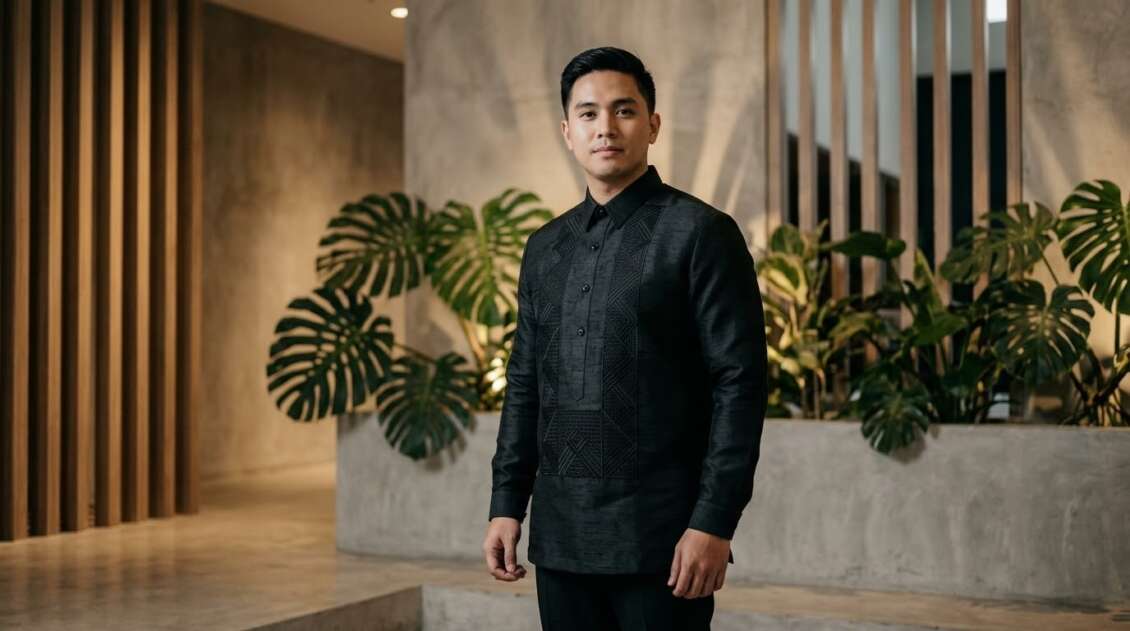
Traditionally, the Barong was off-white or cream. However, the modern Barong Tagalog trends of the current season are embracing the dark side.

The Black Barong

A black-on-black Barong (black fabric with black embroidery) is the height of modern sophistication. It’s mysterious, formal, and incredibly slimming.

  • Perfect for: Evening galas or black-tie optional weddings.

Earth Tones and Deep Blues

We are increasingly crafting custom Barong Tagalogs in sage green, terracotta, and navy blue. These colors reflect the natural landscapes of the Philippines while offering a contemporary alternative to the standard tuxedo.

  1. Redefining Embroidery: Minimalist vs. Calado

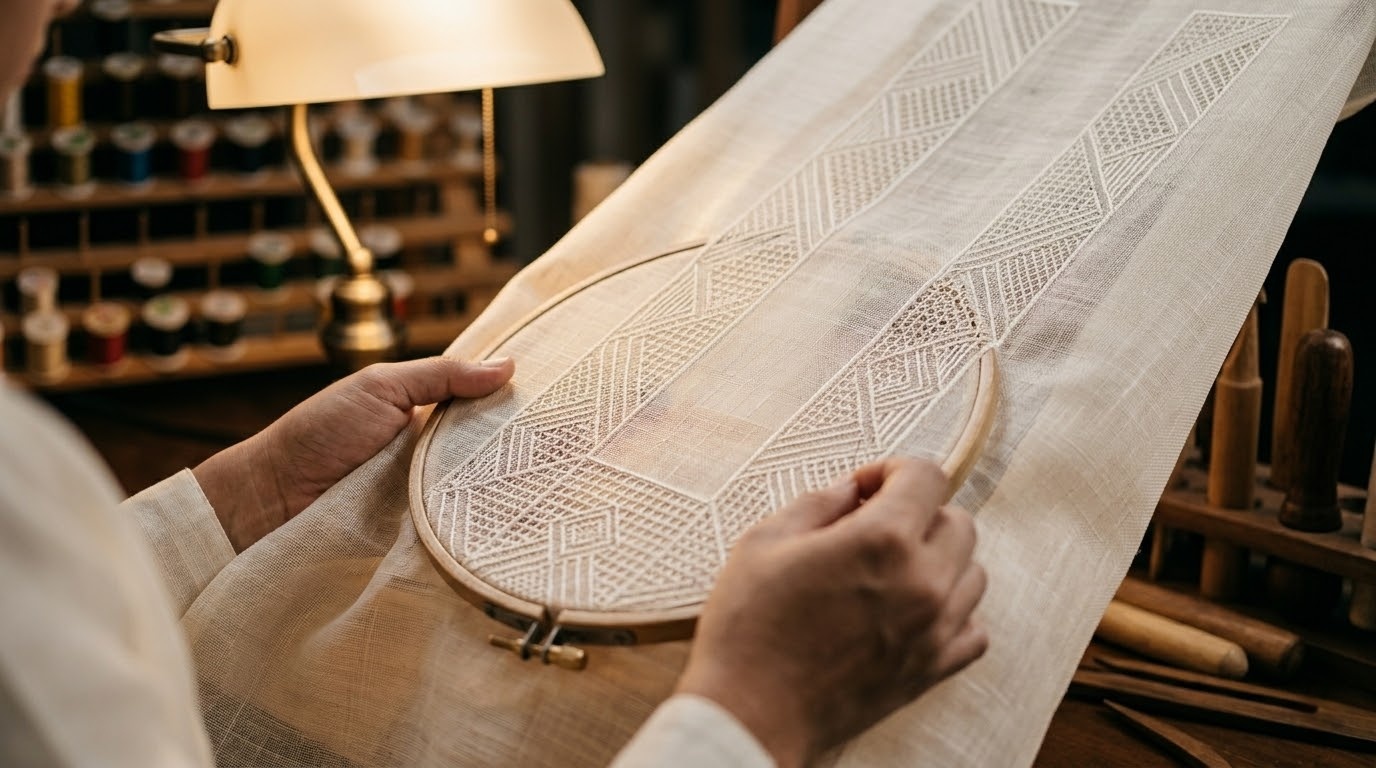
Embroidery is the “soul” of the Barong. In our workshop, we categorize the current trends into two distinct paths:

Minimalist Geometric Patterns

For the modern professional, less is more. We are seeing a move toward “asymmetrical” embroidery—patterns that run down only one side of the chest or are concentrated solely on the cuffs and collar. This creates a clean, architectural look.

The Revival of Calado and Suksuk

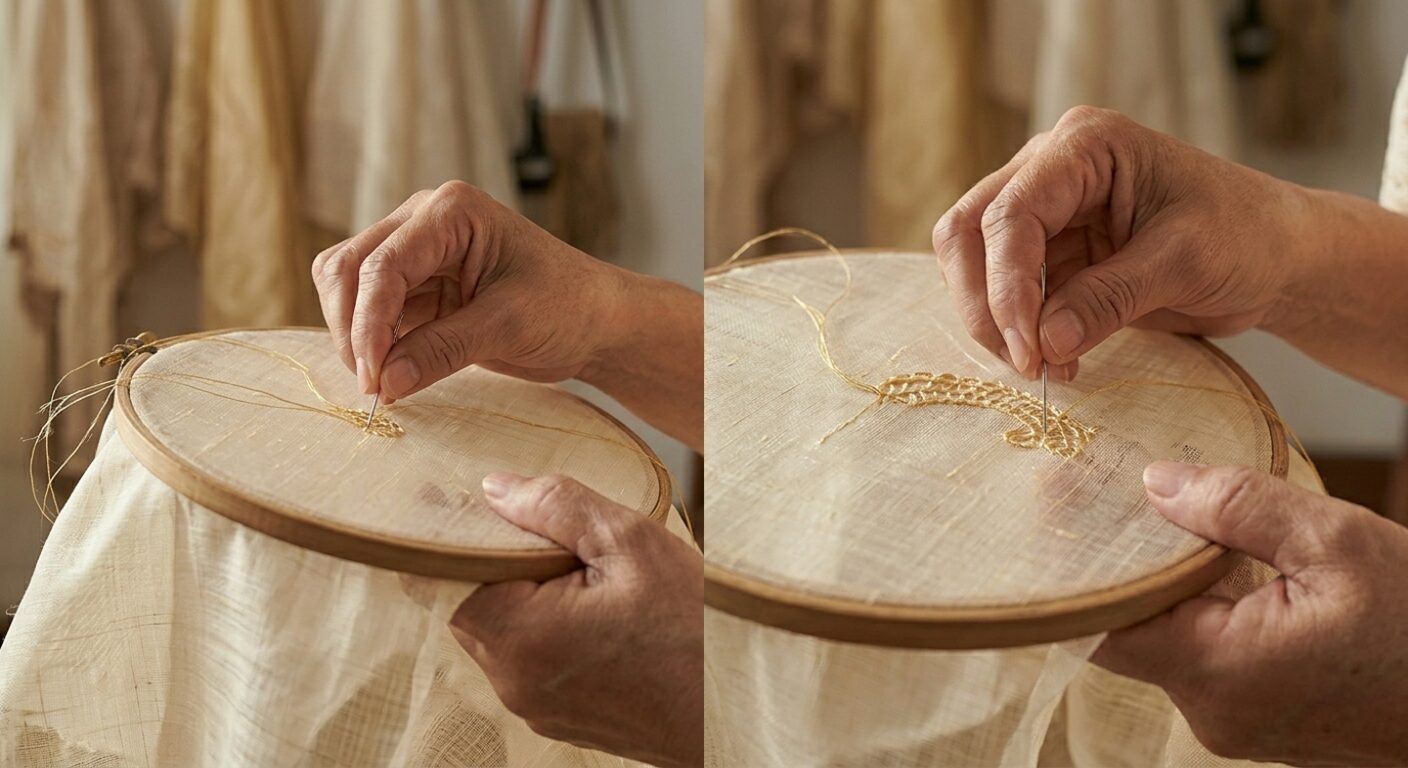
Conversely, there is a renewed appreciation for “Calado”—a painstaking technique where threads are pulled from the fabric to create a lace-like, perforated effect.

  • Trend Insight: Grooms looking for a wedding Barong Tagalog are opting for “Suksuk” (inserted weft) patterns that tell a story, often incorporating indigenous motifs from the Kalinga or Mindanao regions to honor their specific ancestral roots.

Modern womens barong

  1. The Gender-Neutral Shift: Women’s Barongs

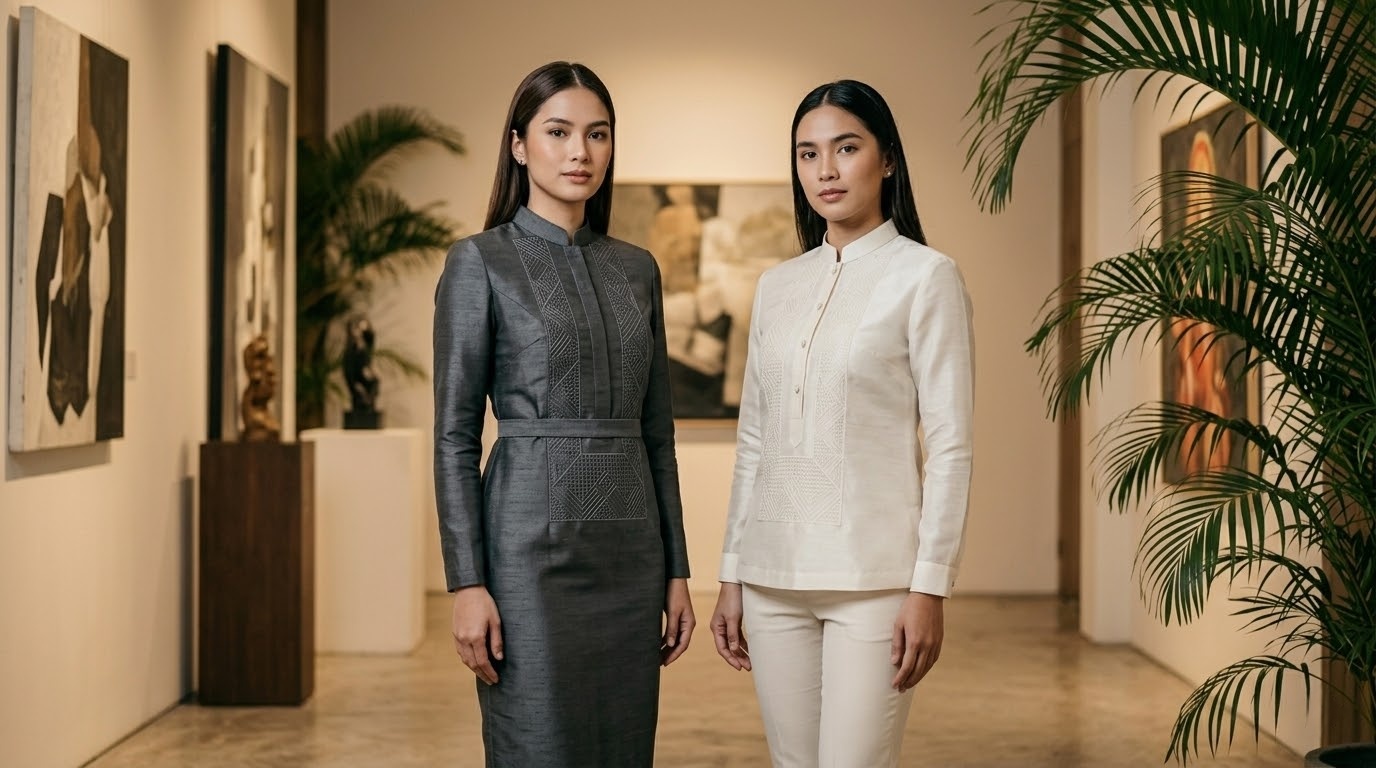
The Barong is no longer “just for the boys.” The evolution of Filipino formal wear has seen the Barong silhouette adapted into stunning Barong dresses, boleros, and tops for women.

Modern Filipina leaders and brides are choosing the “Barong Tagalog for Women”—a button-down piece with traditional embroidery but tailored with feminine darts and often paired with sleek trousers. It’s a powerful statement of identity and equality.

How to Choose Your Masterpiece: A “Kapamilya” Checklist

If you are looking for a Barong Tagalog for sale online, how do you know you’re getting quality? Use our expert checklist:

  1. Check the “Calado”: Is the embroidery hand-guided or machine-stamped? Hand-guided embroidery has slight variations that indicate artisanal work.
  2. The Fit: A traditional Barong is “A-line” (wider at the bottom). A modern Barong should have a slight taper.
  3. The Undergarment: A Barong is transparent by design. Always wear a Camisa de Chino (a long-sleeved white undershirt) underneath. Never wear a standard Hanes T-shirt; the collar lines will ruin the silhouette.
  4. Collar Stiffeners: Ensure the collar is crisp. A “floppy” collar is the fastest way to look unpolished.

Preserving Your Heritage: Care and Maintenance

Salamat for investing in a handmade piece. To ensure your Barong lasts for generations, you must treat it with care. In our experience, the biggest mistake owners make is putting their Barong in a washing machine.

  • Handwash Only: Use a mild detergent (or even baby shampoo). Swirl it in cool water, do not scrub.
  • The Hanger Rule: Never fold your Barong. Use a padded hanger to maintain the shoulder shape.
  • Air Dry: Hang it in a shaded area. Direct sunlight can yellow Piña and Jusi fibers over time.

Elevate Your Wardrobe with Handmade Kapamilya

The modern Barong Tagalog trends we see today are a testament to the enduring beauty of Filipino craftsmanship. Whether you are walking down the aisle or leading a boardroom meeting, the Barong allows you to carry your history with dignity.

At Handmade Kapamilya, we don’t just sell clothes; we help you find your “cultural fit.” Each of our pieces is a labor of love, designed to make you look like the best version of yourself while staying true to your roots.

Ready to find your perfect fit? Shop our Exclusive Modern Barong Tagalog Collection

📚 Continue Your Journey into Filipino Formal Wear

Maraming salamat po for supporting authentic Filipino craftsmanship. We look forward to welcoming you into the Handmade Kapamilya family!

Filipiniana dress modern vs traditional comparison

Filipiniana Dress Guide: A Simple Look at Heritage, Style & Elegance

The Ultimate Guide to the Filipiniana Dress: From Traditional Roots to Modern Masterpieces

Kumusta po! Whether you are a Fil-Am bride preparing for your big day or a guest invited to a prestigious Filipino gala, you’ve likely faced the “heritage dilemma.” You want a look that screams cultural pride, but you also want to feel contemporary, comfortable, and chic.

At Handmade Kapamilya, we believe that wearing a Filipiniana dress—from modern to traditional styles—is more than a fashion choice; it is an act of reclaiming identity. In our workshop, we see daily how a single garment can bridge the gap between the archipelago and the diaspora. In this guide, we will walk you through the rich history, the essential fabrics, and the modern styling rules that every Pinay (and Pinay-at-heart) should know.

The Cultural Significance: Why the Filipiniana Matters

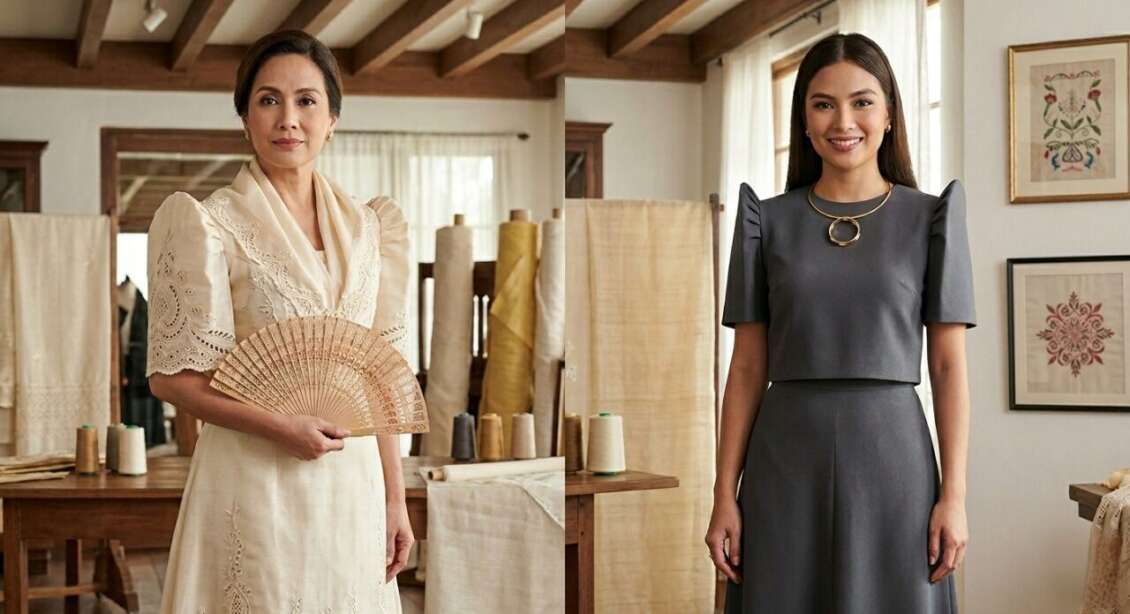
The Filipiniana is not just “a dress.” It is a visual history of the Philippines. From the pre-colonial Baro’t Saya to the iconic Terno popularized in the 20th century, these garments represent the resilience and adaptability of Filipino women.

When you wear an authentic piece, you aren’t just following a dress code; you are honoring the “Handmade” tradition of artisans from places like Lumban and Kalibo. Mabuhay ang sining ng Pilipinas! (Long live Philippine art!)

Traditional Maria Clara Filipiniana dress

Traditional Filipiniana: The Pillars of Heritage

To understand the modern Filipiniana, we must first pay respects to the classics. If you are attending a “Filipiniana Formal” event, these are the silhouettes you need to know.

1. The Maria Clara (Traje de Mestiza)

Named after the heroine in Dr. Jose Rizal’s Noli Me Tangere, this is the quintessential colonial-era dress. It consists of four parts:

  • Baro: A fine, bell-sleeved blouse.
  • Saya: A floor-length skirt.
  • Pañuelo: A starched, triangular scarf worn over the shoulders (essential for that “Maria Clara” modesty).
  • Tapis: A dark overskirt wrapped around the waist.

2. The Classic Terno (The Butterfly Sleeve)

The word Terno literally means “matched.” In our workshop, we define the Terno by its most striking feature: the Butterfly Sleeves. Unlike Western puff sleeves, these are stiff, arched, and perfectly symmetrical. They represent the strength of the modern Filipina.

3. The Balintawak

Think of the Balintawak as the “country version” of the Terno. Traditionally worn for fiestas and rural outings, it usually features shorter butterfly sleeves and a tapis made of colorful, woven fabrics.

Modern Filipiniana bolero urban style

The Modern Shift: Filipiniana for the 21st Century

The most frequent question we get at Handmade Kapamilya is: “How can I wear Filipiniana without looking like I’m in a costume?” The answer lies in Modern Filipiniana. Today’s designers are deconstructing the classic silhouettes to fit a global lifestyle.

1. The Filipiniana Bolero & Alampay

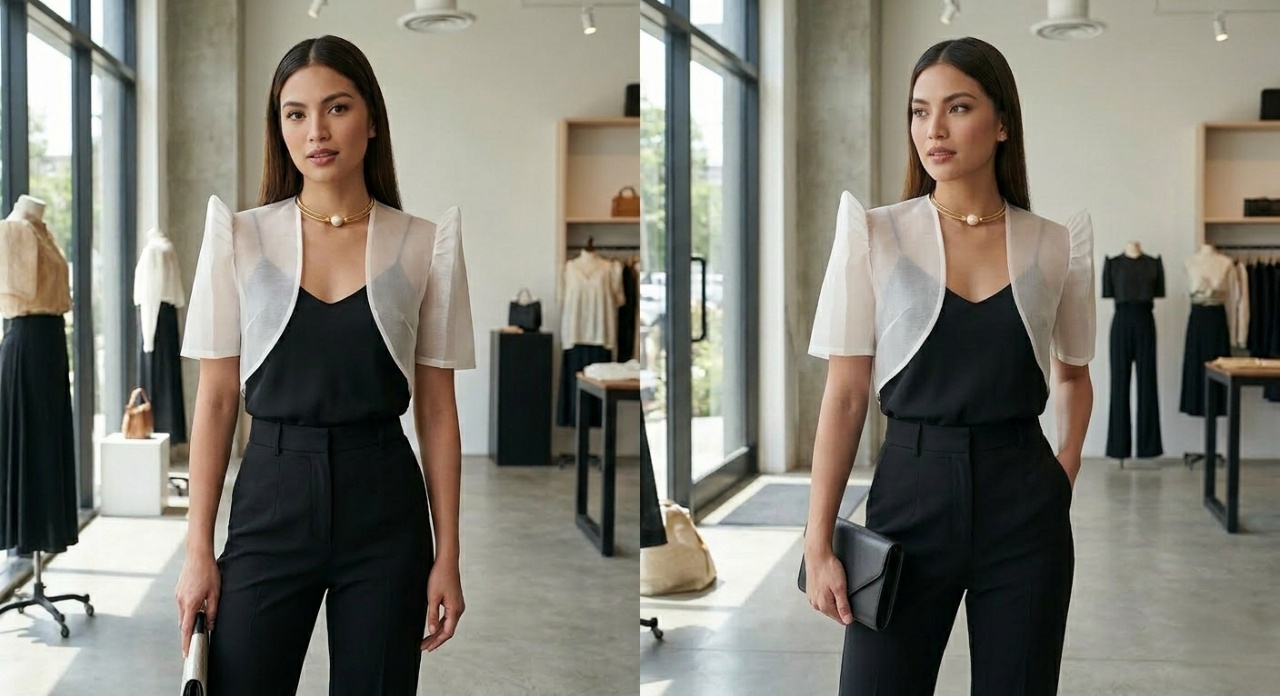
For the woman who wants versatility, the Filipiniana bolero is a game-changer. These are detachable butterfly-sleeve jackets that can be worn over a simple cocktail dress or even a tailored jumpsuit. It’s the perfect “entry-point” into Filipino formal wear.

  • Pro Tip: Pair a white Organza bolero with black trousers for a “Power Barong” look.

2. The Modern Terno Gown

Modern versions often simplify the skirt, moving away from the heavy Saya and toward sleek A-lines or mermaid silhouettes. At our workshop, we focus on the “Clean Terno”—where the butterfly sleeves remain the focal point, but the fabric is a modern stretch crepe or silk.

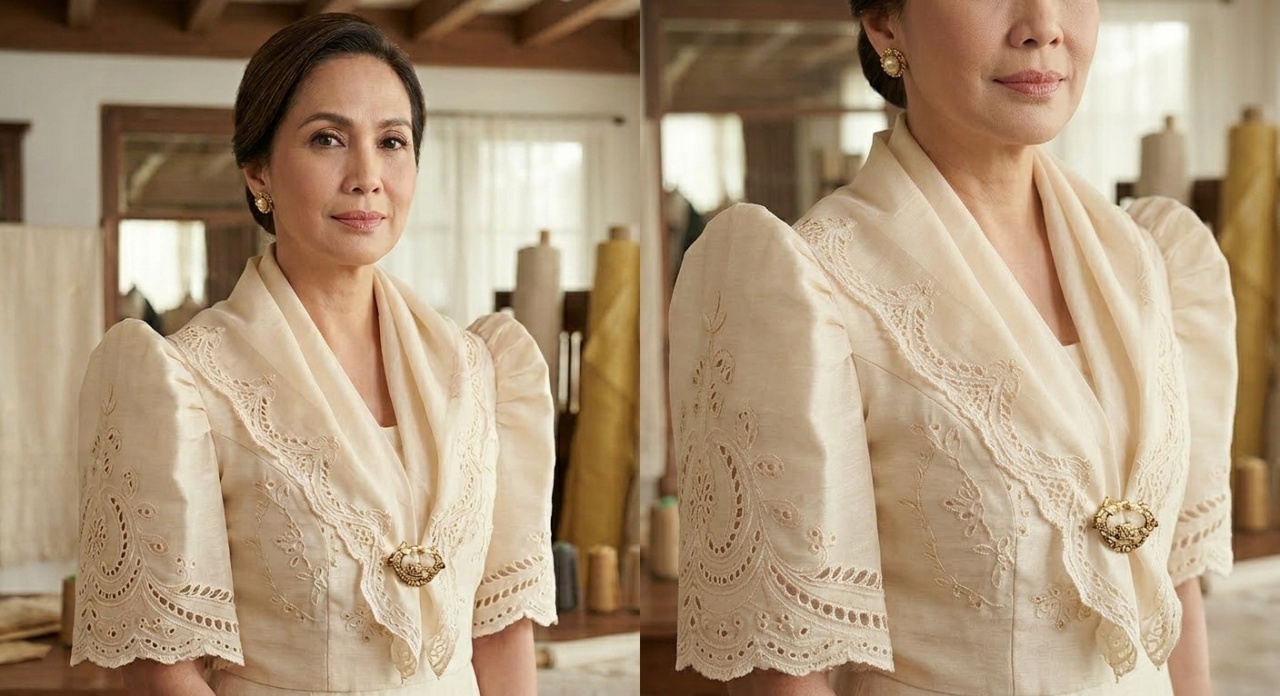
3. The Barong Tagalog for Women (Female Barong)

Traditional “men’s” fashion has crossed over. The Women’s Barong (or Barong Dress) utilizes the same sheer fabrics like Jusi or Piña but is tailored to a woman’s silhouette. It’s the ultimate choice for business functions or semi-formal weddings.

Piña fabric calado embroidery detail

Fabric Science: The Texture of the Philippines

When you buy a modern Filipiniana, you aren’t just paying for the design; you are paying for the textile science. Understanding these fabrics is the key to E-E-A-T (Experience and Expertise) in Filipino fashion.

Fabric Type

Origin

Characteristics

Best For

Piña

Pineapple Fiber

The “Queen” of fabrics. Soft, translucent, and incredibly expensive.

Weddings & Heirloom pieces.

Jusi

Silk/Synthetic Blend

More durable than Piña, with a distinct mechanical weave.

Professional events & Guest attire.

Cocoon Silk

Silkworm Silk

Offers a luxurious sheen and structured feel.

Modern Terno sleeves.

Organza

Synthetic

Lightweight and budget-friendly while maintaining “stiffness.”

Boleros & Debutante dresses.

Inabel / Ethnic

Handwoven (Ilocos)

Thick, cotton-based, and features indigenous patterns.

Casual Filipiniana & Outerwear.

How to Style Your Filipiniana: The “Kapamilya” Rules

1. The Jewelry Rule

Traditionally, Filipiniana is paired with Philippine South Sea Pearls. However, if you are wearing a modern Filipiniana dress, don’t be afraid to experiment. Gold “Tambourine” necklaces (traditional filigree) add an air of authenticity to a modern cut.

2. The Footwear

Avoid chunky sneakers. For traditional gowns, a classic pump or an elegant “Bakya” (wooden clog) inspired heel works best. For modern sets, a sleek stiletto maintains the long lines of the Terno.

3. The “Abaniko” (Fan)

Never underestimate the power of a hand-painted fan. It isn’t just a prop; in the humidity of a summer wedding (or a crowded gala), it is a survival tool. Salamat us later!


Care and Maintenance: Preserving Your Heritage

A high-quality Filipiniana is an investment. Because these fabrics (especially Jusi and Piña) are delicate, you must treat them with respect.

  • Never Machine Wash: The agitation will destroy the embroidery and the “stiff” butterfly sleeves.
  • Hand Wash Only: Use a very mild detergent and cool water.
  • The “Hanger” Rule: Never fold a Terno. The butterfly sleeves have a specialized insert or starching method. Store them on a padded hanger inside a breathable garment bag.

Why Choose Handmade Kapamilya?

In our workshop, we don’t mass-produce. Every stitch tells a story of a family—a “Kapamilya”—dedicated to their craft. When you choose a piece from our Modern Filipiniana Collection, you are supporting:

  1. Direct-to-Artisan Fair Trade: No middleman, just fair wages for our weavers.
  2. Custom Sizing: We understand the diaspora body. We offer bespoke tailoring to ensure your butterfly sleeves sit perfectly on your shoulders.
  3. Cultural Accuracy: We consult with historians to ensure our “modern” takes never disrespect the “traditional” roots.

Wear Your Story

The journey of the Filipiniana dress from modern to traditional mirrors the journey of the Filipino people: we evolve, we adapt, but we never forget our roots. Whether you choose the full drama of a Maria Clara or the understated elegance of a Jusi bolero, you are carrying the spirit of the Philippines with you.

Ready to find your perfect fit?

Shop the Handmade Kapamilya Modern Filipiniana Collection Here.

Salamat po for reading! We can’t wait to see how you style your heritage.

Explore More Filipino Wedding & Handmade Kapamilya Content:

Barong Tagalog Types

Discovering the Elegance of Barong Tagalog Types

The world of Barong Tagalog types may seem unfamiliar to many, but fear not! Let’s take a closer look at these exquisite materials to help you find the perfect Barong for your needs.

Much like other garments, the Barong Tagalog comes in various fabric types, each possessing unique qualities such as Organza, Jusi, Pina, and more. These fabrics vary in quality, softness, opaqueness, thickness, price, and other factors. Let’s explore the most common types and understand their advantages and disadvantages.

Organza Barong: Affordable Elegance Barong Tagalog Types

For those seeking a cost-effective option, the Organza Barong is a wonderful choice. This sheer and transparent material, crafted from Silk and Polyester, offers the most budget-friendly Barong Tagalog. Its shiny appearance can be the perfect show-stopper on stage, but it might be too dazzling for a low-key wedding or office wear. If you need a one-time Barong or are on a budget, the Organza Barong is readily available at Barong Warehouse.

Organza Barong Tagalog

Jusi Barong: Refined and Affordable

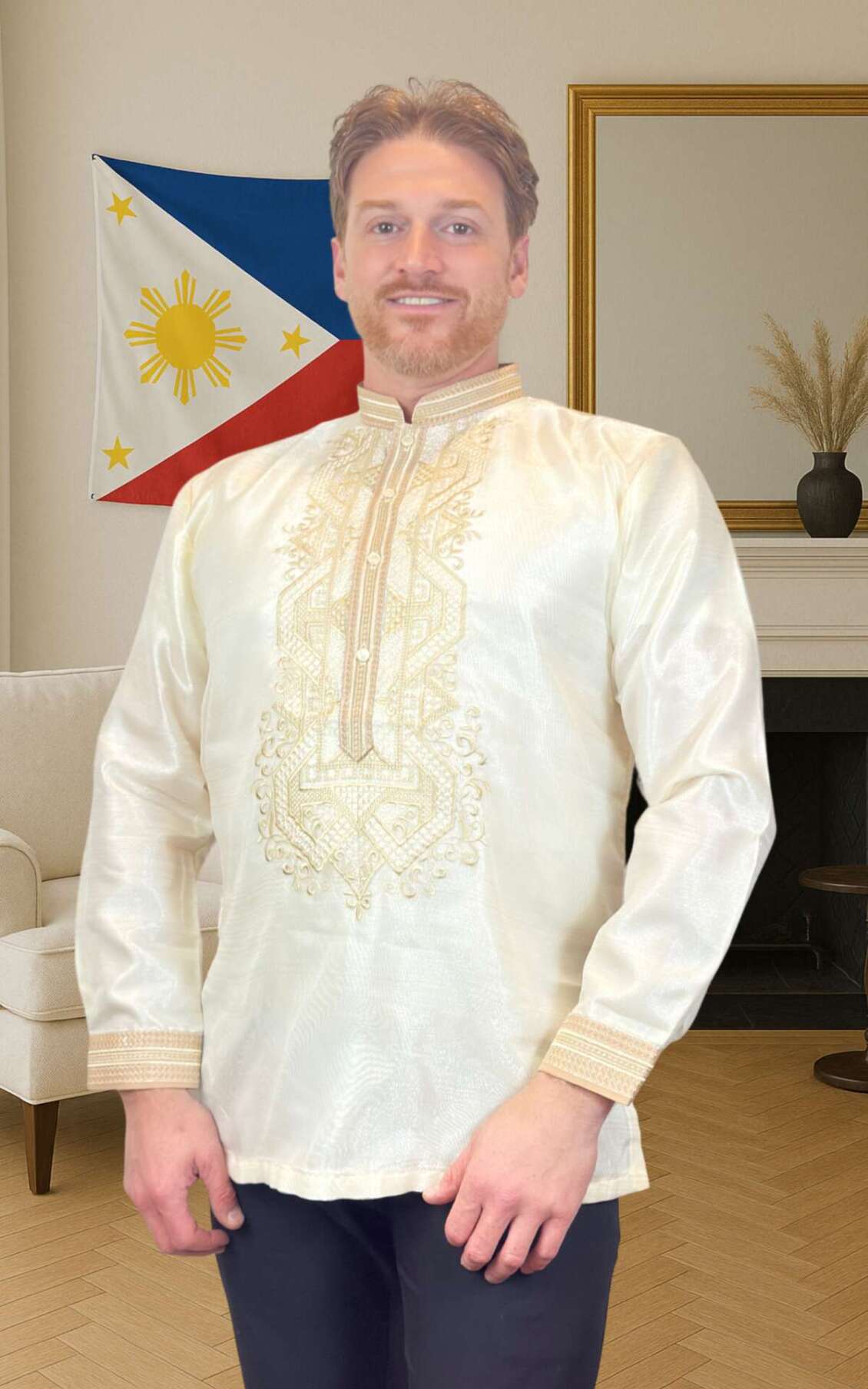
The Jusi Barong strikes an excellent balance between refinement and affordability. Made from a type of silk, it is softer and less sheer than Organza but more budget-friendly than Pina Barong. Available in various colors and styles, you can opt for a Jusi-Pina Barong, featuring subtle stripes resembling Pina fabric, or a Monochromatic Jusi Barong with a captivating gradient effect.

Jusilyn Barong: Silk’s Affordable Alternative Barong Tagalog Types

Similar to Jusi, the Jusilyn Barong offers an economical alternative with a silk and polyester blend. It boasts greater opaqueness than Jusi, making it an attractive option for those seeking budget-friendly elegance.

Barong Tagalog Types - Jusilyn Barong
Traditional Costume Barong Tagalog

Gusot-Mayaman: The Comfortable Linen Fabric

For office wear in the hot and humid Philippine climate, Gusot-Mayaman, known as “Wrinkle of the Rich,” is a popular choice. This breathable Linen fabric features simpler embroidery designs, favored by office workers for its comfort and style. An affordable version, the Bihis Mayaman, is crafted from lightweight polyester.

Piña Barong: Epitome of Elegance

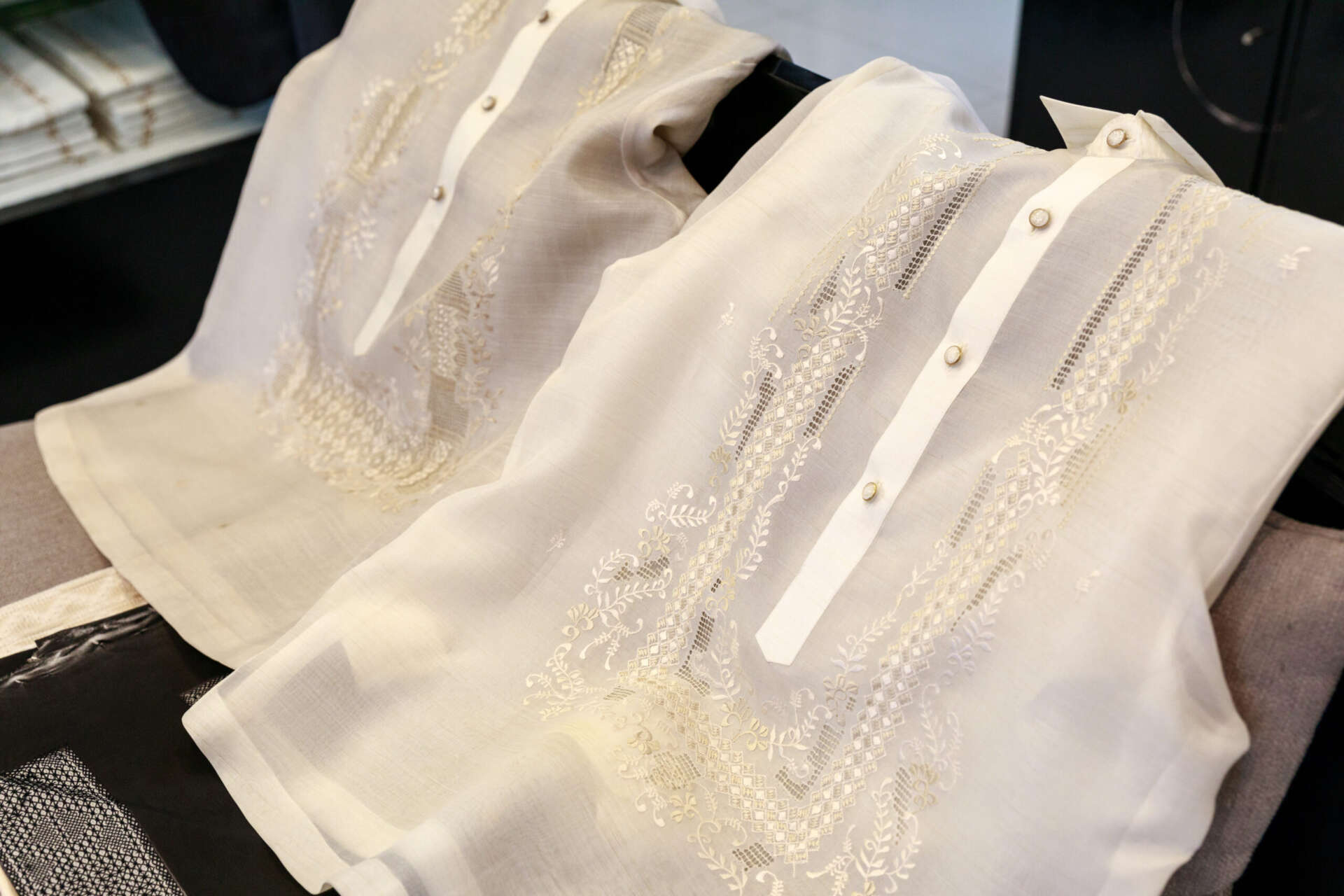
The Piña Barong stands as the epitome of Barong Tagalog elegance. Meticulously woven in the Philippines by skilled artisans, this fabric seamlessly combines age-old Filipino weaving techniques with European hand-embroidery traditions. The result is a truly exquisite fabric that represents a genuine investment for Barong Tagalog aficionados. While Piña Barongs can range from a few hundred to thousands of dollars, there are other fabrics that closely resemble its splendor, such as Cocoon and Silk Barongs, offering affordable yet equally beautiful alternatives.

Barong Tagalog Types - Piña Barong
Traditional Costume Barong Tagalog

Now that you are acquainted with the diverse world of Barong Tagalog fabrics, you can confidently choose the perfect one to suit your style and occasion. Embrace the elegance and charm of these fabrics as you celebrate the rich cultural heritage of the Philippines with your Barong Tagalog attire.